·
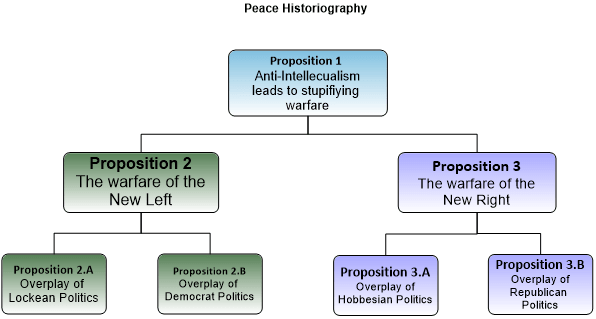
Drew Hutton, I have said, so many times, in my publications, the issue is political rhetoric, political thinking in party rooms and media. It has become power games rather than the proper art of politics in negotiating out a fair and reasonable agreements. Writers and scholars like Libby and I, and many others, are just ignored; ignored not merely by the politicians but also the hoi polloi who complain but make no effort for effective action (outside of the few). Over the history of half a century, going back to Senator Michael Macklin, “the Centre” has been squeezed by tweedle dee and tweedle dum. We all disagree on many issues, but what I am calling for is a unity on reforms which can be law or education. Hence, what I am saying and what the stupid hoi polloi do not understand is one can agree, across the board, on a set of reforms, but we can all still disagree in personal and community life on different ethical positions. Stupid because of the great decline in school humanities education (which Michael knows much about). My recommendation to you, Drew, is to find a set of reform positions where the Centre can agree and be united. This is unlike the reform movements of the left and right to date.
In the provided sources, the “Centre” of reform thinking is characterized not by static dogma, but by a consolidation of diverse views aimed at achieving a “good of order” through rational-critical dialogue and liberal pluralism. This “Centre” often emerges as an alliance between reformist leftists and centrist liberals to oppose both reactionary traditionalism and extremist radicalism.
Key Persons at the Political and Intellectual Centre
- Donald Horne and Manning Clark: These two figures are central to the “consolidation of the centre” in an Australian context. From 1968, they helped form a Liberal Centre-New Left alliance against Australian traditionalists. Their combined “left-thinking” sought to consolidate a national identity beyond British provincialism, grounded in a “liberal humanism” that valued social pluralism.
- Rollie Busch: As the Principal of Emmanuel College, Busch advocated for a “liberal-within-the-mainstream” Protestantism. He prioritized philosophy and critical interpretation over rigid dogma, demonstrating how evangelical faith could move toward a high degree of inclusive humanism and social justice.
- Karl Kautsky: A Marxist theoretician whose political position was explicitly “at the centre”. He utilized his influence to criticize both the anarchists and the militant left wing, as well as the revisionist right wing, maintaining a position of orthodox social democracy.
- Hubert Humphrey: A co-founder of Americans for Democratic Action, Humphrey is identified as a leader who “held the reformist wing of the party together” against both the left-wing and the right-wing. His political vision focused on social welfare and federal leadership committed to protecting the civil rights of minorities.
- Eduard Bernstein: The theoretician of “revisionist” socialism, Bernstein saw socialism not as a revolt against capitalism but as an “extension of liberalism”. He sought reform through peaceful, democratic means, which brought him into conflict with dogmatic Marxists.
- St Clair Donaldson: An Anglican Archbishop described as being “in the middle” between coarse nationalism and internationalists (both liberal and socialist). He advocated for a global version of imperial federation that preserved autonomy for the Australian Church.
Positions That Unite People Around a Centre
The sources identify several core positions and cognitive mechanisms that allow people of varying backgrounds to coalesce around a Centrist reform path:
- Liberal Pluralism and the Impartial State: A central unifying model is one where the state acts as a supposedly impartial body that affirms the equal rights of every citizen while accepting diversity within its structure. This enacts a “combination of conviction and acceptance” for different moral or religious groups.
- Communal Deliberation and Citizenship: The “Centre” functions through a “politics of communal deliberation,” where agents regard each other as citizens capable of long-term practical thinking. This moves society from a “politics of control” (where people are treated as things) toward intersubjective mutuality.
- The “Level Playing Field” in Dialogue: Horne and Clark emphasized a “Level Playing Field” in knowledge construction, which required hierarchical respect for authorship and collegial dialogue. This position unites intelligent conservatives, liberals, and radicals around “progressive valuing”.
- Communicative Rationality (Habermas): A unifying cognitive mechanism is the shift from strategic domination to “communicative action”. This involves removing restrictions on symbolic interaction to reach mutual understanding (Verständigung) and trust without the use of force.
- Spiral Historiography: This method unites people by encouraging them to recursively return to past intellectual struggles to learn from past errors rather than merely repeating unreflective habits. It allows for “philosophical compatibilism” by untangling conflictual presuppositions.
- Reclaiming “Human Authorship”: The ultimate unifying goal is restoring the human being as the proactive operator of social and technical systems (“the who”) rather than a passive object of the system (“the what”).