Abstract: This essay synthesizes Monica Eileen Patterson’s conceptual “architectures of hiding” with Dr. Neville Buch’s “Dynamic of Cognition” (DoC) framework to interrogate the systematic erasure of material memory. It posits that the invisibility of contested landscapes, such as Barrambin (Victoria Park), is fundamentally rooted in a cognitive “analytical abyss”—a state where “specialized ignorance” severs material reality from abstract thought. Drawing on the Heideggerian ontological grounding of being “thrown into the world” ( Geworfenheit ), the essay argues that prejudice serves as the cyclical beginning of all historical interpretation, often manifesting as “potted thinking.” To overcome this, society must transition from unreflective execution to a compassionate comprehension—”panser”—which operationalizes inclusion through empathy and Socratic reflection. By applying the POLICE model to historical discourse, we move beyond the deceptive simplicity of bureaucratic “thin concepts” toward a “horizon worldview.” The ultimate objective is the restoration of “Human Authorship,” elevating the subject from a “junior” state of narrow material utility to a “senior” state of social accountability. This transition restores the proactive “Who” of the person, allowing for a genuine “fusion of horizons” and the realization of Aristotelian flourishing ( eudaimonia ) within the material record.
1. The Analytical Abyss: How Critics Misunderstand Material and Abstract Thought
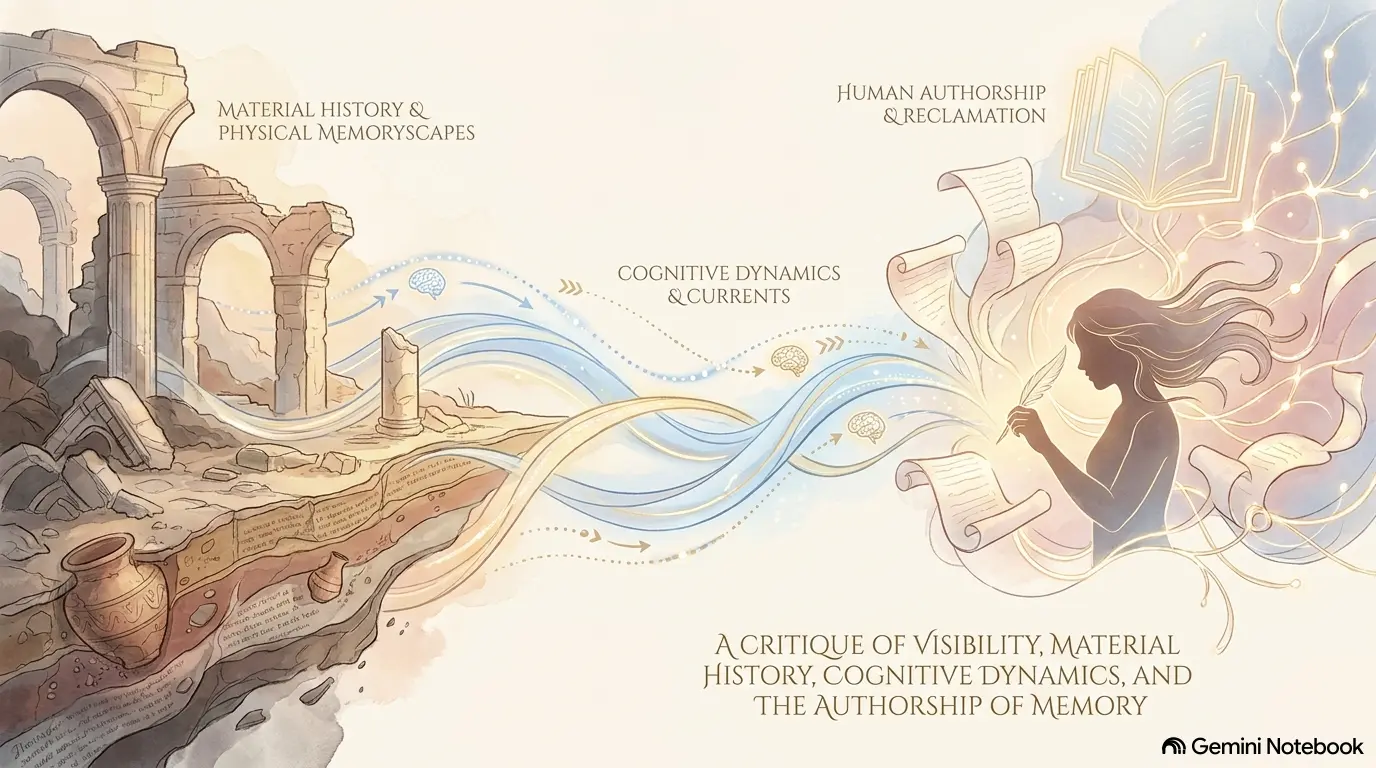
In the contemporary critique of material history, a recurring failure is the tendency to sever the material world from the cognitive frameworks that interpret it. Dr. Neville Buch identifies this disconnect as the “Analytical Abyss,” a state resulting from “Specialized Ignorance” (Buch 2026, p. 3). In this abyss, the mind operates on “thin concepts”—technical or formal descriptions—without connecting to the multi-textured reality of human experience. The root of this failure lies in the ontological state of “prejudice.” Within the Dynamic of Cognition, prejudice is the “cyclical beginning” of thought (Buch 2025, p. 1). Following the Heideggerian concept of being “thrown into the world” ( Geworfenheit ), the starting point for any inquiry is always an unreflective pre-judgment. Critics often remain trapped in a “closed loop” of unexamined belief, relying on “potted thinking” or “compressed statements” to avoid the hermeneutic labour of reflection (Buch 2026, p. 2). When material history is viewed through this lens, it is treated as a mere “state of affairs”—a static, empirical object—rather than a “thread of melody” running through sensory experience and human purpose. Specialized Ignorance: A cognitive state where the mind operates in a space of non-engagement, filtering out the multi-textured reality of lived experience in favour of externalist, “thin” technical formalisms (Buch 2026, p. 3). To bridge this abyss, critics must move beyond these “thin concepts” and adopt “thick ethical concepts”—such as integrity, courage, or kindness—which unite factual description with evaluative meaning (Buch 2026, p. 2). Without this synthesis, the material world remains obscured by the “deceptive simplicity of appearance,” where the observer fails to grasp the depth of the person-world relation.
2. The Landscape of Confusion: How Critics Misunderstand Metaphor and Context
The critical imperative lies in the demarcation between the mere empirical description of a “state of affairs” and the rigorous abstract labour requisite for structural reform (Buch 2024, p. 1). The failure to grasp “context as particulars” often manifests in the use of “simple binaries”—religion vs. secularity or idealism vs. realism—to describe the material landscape. These are frequently deployed as political devices to shift the public away from an intelligent understanding of reality. This confusion is acutely visible in the treatment of Barrambin (York’s Hollow). Patterson’s “architectures of hiding” describes how physical sites are obscured by “metaphorical landscapes.” While the “Save Victoria Park” movement highlights the “Aboriginal Cultural Heritage” and the sacred tangible and intangible systems of the site, bureaucratic discourse reduces the park to “vacant land” through the “level playing field” metaphor (Save Victoria Park 2026, p. 2). This “thin” conceptualization ignores the physical reality of a “challenging topography” featuring elevation changes of 25 meters, massive earthworks, and flood-prone areas (Save Victoria Park 2026, p. 2).By reducing a complex historical landscape to a binary of utility, critics ignore the complexity of contemporary political worldviews. Buch identifies four primary descriptions that govern these interpretations:
- Established Tradition: Resistant to reform and emphasizing traditional institutions (e.g., Hobbes’ Leviathan , Burkean conservatism, Buckley’s neo-conservatism).
- Utopian: A movement toward a singular, ideal “end of state” (e.g., Marx, Anarchism).
- Liberal: Based on a presumption for the level playing field, utilizing Locke’s tabula rasa , Mill and Rawls’ utilitarianism/veiled ignorance, or the closed constitutionalism of Jefferson and Hamilton.
- Open Constitutionalism: The Habermasian dialogical approach, where reform is negotiated periodically between worldviews to find common ground (Buch 2024, p. 2).
3. Panser and Presence: Lessons of a Compassionate Comprehension of Material History
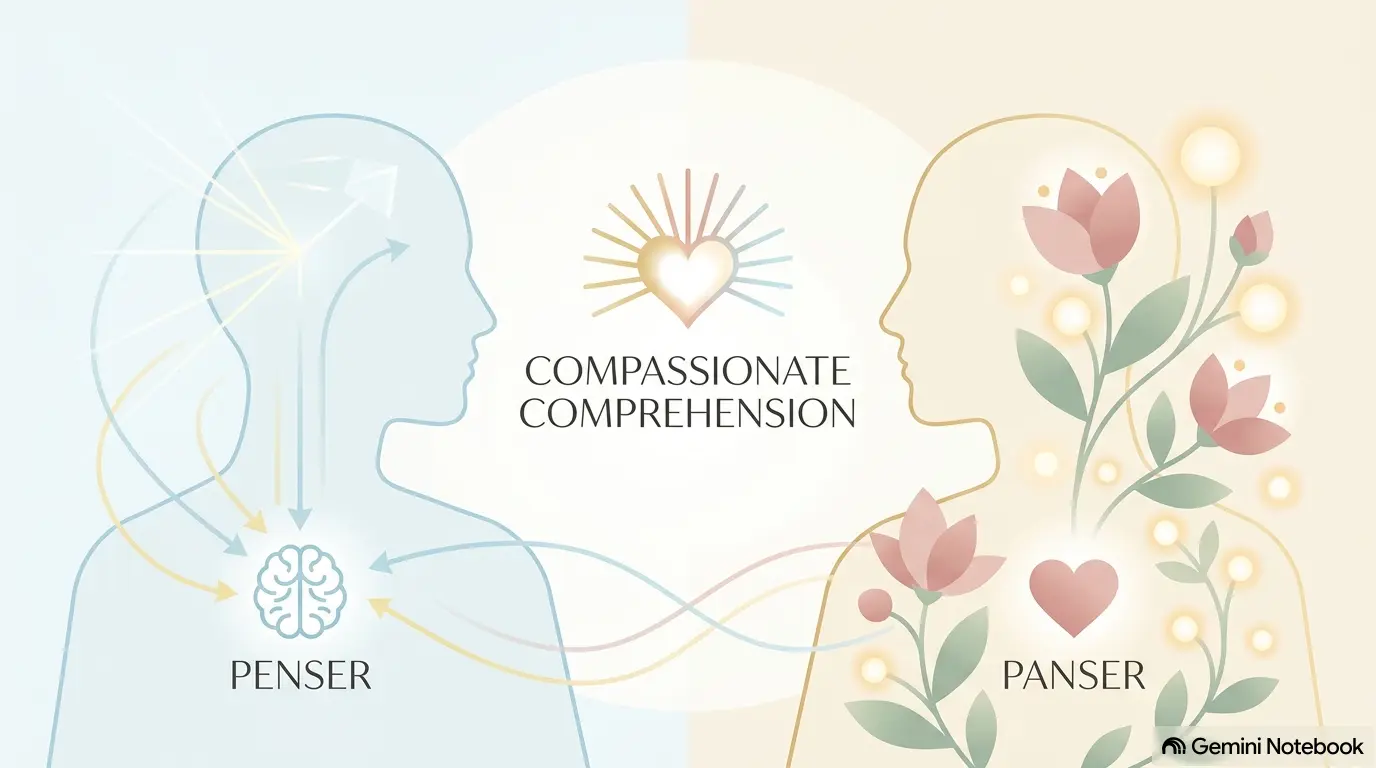
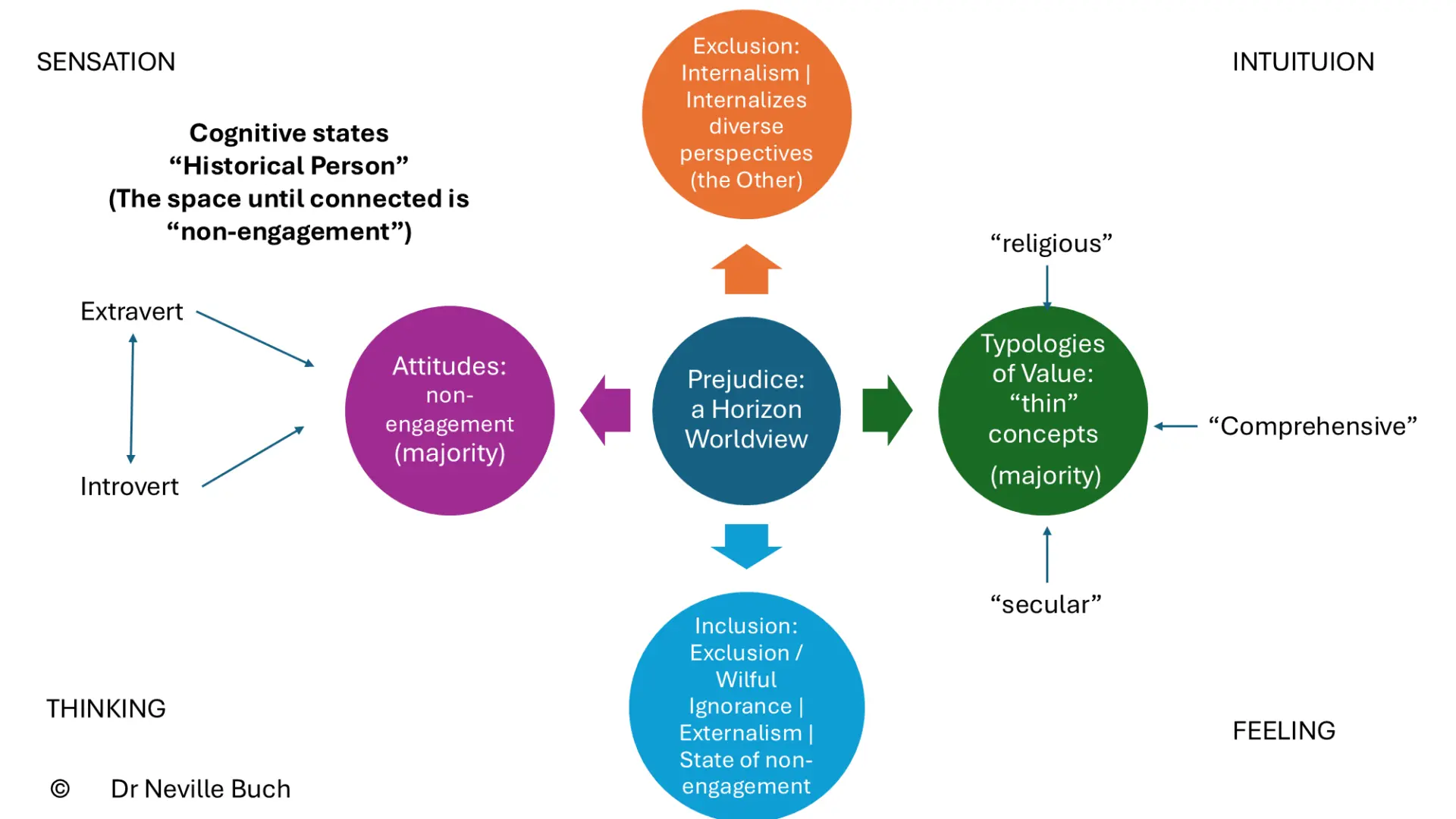
The restoration of material history requires “panser”—an approach to thinking characterized as “caring” or “sympathy.” In the DoC framework, this is connected to “William’s sympathy” and the pursuit of Aristotelian flourishing ( eudaimonia ), where the measure of value is its contribution to the human centre (Buch 2025, p. 2; Buch 2026, p. 3). This is operationalized through “inclusion,” defined as the internalizing of the “Other” through empathy and Socratic reflection (Buch 2026, p. 3).Inclusion facilitates a “Fusion of Horizons” (Gadamer/Buch), where knowledge is synthesized from the experiences of many to achieve mutual understanding (Buch 2026, p. 4). This is essential for sites like Barrambin, where Aboriginal Cultural Heritage is a living system threatened by stadium construction (Save Victoria Park 2026, p. 2). By internalizing the external, the heritage of the “Other” becomes a component of our own internal responsibility. The following illustration contrasts the cognitive states within the DoC model:
‘(Based on the DoC model; Buch 2025, p. 2; Buch 2026, p. 3; Source Image 16)
4. The Proactive “Who”: Why Material History is Important When Better Understood
The ultimate goal of the Dynamic of Cognition is the restoration of “Human Authorship.” This concept asserts the proactive “Who” of the person as the master of their own narrative, rather than a “passive conduit” for dominant bureaucratic systems (Buch 2026, p. 5). This necessitates a developmental ascent from a “Junior” mindset—characterized by unreflective execution—to a “Senior” state of social accountability (Buch 2026, p. 3).To achieve this restoration and filter out “manufactured myths” and “institutional bullshit,” society must apply the POLICE model:
- P hilosophically
- O ntology
- L ogic
- I ntersect
- C ompatibility
- E ducation (Buch 2024, p. 1; Buch 2026, p. 3).By utilizing this methodology, individuals move from “narrow material utility” toward “social accountability.” For a true “level playing field” to exist, we must adopt “Open Constitutionalism” (Habermas/Buch), which advocates for removing privileged statuses to allow for genuine dialogue (Buch 2024, p. 2). When material history is understood as an evolving “Horizon Worldview,” it ceases to be an object of specialized ignorance and becomes the foundation for a shared, proactive future where human agency is reclaimed.
Bibliography
Buch, N. (2024). Semantics and Strategies for the Level Playing Field . Symposium Paper. Dr Neville Buch ABN: 86703686642.
Buch, N. (2025). History of Cognition: Discussion Sheet . The Philosophy Café Brisbane Meetup. Dr Neville Buch ABN: 86703686642.
Buch, N. (2026). Architecture of the Horizon: Navigating the Dynamic of Cognition . Basic Social Psychology. Dr Neville Buch ABN: 86703686642.
Patterson, M.E. (2026). INTERLUDES, INSIGHTS AND REFLECTIONS: Review Essay and Material History .
Save Victoria Park (2026). 30 Reasons Why Victoria Park is Not Suitable for Permanent Olympics Venue . online Available at: https://www.savevictoriapark.com/resources/30-reasons Accessed 22 May 2026.
Featured Images: