
The “Exposing Hidden Surveillance and Government Secret” audio commentary:
Abstract
This essay examines The Washington Post Impact Report (Vol. I, September 2026) through the interdisciplinary lens of American Studies and political sociology[1]. By synthesizing investigative journalism with historiographical inquiry, the report serves both as an empirical archive of contemporary American governance and a primary text reflecting core methodologies of American Studies[4][5]. The essay analyses four central themes: (1) how the report mirrors the interdisciplinary, archival, and critique-oriented methodologies of American Studies[4]; (2) the crucial lessons it yields regarding American politics, particularly executive power, bureaucratic oversight, civil liberties, and legislative feedback loops[8]; (3) the socio-cultural dynamics it exposes, including the financialization of daily life, structural racial injustice, public health polarization, and human resilience[6]; and (4) why the report represents a vital intervention in modern American historiography and the defence of democratic institutions[2][14]. Ultimately, the analysis demonstrates how investigative journalism acts as a dynamic watchdog and an indispensable record of American democratic life[2][5].
1. How American Studies is Reflected in The Washington Post Impact Report
American Studies as an academic discipline relies on an interdisciplinary methodology—combining history, political science, sociology, cultural geography, and media critique—to interrogate the structures, ideals, and contradictions of American civilization. The Washington Post Impact Report directly reflects this approach by offering a multi-layered synthesis of institutional power and lived experience[2][15].
First, the report exemplifies the archival and historiographical method central to American Studies[4][6]. Rather than treating journalism merely as ephemeral daily news, the report engages in deep historical recovery[6][7]. A prominent example is the investigation into the House of Reformation for Colored Children in Maryland by reporters Katie Mettler, Michael Brice-Saddler, and Joy Sung (The Washington Post 2026, pp. 49–52)[6][7]. By examining hundreds of pages of 19th- and 20th-century death records and archival documents, the investigation uncovered a “secret cemetery” containing at least 230 dead Black boys who died between 1870 and 1939 (Mettler, Brice-Saddler and Sung 2025, p. 49)[6][7]. This work connects directly to American Studies’ tradition of unearthing buried subaltern histories and examining how institutional racism operates across generations[7][16].
Second, the report embodies the spatial and material culture analysis characteristic of American Studies[17][18]. Scholars in American Studies frequently evaluate how built environments and public spaces reflect political ideology[8][19]. The report details The Post’s tracking of presidential construction projects in Washington, D.C., including plans for a 250-foot Triumphal Arch, the fencing of Lafayette Square, and the demolition of the White House East Wing to construct a $600 million ballroom (The Washington Post 2026, pp. 17–24)[8]. Analysing these physical alterations reveals how architectural choices symbolise executive authority and contested democratic space[8][18].
Finally, the report bridges macro-institutional analysis with micro-sociological narratives[9][15]. Executive Editor Matt Murray notes that while impact can be quantified in data and lines on a graph, its true significance lies in how it lands in human lives (Murray 2026, p. 5)[4][15]. This dual focus on systemic power and personal narrative aligns with American Studies’ commitment to understanding how high-level policy dictates the textures of everyday American life[15][22].
2. Lessons on American Politics
The Washington Post Impact Report provides a raw, empirical diagnostic of American political institutions in 2026, illustrating key lessons regarding executive power, state surveillance, civil liberties, and legislative oversight[2].
A. Executive Power and Bureaucratic Integrity
A central political insight of the report is the persistent tension between executive overreach and bureaucratic accountability[9][23]. Whistleblower disclosures at the Social Security Administration (SSA) exposed how government efficiency initiatives (DOGE) gained unauthorized access to personal data for over 70 million Americans and detailed a scrapped plan to erroneously mark 2.7 million living citizens as deceased (Dwoskin, Kornfield and Rein 2026, pp. 39–42)[9]. Similarly, investigative reporting on defence operations revealed that during four weeks of military action in Iran, the U.S. military expended over 850 Tomahawk cruise missiles and suffered damage to 228 military sites—facts that directly contradicted official Pentagon disclosures (Copp et al. 2026, pp. 45–48)[23]. These cases demonstrate that modern executive agencies frequently operate under reduced transparency, making investigative press oversight an essential counterweight[9][28].
B. Surveillance, Law Enforcement, and Civil Liberties
The report underscores the expansion of technological surveillance and administrative state power into the daily lives of citizens[10][29]. An investigation by Drew Harwell, Douglas MacMillan, and Aaron Schaffer exposed how police officers misused Flock automated license plate readers across a 7,000-agency network for personal stalking and unauthorized tracking (Harwell, MacMillan and Schaffer 2026, pp. 8–11)[29]. Furthermore, reporting by John Woodrow Cox and Hannah Natanson revealed that the Department of Homeland Security (DHS) used administrative subpoenas to target private citizens—such as a retiree who emailed advocating for an asylum seeker—triggering Google account subpoenas and home visits (Cox and Natanson 2026, pp. 55–58)[10][33]. Politically, these revelations illustrate how automated surveillance and administrative tools can infringe upon First and Fourth Amendment protections when left unchecked[10][29].
C. The Journalistic-Legislative Feedback Loop
A critical political lesson of the report is that investigative journalism functions as a vital engine for formal legislative and judicial correction[2]. Public disclosures in The Post repeatedly led to concrete legislative actions:
- Del. Eleanor Holmes Norton introduced the No Fencing at Lafayette Square Act following reporting on White House barrier plans (Norton 2026, p. 19)[8][19].
- Rep. Pramila Jayapal introduced Orlin’s Law (H.R. 9745) after Maria Sacchetti exposed how an immigrant mother was deported without her toddler, who was subsequently killed (Sacchetti 2026, pp. 34–36)[22][35].
- Sen. Ron Wyden co-sponsored the bipartisan Subpoena Abuse Prevention Act directly in response to DHS subpoena reporting (Wyden 2026, p. 57)[10][34].
- Public records litigation brought by The Post established a binding legal precedent in Maryland requiring police departments to release officers’ names in use-of-force investigations (Jones, Mettler and Thompson 2026, pp. 36–37)[36][37].
3. Lessons on American Culture
Beyond formal politics, the report functions as a sociological barometer of contemporary American culture, illuminating corporate intrusion into daily life, deep racial inequities, shifting public trust, and enduring community resilience[6].
A. Commodification and Financialization of Everyday Life
The report details how commercial pressures have reshaped American childhood, family structures, and higher education[11][38]. Todd C. Frankel’s reporting on youth sports demonstrated that families now face costs ranging from $50 tryouts to $3,000–$8,000 annual playing fees per child, driven in part by private equity investment (Frankel 2026, pp. 29–30)[11][39]. In higher education, Todd Wallack’s investigation into online degree platforms (“degree hacking”) exposed how accelerated, competency-based programs allow students to click through college credits in days, reflecting a cultural shift toward viewing education primarily as an expedited credential rather than a developmental process (Wallack 2026, pp. 31–33)[38]. Additionally, Michelle Singletary’s personal finance columns highlighted systemic credit disparities, such as widows losing financial standing due to lacking independent credit histories (Singletary 2026, p. 28)[42][43].
B. Public Health, Polarization, and Institutional Distrust
Cultural shifts in post-pandemic American society are starkly illustrated in Caitlin Gilbert et al.’s year-long data investigation into childhood vaccination (Gilbert et al. 2025, pp. 42–44)[12][44]. The analysis showed that kindergarten measles vaccination rates plunged across more than 70 percent of U.S. counties, leaving classrooms without herd immunity amid growing vaccine skepticism (Gilbert et al. 2025, pp. 43–44)[12]. Sociologically, this reveals how health decisions have become deeply entwined with political identity, skepticism of expertise, and fragmented public trust[12][44].
C. Historic Injustice, Public Memory, and Human Resilience
Culture in the report is also framed through historical memory and community solidarity[13][16]. The investigation into the House of Reformation led to Governor Wes Moore establishing an independent state commission (Senate Bill 776) and Georgetown University founding the Forgotten Children Initiative to trace living descendants (Mettler, Brice-Saddler and Sung 2025, pp. 51–52)[16][46]. This demonstrates a growing cultural requirement for structural truth-telling and restorative justice[16][46]. Simultaneously, features in The Optimist series highlight everyday acts of human connection—such as a stroke survivor repairing abandoned bicycles or community support for aging citizens—offering a cultural counter-narrative of civic warmth amidst political conflict (Melnick, Page and Penman 2026, pp. 58–61)[13].
4. Why The Washington Post Impact Report is Important
The Washington Post Impact Report holds substantial significance for media historians, sociologists, political scientists, and the general public for several key reasons[2].
A. Empirical Value for Americanists and Social Scientists
For scholars of American Studies and sociology, the report serves as a curated primary dataset of institutional behaviour in mid-2020s America[2][15]. It aggregates complex investigative findings—spanning military operations, federal detentions, public health records, and corporate technology practices—into a single structured text[26]. It offers qualitative narrative context alongside quantitative data graphics, making it an invaluable pedagogical and research document[15].
B. Defending Democratic Accountability in an Era of Media Crisis
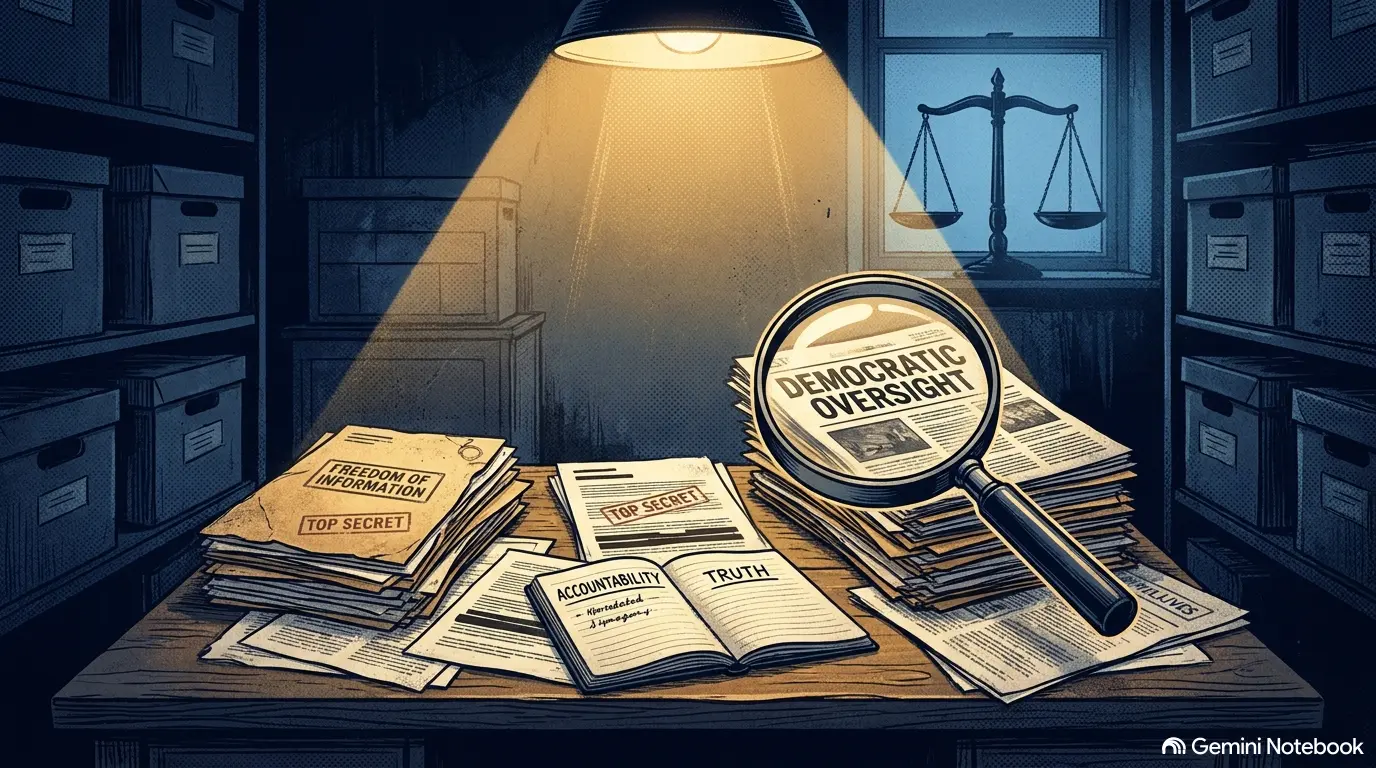
In his foreword, Executive Editor Matt Murray acknowledges that news organizations face severe industry upheaval and economic challenges (Murray 2026, p. 3)[2][14]. In this context, the report provides a rigorous defence of resource-intensive investigative journalism[2][14]. By demonstrating how Post reporting forced the Flock CEO to apologize and overhaul surveillance software (p. 11)[32], compelled the Coast Guard to re-classify swastikas as prohibited hate symbols (p. 54)[53], and prompted federal judges to strike down unlawful monument renamings (p. 22)[20], the document demonstrates that free press oversight remains an active safeguard of democratic governance[2][5].
C. Historiographical Bridge Between Ephemeral News and Institutional Record
Finally, the report bridges the gap between daily reporting and permanent history[4][5]. By placing current reporting alongside historical landmarks—such as Katharine Graham’s publishing leadership, Bob Woodward and Carl Bernstein’s Watergate reporting, and the Pentagon Papers litigation (The Washington Post 2026, pp. 6–7)[4][5]—the document frames ongoing reporting as part of a 150-year institutional duty to document power and preserve public memory[2][5].
Featured Image:


Neville Buch
Latest posts by Neville Buch (see all)
- The Unbound Mind: Independent Scholarship, Institutional Isolation, and the Restoration of Human Authorship – October 20, 2026
- The Road to Geelong: A Re-Narrativization of The Story of Resilience Part 1 – October 20, 2026
- The Human Being Above the Transaction and Why Markets Cannot Measure Human Worth – October 15, 2026