
KEY POINT FROM THE PERSPECTIVE OF A HISTORIAN
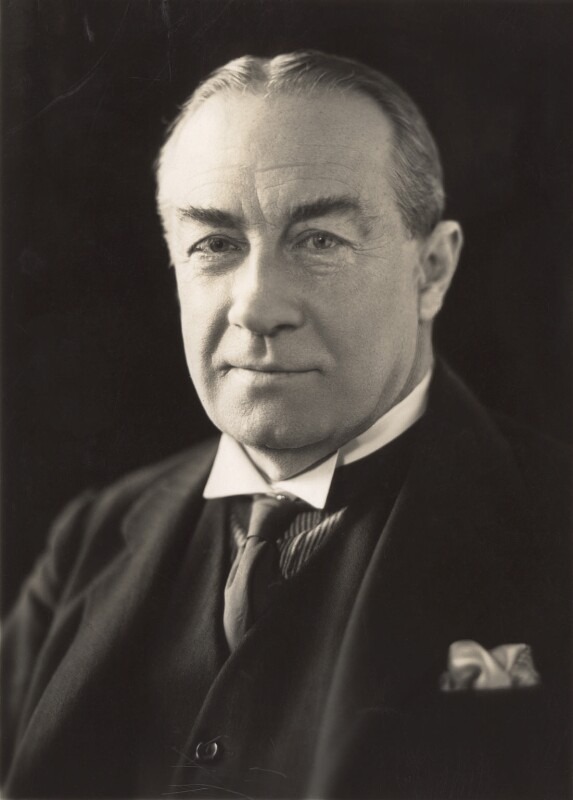
The United Kingdom Prime Minister in 1925, when the book was published on 14 May 1925 was the moderating conservative, Stanley Baldwin (in office 1924-1929, 1935-1937; MP for Bewdley; 1867-1947). This means he was in office during the reign of Edward VIII and his abdication, which Woolf could not foresee but her novel did see the decay of the establishment class which were the problems that lead to the shift in the politics of culture during the second and brief Edwardian period in modern times. Nevertheless, the significant events were read, now and then as, in foreign affairs during Baldwin’s second term: Statute of Westminster 1931, the Hoare–Laval Pact, the remilitarisation of the Rhineland, and the outbreak of the Spanish Civil War.
His family was prosperous, and owned the eponymous iron- and steel-making business that in later years became part of Richard Thomas and Baldwins. Baldwin married Lucy Ridsdale on 12 September 1892. Following the birth of a still-born son in January 1894, the couple had six surviving children:
- Lady Diana Lucy Baldwin (8 April 1895 – 21 May 1982)
- Lady Leonora Stanley Baldwin (10 July 1896 – 23 June 1989)
- Lady Pamela Margaret Baldwin (16 September 1897 – 14 August 1976)
- Major Oliver Ridsdale Baldwin, 2nd Earl Baldwin of Bewdley (1 March 1899 – 10 August 1958)
- Lady Esther Louisa (Betty) Baldwin (16 March 1902 – 22 June 1981)[13][14]
- Arthur Windham Baldwin, 3rd Earl Baldwin of Bewdley (22 March 1904 – 5 July 1976)
Baldwin’s youngest daughter, Lady Betty, was severely injured by shrapnel in March 1941 as a result of a bombing raid which destroyed the Café de Paris nightclub she was attending.[15] She required facial reconstruction surgery from the pioneering surgeon Archibald MacIndoe.
Thus, all you need to know about Stanley Baldwin is all you need to know about what Woolf is saying about the British establishment class in 1925.
MRS DALLOWAY [Wikipedia]
Mrs Dalloway is a novel by Virginia Woolf published on 14 May 1925.[1][2] It details a day in the life of Clarissa Dalloway, a fictional upper-class woman in post-First World War England.
The working title of Mrs Dalloway was The Hours. The novel originated from two short stories, “Mrs Dalloway in Bond Street” and the unfinished “The Prime Minister”. In autumn 1922, Woolf began to think of the “Mrs Dalloway” short story as the first chapter of her new novel,[2] and she completed the manuscript in late autumn 1924.[3]
The book describes Clarissa’s preparations for a party she will host in the evening and the ensuing party. With an interior perspective, the story travels forwards and backwards in time to construct an image of Clarissa’s life and the inter-war social structure. The novel addresses the nature of time in personal experience through multiple interwoven stories.
In October 2005, Mrs Dalloway was included on TIME Magazine‘s list of the 100 best English-language novels written since its first issue in 1923.[4]
On January 1, 2021, Mrs Dalloway entered the public domain in the United States.
Plot summary
Clarissa Dalloway goes around London in the morning, getting ready to host a party that evening. The nice day reminds her of her youth spent in the countryside in Bourton and makes her wonder about her choice of husband; she had married the reliable, successful, Richard Dalloway instead of the enigmatic and demanding Peter Walsh. She “had not the option” to be with a female romantic interest, Sally Seton. Peter reintroduces these conflicts by paying a visit that morning. Peter’s visit made it clear that he was still in love with Clarissa (despite mention of his new love interest, Daisy), and Clarissa expressed her desire for Peter to take her away. Clarissa additionally invites Peter to her party that evening.
Septimus Warren Smith, a First World War veteran suffering from deferred traumatic stress, spends his day in the park with his Italian-born wife Lucrezia, who experiences major loneliness as a result of her husband’s isolating illness. His going to war affected not only his ability to function, but Lucrezia’s as well. Septimus is now visited by frequent and indecipherable hallucinations, mostly concerning his dear friend Evans, whom he had unresolved unrequited sexual feelings towards, and who died in the war; otherwise Septimus seems to be unable to feel emotions for anyone, even his wife. Septimus’s relationship with his physicians, Sir William Bradshaw and Dr Holmes, is extremely poor. He fears for his safety in the presence of both doctors and often questions human nature after their interactions. As a result of his involuntary commitment to a psychiatric hospital he takes his own life by jumping out of a window.
Clarissa’s party in the evening is a slow success. It is attended by most of the characters she has met throughout the book, including Sally, Peter, and others from her past. Clarissa discovers that Sally, whom she has not seen for several decades, and who used to be a free-spirited tomboy, has become a respectable, matronly mother to five boys.
The novel ends with Clarissa hearing about Septimus’s suicide at the party and gradually coming to admire this stranger’s act, which she considers an effort to preserve the purity of his happiness. Clarissa also acknowledges her ability to relate to Septimus regardless of her limited knowledge of him.
Characters
Sir William Bradshaw
A famous psychiatrist to whom Septimus’ physician, Dr. Holmes, refers Septimus. Bradshaw notes that Septimus has had a complete nervous breakdown and suggests spending time in the country as a cure.
Clarissa Dalloway
The 51-year-old[6] protagonist of the novel. She is Richard’s wife and Elizabeth’s mother, and, while reminiscing about her past, spends the day organising a party that will be held that night. She is self-conscious about her role in London’s high society. The character was based on Kitty Lushington.[7]
Elizabeth Dalloway
Clarissa and Richard’s 17-year-old daughter. She is said to look “oriental” and has great composure. Compared to her mother, she takes great pleasure in politics and modern history, hoping to be either a doctor or farmer in the future. She would rather spend time in the country with her father than attend her mother’s party.
Richard Dalloway
Clarissa’s practical, “simple” husband, who feels disconnected from his wife. He is immersed in his work in government.
Miss Kilman
Miss Doris Kilman, originally “Kiehlman”, is Elizabeth’s schoolmistress for history and is a born-again Christian. She has a degree in history and during the Great War was dismissed from her teaching job because “Miss Dolby thought she would be happier with people who shared her views about the Germans”.[8] She has a German ancestry and wears an unattractive mackintosh coat because she is uninterested in dressing to please others. She dislikes Clarissa intensely but loves to spend time with Elizabeth.
Sally Seton
A love interest of Clarissa’s, with whom she shared a kiss, who is now married to Lord Rosseter and has five boys. Sally had a strained relationship with her family and spent substantial time with Clarissa’s family in her youth. She once could be described as feisty, as well as a youthful ragamuffin, although she has become more conventional with age.
Lucrezia “Rezia” Warren Smith
Septimus’ Italian wife. She is burdened by his mental illness and believes she is judged because of it. During most of the novel, she is homesick for her family and country, which she left to marry Septimus after the Armistice.
Septimus Warren Smith
A World War I veteran who suffers from “shell shock” and hallucinations of his deceased friend, Evans. Educated and decorated in the war, he is detached from society and believes himself to be unable to feel. He is married to Lucrezia, from whom he has grown distant.
Peter Walsh
An old friend of Clarissa’s who has failed at most of his ventures in life. In the past, Clarissa rejected his marriage proposal. Now he has returned to England from India and is one of Clarissa’s party guests. He plans to marry Daisy, a married woman in India, and has returned to try to arrange a divorce from his current wife.
Hugh Whitbread
A pompous friend of Clarissa’s, who holds an unspecified position in the British Royal household. Like Clarissa, he places great importance on his place in society. Although he believes he is an essential member of the British aristocracy, Lady Bruton, Clarissa, Richard, and Peter find him obnoxious.
THEMES
The novel has two main narrative lines involving two separate characters (Clarissa Dalloway and Septimus Smith); within each narrative there is a particular time and place in the past that the main characters keep returning to in their minds. For Clarissa, her charmed youth at Bourton keeps intruding into her thoughts on this day in London. For Septimus, his time as a soldier during the “Great War” keeps intruding, especially in the form of Evans, his fallen comrade. Other characters, such as Peter Walsh, also find themselves returning to moments in their past. [17]
Time and secular living
Time plays an integral role in the theme of faith and doubt in Mrs Dalloway. The overwhelming presence of the passing of time and the impending fate of death for each of the characters is felt throughout the novel. As Big Ben towers over the city of London and rings for each half-hour, characters cannot help but stop and notice the loss of life to time in regular intervals throughout the story. For Septimus, who has experienced the vicious war, the notion of death constantly floats in his mind as he continues to see his friend Evans talking of such things. The constant stream of consciousness perspective of the characters, especially Clarissa, serves as a distraction from this passing of time and the ultimate march towards death, but each character is constantly reminded of the inevitability of these facts. Further emphasizing the passage of time is the time-frame of the novel, which takes place in the course of a single day, like Joyce’s Ulysses.
The idea that there can be meaning in every detail of life, and a deeper appreciation of life as a result, is emphasized by the constant connection of characters to memories and to simple ideas and things. Clarissa even feels that her job (throwing her parties) is to offer “the gift” of connectedness to the inhabitants of London. Woolf’s writing style crosses the boundaries of the past, present and future, emphasizing her idea of time as a constant flow, connected only by some force (or divinity) within each person. An evident contrast can be found between the constant passing of time—symbolized by Big Ben—and the seemingly random crossings of time-lines in Woolf’s writing. Yet, although these crossings seem random, they only demonstrate the infinite possibilities that the world can offer once it is interconnected by the individual character of each person.
Mental illness
Septimus, as the shell-shocked war hero, operates as a pointed criticism of the treatment of mental illness and depression.[15] Woolf criticises medical discourse through Septimus’ decline and suicide; his doctors make snap judgments about his condition, talk to him mainly through his wife, and dismiss his urgent confessions before he can make them. Rezia remarks that Septimus “was not ill. Dr Holmes said there was nothing the matter with him.”[18]
Woolf goes beyond commenting on the treatment of mental illness. Using the characters of Clarissa and Rezia, she makes the argument that people can only interpret Septimus’ shell shock according to their cultural norms.[19] Throughout the course of the novel Clarissa does not meet Septimus. Clarissa’s reality is vastly different from that of Septimus; his presence in London is unknown to Clarissa until his death becomes the subject of idle chatter at her party. By never having these characters meet, Woolf is suggesting that mental illness can be contained to the individuals who suffer from it without others, who remain unaffected, ever having to witness it.[20] This allows Woolf to weave her criticism of the treatment of the mentally ill with her larger argument, which is the criticism of society’s class structure. Her use of Septimus as the stereotypically traumatised veteran is her way of showing that there were still reminders of the First World War in London in 1923.[19] These ripples affect Mrs. Dalloway and readers spanning generations. Shell shock, or post-traumatic stress disorder, is an important addition to the early 20th century canon of post-war British literature.[21]
There are similarities in Septimus’ condition to Woolf’s struggles with bipolar disorder. Both hallucinate that birds sing in Greek, and Woolf once attempted to throw herself out of a window as Septimus does.[15] Woolf had also been treated for her condition at various asylums, from which her antipathy towards doctors developed. Woolf committed suicide by drowning, sixteen years after the publication of Mrs Dalloway.[22]
Woolf’s original plan for her novel called for Clarissa to kill herself during her party. In this original version, Septimus (whom Woolf called Mrs. Dalloway’s “double”) did not appear at all.[12]
Existential issues
When Peter Walsh sees a girl on the street and stalks her for half an hour, he notes that his relationship to the girl was “made up, as one makes up the better part of life.” By focusing on characters’ thoughts and perceptions, Woolf emphasizes the significance of private thoughts on existential crisis rather than concrete events in a person’s life. Most of the plot in Mrs Dalloway consists of realizations that the characters subjectively make.[15]
Clarissa Dalloway is depicted as a woman who appreciates life. Her love of party-throwing comes from a desire to bring people together and create happy moments. Her charm, according to Peter Walsh, who loves her, is a sense of joie de vivre, always summarized by the sentence: “There she was.” She interprets Septimus Smith’s death as an act of embracing life and her mood remains light, even though she hears about it in the midst of the party. [citation needed]
Feminism
As a commentary on inter-war society, Clarissa’s character highlights the role of women as the proverbial “Angel in the House” and embodies sexual and economic repression and the narcissism of bourgeois women who have never known the hunger and insecurity of working women. She keeps up with and even embraces the social expectations of the wife of a patrician politician, but she is still able to express herself and find distinction in the parties she throws.[15]
Her old friend Sally Seton, whom Clarissa admires dearly, is remembered as a great independent woman – she smoked cigars, once ran down a corridor naked to fetch her sponge-bag, and made bold, unladylike statements to get a reaction from people.[15] When Clarissa meets her in the present day, Sally turns out to be a perfect housewife, having accepted her lot as a rich woman (“Yes, I have ten thousand a year”-whether before the tax was paid, or after, she couldn’t remember…), married, and given birth to five sons.
Homosexuality
Clarissa Dalloway felt a strong bond to Sally Seton at Bourton, and those feelings seem to extend beyond friendship. Thirty-four years later, Clarissa still considers the kiss they shared to be the “most exquisite” moment of her life, and she remembers feeling about Sally “as men feel.”[23] Clarissa even goes so far as to compare her feelings to those that Shakespeare’s character Othello feels for Desdemona—and when she looks back and ponders those emotions, the narration remarks, “But this question of love (she thought, putting her coat away), this falling in love with women. Take Sally Seton; her relation in the old days with Sally Seton. Had not that, after all, been love?” [24] Clarissa then recalls Sally’s visit and how others seemed “indifferent” to Sally’s presence, and she thinks to herself, “But nothing is so strange when one is in love (and what was this except being in love?) as the complete indifference of other people.”[24]
Clarissa also recalls Sally’s visit—specifically the experience of seeing Sally at dinner—as “the most happy” moment of her life.[24] Nevertheless, scholar Kate Haffey observes that some critics have attempted to gloss over the narrative’s erotic qualities and reframe Clarissa and Sally’s early relationship as a fanciful yet ultimately platonic phase of heterosexual female development: “Despite the quite sexual nature of Clarissa’s descriptions of her affections for women, her feelings for Sally are most often constructed as representing a period of girlhood innocence that is sharply contrasted with the adult self […] When this love is not described in terms of its ‘innocence,’ it is positioned as part of that ‘unruly’ phase of adolescence, a period incompatible with female maturity.”[25] Yet in the novel itself, memories of the kiss are rendered in passionate language (Clarissa compares the kiss to “a diamond, something infinitely precious”),[24] and this moment of the past drifts back powerfully into Clarissa’s present, creating a sense of timelessness. The kiss thus underlines the novel’s theme of temporality, as the experience is a moment that seems to stand outside or suspend ordinary time.[26]
Similarly, Septimus is haunted by the image of his dear friend and commanding officer, Evans, who is described as being “undemonstrative in the company of women.”[27] The narrator describes Septimus and Evans behaving together like “two dogs playing on a hearth-rug” who, inseparable, “had to be together, share with each other, fight with each other, quarrel with each other….”[27] Jean E. Kennard notes that the word “share” could easily be read in a Forsteran manner, perhaps as in Forster’s Maurice; “The word ‘share’ […] was often used in this period to describe sexual relations between men.”[28] Kennard also notes Septimus’ “increasing revulsion at the idea of heterosexual sex,” abstaining from sex with Rezia and feeling that “the business of copulation was filth to him before the end.”[29]
MRS. DALLOWAY MAPPING PROJECT
https://mrsdallowaymappingproject.weebly.com/
The goal of this project is essentially to clarify the occasionally confusing novel Mrs. Dalloway as well as to point out some interesting aspects of the work that are not usually considered in its discussion. Spread over the website is a series of interactive, annotated maps of London that serve as a guide to the novel. The maps show the paths the main characters follow over the course of the novel and are linked to analyses of the text organized by event, location, and time. For a more elaborate reflection on the purpose of this project, see the Purpose tab above.
How to use this website.
Click the character names at the top of the page to navigate through this website.
Each page has an interactive map that traces the path of said character(s) throughout the day along with explanations and analyses of that character’s interactions throughout the day. When you click on the flagged points on the map, you will see a short description of the event that occurs there. Analyses are organized by event below the map.
The map below is an overall map encompassing each character’s individual map. The dots represent a character’s start point, and the lines represent his or her path taken over the course of the day. Mrs. Dalloway is represented with red, Peter with blue, and Septimus and Rezia with green.
CLARISSA DALLOWAY’S ROUTE
Early Morning to 11:00 AM
St. James Park
- Event: Clarissa and Hugh Whitbread meet
Location:Near the entrance of St. James Park (pg. 5)
Interaction: The meeting between Hugh Whitbread and Clarissa moves the narrative to thoughts about Clarissa’s past and Hugh’s role in it.
Analysis: Clarissa and Hugh have known each other for many years, and therefore, they share a common history. This particular interaction causes Clarissa to think about her past relationship with Peter Walsh, a man that she refused to marry, and how Peter and her husband Richard both dislike Hugh.
Flower Shop
- Event: Miss Pym approaches Clarissa in Mulberry’s, the flower shop
Location:Mulberry’s (pg. 12)
Interaction: Miss Pym assists Clarissa with her purchase.
Analysis: As Miss Pym approaches Clarrissa to greet her, Clarissa notes that Miss Pym’s red hands look “as if they had been stood in cold water with the flowers” (Woolf 12). The mention of flowers leads her to note the variety of flowers and she begins to feel calmed. Noting how Miss Pym half closes and opens her eyes as she takes in the aroma, Clarissa again begins to detail the beauty of the flowers and feels content. Thus observations of Miss Pym lead to observations of the flowers, which then incite positive emotions in Clarissa.
The Motor Car
- Event: The Motor Car
Location:Mulberry’s shop window (pg. 14)
Interaction: The Motor car acts as a shift between the mind of Clarissa Dalloway and Septimus, who both witness the event and form different opinions about who and what the car is about.
Analysis: Clarissa wonders about the identity of the passenger in the motor car and believes the car may be the Queen’s. The lustre of the footman’s discs reminds her of the candelabras and stars on that night in Buckingham Palace. She thinks of Hugh Whitbread and the party she hosted.
11:00 AM to 11:30 AM
The Dalloway Home
- Event: Peter visits Clarissa at her home
Location:The Dalloway Home (pg. 39)
Interaction:During Peter’s visit, the narrative jumps between Clarissa and Peter’s thoughts about each other, their past, and their present state.
Analysis: The surprise visit from Peter arouses doubts in both Peter and Clarissa and forces both of them to face their failures in life. Peter never reached the success that he and Clarissa once believed he would. Instead, he is unemployed, without children, and now without a wife. Clarissa settled for the safe route. She married Richard because he was safe and gave her the security and independence that she wanted. Their visit also causes them to consider the path their lives would have taken had Clarissa agreed to marry Peter. They begin to doubt whether they made the right choices in their youth, whether they made the right decisions during their defining moments.
1:30 PM to 3:00 PM
Roses from Richard Dalloway
- Event: Richard brings Clarissa flowers
Location:The Dalloway Home (pg. 113)
Interaction: The narrative shifts between the thoughts of Richard Dalloway and Clarissa.
Analysis: Richard is worried throughout the conversation that Clarissa does not understand Richard’s love for her and that Clarissa still loves Peter. Richard thinks, “Happiness is this…” (116) as he talks to Clarissa and holds her hand. Richard mentions that Hugh was at lunch and Clarissa thinks that Hugh has become “an intolerable ass” (116). Her thoughts of Hugh cause her to think of Peter before he left for India. She believes she might have married Peter “just as he always was” (116). Clarissa’s bickering on having to invite dull women to her parties leads Richard to wonder why she cares so much about these parties. As Clarissa receives her flowers, all of her concerns of the present day flood her mind, and her thoughts concentrate little on the present moment. These concerns include Peter and his love life, Miss Kilman, her preparations for the party, and having received no invitation for lunch from Lady Bruton. She repeatedly thinks about the beauty of her roses. Richard’s departure sparks a long train of thought in Clarissa. Her train of thought concerns her interest in flowers rather than Richard’s Committee about the Armenians and also concerns her sudden unhappiness are prominent in her mind.
Early Night to 3:00 AM
Mrs. Dalloway’s Party
- Event: Mrs. Dalloway’s Party
Location: The Dalloway Home (pg. 163)Interaction:Peter inwardly criticizes Clarissa for her “effusive, insincere” greetings (163) and Clarissa notices Peter’s criticizing glances.
Analysis:Peter begins to think that he should not have come to the party but rather stayed home, for he feels out of place and uncomfortable in this situation. Clarissa has feelings of uncertainty concerning the party. She thinks her party may be a complete failure and feels Peter’s criticizing eyes upon her from the corner of the room. She wonders why she threw parties and believes Peter is criticizing her. She realizes that Peter “made her see herself” (164). - Interaction: The fluttering yellow curtain acts as a shift between Clarissa and Ellie Henderson’s thoughts.
Analysis: Clarissa stresses the importance of her party’s success and she expresses her disappointment that guests bunched in the corner like Ellie Henderson are contributing to her party’s failure. The yellow curtain is symbolic of the failure for her guests to connect and communicate. As with Peter, the interaction between Clarissa and Ellie lead to Ellie’s feelings of comfortability at the party and uncertainty that she belongs. Ellie’s chills from the open window with fluttering yellow curtains leads her to think of the girls and their bare shoulders. Her meagre lifestyle in relation to these girls makes her feel timid. She feels “disqualified” as a guest at such a lavish party and tries to convince herself that Clarissa had reason to invite her and that she enjoys Ellie’s presence (165). - Interaction: Sally excitedly tells Clarissa, “I have five enormous boys” (167).
Analysis: Sally’s proclamation leads Clarissa to remember that Sally has always had “the simplest egotism;” meaning that Sally always tried to be the center of attention (167). She flashes back to past memories of Sally and feels pleasure at the thought. Clarissa is happy to find that Sally has not changed. Sally proves to Clarissa that the past and its pleasures are not all history. These pleasures can be re-kindled because they live on through each person. - Interaction: The Prime Minister’s presence in the party cause POV to shift from Clarissa to Peter and then back to Clarissa
Analysis: Peter comments that the Prime Minister looks ordinary and that nobody notices him as royalty no matter how hard he tries to assert his status. He proclaims his disgust with the “snobbery of the English” (168). Seeing Clarissa walking with the Prime Minister, Peter is impressed that Clarissa still has that gift “to be; to exist” and describes Clarissa in awe (170). He must tell himself that he has moved on from her and no longer loves her so as to stop thinking about her. Then, POV shifts to Clarissa who is brooding on how she feels “the intoxication of the moment” having all the guests’ eyes upon her (170). She admits that seeing Peter marvelling at her brilliance does not produce the same happy feelings in her as such envy used to. - Interaction: Clarissa’s comments to Lady Bruton spark thoughts in Lady Bruton
Analysis: When Clarissa states that she is “perfectly well”, Lady Bruton is reminded of her detest of “illness in the wives of politicians” (175). She points out Peter Walsh’s presence at the party because she has little to say to Clarissa. She remarks that she and Clarissa have nothing in common. She mentions that Richard may have been better marrying “a woman with less charm” who could better help him with his career (175).Interaction: Clarissa overhears the conversation and the POV shifts to Clarissa.
Analysis: Sally’s laugh causes Clarissa to think of a time when Sally’s voice had the “ravishing richness” that it now lacks (177). A number of memories of Sally flood Clarissa’s mind. She sees Peter and Sally sit down to talk with each other and thinks about all she has shared of herself with the two. She reflects that Peter and Sally will always share a part in her past.Interaction: Lady Bradshaw mentions Septimus’ suicide, and Clarissa begins to reflect on that point.
Analysis: At Lady Bradshaw’s mentioning of death, she wonders why such a detail would be announced at her party and why the young man would kill himself. She begins to have feelings of indecency knowing that a young man was in distress as she enjoyed the frivolities of her life. She even refers to Septimus’ death as “her disaster – her disgrace” (181). She begins to define death and determine its significance to herself. She blames Richard for providing her with happiness and a lavish lifestyle. - Interaction: The old lady’s actions prompt thoughts in Clarissa.
Analysis: As the old lady turns out the lights, Clarissa is reminded of the words, “Fear no more the heat of the sun” (182). Thoughts of the suicidal young man come back to her. She feels glad that the man has thrown his life away. The young man has let Clarissa “feel the beauty…feel the fun” (182) for she no longer fears the heat of the sun. Clarissa convinces herself that she must go back to the party.
Featured Image: Stanley Baldwin (1867-1947) in 1932.


Neville Buch
Latest posts by Neville Buch (see all)
- Overcoming the Cynicism of Dismissal: Critical Thinking, and Contributory Economics – September 21, 2026
- Agency, Cultural Construction, and Synoptic Vision: On Matt Patterson’s Comprehensive Examination in Sociological Theory (2009) – September 20, 2026
- Human Existence, Existential Angst, and the Protestant Worldview: An Essay on Buch’s Existential Thesis – September 20, 2026