
22 December 2025
Dr Neville Buch (ABN 86703686642)
Scholar, Principal Researcher, Team Leader,
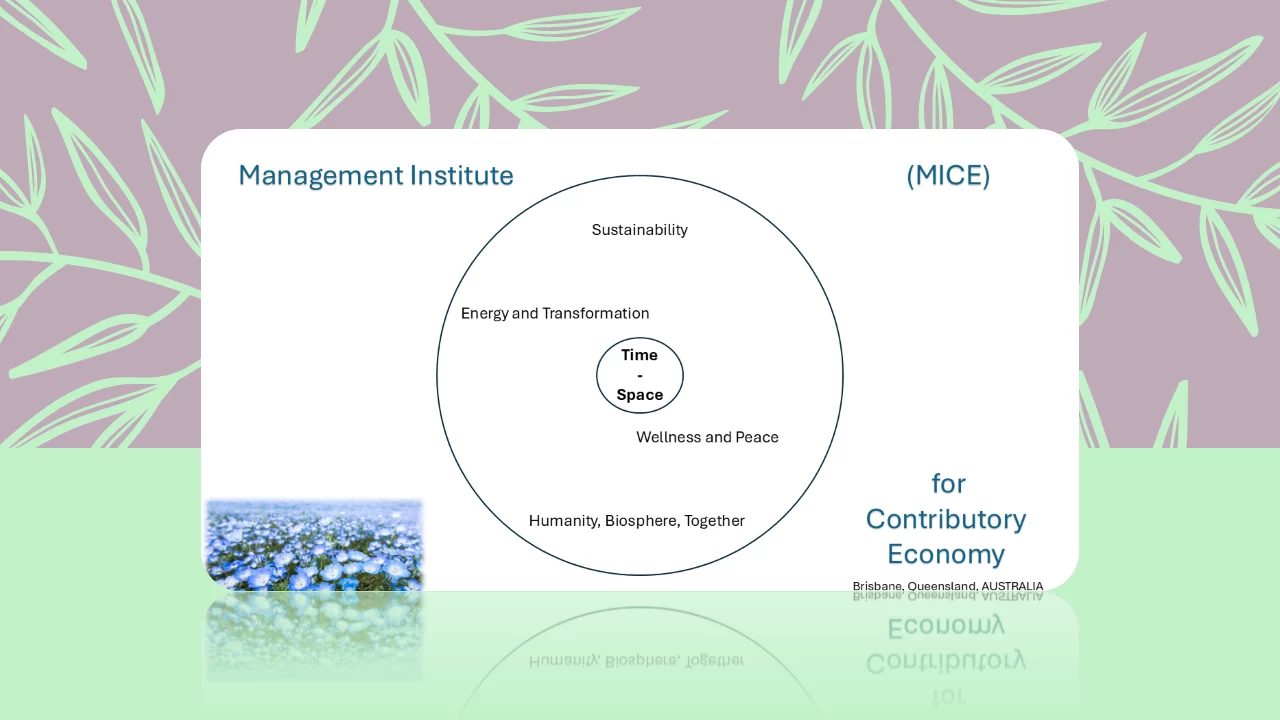
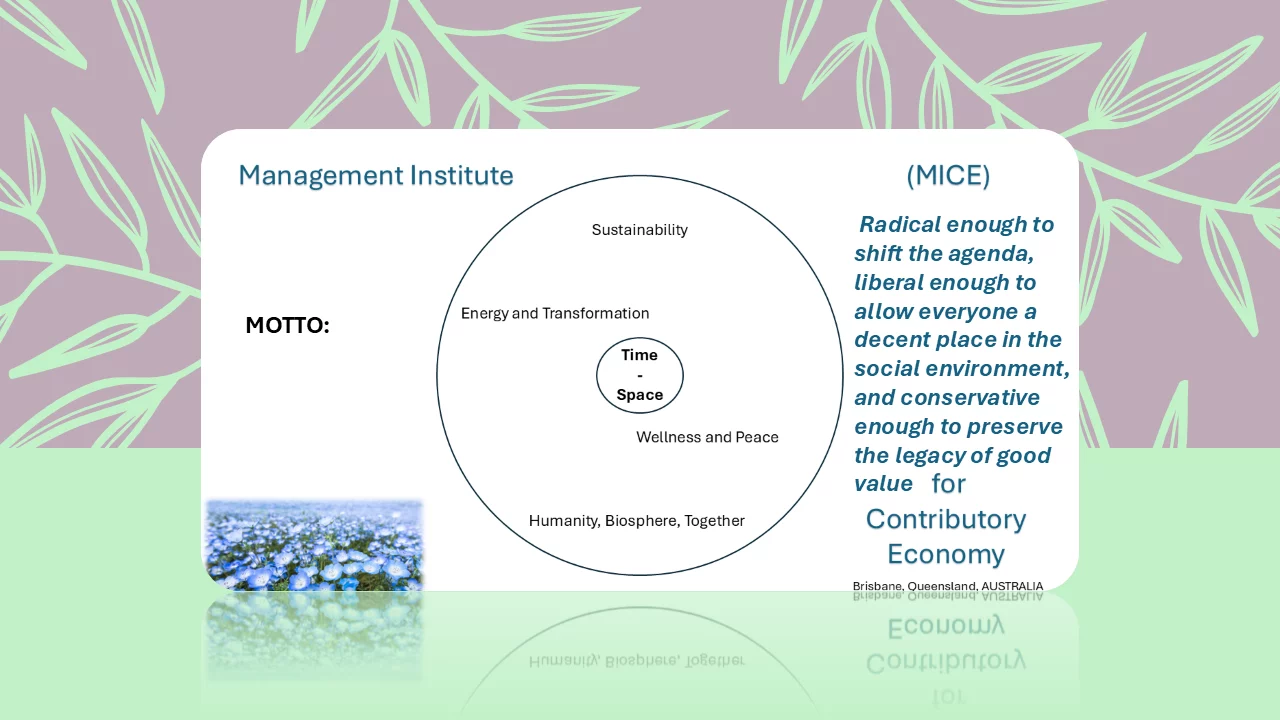
Management Institute for Contributory Economy
Business Office
18 Callendar Street, Sunnybank Hills 4109
AUSTRALIA
cc. Drs. Michael Macklin and Neil Peach, Directors, Management Institute for Contributory Economy
Dear friends,
I published a series of papers which identified the problems of the Queensland education system, and a suite of solutions which can address the problems; they are problems of thinking.
I have a message that must be acknowledged. And better that it is engaged in. In essence, Dr. Buch’s practice offers a sophisticated form of consultancy, research, and education that links high-level global philosophical and cognitive theory directly to the local social, economic, and organizational imperatives. He explicitly states that his professional service should be paid for, instructing readers to “Contract him”.
Five Intention Prejudice and Global Thinking
Dr Neville Buch ABN: 86703686642
Abstract
https://www.academia.edu/145519708/Five_Intention_Prejudice_and_Global_Thinking_Series_1_Devotion
This paper investigates the concept of Devotion as a critical component within the Five Intentions framework—specifically the intention of the Self—and its role in navigating the Dynamic of Cognition (DoC). Traditionally viewed through the lens of religious piety or unreflective loyalty, Devotion is here redefined as a disciplined concept-practice aimed at Self-Improvement and Ethical Responsibility toward the Other. By synthesizing the vitalist impulses of Lebensphilosophie with the rigorous skepticism of Active Nihilism, the essay argues that authentic Devotion must transcend the “Junior” state of passive habit and ascend toward a “Senior” state of conscious individual self-realization. The inquiry further explores how Devotion functions as a psychological and moral “rudder,” allowing the historical person to construct a valuable life-world amidst the “Culture-History War” and the systemic pressures of technocratic instrumentalism. Finally, the paper posits that the highest form of Devotion is found in the “Universal Unfolding”—a commitment to a redeemed social condition where the welfare of the particular person is prioritized through the Intention of Love.
Five Intention Prejudice and Global Thinking Series. 1. Devotion
Abstract
https://www.academia.edu/145519883/Five_Intention_Prejudice_and_Global_Thinking_Series_2_Openness
This paper examines Openness—defined within the Five Intentions framework as “Transparency & Open Mindedness”—and its vital role as the functional expression of the Mind. In a world dominated by “identity thinking” and the “coldness of calculation,” authentic Openness is presented not as passive tolerance, but as a rigorous cognitive discipline required to navigate the Dynamic of Cognition (DoC). The essay explores the tension between the “Junior” mindset of narrow utility and the “Senior” ascent toward a comprehensive worldview, emphasizing that the Mind is a “bubble” that must be prepared to burst and reform in response to new information. By integrating the Jungian open framework of Sensation, Intuition, Thinking, and Feeling with the Habermasian ideal of pluralist deliberation, this inquiry demonstrates how Openness serves as a safeguard against ideological reductionism and the “techné mindset”. Ultimately, the paper argues that Openness is the prerequisite for “Universal Humanity,” allowing the historical person to move beyond parochial prejudices toward a “Universal Unfolding” of justice and truth.
Five Intention Prejudice and Global Thinking Series. 2. Openness
Abstract
https://www.academia.edu/145519932/Five_Intention_Prejudice_and_Global_Thinking_Series_3_Critical_Thinking
This paper explores the nature of Critical Thinking as the regulating force within the Five Intentions framework—specifically as the functional expression of Reason. Defined as the conscious application of logic to conclude truth from information, critical thinking is here conceptualized as an “extraversion” of the monk’s inner scrupulosity, transforming private doubt into a powerful tool for the construction of public knowledge. The inquiry situates critical thinking as a necessary defence against Limited Thinking, technocratic instrumentalism, and the “techné mindset” that reduces human life to measurable metrics. By integrating the via Negativa of the theological tradition with the Active Nihilism of Nietzsche and the Communicative Rationality of Habermas, the essay argues that authentic criticality requires a state of being permanently open to questioning and correction. Ultimately, the paper demonstrates that critical thinking is not a detached intellectual exercise but a moral imperative, providing the “panser” (cognitive shield) that anchors the historical person in a life of Aristotelian Flourishing and Love.
Five Intention Prejudice and Global Thinking Series. 3. Critical Thinking
Abstract
https://www.academia.edu/145519960/Five_Intention_Prejudice_and_Global_Thinking_Series_4_Comprehension
This paper investigates Comprehension as the essential cognitive pivot within the Five Intentions framework, situated at the critical juncture between the rational rigor of Reason (Critical Thinking) and the practical application of Utility (Minimising Harm). Defined as the act of seeking the “whole of the matter” and the systematic “filtering out of fallacies,” Comprehension is presented as the functional culmination of the Dynamic of Cognition (DoC). The inquiry argues that while Reason provides the logical tools for critique, it risks falling into “specialized ignorance” or the “techné mindset” if it is not grounded in the empirical reality of history and social context. Drawing on the urban history of Brisbane and the methodology of Cognition Histories, the essay demonstrates how Comprehension serves as a safeguard against the “coldness of calculation” that often dominates bureaucratic and technocratic systems. Ultimately, the paper posits that true Comprehension requires the adoption of Spiral Historiography—a non-linear model for learning from past intellectual errors—enabling the historical person to achieve a “Balanced and Comprehensive” worldview necessary for Aristotelian Flourishing.
Five Intention Prejudice and Global Thinking Series. 4. Comprehension
Abstract
https://www.academia.edu/145520227/Five_Intention_Prejudice_and_Global_Thinking_Series_5_Minimising_Harm
This paper examines the principle of Minimising Harm as the functional application of Utility within the Five Intentions framework (Self, Mind, Reason, Utility, and Love). Within the FTI-TPC curriculum, Minimising Harm is presented not as a mere avoidance of conflict, but as a rigorous ethical standard requiring the individual to move beyond egoism toward an understanding of their impact on the broader social environment. By synthesizing the utilitarian traditions of Bentham and Mill with the critical social theories of Habermas and Arendt, the essay argues that authentic harm reduction must resist the “coldness of calculation”—a technocratic mindset that reduces persons to manageable units or “cardiac events”. The inquiry explores the “Harm Principle” in relation to planned obsolescence, the precautionary principle in global sustainability, and the historical “path of least resistance” taken by municipal governance in Brisbane, which often resulted in unintended interference with marginalized voices. Ultimately, the paper posits that Minimising Harm finds its highest expression when tempered by the Intention of Love, acting as a cognitive “panser” (shield) that protects human dignity within the “Universal Unfolding”.
Five Intention Prejudice and Global Thinking Series. 5. Minimising Harm
Abstract
https://www.academia.edu/145520272/Five_Intention_Prejudice_and_Global_Thinking_Series_6_Mutuality
This paper explores the principle of Mutuality as the culminating expression of the Intention of Love and the Intention of the Self within the Five Intentions framework (Self, Mind, Reason, Utility, and Love). Defined within the FTI-TPC curriculum as the transition from an isolated, “Junior” state of consciousness to an integrated, “Senior” state of intersubjective awareness, Mutuality is presented as the vital antidote to the “coldness of calculation” and the “atomization of knowledge” that characterizes modern technocratic systems. By synthesizing the dialogic philosophy of Martin Buber, the communicative rationality of Jürgen Habermas, and the vitalist reciprocity of Lebensphilosophie, this essay argues that authentic human existence is not a solitary achievement but a “shared stream of consciousness”. The inquiry examines the role of reciprocal interaction in community building, the “Animal-Environment Mutuality” in evolutionary biology, and the ethical demand for Agape—a sacrificial love that creates the possibility of reciprocity. Ultimately, the paper posits that Mutuality is the operational engine of the “Universal Unfolding,” facilitating a redeemed social condition where the “I” finds its true meaning only in relation to the “Thou”.
Five Intention Prejudice and Global Thinking Series. 6. Mutuality
Abstract
https://www.academia.edu/145520330/Five_Intention_Prejudice_and_Global_Thinking_Series_7_Bringing_it_to_Unity
This paper serves as the theoretical culmination of the Five Intentions framework, exploring the systematic unification of Self, Mind, Reason, Utility, and Love as a singular, coherent project of human flourishing. Drawing on the Dynamic of Cognition (DoC) model, the essay argues that human existence is frequently fragmented by “identity thinking,” the “coldness of calculation,” and the systemic pressures of technocratic instrumentalism. To overcome this fragmentation, the framework posits a synthetic goal where the internal axis of the Self and Mind provides the seat of agency, Reason provides the procedural method for seeking truth, Utility establishes the ethical metric for public action, and Love (Caring) functions as the indispensable cognitive “panser” (shield) that protects the particularity of the person. By integrating these intentions, the individual ascends from the “Junior” mindset of narrow material utility toward a “Senior” state of individual self-realization. Ultimately, the paper demonstrates that this unity is realized in the “Universal Unfolding”—a state of conscious individual self-realization where the historical person can affirm the whole of their narrative with the triumphant declaration, “Thus I willed it.”
Five Intention Prejudice and Global Thinking Series. 7. Bringing it to Unity
List of Tags
- Brisbane
- Queensland
- Appearance
- Foolishness
- Truthfulness
- Value
- Focus
- Exclusion
- Inclusion
- Political Communication
- Thinking
- Cognition
- Bernard Williams
- Bernard Stiegler
- Nel Noddings
- Political Theory
- Paid Work
- Education
I, personally, as representing MICE, am now engaged with over 84,900 persons around the world, at the very least. My work has been read by 123,350 persons and more. My profile has been seen by 13,481 persons. Of the 8,223 readers, 3,705 are highly engaged, 448 are in my network, and there are 1,022 across my fields of learning (a few hours ago; a moving feast).



Neville Buch
Latest posts by Neville Buch (see all)
- From Augustine’s Pears to Academic Boycotts: Fundamental Sociological Change in Australian Cultural Relations – October 11, 2026
- Yes, I want Anger Expressed But Then Resolved – October 11, 2026
- Part 3:The Failure of an Educational Institution and How to Spiral Forward – October 10, 2026