
This essay presents a comprehensive analysis of contemporized sociology across its theoretical, methodological, and applied spectrums. In an era marked by rapid technological transformation, algorithmic governance, and institutional restructuring, contemporary sociology faces both critical vulnerabilities and unprecedented opportunities. This study examines four interconnected dimensions defining the modern discipline: first, how mapping belief and cognition has emerged as a fundamental priority to diagnose algorithmic denoetization, combat historical forgetfulness, and restore human authorship; second, how sociology serves as the primary hope for local communities, highlighted by the state of the discipline presented at the 2026 Australian Sociological Association (TASA) conference (23–27 November 2026) and its benchmark research performance; third, the distinct analytical and practical offerings sociologists bring to local communities, governmental bodies, and commercial enterprises; and fourth, the civilisational urgency of this message in preserving noodiversity, public trust, and Aristotelian flourishing ( eudaimonia ) against technocratic reductionism. Grounded in contemporary Australian and international scholarship, this paper demonstrates that sociology’s capacity to bridge micro-level human experience with macro-level institutional structures remains indispensable to 21st-century democratic life.
1. Introduction: Contemporized Sociology Across the Spectrum
Contemporary sociology stands at a pivotal historical threshold. Defined by the dynamic interaction between macro-institutional pressures and micro-level lived experiences, the discipline has expanded beyond traditional academic confines into a vital, multi-layered framework of societal analysis (Possamai-Inesedy & Gower 2026, p. iii). Contemporized sociology does not operate as a static catalog of empirical descriptions; rather, it functions as a diagnostic and emancipatory science capable of unmasking manufactured social realities, evaluating power structures, and guiding collective human agency (Buch 2026a, p. 19).
Across the contemporary intellectual spectrum, sociology spans pure theoretical inquiry, public policy intervention, historical geography, digital humanism, and applied corporate governance (Buch 2025, p. 107; Possamai-Inesedy & Gower 2026, p. 3). From classical distinctions between organic community ( Gemeinschaft ) and instrumental society ( Gesellschaft ) (Tönnies 2026, p. 225) to modern formulations of intersectional domination (Collins 2000, p. 23) and cognitive mapping (Buch 2026a, p. 8), sociologists illuminate how human subjects navigate complex structural matrices. By synthesizing these diverse traditions, contemporized sociology equips scholars, citizens, and institutions to confront the defining crises of the 21st century: digital automated control, socio-economic fragmentation, and the erosion of civic trust.
2. Point 1: Mapping Belief and Cognition as a Sociological Priority
In modern sociological theory, the mapping of belief systems, mental architectures, and cognitive processes has elevated from a specialized subfield to an overarching disciplinary priority (Buch 2026a, p. 7). This cognitive turn stems from the realization that contemporary social control operates not merely through formal regulation, but through the subtle manipulation of shared social imaginaries, cognitive habits, and ideological heuristics (Raban 1974, p. 120; Buch 2026d, p. 116).
2.1 The Dynamic of Cognition (DoC) and Structural Matrices
Central to this priority is the development of systemic frameworks that map human integration from unreflective habit toward conscious authorship. Dr. Neville Buch’s Dynamic of Cognition (DoC) framework and Matrix of Sociology demonstrate how cognitive processes intersect with institutional authority structures, Western archetypes, and modes of social action (Buch 2026a, p. 5). By categorizing social integration across four distinct systemic orders—the High System (State/Rational-Legal Authority), the Utopian Order (Church/Value-Rationality), the Mass System (Common Realm/Affectual Action), and the Basic Individual-Collective (University/Traditional Action)—the matrix provides a diagnostic tool to filter out institutional myths and artificial distortions (Buch 2026a, p. 8).
Systemic Order,Institutional Focus,Historical Catalyst (Prophet),Authority Structure (Weber),Primary Mode of Social Action,Integrated Cognitive Goal
Row 1: High System,The State,Niccolò Machiavelli,Rational-Legal Authority,Instrumental-Rational ( Zweckrational ),Human Authorship
Row 2: Utopian Order,The Church,Martin Luther,Traditional Authority,Value-Rational ( Wertrational ),Transcendence & Conscience
Row 3: Mass System,The Common,Girolamo Savonarola,Charismatic Authority (Unholy),Affectual / Emotional Action,Singularization
Row 4: Individual-Collective,The University,Desiderius Erasmus,Charismatic Authority (Holy),Traditional / Scholarly Action,Collective Memory
Table 1: Structural Alignment of Cognition and Authority in the Sociological Matrix (Source: Buch 2026a, p. 8).
By systematically mapping these intersections, sociology reveals how unreflective assumptions ( Prejudice ) can be transformed into reflective self-criticism and intersubjective mutuality ( Inclusion ) (Buch 2026a, p. 22). This structural mapping bridges C. Wright Mills’s concept of the “sociological imagination”—connecting personal troubles to public issues (Mills 1959, p. 42; Buch 2026a, p. 41)—with Patricia Hill Collins’s “Matrix of Domination,” which identifies how interlocking power dynamics shape human consciousness (Collins 2000, p. 24; Buch 2026a, p. 23).
2.2 Diagnosing Algorithmic Denoetization and Historical Forgetfulness
A primary impetus for prioritizing cognitive mapping is the threat of “denoetization”—the mechanical liquidation of human discernment and critical judgment by automated digital platforms and technocratic reductionism (Stiegler 2018, p. 124; Buch 2026d, p. 116). When municipal governance and market forces treat urban and social environments purely as “Hard Cities” composed of physical infrastructure, utility grids, and profit metrics, human subjects are reduced to passive nodes in an automated network (Raban 1974, p. 120; Buch 2026d, p. 120).
Cognition sociology counteracts this degradation by asserting the primacy of the “Soft City”—the mental architecture formed by memory, narrative, aspirational imaginaries, and relational care (Raban 1974, p. 120; Buch 2026d, p. 120). Through methodologies like Spiral Historiography , sociologists uncoil repetitive patterns of historical error and combat “Historical Forgetfulness,” ensuring that historical memory remains an active site of ethical critique (Buch 2026c, p. 115). Mapping belief and cognition thus equips individuals to reclaim their status as proactive authors of their shared social reality rather than passive conduits for algorithmic or hegemonic stimuli (Buch 2026g, p. 130).
3. Point 2: Sociology as the Great Hope for Local Communities and the 2026 TASA Horizon
As global socio-economic pressures intensify, sociology stands as a vital hope for local communities seeking resilience, self-determination, and democratic renewal. The essential role of the discipline is highlighted by the convening of The Australian Sociological Association (TASA) Conference next week (23–27 November 2026), alongside the comprehensive findings of the Mapping Sociology in Australia Report (Possamai-Inesedy & Gower 2026, p. iii; TASA 2026, p. 1).
3.1 Disciplinary Research Excellence and Sector Benchmarks
The 2026 TASA horizon brings into sharp relief a discipline characterized by exceptional academic quality paired with structural vulnerability. The national assessment conducted by TASA reveals that 100% of assessed Australian university sociology departments met or exceeded global research standards in the Australian Research Council’s (ARC) Excellence in Research for Australia (ERA) evaluation (Possamai-Inesedy & Gower 2026, p. iii; TASA 2026, p. 3). Sociology achieved the highest proportion of world-standard performance within the broader Studies in Human Society category, outperforming related fields such as political science, criminology, human geography, and anthropology (Possamai-Inesedy & Gower 2026, p. 138; TASA 2026, p. 188).
ERA Research Performance Thresholds (Studies in Human Society)
===================================================================
Sociology: [100% Met or Exceeded World Standard]
Political Science: [79% Met or Exceeded World Standard]
Criminology / Other: [75% Met or Exceeded World Standard]
===================================================================
Between 2002 and 2021, Australian sociology secured over $140 million in ARC public research investment, ranking 5th among 55 Humanities and Social Science (HaSS) disciplines (Possamai-Inesedy & Gower 2026, p. 166; TASA 2026, p. 189). Research specialisations across Australian institutions span nineteen distinct fields, led by Migration, Ethnicity & Multiculturalism, Health & Illness, Cultural Sociology, and Critical Indigenous Sociology (Possamai-Inesedy & Gower 2026, p. 158; TASA 2026, p. 188). Pioneering scholarship in Indigenous Data Sovereignty—led by Distinguished Professor Maggie Walter (Palawa) and colleagues—has established international paradigms that position Indigenous lifeworlds as foundational to sociological inquiry (Walter et al. 2023, p. 194; TASA 2026, p. 194).
3.2 Anchoring Local Communities: Digital Humanism and Non-Partisan Liberty
This discipline-wide excellence translates directly into community empowerment at the local level. In local settings, sociologists deploy digital humanism and spatial mapping to preserve community heritage against speculative development and top-down municipal reductionism. The Mapping Brisbane History (MBH) project, directed by Dr. Neville Buch, exemplifies how local studies are transformed from nostalgic folk history into rigorous social inquiry (Buch 2025, p. 107; Buch 2026c, p. 113). By spatializing over 1,000 historical sites across 67 Local Study Areas (LSAs), MBH establishes that local neighborhoods possess deep intellectual, spiritual, and civic roots that cannot be erased by commercial zoning or property speculation (Buch 2026d, p. 118; Buch 2026g, p. 128).
Furthermore, empirical sociologies of local governance—such as Yuzheng Wang’s examination of non-partisan municipal systems—demonstrate how local communities maintain political trust and democratic accountability when traditional party labels are absent (Wang 2026, p. 206). In non-partisan environments, accountability shifts away from distant party apparatuses onto local civic organizations, public records, and neighborhood debate (Wang 2026, p. 209). Sociological analysis reveals that local institutions function as Alexis de Tocqueville’s “schools of self-government,” where citizens learn the habits of direct deliberation and shared decision-making (Tocqueville 1835; Wang 2026, p. 213). By bridging global conceptual frameworks with local spatial particulars, sociology offers communities the theoretical and practical tools needed to resist institutional alienation and foster genuine local liberty (Buch 2025, p. 109; Wang 2026, p. 217).
4. Point 3: What Sociologists Offer Local Communities, Governmental Bodies, and Corporations
The modern sociologist possesses a versatile intellectual and methodological toolkit that yields direct value across three major sectors: local civil society, public governance, and private commercial enterprises (Possamai-Inesedy & Gower 2026, p. 139).
4.1 Offerings to Local Communities
Sociologists empower local communities by providing the conceptual frameworks and historical evidence necessary for social cohesion and collective self-determination (Buch 2026d, p. 117). Specifically, sociologists offer:
- Restorative Truth-Telling and Heritage Mapping : Unearthing suppressed Indigenous, labor, and community narratives to heal intellectual wounds and uncoil repetitive cycles of historical dispossession (Buch 2026c, p. 115).
- Soft City Stewardship : Formulating social imaginaries that prioritize relational care, local memory, and environmental wellbeing over speculative property exploitation (Raban 1974, p. 120; Buch 2026d, p. 120).
- Civic Infrastructure for Self-Governance : Equipping voluntary associations and neighborhood groups with qualitative and quantitative tools to audit municipal decisions and participate meaningfully in non-partisan local politics (Wang 2026, p. 213).
4.2 Offerings to Governmental Bodies and Policymakers
To public sector entities and government agencies, sociologists deliver rigorous, evidence-based policy evaluation and structural diagnostic tools:
- Policy Evaluation Beyond Market Metrics : Demonstrating the failure of reductive policy packages—such as the Morrison Government’s 2020 Job-Ready Graduates (JRG) fee restructuring, which doubled social science student fees without altering student field selection—and offering human-centered policy alternatives (Yong, Coelli & Kabatek 2023, p. 158; Possamai-Inesedy & Gower 2026, p. 140).
- Structural Auditing via the POLICE Framework : Deploying Philosophically Ontology Logic Intersect Compatibility Education (POLICE) audits to evaluate public governance models, ensuring state administration avoids technocratic retail politics and maintains public trust (Buch & Peach 2024, p. 127; Buch 2026d, p. 117).
- Indigenous Data Sovereignty and Health Equity : Providing ethical governance frameworks that respect community-owned data, address structural health disparities, and enhance multicultural social cohesion (Walter et al. 2021, p. 204; Possamai-Inesedy & Gower 2026, p. 138).
4.3 Offerings to Companies and Corporations
In commercial and enterprise contexts, sociologists provide essential strategic and organizational expertise that transcends conventional business models:
- Cultural Intelligence (CQ) and Intercultural Leadership : Applying socio-cultural intelligence frameworks to manage diverse global workforces, enhance leadership adaptability, and foster inclusive organizational cultures (Zivkovic 2025, p. 1).
- Organizational Diagnosis and Action Typologies : Analyzing corporate structures through Weberian action types—balancing instrumental efficiency ( Zweckrational ) with value-rational ethical commitments ( Wertrational )—to prevent toxic workplace bureaucratization and employee turnover (Weber 1978, p. 24; Buch 2026a, p. 28).
- Ethical AI Integration and Work Dynamics : Evaluating the impact of Generative AI and Large Language Models (LLMs) on labor patterns, organizational assessment, and skill transformation, ensuring technology enhances human agency rather than driving workplace alienation (Jauhiainen 2026, p. 1; Possamai-Inesedy & Gower 2026, p. 142).
- Service Discipline Transferable Skill Sets : Providing corporate decision-makers with advanced capabilities in quantitative statistics, qualitative interviewing, network analysis, and critical problem-solving (Possamai-Inesedy & Gower 2026, p. 139).
Sector, Primary Sociological Offering, Core Methodological Tool, Direct Practical Impact
Local Communities, Heritage mapping & restorative truth-telling, Spatial digital humanism & Local Study Areas (LSAs),Counteracts property speculation & preserves civic identity
Governmental Bodies, Evidence-based policy audit & data sovereignty, POLICE audits & structural equity evaluation, Exposes policy failures (e.g. JRG) & secures public trust
Companies & Corporations, Cultural intelligence & ethical technology integration, Action-type analysis & workforce impact assessment, Balances Zweckrational efficiency with ethical resilience
Table 2: Matrix of Sociological Offerings Across Public, Private, and Civil Sectors (Source: Possamai-Inesedy & Gower 2026; Buch 2026a; Zivkovic 2025).
5. Point 4: Why This Message is Important
The core message of contemporized sociology—that human authorship must remain the master of technical and bureaucratic systems—is of paramount civilisational importance (Buch 2026d, p. 117). At a time when technological automation, market financialization, and institutional contraction threaten to diminish human agency, sociology provides the mandatory intellectual ballast for democratic survival.
5.1 Restoring Human Authorship Against Technocratic Exploitation
Modern society stands at risk of falling into a state of artificial stupidity and civilisational regression, wherein complex administrative systems operate without ethical or philosophical oversight (Stiegler 2010, p. 124; Buch 2026e, p. 125). When governance is reduced to algorithmic optimization and market utility, the human subject is demoted to a passive node in an extractive network (Buch 2026c, p. 115).
Sociology’s central proposition asserts that the “who” (the self-conscious human being) must explicitly steer the “what” (the technical, legal, and economic apparatus) (Buch 2026a, p. 7; Buch 2026c, p. 115). By insisting that understanding history and society is “philosophy in practice,” sociology preserves noodiversity —the diversity of human thought, conscience, and cultural expression—against totalizing standardization and digital denoetization (Buch 2025, p. 107; Buch 2026d, p. 117).
5.2 Addressing Structural Discipline Vulnerabilities
This message is equally vital for the institutional health of higher education itself. Despite sociology’s world-class research performance, the discipline faces severe structural headwinds across Australian universities:
- The “Service Discipline” Paradox : While 63% of university focus group participants report sociology functioning as an essential service discipline—teaching core research methodologies and analytical frameworks to students in nursing, social work, education, law, and engineering—standalone sociology departments are increasingly merged into generic social science schools (Possamai-Inesedy & Gower 2026, p. 139; TASA 2026, p. 198).
- Gender Structural Barriers in Academic Leadership : Although women constitute the majority of sociology students and staff from Levels A through D, women hold only 35.8% of Level E (Full Professor) positions, exposing persistent structural barriers in academic career progression (Possamai-Inesedy & Gower 2026, p. 140; TASA 2026, p. 168).
- Funding Concentration and Discontinued Metrics : Over 60% of ARC sociology research funding is concentrated in the elite ‘Group of Eight’ (Go8) universities, creating structural inequities for regional and technology-focused institutions (Possamai-Inesedy & Gower 2026, p. 162; TASA 2026, p. 189). Furthermore, the discontinuation of the ERA assessment framework in 2023 has created a sector-wide data blindspot regarding discipline-level staffing and workforce trends (TASA 2026, p. 199).
Advocating for sociology as core intellectual infrastructure is therefore essential to prevent the erosion of standalone degree programs, ensure equitable research funding, and protect the discipline’s capacity to reproduce scholarly expertise (Possamai-Inesedy & Gower 2026, p. 175).
5.3 Fostering Contributory Economies and Aristotelian Flourishing
Ultimately, contemporized sociology points toward the realization of a Contributory Economy and Aristotelian flourishing ( eudaimonia ) (Buch 2026c, p. 115). By moving beyond extractive economic models toward non-extractive urban stewardship, contributory income schemes, and triadic governance, sociology aligns individual life trajectories with the broader public good (Stiegler 2018, p. 124; Buch 2026d, p. 117). Whether in metropolitan centers, regional cities, or First Nations territories, sociology provides the critical lens through which democratic societies translate personal troubles into shared public solutions, guaranteeing that human dignity remains the ultimate measure of progress (Mills 1959, p. 42; Possamai-Inesedy & Gower 2026, p. 182).
6. Conclusion: Reclaiming Human Authorship Across the Spectrum
Contemporized sociology across the spectrum represents far more than an academic field of study; it is an indispensable pillar of modern democratic life and civilisational resilience. By prioritizing the mapping of belief and cognition, sociology unmasks the subtle mechanisms of algorithmic control, symbolic misery, and historical forgetfulness, offering a clear pathway toward intellectual clarity and human authorship. As demonstrated by the national benchmark data featured at the 2026 TASA Conference, the discipline’s world-class research quality provides irreplaceable value to local communities, public sector governance, and private enterprise alike.
Whether guiding non-partisan municipal trust, establishing Indigenous data sovereignty, diagnosing policy failures, or fostering cultural intelligence in corporate leadership, sociologists translate complex empirical realities into actionable human wisdom. In an era threatened by technocratic reductionism and institutional alienation, the vital task of sociology remains clear: to ensure that human beings remain the proactive authors of their shared history, fostering a society grounded in truthfulness, intersubjective care, and enduring flourishing.
Full Bibliography
Academy of the Social Sciences in Australia, 2021. State of the Social Sciences 2021 . Canberra: Academy of the Social Sciences in Australia.
Arendt, H., 1958. The Human Condition . Chicago: University of Chicago Press.
Australian Research Council (ARC), 2019. State of Australian University Research 2018-19: Excellence in Research for Australia (ERA) Outcomes . Canberra: Commonwealth of Australia.
Australian Research Council (ARC), 2022. National Competitive Grants Program Dataset (2002–2021) . Canberra: Commonwealth of Australia.
Australian Universities Accord, 2024. Australian Universities Accord Final Report . Canberra: Australian Government Department of Education.
Buch, N., 2025. Mapping Brisbane for the World: A Digital Historiography of Cognition and Place . Brisbane: Management Institute for Contributory Economy (MICE).
Buch, N., 2026a. A Matrix of Sociology: A Synoptic Framework for Human Flourishing . Brisbane: Management Institute for Contributory Economy (MICE).
Buch, N., 2026b. Getting Under the Skin: Queensland History and Sociology . Brisbane: Management Institute for Contributory Economy (MICE).
Buch, N., 2026c. Mapping Brisbane History: Digital Humanism and the Historiography of Cognition . Brisbane: Management Institute for Contributory Economy (MICE).
Buch, N., 2026d. Re-Mapping the City of Intellect: Contributory Transformation of Urban and Regional Landscapes . Brisbane: Management Institute for Contributory Economy (MICE).
Buch, N., 2026e. Reforming 21st-Century Theology and Sociology: Basic Propositions . Brisbane: Management Institute for Contributory Economy (MICE).
Buch, N., 2026f. Sociology of Emotions and Affect Symposium: Epistemological Foundations . Brisbane: Management Institute for Contributory Economy (MICE).
Buch, N., 2026g. The New MBH Program: Local Study Areas and Digital Humanism . Brisbane: Management Institute for Contributory Economy (MICE).
Buch, N. & Peach, N., 2024. Philosophically Ontology Logic Intersect Compatibility Education (POLICE) Auditing Manual . Brisbane: Management Institute for Contributory Economy (MICE).
Burns, N. & Rajčan, L., 2021. Publish or perish elsewhere: Australian sociology doctoral publication destinations. Journal of Sociology , 57(4), pp. 845–863.
Collins, P.H., 2000. Black Feminist Thought: Knowledge, Consciousness, and the Politics of Empowerment . 2nd ed. New York: Routledge.
Collyer, F.M. & Williams Veazey, L., 2021. The state of Australian sociology: An empirical profile. Journal of Sociology , 57(3), pp. 517–538.
Habermas, J., 1979. Communication and the Evolution of Society . Trans. T. McCarthy. Boston: Beacon Press.
Jauhiainen, J.S., 2026. Generative AI and LLMs in Educational Assessment: Sociological and Pedagogical Implications . Research Monograph.
Mills, C.W., 1959. The Sociological Imagination . New York: Oxford University Press.
Possamai-Inesedy, A. & Gower, R., 2026. Mapping Sociology in Australia: Research Excellence, Service Teaching, and Strategic Challenges . The Australian Sociological Association (TASA) Report 2026. Sydney: TASA.
Raban, J., 1974. Soft City . London: Hamish Hamilton.
Rajčan, L. & Burns, N., 2024. Beyond institutional tiering: PhD publication quality and doctoral outcomes in Australian sociology. Higher Education Research & Development , 43(2), pp. 341–357.
Rajčan, L. & Burns, N., 2025. The institutional restructuring of Australian sociology: Departmental mergers, school reorganisations, and the fate of the discipline. Journal of Sociology , 61(1), pp. 112–131.
Stiegler, B., 2010. For a New Critique of Political Economy . Cambridge: Polity Press.
Stiegler, B., 2018. New Urban Engineering, New Urban Genius . Keynote Address, Shanghai, 22 November 2018.
The Australian Sociological Association (TASA), 2026. Mapping Sociology in Australia: Executive Summary & Disciplinary Indicators . Melbourne: TASA. Available online at: tasa.org.au/mapping_sociology_in_Australia Accessed 19 November 2026.
Tocqueville, A. de, 1835. Democracy in America . Trans. H. Reeve. London: Saunders and Otley.
Tönnies, F., 2026. Ferdinand Tönnies: Community (Gemeinschaft) and Society (Gesellschaft) in Sociological Categorization . Reference Synthesis.
Walter, M. & Andersen, C., 2013. Indigenous Statistics: A Quantitative Research Methodology . Walnut Creek: Left Coast Press.
Walter, M., 2016. Data Politics and Indigenous Representation in Australian Statistics . London: Routledge.
Walter, M., Kukutai, T., Carroll, S.R. & Rodriguez-Lonebear, D. eds., 2021. Indigenous Data Sovereignty and Policy . London: Routledge.
Walter, M., Kukutai, T., Gonzales, A.A. & Henry, R. eds., 2023. The Oxford Handbook of Indigenous Sociology . Oxford: Oxford University Press.
Wang, Y., 2026. Local liberty and the non-partisan state: Property, governance, and political trust in West Windsor Township. Oxford Journal of Student Scholarship , 13(1), pp. 206–224.
Weber, M., 1978. Economy and Society: An Outline of Interpretive Sociology . G. Roth & C. Wittich, eds. Berkeley: University of California Press.
Yong, J., Coelli, M. & Kabatek, J., 2023. Price responsiveness in higher education: Evaluating the impact of the Job-Ready Graduates fee restructuring. Economics of Education Review , 94, p. 102391.
Zivkovic, S., 2025. Leadership and Cultural Intelligence: Navigating Diversity in Organizational Structures . Research Monograph.
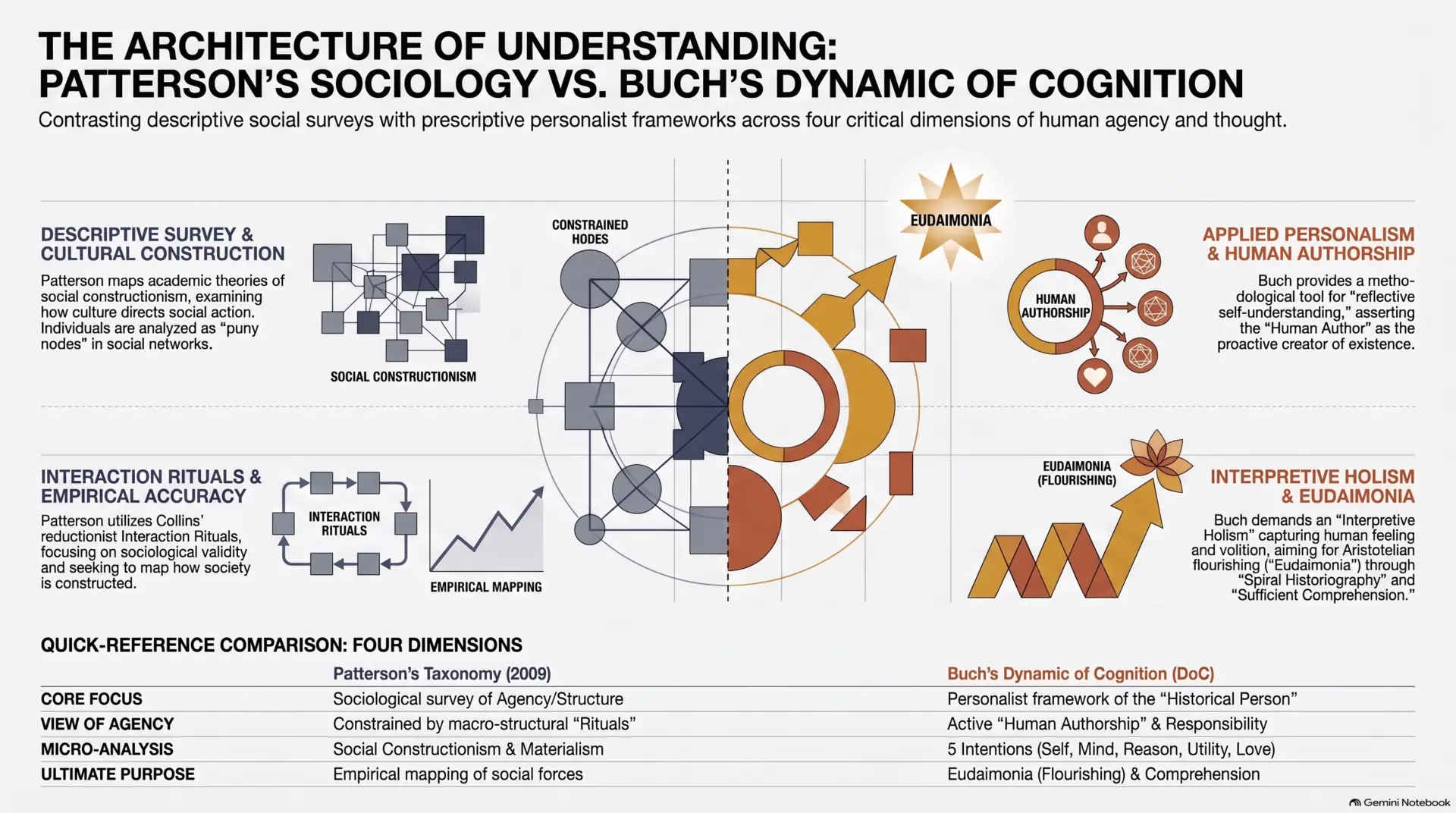
Featured Image: Comparative_Sociology_and_Cognition_Frameworks.


Neville Buch
Latest posts by Neville Buch (see all)
- Contemporized Sociology Across the Spectrum: Cognition, Community, and Human Authorship – November 20, 2026
- Buch, Neville. Arif Jameel (2026). The Architecture of Character – November 20, 2026
- Coding the Architecture of Silence: An Co-Scientist Academia.Edu Answer – November 19, 2026