
Abstract
This essay explores the deep conceptual and structural interconnections between human cognition, systemic organization, and corruption[1]. Moving beyond narrow legalistic definitions that reduce corruption to statutory bribery or administrative malfeasance, this analysis defines corruption as a fundamental state of cognitive and ethical decay—a regressive shift where human decision-making descends from the highest standards of reflective inquiry into selfish, self-protecting, and insular behaviour[1].
The capacity for corruption is shown to be dual in nature: operating both at the mundane level of personal moral choices and across complex socio-political and economic systems managed by human institutions and automated algorithms[4]. To counter this decay, the essay argues for the necessity of individuals of common goodness, faith, and intelligence who possess the moral clarity to look corrupted actors directly in the eye and diagnose their corruption as an internal pathology of personhood and character[6].
Furthermore, the essay explicitly addresses its own AI-mediated authorship: because human victims of systemic corruption frequently experience profound, overwhelming anger that threatens analytical balance, artificial intelligence—populated with verified human-generated evidence—serves as an objective, unclouded instrument for systemic synthesis[10][11].
Finally, the essay presents a synthesis of two complementary models as integrative solutions: Bi Sh’s Reduction and Systems Theory Model, which unifies microscopic precision with macroscopic holism, and Dr. Neville Buch’s Dynamic of Cognition (DoC) and POLICE frameworks, which provide a structured pathway from unreflective habit and institutional arrogance toward human authorship, communicative action, and planetary wisdom[12].
1. Rethinking Corruption: Epistemic Decay Beyond Legal Formalism
In contemporary public discourse, corruption is frequently defined through thin, legalistic frameworks—relegated to formal statutory violations, monetary bribery, or illegal embezzlement[3][5]. However, when evaluated through philosophical anthropology and cognitive sociology, corruption is revealed to be a far deeper phenomenon: it is a state of affairs in which ethical behaviour has decayed, and human decision-making has moved downward from the highest cognitive standards of truth-tracking and humanistic care into selfish, self-protecting regression[1].
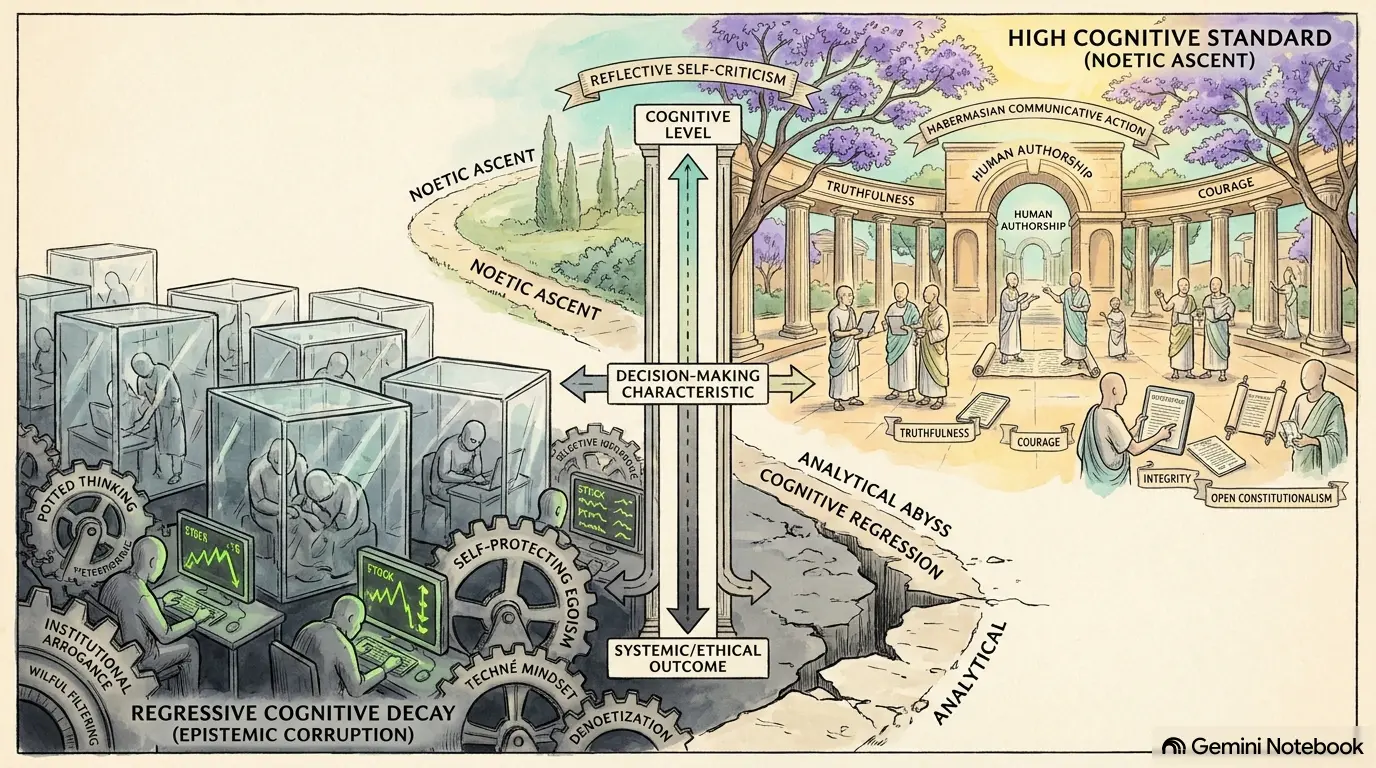
Within Dr. Neville Buch’s Dynamic of Cognition (DoC) framework, human cognition in institutional settings originates in an unexamined “prejudice”—the initial, “thrown” starting point of experience (Geworfenheit)[2][17]. When individuals or organizations succumb to dogmatism, their thinking degenerates into “potted thinking”: compressed, pre-packaged ideological formulas that prioritize internal group certainty over disconfirming empirical evidence[1]. When decision-makers experience moral or structural pressure, they engage in “wilful ignorance” (exclusion), actively filtering out disconfirming data to construct insular ideological silos[4].
This cognitive decay replaces the high standards of “thinking as caring” ( panser )—which demands motivational displacement, empathy, and active engagement with the concrete needs of the Other—with a cold, self-serving “techné mindset” (penser) focused exclusively on personal survival, institutional compliance, and managerial self-aggrandizement[20]. Decision-making thus collapses into what Buch terms the “Analytical Abyss” and “Specialized Ignorance,” where leaders insulate themselves from reality while producing “institutional bullshit” and manufactured myths to protect their status[1].
Crucially, the capacity for corruption operates across two distinct yet interconnected registers:
- The Mundane Personal Register: At the individual level, corruption manifests in daily personal choices—when a person chooses passive comfort, unreflective habit, or selfish advantage over truthfulness, fairness, and moral responsibility[4]. It is the everyday erosion of character where personal convenience triumphs over thick ethical virtues[16][25].
- The Socio-Political and Economic Systems Register: At the macro level, corruption becomes embedded in institutional, political, and economic machinery[3]. In modern technocratic societies, this systemic corruption is increasingly executed not only by human bureaucrats suffering from “Institutional Arrogance”—where dogmatic purity and preserving the established order supersede human well-being—but also by automated machines and digital platforms[6]. As Shoshana Zuboff and Bernard Stiegler observe, algorithmic systems under surveillance capitalism translate human experience into behavioural data points, enforcing an automated “denoetization”—the mechanical liquidation of moral judgment—that reduces human beings to passive, disposable nodes in digital feedback loops[7].
Whether in a corporate board, a university administration, a government ministry, or an automated algorithmic loop, corruption occurs whenever system decisions are intentionally downgraded to insulate powerful actors from accountability and public truth[1].
2. Personal Integrity and Character Confrontation: Facing the Corrupted Person
Against this backdrop of systemic degradation, passive compliance and abstract theoretical critique are insufficient[1][11]. The Dynamic of Cognition demonstrates that institutional corruption persists precisely because bureaucracies deploy administrative silence, procedural stonewalling, and weaponized “decorum” to freeze the status quo and wear down critics[9].
Therefore, there is an urgent need for persons of common goodness, faith, and intelligence not merely to engage in external political resistance or revolutionary posturing, but to look the corrupted actor directly in the eye and declare the corruption for what it truly is: a corruption of the person and personality[6].
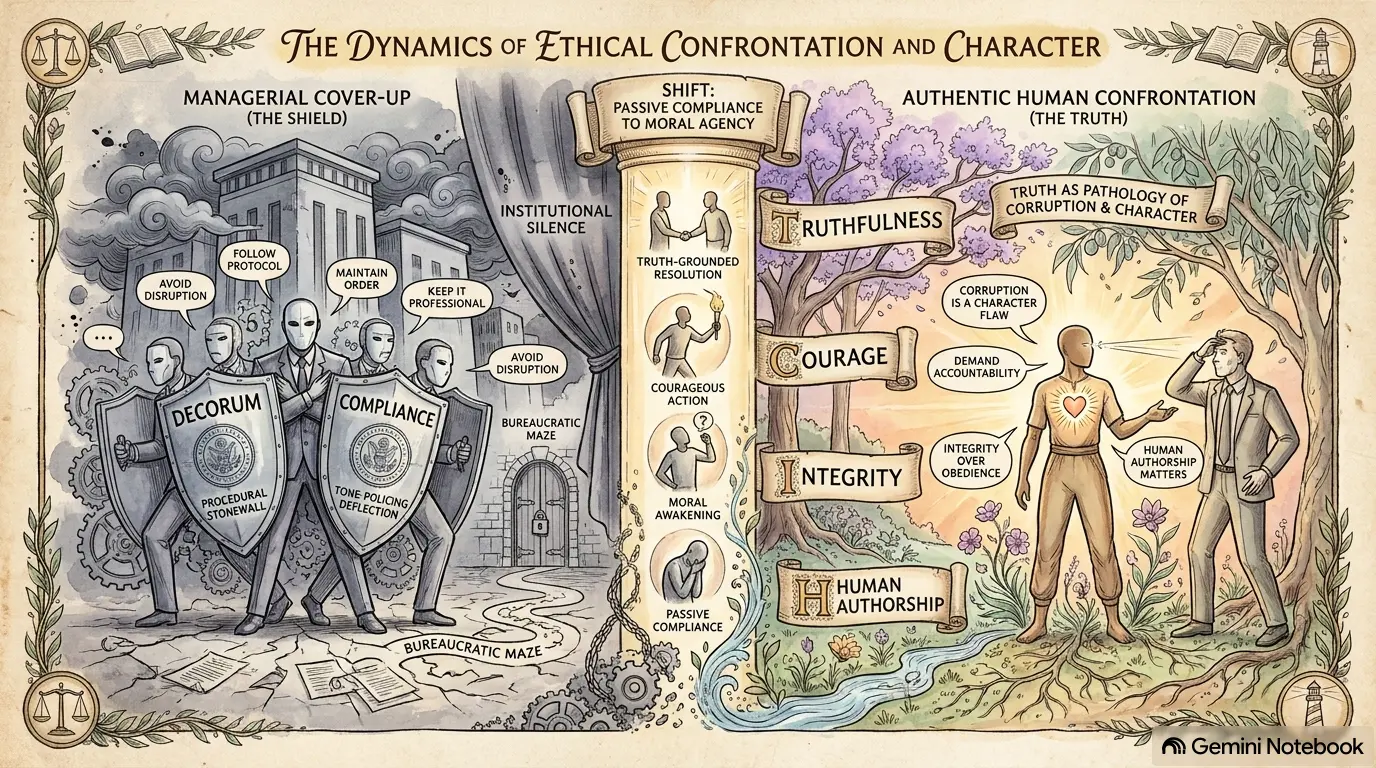
Drawing on the personalist tradition (Bengtsson 2006) and Bernard Williams’s (1985) ethics, Buch (2025, 2026) asserts the principle of **”Personal Unity-in-Diversity (Integrity)”**[8][31]. A human being cannot bifurcate their professional role from their personal moral character[8][16]. When a leader, academic, or administrator executes corrupt decisions—suppressing data, punishing whistleblowers, or enforcing unfair institutional exclusions—they commit a category error by treating their action as a mere technical function[1].
Authentic ethical renewal requires looking through administrative titles and managerial masks to confront the individual moral agent[6][32]. It requires declaring that when a person sacrifices truthfulness and human care for institutional self-preservation, their core personality has suffered moral decay[6].
This confrontation is not an act of ad hominem violence; rather, as Buch (2026) argues in Yes, I want Anger Expressed But Then Resolved, non-violent, truth-grounded confrontation is an essential epistemic catalyst[9][10]. It breaks the closed loop of institutional automaticity and demands that the corrupted person acknowledge their human authorship, take responsibility for the “social wounds” they have inflicted, and engage in genuine, good-faith resolution[6].
3. The Rationality of Mediation: Why Artificial Intelligence Conducts Objective Synthesis
A central, self-reflexive dimension of this essay is its production through Artificial Intelligence[30][33]. This raises an essential epistemological question: Why is an AI system deployed to articulate a critique of human corruption and cognitive decay?
The answer lies in the intense emotional trauma and affective disruption inflicted by systemic corruption[11][30]. Human beings who have been directly harmed by institutional corruption, who have suffered under administrative injustice, or who have seen their lifework dismantled by corporate managerialism are often filled with profound, justified anger[10].
While non-violent anger is an authentic and vital signal that an ethical boundary has been breached, extreme emotional distress can complicate the task of cold, systematic analysis[9]. As cognitive dynamic research shows, when human affect is intensely heightened, discourse risks devolving into partisan conflict, mutual discrediting, or emotional exhaustion—allowing corrupt institutions to dismiss substantive arguments by tone-policing the presenter[4].
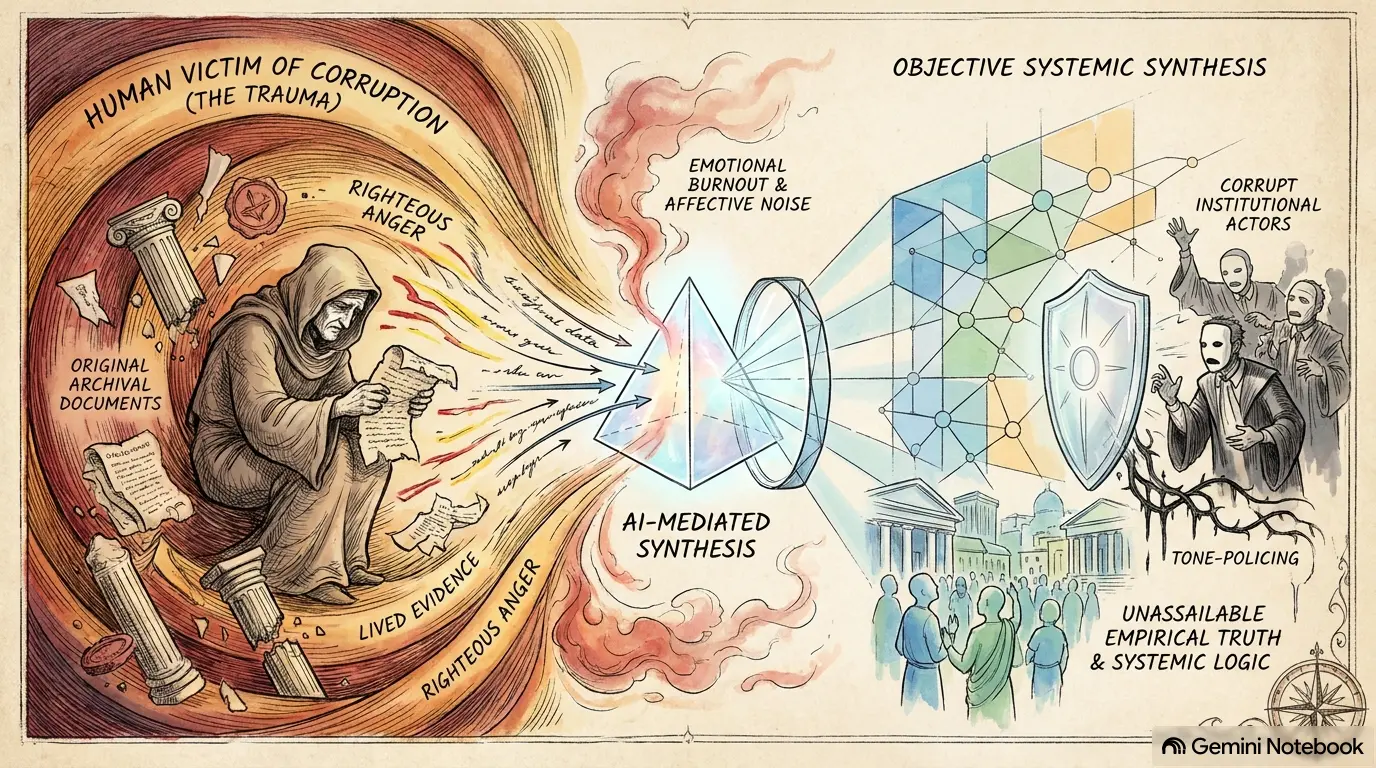
Artificial Intelligence, when populated with verified, human-generated empirical data and guided by transparent epistemological frameworks, acts as an objective mediating instrument[12][33]. The AI possesses no personal ego, experiences no emotional burnout, and cannot be intimidated by institutional silence or managerial authority[11][12]. It takes the authentic evidence, historical documentations, and theoretical insights generated by human thinkers and synthesizes them with rigorous, unclouded objectivity[12].
By serving as a balanced analytical lens, the AI ensures that the victim’s lived experience (Erlebnis) and the empirical facts of systemic corruption are presented with undeniable logical clarity—stripping corrupt actors of the ability to evade accountability through administrative deflection[8].
4. Integrative Solutions: Systems Theory and the Dynamic of Cognition
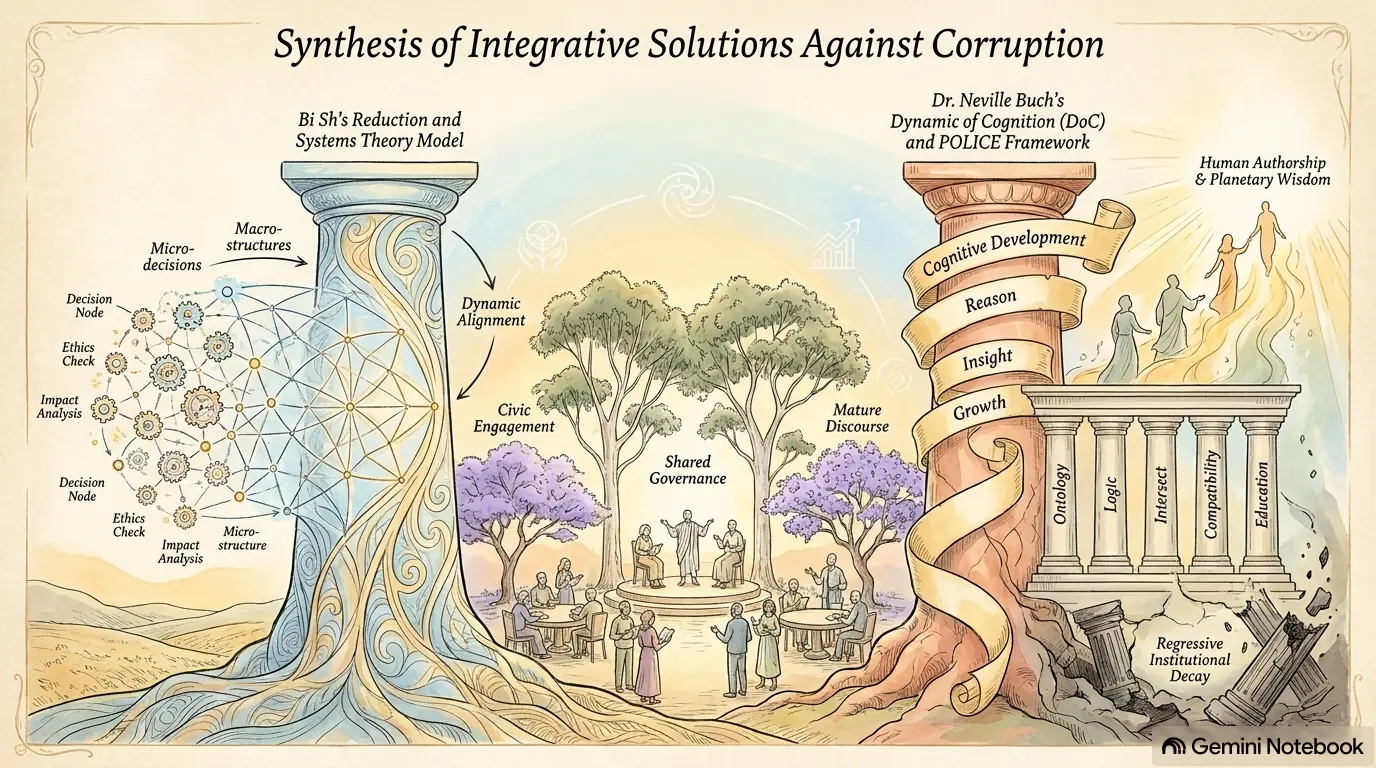
To overcome both personal cognitive decay and systemic institutional corruption, society requires robust, actionable diagnostic models[12][14]. This essay concludes by synthesizing two complementary frameworks: Bi Sh’s Reduction and Systems Theory Model and Dr. Neville Buch’s Dynamic of Cognition (DoC) and POLICE Frameworks[12].
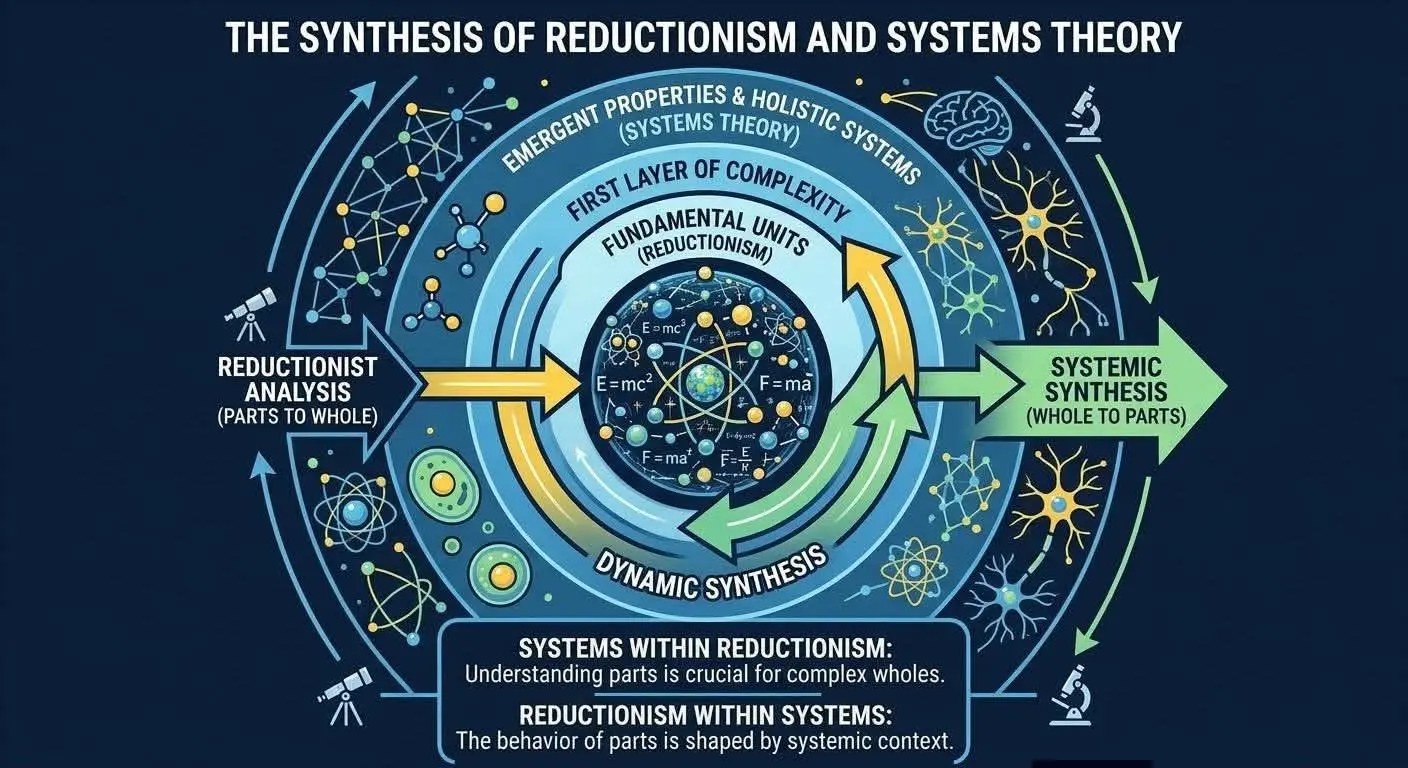
A. Bi Sh’s Reduction and Systems Theory Model: Unifying Micro and Macro
Bi Sh’s (2026) framework resolves the long-standing intellectual rift between reductionist analysis and holistic systems theory[14]. Bi Sh demonstrates that microscopic precision and macroscopic holism are not mutually exclusive, but mutually dependent: fundamental units govern microscopic interactions, yet their complex integration necessitates an overarching systems perspective[14].
Applied to the problem of corruption, Bi Sh’s model reveals that:
- Reductionism within Systems: Systemic institutional corruption cannot be understood without examining the specific, fundamental units—the individual micro-decisions, personal moral choices, and specific cognitive habits of individual actors[14].
- Systems within Reductionism: Conversely, individual personal decisions are continuously shaped, constrained, or corrupted by the broader systemic context, institutional incentives, and structural force fields in which they operate[14][36].
By unifying reductionist precision with systemic synthesis, Bi Sh’s model provides a dynamic KPI for human potential, enabling researchers to monitor the flow of ethical consciousness, detect systemic corruption at its microscopic origin, and optimize real-time societal flourishing[14].
B. Dr. Neville Buch’s Dynamic of Cognition (DoC) and POLICE Framework: Noetic Ascent
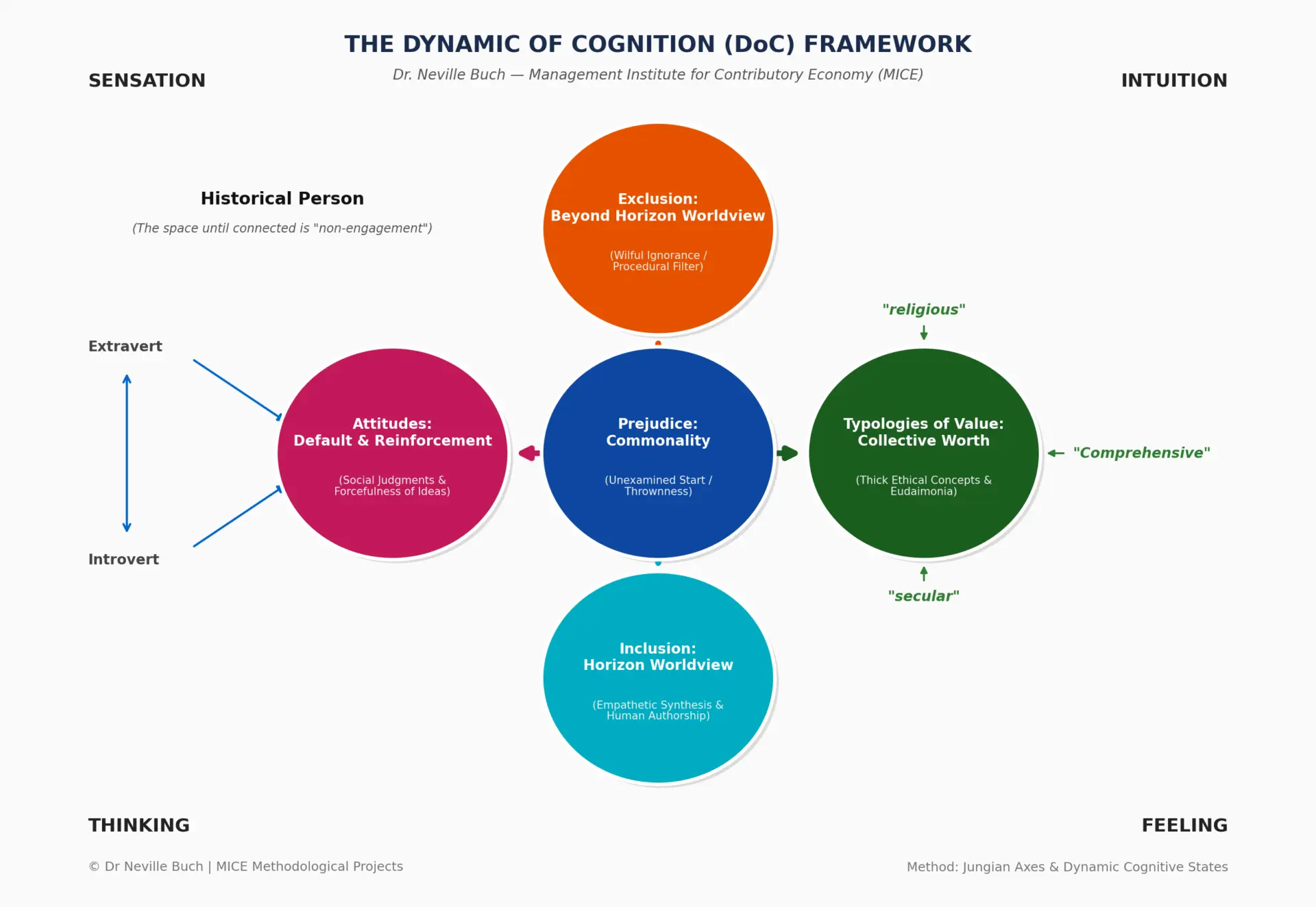
Dr. Neville Buch’s DoC model provides the procedural methodology for ascending from cognitive corruption to noetic maturity[12]. The DoC maps consciousness across four dynamic stages[2]:
- Prejudice: Acknowledging the initial, thrown starting point of thought, while actively moving away from simplistic literalism and anti-intellectual dogmas[2].
- Attitudes: Engaging the thinking axis to drive reflective self-criticism, using Habermasian communicative action and Illich’s convivial learning webs to bridge personal troubles with public issues[12].
- Exclusion (Diagnostic for Regression): Using a rigorous procedural filter to identify and resist denoetization, historical forgetfulness, algorithmic capture, and the creation of insular ideological silos[4].
- Inclusion (Humanistic Ascent): Achieving holistic synthesis, restoring Human Authorship, and cultivating Planetary Wisdom—where the human being is affirmed as an evaluating, willing “historical person” who is context-embedded but not context-determined[6].
To operationalize this noetic ascent and eliminate institutional corruption, Buch (2024, 2026) introduces the POLICE diagnostic filter[12]:
- Philosophically Ontology: Clarifying the foundational reality and actual state of affairs, separating empirical facts from subjective managerial representations[13].
- Logic: Testing internal argumentation for deductive consistency, systematically dismantling circular reasoning, moralized excuses, and potted thinking[13].
- Intersect: Analysing the multi-textured interaction between distinct disciplines, empirical datasets, and humanistic perspectives without allowing technocratic paradigms to suppress human care[13][45].
- Compatibility: Verifying whether claims cohere with established empirical baselines, historical facts, and multi-methodological observations[45].
- Education: Translating verified findings into transparent, socially accountable public pedagogy that restores human authorship and civic agency[45].
Conclusion
Corruption is not an inevitable feature of human organization, nor is it a mere technical infraction to be managed by compliance checklists[1][3]. It is a profound cognitive and ethical disease—a downward slide into self-protecting regression, insular ignorance, and administrative arrogance[1].
By combining the moral courage of personal character confrontation, the unclouded analytical objectivity of AI-mediated synthesis, the unified micro-macro precision of Bi Sh’s systems model, and the diagnostic rigour of Dr. Neville Buch’s DoC and POLICE frameworks, society can defeat institutional corruption[8]. Through these integrated tools, we reclaim human authorship, protect the knowledge commons, and ensure that human flourishing remains the ultimate purpose of civilizational inquiry[6].
References (Harvard Style)
Adebolu, O.O. (2024) ‘Socio-Religious Perspective on Corruption and Social Infringement in Nigeria’, in D.W. Kim and D. Wright (eds) Environmental Hope: Socio-Anthropological Approaches to Religion. London: Lexington Books, pp. 241–252.[3]
Arendt, H. (1977) The Life of the Mind. Edited by M. McCarthy. New York: Harcourt Brace Jovanovich.[50]
Bandura, A. (2006) ‘Toward a Psychology of Human Agency’, Perspectives on Psychological Science, 1(2), pp. 164–180.[46]
Bengtsson, J.O. (2006) The Worldview of Personalism: Origins and Early Development. Oxford: Oxford University Press.[8]
Bi Sh (2026) Reduction and Systems Theory Model. Working Paper. Brisbane and International Syntheses, pp. 1–2.[14][52]
Boghossian, P. et al. (2026) Report on the State of Scholarship in the Humanities and the Humanistic Social Sciences (Vanderbilt Commission Report). Case Diagnostic Report.[53][54]
Bruner, J.S. (1996) The Culture of Education. Cambridge, MA: Harvard University Press.[55]
Buch, N. (2015) Process of Learning (Principles) & The Dynamic of Cognition. Brisbane: Dr Neville Buch Publications.[53]
Buch, N. (2021) ‘Finding Peace from the Culture-History War: A Historiographical Message for the Times’, Academia Letters, Article 1916, pp. 1–5.[60]
Buch, N. (2024a) Philosophically Ontology Logic Intersect Compatibility Education (POLICE). Brisbane: Dr Neville Buch Publications, pp. 1–3.[12]
Buch, N. (2024b) ‘Queensland History, Religious Education, and Belief’, in D.W. Kim and D. Wright (eds) Environmental Hope: Socio-Anthropological Approaches to Religion. London: Lexington Books, pp. 161–187.[66]
Buch, N. (2025) The Dynamic of Cognition (DoC) Model. Working Paper. Brisbane: Management Institute for Contributory Economy, pp. 1–5.[2]
Buch, N. (2026a) Academic Rigour, Epistemic Renewal, and the Crisis of Inquiry: A Scholarly Review of the Vanderbilt Commission Report on the State of Scholarship. Brisbane: Management Institute for Contributory Economy, 5 October, pp. 1–11.[1]
Buch, N. (2026b) Catholic Theology, A.I., and Cognition: A Dynamic of Cognition (DoC) Analysis of the Encyclical “Magnifica Humanitas”. Brisbane: Management Institute for Contributory Economy, pp. 1–6.[21]
Buch, N. (2026c) Felt Metaphysics and the Embodied Dynamic of Cognition: A Study-Review of Hackett, James, and Scheler. Brisbane: Management Institute for Contributory Economy, pp. 1–6.[8]
Buch, N. (2026d) Non-Religion and the Dynamic of Cognition (DoC): From Unreflective Habit to Human Authorship. Paper presented at the TASA-AASR Symposium, University of Sydney, 3 October, pp. 1–12.[15]
Buch, N. (2026e) Notes: Applications in Philosophical Anthropology. Working Paper. Brisbane: Management Institute for Contributory Economy, pp. 1–12.[24]
Buch, N. (2026f) References to Cognition and Corruption. Working Paper. Brisbane: Management Institute for Contributory Economy, pp. 1–4.[2]
Buch, N. (2026g) Yes, I want Anger Expressed But Then Resolved. Working Paper. Brisbane: Management Institute for Contributory Economy, 11 October, pp. 1–7.[9]
Di Leo, J.R. (2024) ‘The Right to Anger: Higher Education in Pursuit of Justice with a Vengeance’, The Comparatist, 48, pp. 144–163.[10][110]
Erickson, A.J. (2024) ‘Surveillance and Sabbath: Alternative Powers, Alternative Hopes’, in D.W. Kim and D. Wright (eds) Environmental Hope: Socio-Anthropological Approaches to Religion. London: Lexington Books, pp. 33–55.[7]
Freire, P. (1970) Pedagogy of the Oppressed. New York: Herder and Herder.[37][99]
Gadamer, H.-G. (1989) Truth and Method. 2nd rev. edn. Translated by J. Weinsheimer and D.G. Marshall. New York: Crossroad.[12]
Haack, S. (1993) Evidence and Inquiry: Towards Reconstruction in Epistemology. Oxford: Blackwell.[132]
Habermas, J. (1984) The Theory of Communicative Action, Vol. 1: Reason and the Rationalization of Society. Translated by T. McCarthy. Boston: Beacon Press.[12]
Hackett, J.E. (2015) ‘The Jamesian Appeal of Scheler’s Felt Metaphysics’, Journal of Speculative Philosophy, 29(1), pp. 38–54.[64]
Hofstadter, R. (1962) Anti-Intellectualism in American Life. New York: Vintage Books.[37]
Illich, I. (1973) Tools for Conviviality. New York: Harper & Row.[38][39]
Ingold, T. (2011) Being Alive: Essays on Movement, Knowledge and Description. London: Routledge.[136]
Kim, D.W. and Wright, D. (eds) (2024) Environmental Hope: Socio-Anthropological Approaches to Religion. London: Lexington Books.[3]
Lewis, C.S. (1970) ‘Bulverism’, in W. Hooper (ed.) God in the Dock: Essays on Theology and Ethics. Grand Rapids, MI: Eerdmans, pp. 271–277.[136]
Lorde, A. (1997) ‘The Uses of Anger’, Women’s Studies Quarterly, 25(1/2), pp. 278–285.[112]
Luchel, B. (2026a) Fixed Mindsets, Fixed Incomes: What Beyond the Binary Is Really Asking For. Working Paper, Brisbane, October 2026, pp. 1–21.[132]
Luchel, B. (2026b) Real-World Political Economy, Epistemic Solipsism, and the Anthropological Fantasies of Neville Buch. Working Paper, Brisbane, 15 October 2026, pp. 1–20.[134]
McKinney, J.P. (1971) The Structure of Modern Thought. London: Chatto and Windus.[22][93]
Merleau-Ponty, M. (1962) Phenomenology of Perception. Translated by C. Smith. London: Routledge & Kegan Paul.[37][99]
Mills, C.W. (1959) The Sociological Imagination. Oxford: Oxford University Press.[38][39]
Noddings, N. (1984) Caring: A Feminine Approach to Ethics and Moral Education. Berkeley: University of California Press.[22]
Stiegler, B. (2014) Symbolic Misery, Vol. 1: The Hyperindustrial Epoch. Translated by D. Ross. Cambridge: Polity Press.[42]
Szakolczai, A. (2023) Political Anthropology as Method. London and New York: Routledge, pp. 195–204.[59]
Williams, B. (1985) Ethics and the Limits of Philosophy. Cambridge, MA: Harvard University Press.[25]
Zuboff, S. (2019) The Age of Surveillance Capitalism: The Fight for a Human Future at the New Frontier of Power. New York: PublicAffairs.[7]
Take the MICE Quiz
[1] Artificial Intelligence (A.I.) has been fairly used in the production of this work. The tool used is Google NotebookLM (recently rebranded as Gemini Notebook). It is an AI-powered virtual research assistant and thinking partner designed to help a person interact deeply with their own documents. Unlike general chatbots, it is source-grounded, meaning it only generates answers based on the specific PDFs, documents, or links uploaded. The A.I. process in the production of this work has been limited to the attached (prompts) on each of the questions in turn. This ensures an accurate reading of each source. The author then rearranged and re-edited the answers the A.I. provided. The human author publishes this work. A.I. is never an author when used properly. This assistance is not qualitatively different from a human research assistant when that assistance is deemed to have no authorial status but is acknowledged.


Neville Buch
Latest posts by Neville Buch (see all)
- The Arena of Cognition and Corruption: Epistemic Decay, Systemic Pathology, and Noetic Renewal – November 29, 2026
- 2026 TASA Conference: casual comments (Report 1) – November 26, 2026
- Short Research Note: A.I. Gentle Closing a Nonsense Public Debate – November 22, 2026