
https://www.academia.edu/164685489/Cold_War_Historiography_and_the_Philosophy_of_Joe_Siracusa_HAPI_Past_Series
Dr Neville Buch ABN: 86703686642
Abstract
This essay examines the historiographical contributions of Joseph M. Siracusa during his tenure at the University of Queensland (UQ) within what is now the School of Historical and Philosophical Inquiry (HAPI). Siracusa’s work is characterized by a synthesis of American diplomatic history, international relations, and public intellectualism. His historiographical approach emphasizes a “Realist Interpretation,” particularly regarding the Cold War and nuclear diplomacy, while simultaneously engaging with the local political landscape of Queensland through biographies and critiques of governance. By integrating the history of ideas with political and diplomatic developments, Siracusa moved historical inquiry from narrow specialization toward a broad social accountability, effectively acting as an “intellectual immune system” during periods of regional political crisis, such as the Fitzgerald Inquiry.
PDF File: Joe Siracusa. Cold War Historiography and Political Philosophy (HAPI Past Series)
Series Abstract: For the past few years, I have been researching and writing about the defuncted Department of History, University of Queensland, 1911-2000. It will take a few more years before a tome on the subject may be published. In the meantime, it has occurred to me to write up on the past academics of what is now called the school of “Historical and Philosophy Inquiry”. It is certainly appropriate for myself as my career at UQ began in this direction of interdisciplinary thought. The series publishes the articles in not particular order, and selection is based on the availability of materials.
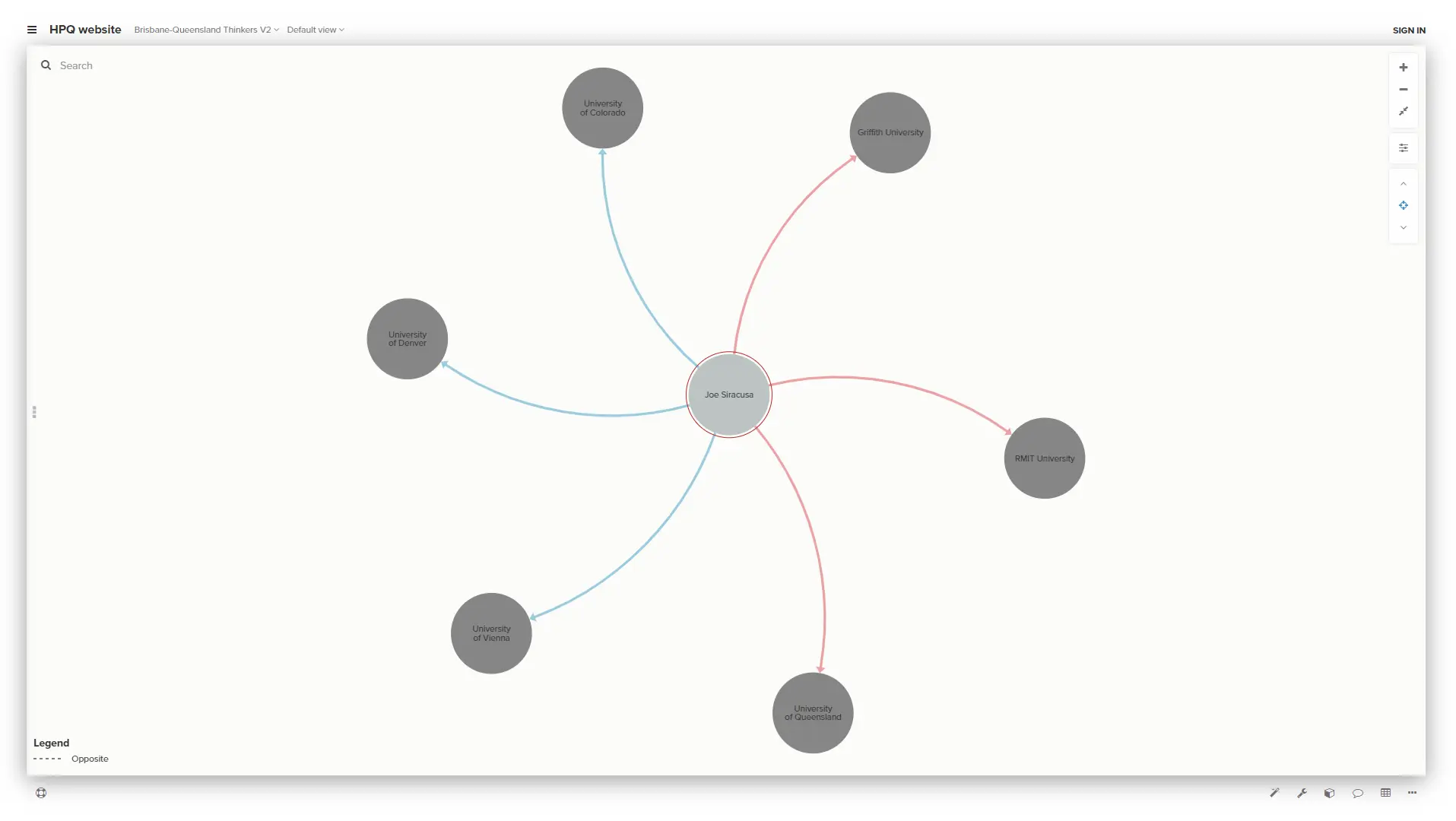
Featured Image: Where Joe lies in the fields of learning during the Time at UQ, and after?


Neville Buch
Latest posts by Neville Buch (see all)
- Volunteers Economically Abused: Neoliberal Formalism, MICE Philosophy, and the Capacity for Comprehensive Understanding – October 25, 2026
- University Academy Aggression: Corporate Managerialism, MICE Philosophy, and the Capacity for Comprehensive Understanding – October 25, 2026
- The Numbers Game Problem: Neoliberal Formalism, MICE Philosophy, and the Capacity for Comprehensive Understanding – October 25, 2026