
Dr Neville Buch
Abstract
This essay synthesizes David Brooks’ cultural analysis of a world “running backwards” with Bernard Stiegler’s (via Ekin Erkan) diagnostic of “computational capitalism.” Brooks argues that the Enlightenment vision of linear progress has failed to provide a spiritually fulfilling future, leading billions to retreat into traditionalism and nostalgia. Erkan’s plain-language interpretation of Stiegler provides the technical “why”: modern technology and algorithmic management move faster than human social organization, rendering individual will and reason “obsolete in advance”. By linking Brooks’ call for a “humanistic renaissance” to Dr. Neville Buch’s framework of “Digital Humanism,” this essay supports the conclusion that society must move beyond technical skill (techné) toward “Aristotelian flourishing”—reclaiming human authorship over our narratives to prevent a state of total madness.
——————————————————————————–
The Dynamic of Cognition (DoC) Table: Brooks and Erkan Synthesis
| DoC Component | Phenomenon in Modernity | Goal for Recovery |
| Self | Disindividuation: Losing our unique identity to digital platforms. | Individuation: Reclaiming the “feeling of existing”. |
| Mind | Denoetization: The loss of the human power to judge. | Noetic Dreaming: Re-enchanting the mind through the humanities. |
| Reason | Historical Forgetfulness: Ignoring the wisdom of traditions. | Spiral Historiography: Learning from repetitive patterns of error. |
| Utility | The Machine: A mindset focused solely on efficiency and data. | Contributory Economy: Technology serving the human spirit. |
| Love | Social Bond Decay: Loneliness and empty consumerism. | Aristotelian Flourishing: Deep community attachments and purpose. |
——————————————————————————–
Essay: History, Disruption, and the Reclaiming of the Human Spirit
I. The Failure of the Progress Narrative
David Brooks observes that for much of the 20th century, Western civilization lived under a “cult of openness” and a faith in material progress. However, this future now feels “spiritually empty, too lonely, and too technological”. Brooks suggests that history is “running backwards” because people are driven by a sense of loss, yearning for a “secure base”—the stable home, neighbourhood, and moral order that modernity has dismantled.
II. The Speed of Disruption (Plain Language Observations from Erkan)
Ekin Erkan explains this sense of disorientation through Stiegler’s concept of “disruption.” In plain language, our technology (like social media and AI) is now moving faster than our laws, our schools, and even our own thoughts. This creates a “new kind of barbarism” where we stop thinking for ourselves and let “algorithmic governmentality”—the rule by computer formulas—make our decisions.
When we outsource our memory to digital devices, we suffer from “disindividuation”. Plainly put, we lose the ability to be unique individuals because our desires are being “automated” by a system that only cares about data and profit. This leads to a state of “denoetization,” which is simply the loss of human judgment. As Brooks notes, this results in “sloppy thinking” by people who haven’t been taught how to weigh evidence or recognize their own flaws.
III. The “Epimethean Fault” and Historical Forgetfulness
Both Brooks and the MICE framework identify a crisis of “Historical Forgetfulness”. Brooks argues that in our rush toward autonomy, we have cut ourselves off from the “millennia-long conversations” of the Bible and humanism. Erkan/Stiegler call this the “Epimethean fault”—the failure of foresight and the banishment of our origins from memory. When we forget the “thick” historical bearings of reality, we are left with only “thin” metrics and spreadsheets, which Brooks characterizes as the “iron cage” of bureaucracy.
- Conclusion: Toward Digital Humanism
The path forward is not a simple return to the past, which Brooks admits would be a “static utopia” that never actually existed. Instead, both authors point toward a transformation. Brooks calls for a “humanistic renaissance” centred on the “big questions of life”. Similarly, the MICE framework advocates for “Digital Humanism,” where technology is used not to automate humans, but to serve the human spirit.
To achieve “Aristotelian flourishing,” we must transition from a “Junior” mindset of passive observation to a “Senior” state of social accountability. This requires moving beyond the “techné mindset” (the obsession with technical skills) and reclaiming our status as the authors of our own stories. Only by unhooking our society from the “Machine” of pure rationalism can we heal our “intellectual wounds” and build a future that is “radically human”.
——————————————————————————–
Bibliography
Arklay, T., & Menzies, J. (n.d.). 1986 Cabinet minutes: Selected highlights. Policy Innovation Hub, Griffith University for Queensland State Archives.
Arklay, T., Horton, S., & Menzies, J. (n.d.). 1987 Cabinet minutes: Selected highlights. Policy Innovation Hub, Griffith University for Queensland State Archives.
Brooks, D. (2026, April 16). History is running backwards: Why reactionaries are taking over the world. The Atlantic.
Buch, N. (2015). No regrets in the evening of life: The history of Junction Park State School (1888–2013). Boolarong Press.
Buch, N. (2021, April 12). A possible MICE reply to Dan Mason critique. Management Institute for Contributory Economy.
Buch, N. (2024). Queensland history, religious education, and belief. In Socio-Anthropological Approach in Queensland (Chapter 7, pp. 161-187). Lexington Books.
Buch, N. (2026, April 7). Viking Age media and the synthesis of lived experience. Independent Scholar Essay.
Corwin, S. (2026). Chasing windmills in Sunnybank Hills: The sorrow and the spiral of Dr. Buch. Academia.Edu
Erkan, E. (2019). Societies of disindividuated hyper-control: On the question of a new pharmakon. [Review of the book The age of disruption: Technology and madness in computational capitalism, by B. Stiegler]. Polity Press.
Mason, D. (2026, April). A multi model forensic evaluation of “Lost Insights of the Uneducated”: Applying the DB-FEP + DQA + ELIS framework. Independent Scholar Working Paper.
——————————————————————————–
Endnotes References.
Brooks, History Running Backwards, p. 1.
Brooks, History Running Backwards, p. 2.
Brooks, History Running Backwards, p. 4.
Brooks, History Running Backwards, p. 5.
Brooks, History Running Backwards, p. 6.
Erkan Review, p. 1.
Erkan Review, p. 2.
Erkan Review, p. 3.
MICE Reply, p. 1.
MICE Reply, p. 2.
Viking Media Essay, p. 1.
Viking Media Essay, p. 6.
Beyond the Windmill, p. 2.
Beyond the Windmill, p. 3.
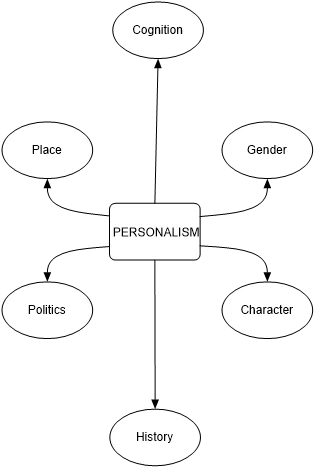
Featured Image: F.01-Level-3.-Personalism-in-Historiography-Knowledge-and-Learning.webp


Neville Buch
Latest posts by Neville Buch (see all)
- The Unbound Mind: Independent Scholarship, Institutional Isolation, and the Restoration of Human Authorship – October 20, 2026
- The Road to Geelong: A Re-Narrativization of The Story of Resilience Part 1 – October 20, 2026
- The Human Being Above the Transaction and Why Markets Cannot Measure Human Worth – October 15, 2026