
By Dr Neville Buch with A.I. assistance
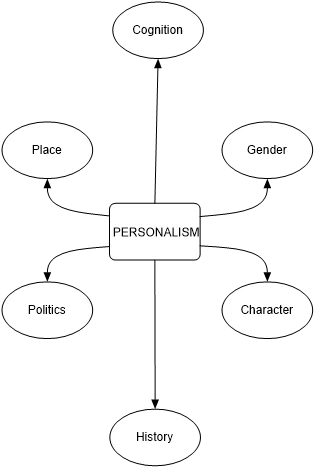
Define and Explain Personalism
Jan Olof Bengtsson writes in The Worldview of Personalism: Origins and Early Development (2006:283):
Deeply involved in the complexities of a crossover period, when the influence of traditional culture was not yet eclipsed by radical modernism, idealistic personalism evinces many of the ambiguities of the nineteenth century. But this culture climate was also fertile and resourceful, with new creative possibilities.
The new importance placed on personality, even when it emphasized the classical and Christian precedent, was clearly a concomitant of the whole new development of the consciousness of individuality and subjectivity ever since the Renaissance. The relativistic consequences of the modern project had been visible from the outset, but it was perhaps only in the nineteenth century that their full extent revealed, as the new impersonal wholes failed convincingly to assert objectivity.
In this situation, the early personalists addressed the decisive and pressing question of the possibility of reconciling moral and axiological normativity and theistic metaphysics with the deepened understanding of individuality. They sought a way to keep the faith in both God and reason that retained an objective conception of truth, goodness, and beauty while at the same time doing justice to the dynamic, historical character of personal life and the dialogical reciprocity between persons. In doing so, they revealed needed alternative potentials or the modern Western mind. There are good reasons to give them a fair hearing again.
In Reasons and Persons (1984), Derek Parfit argues that we hold false beliefs about our nature and personal identity, challenging the notion of a unique ‘self’ and proposing that psychological continuity—not a singular, persistent identity—is what truly matters for survival and ethics. He introduces the “Non-Identity Problem,” examining how our actions affect future generations and leading to the disturbing conclusion that it is often rational to act against one’s own interests and that personal identity is irrelevant to morality. Jan Olof Bengtsson shows that personalism began as early as the eighteenth century and was a central, international current of thought throughout the nineteenth century – that it was, in fact, more characteristic of the nineteenth century than of the twentieth. John Frow (2014) is interested in how “characters and persons are at once ontologically discontinuous (they have different manners of being) and logically interdependent.” Bennett Gilbert’s central argument in A Personalist Philosophy of History (2020) is that a robust concept of personhood, grounded in moral agency and the experience of time, can resolve contemporary challenges in the philosophy of history by re-centring our understanding of the human past. He posits that by focusing on those who study history and their moral responsibility to the past, we can develop a more resilient and ethically rich historiography that extends beyond human-centric views into “non-human, trans-human, and deep history”. James T. Lamiell’s argument (2021) is that William Stern’s critical stance on certain methodological trends that were gaining favour within psychology during his lifetime. Lamiell contextualise the translations by providing an overview of the most basic tenets of critical personalism, and offering a commentary on paradigmatic commitments within scientific psychology’s mainstream that began to impede Stern’s efforts prior to his death, and that remain obstacles to personalistic thinking in the discipline today. In Concepts and Persons (2021), Michael Lambek draws upon Elizabeth Anscombe to suggest that anthropologists, “first to observe how people put their acts under description (and the kinds of descriptions they put them under) and then, in the course of translation, abstraction, and theory making to put those acts of description under further description of our own.” (2022:7) Hence, personalism is defined and explained as a relationship between persons.
Personalism is a philosophical and ethical worldview that emphasizes the primacy of the person—a conscious, feeling, willing, and rational individual—as the central reality and the starting point for philosophical, moral, and social inquiry. It is a broad tradition with various streams, including Christian, American, and British Personal Idealism, but its core tenets consistently focus on the unique value, dignity, and agency of the individual. There are core Principles of Personalism, ideas of reality, the subject-object distinction, human action, ethical considerations, and identity.
Personalism posits that ultimate reality is found in personality, both finite (human) and infinite (God, in theistic versions). It rejects views that reduce persons to purely material, mechanical processes or abstract social forces. Instead, it holds that to be is to be a person or a constituent of a person, and the “human soul” or self is the irreducible locus of experience and agency. The system is in opposition to mechanistic or purely materialist worldviews that treat human beings as objects, epiphenomena, or abstract entities like ‘human capital’. It critiques the tendency in science and philosophy to “impersonalize the personal,” arguing that such an approach strips away moral responsibility and a proper understanding of human life. A key tenet is the belief in human agency and the capacity for self-determination. This is not an unlimited freedom but one that operates within a social and historical context, allowing individuals to shape themselves and their environment. As an ethical statement it is “the inherent worth and dignity of every person.” It implies accountability for one’s actions. This ethical framework often includes a ‘relational’ aspect, where meaningful action is undertaken for the sake of friendship and community. Personalism does not necessarily promote a radical individualism, rather there is a “triangular physical-metaphysical ‘transaction’ that interweaves the individual’s needs and goals with shared meanings, values, and symbols at biological, social, and transcendent levels.
In the history of personalism is the Boston Personalism of Borden Parker Bowne who the “clue to the meaning of ultimate reality is found in personality.” William James and Josiah Royce followed in Bowne’s pathway. Personalism have advantages over hard materialism and vague spiritualism. Roy Wood Sellars argued that a sophisticated materialism can do justice to the uniqueness of the human person without resorting to panpsychism. Gabriel Marcel and Karl Jaspers being associated with Christian existentialism, in particular, shares many of Personalism’s concerns with individual freedom, responsibility, and the subjective experience of faith. Personalism offers a worldview that seeks to affirm the irreducible reality and value of the person. It provides a framework for understanding human beings not as mere objects determined by physical laws or social structures, but as active, conscious, and morally significant agents who find meaning through experience, relationship, and responsible action.
In contrast, humanism is a broader philosophical stance that highlights the potential and agency of human beings, making them the starting point for moral and philosophical inquiry. It has a complex history with many interwoven threads, including freethought, secularism, and rationalism. While there is no single definition, humanism generally values human flourishing, dignity, freedom, autonomy, reason, and progress. The relationship between Personalism and humanism can be understood through their historical and conceptual connections. Personalism is identified as a school of thought that, along with others like Pragmatism and Neo-Thomism, was part of a ‘Crossover’ period in the early 20th century. Modernist historiography, which emerged in the late 19th and early 20th centuries, is described as valuing Personalism, leading to a rise in the importance of biography. This places Personalism within the broader evolution of humanist thought.
Both Personalism and humanism place a strong emphasis on the individual. Humanism considers human beings the “starting point for serious moral and philosophical inquiry.” Personalism, similarly, is a theory based on subjective ideas and the quality of being personal. This aligns with various critiques within humanism of overly simplistic or scientistic views of humanity.
In summary, Personalism is a specific philosophical system focused on the person as the fundamental reality, which developed within the larger, more diverse, and historically complex tradition of humanism. Both share a central concern with the human individual, but humanism encompasses a wider array of views, from secular to religious and from systematic to anti-system, while Personalism offers a more specific ontological and subjective framework.
REFERENCES
Baker, L., et al (2001). Soul, Body, and Survival: Essays on the Metaphysics of Human Persons (Corcoran K., Ed.). Ithaca; London: Cornell University Press. Retrieved May 8, 2020, from www.jstor.org/stable/10.7591/j.ctv3s8s32
Bengtsson, Jan Olof (2006). The Worldview of Personalism: Origins and Early Development, Oxford University Press.
Bertocci, P. (1954). The Nature of Cognition: Minimum Requirements for a Personalistic Epistemology. The Review of Metaphysics, 8(1), 49-60. Retrieved May 7, 2020, from www.jstor.org/stable/20123421
Bruno-Jofré, Rosa (2022). Ivan Illich Fifty Years Later: Situating Deschooling Society in His Intellectual and Personal Journey, University of Toronto Press.
Buch, Neville (2018). Small is Big: Scaling the Map for Brisbane Persons and Institutions 1825-2000. ‘The Scale of History’ AHA Conference, Australian National University, 4 July 2018.
Buch, Neville (2025). Global and Australian Literature for Cognition and Attitude in Australian Intellectual History and Sociology: The Solutions in the History Industry Redeeming itself from the Curse of Nostalgia (heads in the sands of time). [a bibliography]
Campbell, R. (1968). Personality as an Element of Regional Geography. Annals of the Association of American Geographers, 58(4), 748-759. Retrieved May 1, 2020, from www.jstor.org/stable/2561716
Curthoys, Ann (2019). Michelle Arrow on how the personal became political, History Australia, 16:3, 594-595, DOI: 10.1080/14490854.2019.1636680
Fraser, J. (1971). Personal and Political Meaning Correlates of Political Cynicism. Midwest Journal of Political Science, 15(2), 347–364. https://doi.org/10.2307/2110275
Frow, John (2014). Character & Person, Oxford University Press.
Gilbert, Bennett (2020). A Personalist Philosophy of History, Routledge.
Hedden, Brain (2015). Reasons without Persons: Rationality, Identity, and Time, Oxford University Press.
Hunt, H. (1995). On the Nature of Consciousness: Cognitive, Phenomenological, and Transpersonal Perspectives, Yale University Press. Retrieved May 8, 2020, from www.jstor.org/stable/j.ctt32btm9.16
Kimball, E., Schnee, E., & Schwabe, L. (2015). Writing the Personal in an Outcomes-Based World. Composition Studies, 43(2), 113–131. http://www.jstor.org/stable/45157102
Lambek, Michael (2021). Concepts and Persons, University of Toronto Press.
Lambek, Michael (2022). Portrait: Michael Lambek, Berghahn Open Anthro.
Lamiell, James T. (2021). Uncovering Critical Personalism : Readings from William Stern’s Contributions to Scientific Psychology, Springer Nature Switzerland AG.
Martin, A., & Dowson, M. (2009). Interpersonal Relationships, Motivation, Engagement, and Achievement: Yields for Theory, Current Issues, and Educational Practice. Review of Educational Research, 79(1), 327-365. Retrieved April 28, 2020, from www.jstor.org/stable/40071168
Mayer, J. (1998). A Systems Framework for the Field of Personality. Psychological Inquiry, 9(2), 118-144. Retrieved May 8, 2020, from www.jstor.org/stable/1449106
Merrington, Earnest Northcoft (1916). The Problem of Personality: A Critical and Constructive Study in the Light of Recent Thought, London: Macmillan and Co. Limited.
Morito, B. (1989). Fundamental Ontology and Personal Identity: A Critique of Albert Shalom’s View of Personhood. The Review of Metaphysics, 42(4), 797-815. Retrieved May 8, 2020, from www.jstor.org/stable/20128802
Norris, Clarke, W. (1994). The “We Are” of Interpersonal Dialogue as the Starting Point of Metaphysics (pp. 31-44), in Clarke, W. Explorations in Metaphysics: Being-God-Person. Notre Dame: University of Notre Dame Press. Retrieved May 7, 2020, from www.jstor.org/stable/j.ctvpj74zd
Parfit, Derek (1984). Reasons and Persons, Oxford University Press.
Schwartz, S., Caprara, G., Vecchione, M., Bain, P., Bianchi, G., Caprara, M., . . . Zaleski, Z. (2014). Basic Personal Values Underlie and Give Coherence to Political Values: A Cross National Study in 15 Countries. Political Behavior, 36(4), 899-930. Retrieved April 29, 2020, from www.jstor.org/stable/43653359


Neville Buch
Latest posts by Neville Buch (see all)
- Volunteers Economically Abused: Neoliberal Formalism, MICE Philosophy, and the Capacity for Comprehensive Understanding – October 25, 2026
- University Academy Aggression: Corporate Managerialism, MICE Philosophy, and the Capacity for Comprehensive Understanding – October 25, 2026
- The Numbers Game Problem: Neoliberal Formalism, MICE Philosophy, and the Capacity for Comprehensive Understanding – October 25, 2026