
Dr Neville Buch
Top of Form
Beyond Harry Frankfurt’s core definition of bullshit as an indifference to truth—where the bullshitter is “phony” rather than “false” and misrepresents their own enterprise to suit a purpose—the sources identify several specific elements that constitute “intellectual” and “institutional” bullshit.
Intellectual bullshit manifests through the following cognitive and structural patterns:
1. Potted Thinking and Compressed Statements
A primary element is ”potted thinking,” the habit of accepting compressed, ready-made statements and catch-words that save the individual from the “actual trouble of thinking”. Like potted meat, these beliefs are concentrated in form but have lost the ”vitamins” essential for mental nourishment. They become unreflective, “ignorant habits” that collapse under the first pressure of an epistemological crisis.
2. Specialized Ignorance and “Thin” Concepts
Intellectual bullshit often arises from specialized ignorance (or the “Analytical Abyss”), where individuals know “more and more about less and less”. This involves:
- Thin Concepts: Relying on abstract terms like “right” or “ought” that lack descriptive weight and disconnect thought from the “thick,” multi-textured reality of lived experience.
- The “Techné” Mindset: A cognitive failure that reduces complex social and philosophical issues to quantifiable data and narrow administrative tasks.
- Denoetization: The mechanical liquidation of human judgment by automated technical or hegemonic systems.
3. Obscurity vs. Technicality
In academic and philosophical contexts, bullshit often involves a preference for obscurity over technicality. While technicality may be a necessity for precision, “intellectual bullshitters” often use obscurity as a comfort, producing work that is “unhelpful, boring, [and] sterile” merely to fulfill the requirements of an academic career. This leads to the production of ”hot air”—speech that is empty of content and does not contribute to the purpose it purports to serve.
4. Institutional and Administrative Bullshit
Modern institutions generate bullshit through bureaucratic and “productivity-oriented” frameworks:
- Administrative Values: Universities are increasingly managed by bureaucrats with no knowledge of the “life of the mind,” who judge faculty by surrogate measures like grant money and citation counts rather than the quality of inquiry.
- Singular Messaging: Public relations efforts often lapse into “singular messaging” and “dumbing down,” which fail to account for the layered, complex schemas of human thought.
- “Spit-and-Polish” (Red Tape): Unnecessary routine tasks and ceremonials (referred to as “bull” in British usage) that are disconnected from the legitimating motives of an organization.
5. Rationalization and Rhetorical Defence
Intellectual bullshit frequently employs rationalization—providing reasons believed solely because they suit a purpose, such as masking discrimination or systemic corruption. This is seen in the ”Apologetics Industry,” which functions as a “technology of rhetorical defence” to shield assumptions from contemporary criticism rather than engaging in genuine knowledge discovery.
6. The “Vanity of Cleverness”
This element involves an overweening belief in one’s own “wonderfulness” or “cleverness”. It leads to ”This-or-Nothingism,” where a thinker offers absurdly false dichotomies (e.g., “either truth is discovery or it is just conversational defence”) to induce a “revolutionary” break with previous intellectual practices.
Bottom of Form
The following analysis of The Mechanics of Intellectual and Institutional Bullshit utilizes the Dynamic of Cognition (DoC) framework to categorize the various ways in which truth-indifference and cognitive reductionism manifest in modern discourse and administration.
The Dynamic of Cognition (DoC) Table: The Mechanics of Bullshit
| DoC Component | Manifestation of Intellectual/Institutional Bullshit | Cognitive Impact and Rationale |
| Prejudice (Centre) | Potted Thinking / Widely-Believed Falsehoods | The unreflective starting point where thought is replaced by compressed, ready-made statements that save the individual from the “actual trouble of thinking”. |
| Exclusion (Sensation) | “Thin” Concepts / The Techné Mindset | The systematic filtering of reality through quantifiable data and abstract terms (e.g., “right,” “ought”) that lack descriptive weight and disconnect thought from lived experience. |
| Inclusion (Intuition) | Theological Masks / Manufactured Myths | Internalizing information only insofar as it serves a partisan agenda or shields a “cognitive bubble” from evidence that contradicts existing beliefs. |
| Attitude (Thinking) | Rationalization / Rhetorical Defence | A disposition that uses communication as a “technology of rhetorical defence” (e.g., the Apologetics Industry) to protect assumptions rather than engage in genuine discovery. |
| Value (Feeling) | Surrogate Measures / “Political Profit” | Shifting valuation from human flourishing to quantifiable metrics such as citation counts, grant money, or “rates, roads, and rubbish”. |
——————————————————————————–
Endnotes
- Frankfurt’s Definition: Harry Frankfurt distinguishes bullshit from lying; while the liar must believe they know the truth to subvert it, the bullshitter is characterized by a complete indifference to truth, misrepresenting their enterprise to suit a purpose.
- Potted Thinking: This refers to concentrated, ready-made beliefs that lack the “vitamins” essential for mental nourishment, becoming “ignorant habits” that fail during epistemological crises.
- Specialized Ignorance and the Analytical Abyss: A cognitive failure where individuals know “more and more about less and less,” operating on “thin” concepts that have lost their historical and social bearings.
- Techné Mindset and Denoetization: The reduction of human life to narrow administrative tasks and quantifiable data, resulting in the mechanical liquidation of judgment.
- Institutional Bull (Red Tape): Derived from British usage, this refers to unnecessary routine tasks and ceremonials (spit-and-polish) that are disconnected from the legitimating motives of an organization.
- The Apologetics Industry: A “technology of rhetorical defence” used by established institutions to deploy flawed scholarship to shield their assumptions from contemporary criticism.
- Surrogate Measures of Quality: In the “productivity-oriented” environment of modern universities, managers often rely on external metrics like rankings and citation counts because they lack the intellectual interest to assess the actual worth of academic work.
- The Vanity of Cleverness: A term from C.S. Peirce describing an overweening belief in one’s own “cleverness,” which often leads to “This-or-Nothingism” and the creation of false dichotomies.
- Crap Detecting: The diagnostic function of the POLICE model (Philosophically Ontology Logic Intersect Compatibility Education) used to filter out institutional bullshit and restore human authorship over narratives.
——————————————————————————–
APA Bibliography
- Buch, N. (2015). Process of learning (principles) & the dynamic of cognition. Dr Neville Buch ABN: 86703686642.
- Buch, N. (2024, March 4). Philosophically ontology logic intersect compatibility education (POLICE). Dr Neville Buch ABN: 86703686642.
- Buch, N. (2025, July 27). Research note: Anglo-American major belief-doubt systems. Academia.edu.
- Buch, N. (2026, March 17). A matrix of sociology. Management Institute for Contributory Economy.
- Frankfurt, H. G. (2005). On bullshit. Princeton University Press.
- Ginsberg, B. (2011). The fall of the faculty: The rise of the administrative university. Oxford University Press.
- Haack, S. (2021). Philosophy as a profession, and as a calling. Syzetesis VIII, 33-51.
- Hofstadter, R. (1963). Anti-intellectualism in American life. Random House.
- Lonergan, B. J. F. (1972). Method in theology. Herder & Herder.
- Stiegler, B. (2014). Symbolic misery, 1: The hyperindustrial epoch (B. Norman, Trans.). Polity Press.
- Veblen, T. (1918). The higher learning in America: A memorandum on the conduct of universities by business men. B. W. Huebsch.
- Wakeham, J. (2017). Bullshit as a problem of social epistemology. Sociological Theory, 35(1), 15–38.
- Williams, B. (1985). Ethics and the limits of philosophy. Fontana Press.
*****
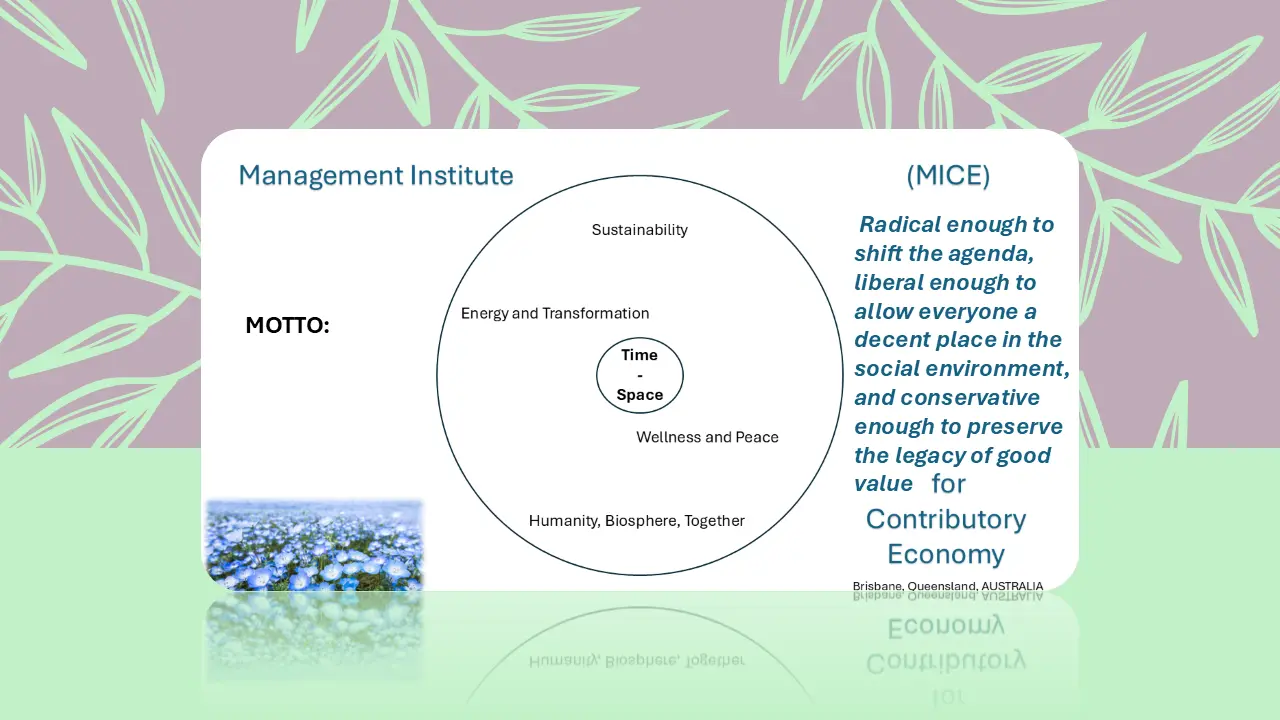
Featured Image:
Come in, You are
welcomed


Neville Buch
Latest posts by Neville Buch (see all)
- The Unbound Mind: Independent Scholarship, Institutional Isolation, and the Restoration of Human Authorship – October 20, 2026
- The Road to Geelong: A Re-Narrativization of The Story of Resilience Part 1 – October 20, 2026
- The Human Being Above the Transaction and Why Markets Cannot Measure Human Worth – October 15, 2026