
https://www.academia.edu/145880185/Political_Thinking_Harms_and_solutions
Political Thinking. Harms and solutions
Dr Neville Buch on behalf of MICE
Abstract
Political thinking in the 21st century is characterized by a structural crisis where communicative action is increasingly replaced by mechanistic calculation and sociological propaganda. The harms of this “immense regression” include the technicisation of language, the erosion of personal integrity, and a systemic “Historical Forgetfulness” that reduces human beings to discontinuous consumers of stimuli rather than authors of their own lives. To counter these harms, the sources advocate for a “Reflective Ascent” grounded in the Dynamic of Cognition. This involves reinventing thinking (penser) as caring (panser), adopting Spiral Historiography to critically re-evaluate past wisdom for the present, and utilizing the POLICE model to facilitate intellectual accountability. Ultimately, the solution lies in achieving a Synoptic Vision that harmonizes technical skill with humanistic values to restore intersubjective mutuality and social justice.
——————————————————————————–
The Pathologies of Power and the Reconstitution of Reason
I. The Harms of Political Thinking: Technicisation and Non-Knowledge
The primary harm identified in the sources is the technicisation of cognition, where the political context separates tekhnē (technical skill) from epistēmē (knowledge), leading to the instrumentalization of the logos as a mere instrument of power. This process drives a “systemic closing” where social interests are defined solely by the need to maintain the existing system, effectively depoliticizing society.
- The Loss of Human Authorship: Modern technics, characterized by “planifying” imperatives, threatens to turn human agents into “puny nodes” in a network or mindless automatons. This is the essence of the “immense regression”: a state of absolute non-knowledge where individuals lose the capacity for anticipation and meaningful decision-making.
- The Mechanism of Propaganda: Political thinking often regresses into sociological propaganda, which seeks to achieve orthopraxy (uniform action) rather than shared belief. By filling the citizen’s day with “intellectual junk food” and “bullshit,” this system suppresses the moment of meditation required for reflection. It exploits the “Principle Basic Fallacy”—the false separation of the natural from the artificial—to create rigid political binaries like ‘native’ versus ‘foreign’ that justify exclusion and violence.
- Historical Forgetfulness: A significant harm is the banishment of deep historical knowledge. This “forgetfulness of origin” allows for the uncritical adherence to outworn notions and prevents individuals from identifying the “causality of fate” embedded in distorted communication.
- The “Dirty Hands” of Moralism: Political actors often succumb to an excessive concern for their own moral purity or, conversely, find it too easy to commit morally disagreeable acts under the guise of “political necessity”. This moralism provides a faulty intellectual architecture for both extremes of the political spectrum, leaving behind genuine rights and respect.
II. The Solutions: From Calculation to Care
To end the regression and mitigate these social harms, the sources propose a multi-layered approach to cognitive and ethical redemption.
- Thinking as Caring (Panser): One must reinvent the task of thinking as the procedural necessity of tending to wounds. This Compassion-Focused Pedagogy (CfP) serves as the indispensable human complement to technological function, ensuring that empathy balances the “coldness of calculation”.
- Communicative Rationality: Following Jürgen Habermas, the solution is to remove restrictions on symbolic interaction and symbolic communication. This “rational-critical communication” aims at mutual understanding (Verständigung) and the redemption of validity claims (truth, rightness, truthfulness) in a public sphere free from domination.
- Spiral Historiography: History must be used as a “mental scaffolding” for the present. By reading ancient texts with modern inclusivity, individuals can learn from past intellectual struggles to avoid repeating errors. This method distinguishes between ideas that are truly fixed and those that are contingent cultural developments that can be overcome.
- Intellectual Accountability (The POLICE Model): Individuals must adopt the POLICE model (Philosophically Ontology Logic Intersect Compatibility Education) to “police our own thoughts”. This requires a Synoptic Vision that integrates history, philosophy, and sociology to break through the “managerial bubble” and “folklore epistemology” that dominate current political discourse.
- Digital Humanism: In the digital age, technologies must be designed to promote democracy and inclusion rather than displacing human agency in decision-making. This reinforces the core idea of human authorship, linking it to reason, freedom, and responsibility.
——————————————————————————–
Dynamic of Cognition (DoC) Analysis: The Political Thinking Cycle
| DoC Component | Regression (Harmful Thinking) | Ascent (Solutions/Comprehension) |
| Prejudice (Centre) | Mechanistic Reductionism: Viewing humanity as quantifiable data/instrumental metrics. | Reflective Self-Criticism: Questioning assumptions and historical bearings to initiate inquiry. |
| Attitudes (Thinking/Extrovert) | Binary Logic: Imposing ‘native’ vs. ‘foreign’ binaries to simplify complex reality. | Rational-Critical Communication: Dialogue aimed at mutual accord and truthfulness. |
| Typologies of Value (Feeling/Introvert) | Measurable Utility: Valuing knowledge only for vocational profit or power. | Holistic Flourishing: Valuing wisdom, character, and the search for meaning. |
| Exclusion (Sensation/Intuition) | Historical Forgetfulness: Filtering out the technical and social history of ideas. | Exclusion of Reductionism: Active rejection of mechanistic models to preserve authorship. |
| Inclusion (Thinking/Feeling) | Sociological Propaganda: Including manufactured myths to replace honest discourse. | Panser (Thinking as Caring): The inclusion of empathy to tend to the community’s wounds. |
——————————————————————————–
Analogy: Harmful political thinking is like a GPS system that has lost its connection to history and terrain; it provides precise, mathematical coordinates (calculation), but leads the user into a cliff because it cannot perceive the reality of the ground (humanity). The solution is to recalibrate the device with the compass of care (panser) and the maps of history, ensuring that we are not just moving fast, but moving toward a destination that supports human life.
——————————————————————————–
BIBLIOGRAPHY
Aung-Thwin, M. (1991). Spirals in Early Southeast Asian and Burmese History. The Journal of Interdisciplinary History, 21(4), 575–602.
Buch, N. (2024). Habit, define! The “Subject” of Thinking of Human Habit and Habitation in Twentieth Century Philosophic History. Comprehension: Solutions and The Plan.
Buch, N. (2024). Habermas and Public Theology in the Evangelical World: At the End of the First Quarter of the 21st Century. Presentation Text.
Buch, N. (2025). The Dynamic of Cognition. Academia.edu.
Buch, N. (2025). The Spiral Historiography of Radical-Liberal-Conservative: Vague Definitions and Practices. Concepts in Public History for Marketplace Dialogue.
Buch, N., & Peach, N. (2025). Comparison of Two Papers.
Camus, A. (1956). The Rebel: An Essay on Man in Revolt (A. Bower, Trans.). Knopf.
Collins, R. (1998). The Sociology of Philosophies: A Global Theory of Intellectual Change. Belknap Press of Harvard University Press.
Collins, R. (2019). The Credential Society: An Historical Sociology of Education and Stratification. Columbia University Press.
Ellul, J. (1965). Propaganda: The Formation of Men’s Attitudes. Knopf.
Giroux, H. A. (1986). Critical Theory and the Politics of Culture and Voice: Rethinking the Discourse of Educational Research. Journal of Thought, 21(3), 84–105.
Habermas, J. (1979). Communication and the Evolution of Society (T. McCarthy, Trans.). Beacon Press.
Habermas, J. (1981). The Theory of Communicative Action: The Critique of Functionalist Reason (T. McCarthy, Trans.). Polity Press.
Habermas, J. (1987). Knowledge and Human Interests (J. J. Shapiro, Trans.). Polity Press.
Noddings, N. (2004). War, Critical Thinking, and Self-Understanding. The Phi Delta Kappan, 85(7), 488–495.
Plant, B. (2005). Wittgenstein and Levinas: Ethical and Religious Perspectives. Routledge.
Rosenblatt, H. (2018). The Lost History of Liberalism: From Ancient Rome to the Twenty-First Century. Princeton University Press.
Stiegler, B. (1998). Technics and Time, 1: The Fault of Epimetheus (R. Beardsworth & G. Collins, Trans.). Stanford University Press.
Stiegler, B. (2025). The Immense Regression (D. Ross, Trans.). K. Verlag.
Tate, J. (2007). Habermas for Humanists. Essays in the Philosophy of Humanism, 15, 59–76.
Toulmin, S. (2003). The Uses of Argument (Updated ed.). Cambridge University Press.
Williams, B. (1981). Moral Luck: Philosophical Papers 1973–1980. Cambridge University Press.
Williams, B. (1985). Ethics and the Limits of Philosophy. Fontana.
Williams, B. (1995). Making Sense of Humanity and Other Philosophical Papers 1982–1993. Cambridge University Press.
Williams, B. (2008). Philosophy as a Humanistic Discipline (A. W. Moore, Ed.). Princeton University Press.
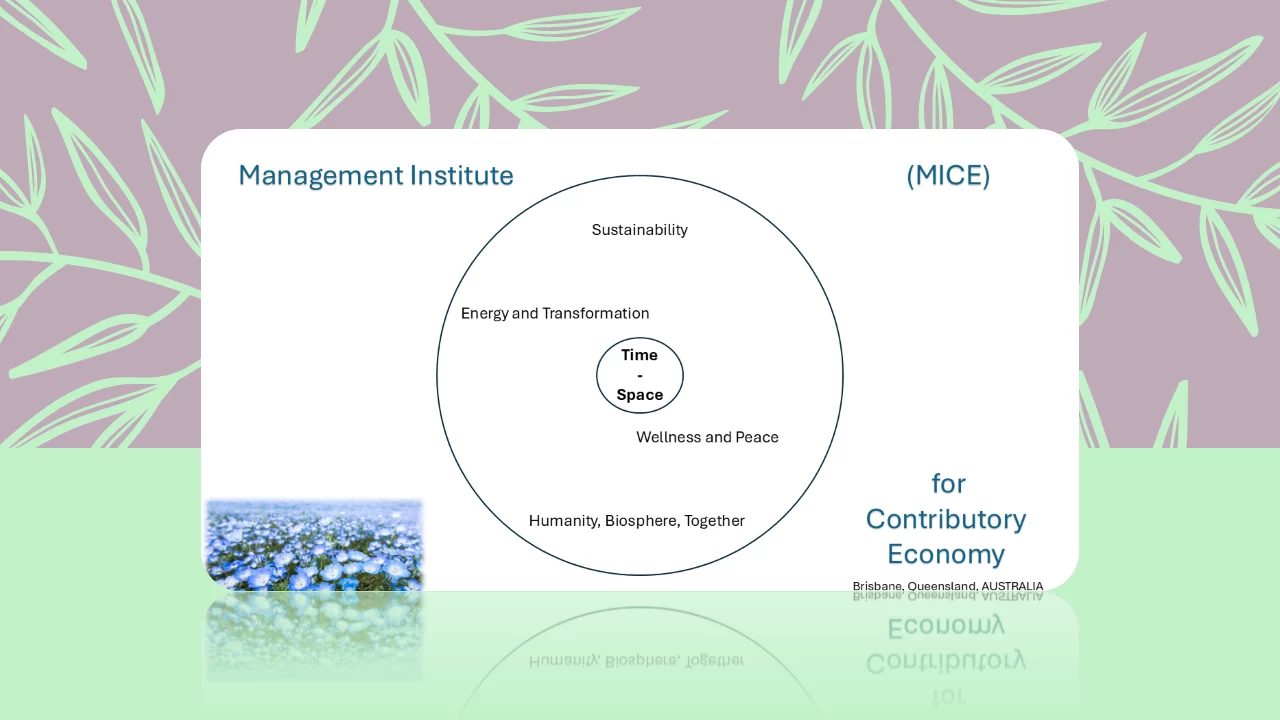
Featured Image: MICE makes the difference for the better.



Neville Buch
Latest posts by Neville Buch (see all)
- Volunteers Economically Abused: Neoliberal Formalism, MICE Philosophy, and the Capacity for Comprehensive Understanding – October 25, 2026
- University Academy Aggression: Corporate Managerialism, MICE Philosophy, and the Capacity for Comprehensive Understanding – October 25, 2026
- The Numbers Game Problem: Neoliberal Formalism, MICE Philosophy, and the Capacity for Comprehensive Understanding – October 25, 2026