
Political rhetoric was the deliberative use of language to persuade an audience about civic affairs, encompassing motives, arguments, and sentiments to form attitudes and influence judgments; but today in the loss of all fairness, as mere devices, for good, bad, evil ends, it involves various techniques, such as metaphors, storytelling, and emotional appeals, aiming to shape perceptions and mobilise support. Political rhetoric leads to polarisation when misused. The study of political rhetoric examines problems in the classical modes of ethos (character), pathos (emotion), and logos (logic).
There are other languages other than political rhetoric for persuasion, using language and other communicative devices to influence the attitudes, beliefs, and actions of a target audience. These other languages are the deep knowledge of disciplinary and interdisciplinary research and education. Today, the problem is that political rhetoric has become largely corrupt by ignoring the critical scholarship; the idea that a politician or another political player cannot be faulted in their thinking.
Political rhetoric today rarely informs the public about political ideas and events and aims to motivate them to intelligently support specific policies or leaders. The strategic using rhetoric has become especially abusive, lacking clarity, misleading the public, or skew public debate. By employing fear, it arouses unwarranted emotional appeals, and create divisive language. Current political rhetoric can contribute to societal polarisation and conflict. While political persons often aim for truth and a moral quality, the focus on persuasion too often disregards facts or ethical considerations.
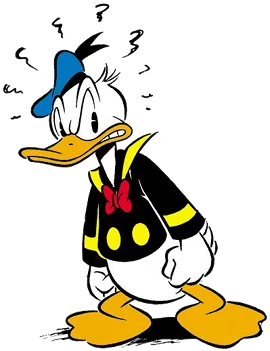
In other words, today, political rhetoric quacks like Donald Duck. Donald Fauntleroy Duck is a cartoon character created by the Walt Disney Company. Donald is an anthropomorphic white duck with a yellow-orange bill, legs, and feet. He typically wears a sailor shirt and cap with a bow tie. Donald is known for his semi-intelligible speech and his mischievous, temperamental, and pompous personality. (Wikipedia):
The character of Donald Duck is portrayed as an impatient, immature, and arrogant duck with a pessimistic attitude and an insecure disposition. In addition, his two dominant personality traits are his fiery temper and his upbeat attitude to life. Many Donald shorts start with Donald in a happy mood, without a care in the world until something comes along and spoils his day. His rage is a great cause of suffering in his life. On multiple occasions, it has caused him to get in over his head and lose competitions. There are times when he fights to keep his temper in check, and he sometimes succeeds in doing so temporarily, but he always returns to his normal angry self in the end.
Comparisons have been made on the internet between Donald Trump and Donald Duck, with the Duck being more favoured. In “A Case of Two Donalds But One Quack!”, Karan Thapar (speakin) writes:
Part of the Duck’s charm is you’re never quite sure what he’s saying and often suspect he [Trump] isn’t either. As a portrait on BBC News states: “The secret to his longevity lies in his distinctive – but unintelligible – command of language.”
…Of course, both the Duck and the President are great achievers. The Duck has won an Oscar and played a major part in the war effort of the 1940s. Such is his fame in Finland voters register a protest by marking the name Donald Duck. The President is, of course, a billionaire and, as Americans love to tell you, the most powerful man on earth.
Whenever they appear both the Duck and the President dominate the situation but they’re usually never alone…
Here you see the problem in the loss of intelligent language among the public and the role in anti-democratic forces. That narrative of threats to democracy, and even the present condition of anti-democratic states of affair (i.e. not threats but actualities), is built from the sociological analysis of elitism and populism. In both cases, there are anti-intellectual force at work.
Wright Mills (1956, 1959) viewed elitism as the rule of a small, centralised ‘power elite’ in advanced industrial societies, composed of individuals from the economic, military, and political sectors, who wielded disproportionate power outside of public democratic processes. This concentration of power led to a decline in formal politics and the degradation of democracy, with decisions being made by this unified group rather than by the masses or their representatives. Mills identified a distinct, unified group that holds significant power in a society. This power is concentrated in the highest echelons of three key institutions: the economic corporations, the state (political), and the military. The process of rationalisation in advanced industrial societies leads to the concentration of power in the hands of this small group. The existence of the power elite means that true democracy is eroded, as power lies outside the control of elected representatives and the broader public. Members of this power elite understand, accept, and work with each other, leading to a cohesive and influential group. Politics becomes a formal process rather than a genuine arena for public debate and decision-making, as it is dominated by the power elite’s agenda.
Susan Jacoby in The Age of American Unreason (2008) argues that Americans are ignorant on political issues affecting everything from scientific research to decisions about war and peace (also Bill Moyers interview, “Susan Jacoby on American Ignorance,” February 15, 2008). Mike O’ Connor (May 12, 2008) for the Society for U.S. Intellectual History, wrote: “Susan Jacoby’s The Age of American Unreason gave me hope that the definitive statement for which I had long been waiting had finally arrived.” That is over two decades ago, and then Donald Trump is elected, not once but twice, President of the United States. The cause is the corruption of political rhetoric, not merely as elitism but also populism. In the Americanisation of Australian culture over the last 80 years, the same problem looms large on the southern continent.
Russell Jacoby’s The End of Utopia (1999; also, the title of Herbert Marcuse’s 1967 lecture) provides a framework for understanding the decline of public intellectuals. Jacoby viewed the current political climate as characterised by an absence of transcendent ideals and a pervasive apathy, which creates fertile ground for simple, short-sighted narratives that bypass critical thinking and perpetuate cyclical change without true progress, a dynamic analogous to the roots of populism. Jacoby argues that the intellectual and political landscape has shifted from a search for utopian ideals to a state of pervasive apathy and historical amnesia. This environment is conducive to populism, which often thrives on a reactive rather than visionary approach to societal problems. Jacoby’s work suggests that populism is a symptom of a broader cultural condition characterised by intellectual shallowness, a rejection of complex thought, and a cyclical forgetting of important ideas. The void left is fulfil with corrupting political rhetoric.
REFERENCES
Jacoby, Russell (1999). The End of Utopia. Politics and Culture in an Age of Apathy, Basic Books, New York, NY.
Jacoby, Susan (2008). The Age of American Unreason, Pantheon Books.
Mills, C. Wright (1956, 2000). The Power Elite, Oxford University Press
Mills, C. Wright (1959). The Sociological Imagination, Oxford University Press
Moyers, Bill (2008). Interview, “Susan Jacoby on American Ignorance,” February 15, 2008, https://billmoyers.com/content/susan-jacoby-on-american-ignorance/
O’Connor, Mike (2008), The Age of American Unreason, U.S. Intellectual History Blog, May 12, 2008, https://s-usih.org/2008/05/age-of-american-unreason/
Thapar, Karan (2019), A Case of Two Donalds But One Quack!, speakin, https://www.speakin.co/edit/a-case-of-two-donalds-but-one-quack/
Wikipedia contributors. (2025, September 3). Donald Duck. In Wikipedia, The Free Encyclopedia. Retrieved 01:09, September 6, 2025, from https://en.wikipedia.org/w/index.php?title=Donald_Duck&oldid=1309303062
Featured Image: Donald Duck by Disney – Image link from Twitter (Tweet date 2019-07-16) by @DonaldDuckNL included in curated Twitter list linked on https://www.donaldduck.nl/. White changed to transparency by Alexis Jazz. As this was done as non-destructively as possible, this can be noticed around the edges on very dark backgrounds., Fair use, https://en.wikipedia.org/w/index.php?curid=66173508


Neville Buch
Latest posts by Neville Buch (see all)
- Volunteers Economically Abused: Neoliberal Formalism, MICE Philosophy, and the Capacity for Comprehensive Understanding – October 25, 2026
- University Academy Aggression: Corporate Managerialism, MICE Philosophy, and the Capacity for Comprehensive Understanding – October 25, 2026
- The Numbers Game Problem: Neoliberal Formalism, MICE Philosophy, and the Capacity for Comprehensive Understanding – October 25, 2026