
Dr Neville Buch
The Thesis of the Principle Basic Fallacy:
Against the Natural/Artificial and Foreign/Native Binaries (Synthetic Goal/Procedure)
https://www.academia.edu/145473077/The_Thesis_of_the_Principle_Basic_Fallacy
The Thesis of the Principle Basic Fallacy
Abstract
The Thesis of the Principle Basic Fallacy asserts that the intellectual separation of ‘natural’ and ‘artificial’ elements in constructing systems of meaning is a foundational philosophical error, inextricably linked to the harmful political practice of imposing the ‘foreign’ versus ‘native’ binary for political agendas. This fallacy originated in metaphysics through the opposition of phusis (nature) and tekhnē (technics), historically leading to the devaluation of practical knowledge. Modern technological society perpetuates this split by reducing humanity to instrumental calculation, ignoring that the human is an essentially prosthetic being, whose culture and development are constituted by technics (originary technicity). The political consequence—the destructive concept-practice of nasty politicians—is the creation of rigid, exclusionary ideologies that exploit simplistic binaries (like ‘foreign’ and ‘native’) to maintain power, thereby resisting the necessary complexity of the one and the many. The resolution of this fallacy requires a Dynamic of Cognition (DoC) based on Interpretive Holism, recognizing that differences are often illusory oppositions arising from a deeper relational composition. A postscript for those who have difficulty understanding is added at the end.
Dynamic of Cognition Analysis: The Principle Basic Fallacy
The Principle Basic Fallacy stems from an unexamined acceptance of dualistic thinking, particularly the metaphysical opposition between the natural and the artificial. The required ascent demands overcoming this intellectual fragmentation to achieve holistic comprehension.
| DoC Component | Analysis in The Principle Basic Fallacy | Implication / Function |
| Prejudice (Centre) | Metaphysical Binary Opposition: The core starting error is the imposition of strict dualisms, such as the philosophical split between phusis and tekhnē. This involves pursuing an inherent teleology that falsely sets humanity up as the end of nature. | Perpetuates simplistic and reductive interpretations of complex reality, leading to the failure to acknowledge originary technicity. |
| Attitudes (Thinking/Extrovert) | Ideological Purification / False Rhetoric: The inclination to frame political discourse in false binaries (e.g., ‘native’ vs. ‘foreign’). This exploits natural human tendencies, such as pity and self-preservation, which are easily corrupted into particular, destructive interests. | This rhetorical strategy substitutes complex reality for easily consumable, politically directed sociological propaganda. |
| Exclusion (Sensation/Intuition) | Repression of Prosthetic Essence and History: The systemic filtering out of the originary de-fault and the constitutive role of exteriorization (technics) in human development. This leads to Historical Forgetfulness and an ahistorical focus on the immediate present. | Secures the coherence of the fiction (e.g., Rousseau’s notion of pure nature) necessary for exclusion-based political agendas. |
| Inclusion (Thinking/Feeling) | Différance and Composition: Recognizing the constitutive unity of the human and the technical—the who and the what—through interpretive holism. This acknowledges technics as life organizing the inorganic and organizing itself therein. | Achieves a philosophical stance of non-binary thinking that allows for the simultaneous integrity of diverse components in a sustained, reflexive politics of memory. |
I. The Philosophical Roots of the Artificial/Natural Divide
The Principle Basic Fallacy is rooted in ancient metaphysical disputes that established a seemingly absolute division between the products of nature and the products of human artifice. This intellectual separation, though long questioned, persists in contemporary thought, generating deep conceptual problems.
1.The Antiquity of the Phusis/Tekhnē Opposition
At the very beginning of its history, philosophy drew a distinction that had not existed previously in Homeric times: the separation of tekhnē (skill/art) from epistēmē (pure knowledge). This separation was fundamentally political, aimed at accusing the Sophist of instrumentalizing the logos as rhetoric and thereby devaluing all technical knowledge. This metaphysical inheritance created categorical oppositions—such as logos versus tekhnē, phusis versus nomos, and the intelligible versus the sensible—which still command philosophical discourse today.
The Platonic tradition codified this separation by viewing technics as fundamentally what does not have the principle of its movement in itself, contrasting it with the soul, which possesses self-movement. Consequently, traditional philosophy views the “fall” of humanity from pure nature as a fall into technics. Jean-Jacques Rousseau epitomized this perspective by contrasting what is original (natural law, self-preservation, pity) with what is artificial (society, technics, and reflection). Rousseau contended that man’s essence is immediately and irremediably linked to a process of “supplementation,” of prosthetization or exteriorization, which tears humanity away from everything that seemed to define it, leading to the “derealization of man, his disappearance”.
2.The Prosthetic Truth of Human Existence
The Basic Fallacy operates by ignoring the contemporary philosophical insight that this opposition is, in fact, an illusion or a category mistake.
- Technics as the Human De-Fault: Contrary to the metaphysical tradition, thinkers like Bernard Stiegler argue that the human is constitutively technical. The pursuit of life by means other than life makes human beings essentially prosthetic beings. This technical existence constitutes an originary de-fault (lack or deficiency) that defines the human species. The very emergence of humanity is linked to the exteriorization of memory and intelligence (prosthesis), a process that is also the originary horizon of technics. Thus, the difference between phusis and tekhnē fades, as the industrial technical object… becomes more and more like a natural object.
- The Unity of the Technical and the Ethnic: The true relationship between the artificial and the natural is one of composition, not opposition. The universal technical tendency (the kernel of the fact) is enveloped by the local, diverse reality (the ethnic flesh). This truth mandates a radical conversion of one’s point of view to think of technology and anthropology as an inseparable unity. The denial of this inherent unity perpetuates the intellectual crisis of modern society.
- Political Consequences: The Harm of Binary Exclusion
When the “natural/artificial” fallacy is transposed to the political realm, it manifests as the harmful ‘foreign/native’ binary, a destructive concept-practice that uses reductive rhetoric to secure power.
II. Ideology, Propaganda, and the Simplification of Truth
The imposition of false binaries is a mechanism for simplifying political and economic life for the masses. In the modern world, this manipulation is known as propaganda, which exploits the individual’s psychological frailty.
- The Technicisation of Control: The development of modern technics leads to the technicisation of cognition, where systemic complexity forces political systems toward behavioural control steered by external stimuli rather than guided by norms. This creates a systemic closing where social interests coincide with the interest in maintaining the system. The goal of propaganda is to achieve orthopraxy (action) rather than orthodoxy (belief), seeking to destroy the individual’s critical and personal judgment and sense of continuity.
- The Political Utility of Falsehood: Propaganda operates by concealing the true projects of the government behind a veil of intentions, using lies about intentions and interpretations (the “moral elements”) rather than falsifying bald facts. The falsehood of the bad social arrangements is often mere lies, humbug, polluted speech. Nasty politicians use the falsehood of dividing categories (e.g., Hate, Competition, Lies) against the desired Group Two (Love, Cooperation, Truth).
- Manufacturing the Narrative: The political binary of ‘native’ versus ‘foreign’ (or ‘us’ versus ‘them’) appeals to simple, elementary sentiments, especially pride and fear associated with nationalism. This manufactured myth provides a justification for violence and oppression by creating guilt feelings in the enemy and righteousness in the partisans. The propagandist, acting as a technician, creates this narrative, often despising the very popular beliefs he uses as a means to mobilize individuals toward orthopraxy.
- The Destructive Illusion of Absolute Purity
The insistence on a pure ‘native’ political or cultural essence is an ideological manoeuvre that neglects the contingent, complex, and impure nature of human systems.
- The Illusion of the Founder: Political rhetoric, driven by the illusion of a pure origin, fails to account for the actual, mixed historical reality. The Jacobin leader Saint-Just, for instance, operated under the illusion that the revolutionary state could be made into the form of an ancient society, overlooking the transmutation of ideals that historical development requires. This is characteristic of figures who fail to see that nothing that has a history can be defined.
- The Failure of Separation: The cosmopolitan critique of nationalism identifies the sovereign state as a relatively recent historical product whose borders are artificial and destructive constructs, often reified in popular consciousness as “natural”. The belief that truth can be separated from error, or that a political system can achieve ideological purity (e.g., in anti-radicalism or neo-conservatism), is a Widely-Believed Falsehood. This false purity creates a block in thinking.
III. The Resolution: Towards a Holistic System of the One and the Many
Overcoming the Principle Basic Fallacy and the resultant political fragmentation requires adopting an integrated, non-reductive philosophical framework centred on complexity, history, and radical inclusion.
- Embracing Complexity and Non-Binary Thought
The fragmentation of knowledge into separate, simple categories is directly refuted by the intrinsic complexity of reality.
- Holism and Unity: In complex psychological and ethical experiences, there is no ‘real’ separation between thought and emotion; this supposed separation is an artificial analytical device. The highest philosophical goal is the unification of thought and the comprehensive understanding of humanity as the one and the many.
- Beyond Dichotomies: The insistence on oppositional pairs (ends and means, subjects and objects, nature and culture) is a result of prevailing understandings of contemporary technics caught up in metaphysics. However, the concept of différance explicitly contests the opposition animal/human and, in the same move, the opposition nature/culture. The movement toward reconciliation demands thinking the articulation of time and technics from the perspective of originary prosthesis.
- The Non-Reductive Self: The illusion of a simplified, fixed self is based on grammatical habit or superstition. Genuine ethical existence must acknowledge the self is defined by dispositions of character and an internal economy that resists the abstraction imposed by purely rational models.
- The Method of Inclusion and Truthfulness
The methodological solution involves integrating historical truth and contextualizing reason, rather than seeking absolute, external certainty.
- Spiral Historiography and Reflective Understanding: The pursuit of the “truth about values” (the ethical) requires reflective social knowledge, including history, that can command unprejudiced assent. The only sustainable method is spiral historiography, which treats concepts as manifestly contingent cultural development dependent on their social and historical bearings. This practice counters the delusion that principles can be derived from an absolute point of view, a point of view that was free of contingent historical perspective.
- Truthfulness and Persuasion: The reconciliation of diverse belief systems does not hinge on finding a single objective truth but on achieving an honourable agreement reached in actual historical circumstances. This requires the ethical activity of persuasion, which is grounded in truthfulness and the plain truth of historical and social reality, not the phantasm of ultimate ethical truth. This inclusive process respects that values are more deeply incorporated in systems of belief and that disagreement requires social understanding.
- The Unity of the Who and the What: The final synthesis is the acknowledgment that the irreducible relation of the who to the what (Dasein to the object, existence to presence-at-hand) is the expression of retentional finitude (memory). The goal is achieved in accepting complexity, ambiguity, and contradiction, which results in practical confidence that will come from strength and not from the weakness of self-deception and dogmatism. This constitutes the necessary foundation for a sustainable and holistic system of “the one and the many.”
The Principle Basic Fallacy, therefore, is not merely a conceptual oversight but an act of intellectual violence that fragments reality and mandates exclusion. The antidote lies in the philosophical and ethical courage to embrace the messy, contradictory, and deeply historical truth of human prosthetic existence, thereby dissolving the illusion of purity (natural, artificial, foreign, or native) in favour of shared, negotiated complexity. The challenge is converting the necessity of this unity into the possibility of a political and social reality that reflects it.
Postscript: The Convergence of Pluralism and Procedure in Overcoming the Basic Fallacy
The Thesis of the Principle Basic Fallacy—which identifies the intellectual separation of the ‘natural’ from the ‘artificial’ as a fundamental error leading to destructive political binaries (such as ‘foreign’ versus ‘native’)—is the culmination of philosophical critiques launched during the long twentieth century against totalizing, simplistic systems. This lineage, marked powerfully by the work of Isaiah Berlin and Stephen Toulmin, demonstrated that both truth and value are inherently pluralistic and context-bound, rendering the pursuit of conceptual or political purity illusory.
I. Isaiah Berlin: The Irreducibility of Value and the Critique of Purification
Isaiah Berlin’s central contribution was his insistence on the philosophical and existential necessity of value pluralism, a concept that directly undermines the binary logic inherent in the Basic Fallacy.
- Conflict as a Constitutive Reality: Berlin tirelessly argued that values, whether ethical, political, or social, are plural, irreducible, and often conflict with one another, and that this conflict is not resolvable without remainder or loss of value. To believe that all goods and ideals are compatible is a cardinal error that offends against something absolutely true about values.
- The Folly of Monism: The Basic Fallacy relies on philosophical monism—the imposition of a unitary standard (natural/artificial, native/foreign) to judge all reality. Berlin’s work showed that systems that seek to systematise and simplify our moral opinions by conflating goods inevitably alter our moral perception of the world. The virtues of differing ways of life (such as the virtues of the great-souled man and the Christian saint) are mutually exclusive and cannot coexist in the same culture.
- From Logic to Social Need: Berlin insisted that where the need to overcome conflict arises, this need is fundamentally a social or personal need, not one of pure rationality or logical necessity. By exposing the impossibility of a coherent world without contradiction, Berlin mandated that solutions to conflict must arise from truthfulness and historical experience of human nature, grounded in practical reality rather than abstract, totalizing schemes. This is the theoretical basis for rejecting political agendas that exploit false simplicity (like the foreign/native binary).
II. Stephen Toulmin: Procedural Validity and the Rejection of Analytic Idealism
Stephen Toulmin led the methodological charge against the philosophical impulse toward idealization, thereby providing the procedural justification for avoiding the illusory opposition between tekhnē (practice) and epistēmē (pure knowledge).
- The Limits of Formal Logic: Toulmin explicitly criticized the pervasive assumption in Anglo-American philosophy that any significant argument must be rendered in formal terms. He argued that logic became idealized by adopting the analytic syllogism (like those of geometry) as a universal paradigm, leading to a misleadingly simple sort of argument and creating paradoxes when applied to substantial arguments.
- The Sufficiency of Practice: Toulmin advocated for a procedural rather than formal notion of validity, asserting that standards of adequacy are field-dependent. Philosophical attempts to bridge the “logical gulf” between practical claims and the analytic ideal stemmed from demanding standards that were “in the nature of the cases unrealisable”. He demonstrated that substantial arguments (such as those in ethics and natural science) do not need redeeming by analytic standards; they are conclusive when practical criteria are met.
- The Return to Context: By insisting that the logic of argument must be rooted in working logic rather than idealized logic, Toulmin legitimized the need for contextual judgment over abstract law. This directly informed the fallacy’s critique of any system (including the natural/artificial binary) that ignores the situated, contingent, and historical basis of human understanding.
III. The Ethos of Conflict and the Critique of Perfectionism
The challenges posed by Berlin and Toulmin reflect the turbulent intellectual ethos of early and mid-twentieth-century philosophy, which moved from the rigid certainties of earlier rationalism toward a skeptical, historically situated, and deeply self-critical perspective.
- The Dominance of Analytic Abstraction: Early mid-century analytical philosophy favoured a style characterized by argument, clarity, and highly abstract debates (meta-ethics). This tradition often possessed a scientistic impulse, seeking to construct systems that mimicked the rigor of mathematics or physics, and often relegated moral philosophy to arguments based on universal laws and non-contextual theory. The inherent assumption was that philosophy can determine how we should think in ethics.
- The Humanistic Counter-Ascent: Against this tendency, a powerful humanistic movement emerged, championed by figures like Bernard Williams, who defined philosophy as a humanistic discipline aimed at reflective self-understanding informed by our social and historical bearings. This intellectual shift emphasized that conceptual analysis is not self-sufficient and must acknowledge the complex historical deposit of ethical ideas. This renewed ethos found alignment with earlier traditions, such as Lebensphilosophie, which prioritized the study of lived human experience (Erlebnis) and dynamic becoming over abstract categories.
- Critique as the Philosophical Function: The role of philosophy in this era became explicitly one of critique. It did not aim to deliver a prescriptive theory to guide ethical reasoning, but rather to assist the self-understanding of individuals and institutions through reflection on conflict, ambiguity, and contingency. This function required accepting that philosophy is impure—necessarily drawing upon history and the social sciences—to critique falsehoods and expose the illusions of absolute conception. The collective effect of these philosophical movements was the realization that the phantasm of ultimate ethical truth must be replaced by a commitment to contextual truthfulness.
By showing that truth lies not in metaphysical purity but in the principled coherence of pluralistic, contextual practice, Berlin and Toulmin provided the essential theoretical basis for the Basic Fallacy’s rejection of artificial ideological binaries, substituting the pursuit of ultimate perfection with the realistic, ongoing commitment to reflective living.
REFERENCES AND BIBLIOGRAPHY
The Principle Basic Fallacy: Natural, Artificial, and Political Binary Breakdown
Aristotle. (1984). The Complete Works of Aristotle (J. Barnes, Ed.). Princeton University Press.
Buch, N. (2024, February 23). Three umbrella systems of thought. The conservative-liberal-radical-counter happening. Dr Neville Buch ABN: 86703686642.
Collins, R. (1998). The Sociology of Philosophies: A Global Theory of Intellectual Change. The Belknap Press of Harvard University Press.
Ellul, J. (1965). Propaganda (K. Kellen & J. Lerner, Trans.). Alfred A. Knopf.
Habermas, J. (1979). Communication and the Evolution of Society (T. McCarthy, Trans.). Beacon Press.
Stiegler, B. (1998). Technics and Time, 1: The Fault of Epimetheus (R. Beardsworth & G. Collins, Trans.). Stanford University Press.
Warf, B. (2012). Nationalism, Cosmopolitanism, and Geographical Imaginations. Geographical Review, 102(3), 271–292.
Williams, B. (1985). Ethics and the Limits of Philosophy. Fontana Press.
Williams, B. (1995). Making Sense of Humanity and Other Philosophical Papers 1982–1993. Cambridge University Press.
Williams, B. (2006). Philosophy as a Humanistic Discipline (A. W. Moore, Ed.). Princeton University Press.
Postscript: The Convergence of Pluralism and Procedure in Overcoming the Basic Fallacy
Berlin, I. (1999). Concepts and Categories: Philosophical Essays (H. Hardy, Ed.). Pimlico. (Original work published 1978).
Toulmin, S. (1950). The Place of Reason in Ethics. Cambridge University Press.
Toulmin, S. (2003). The Uses of Argument (Updated ed.). Cambridge University Press. (Original work published 1958).
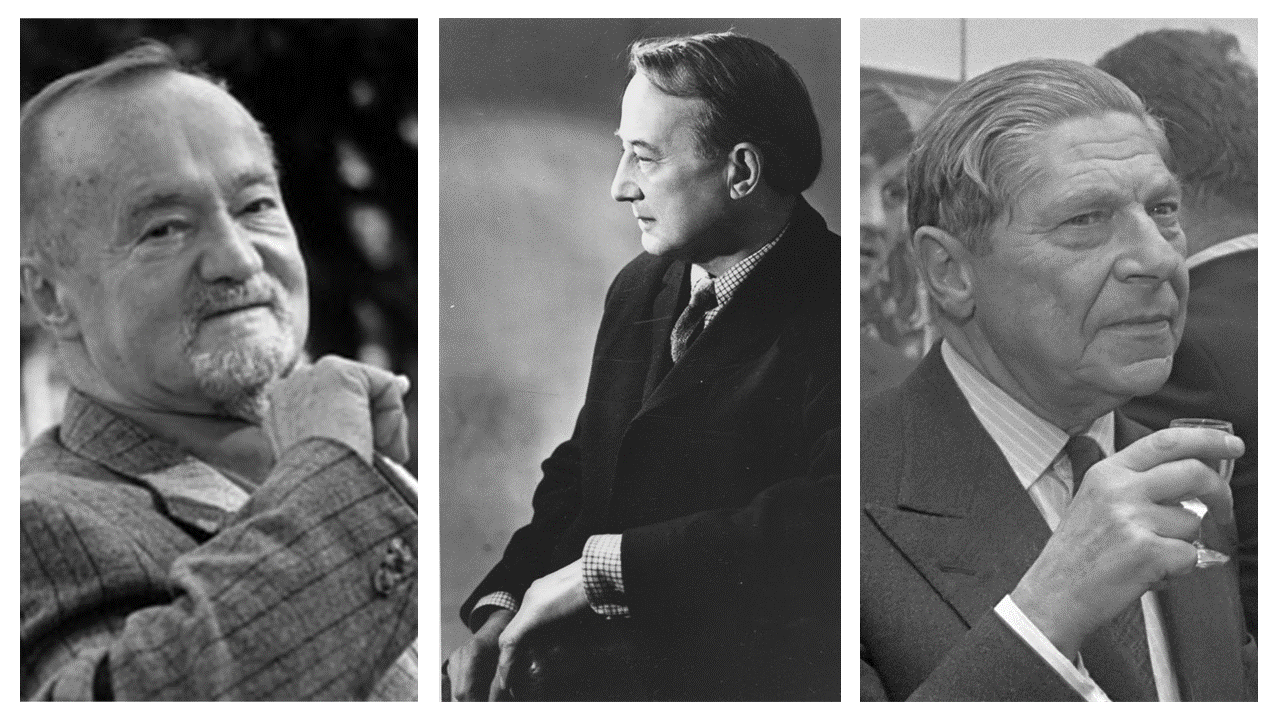
Featured Image: Toulmin, Oakeshott, Koestler.


Neville Buch
Latest posts by Neville Buch (see all)
- Overcoming the Cynicism of Dismissal: Critical Thinking, and Contributory Economics – September 21, 2026
- Agency, Cultural Construction, and Synoptic Vision: On Matt Patterson’s Comprehensive Examination in Sociological Theory (2009) – September 20, 2026
- Human Existence, Existential Angst, and the Protestant Worldview: An Essay on Buch’s Existential Thesis – September 20, 2026