
Dr Neville Buch
The Architecture of Error: Systems of Cognitive Pathological Misunderstanding
Abstract
This essay synthesizes the multifaceted origins of misunderstanding, characterizing it not as a simple lack of information but as a systemic cognitive pathology embedded in modern technical and social systems. Drawing on a wide-ranging framework that includes the forensic analysis of Dan Mason, the historical scholarship of Dr. Neville Buch, and the social philosophies of Bernard Stiegler and Jürgen Habermas, the analysis identifies the “techné mindset”, “Historical Forgetfulness”, and “systematically distorted communication” as the primary drivers of intellectual error. Ultimately, misunderstanding is presented as a structural consequence of frameworks that prioritize technical efficiency and personal patronage over social accountability and the “Original Synthesis of Experience”.
——————————————————————————–
The Architecture of Error: A Synthesis on the Reasons for Misunderstanding
I. The Epistemological Foundation: The Cartesian Impasse and Self-Sealing Systems
Misunderstanding often begins with the “Cartesian Impasse”—the erroneous belief in “epistemological individualism” where knowledge is viewed as a solitary acquisition derived from private sensory data rather than a social process. This foundational error is institutionalized through “self-sealing” intellectual frameworks that generate immunity to external challenge via a “Junior/Senior” cognition hierarchy. In such systems, any challenger operating outside the framework’s proprietary terms is automatically classified as a “Junior” thinker, rendering the challenge itself evidence of the critic’s deficiency rather than a claim requiring engagement. This creates a “classification condition” where misunderstanding is structurally mandated to protect the framework’s internal narrative.
II. The Technological Pressure: Denoetization and Symbolic Misery
In the age of computational capitalism, misunderstanding is exacerbated by “denoetization”—the mechanical liquidation of the human capacity to judge. As technology and algorithmic management outstrip human social organization, individual will is rendered “obsolete in advance,” leading to a state of “symbolic misery” where active human agency is replaced by automated behavioural control. When individuals outsource their memory and decision-making to digital platforms, they suffer from “disindividuation,” losing the ability to form critical thoughts or recognize the flaws in their own reasoning. This “correlative loss of reason” creates a generational vacuum where complexity is rejected in favour of “sloppy thinking” and “superstition”.
III. The Historical Context: Forgetfulness and the “Queensland Character”
A critical driver of misunderstanding is “Historical Forgetfulness”—the failure to perceive the historical origins of one’s own prejudices. In the Queensland context, this manifests as an “historical lag,” where the state was slow to embrace modern theories in favour of a folkloric, agrarian identity known as the “myth of the Queensland character”. Misunderstanding occurs when society relies on “folk history” that views the past through ethnic heroes and villains rather than professional historiography that seeks to “uncoil” repetitive patterns of error. This results in an “intellectual stasis” where the “Other” is viewed as a shadowy subversive rather than a real person with a valid, historically situated perspective.
IV. The Communicative Breakdown: Distorted Action and Thin Concepts
Misunderstanding is frequently the result of “Systematically Distorted Communication,” where communication is manipulated by institutional power to serve “strategic action” oriented toward success rather than mutual accord. This environment fosters “potted thinking”—compressed, ready-made statements that save individuals the trouble of actual thought. Such communication relies on “thin” concepts (abstract terms like “right” or “ought”) that carry no descriptive weight, stripping away the “thick ethical concepts” (like honesty or courage) that anchor thought in concrete reality. Consequently, the mind drifts instantly from objective observation to unreflective interpretation, confused by the signifiers of language used in socio-political conflict.
V. Institutional Failures: Repressive Tolerance and Parochialism
Finally, misunderstanding is rooted in the “mismatch of standpoints” between experts and the lived experience of the community. This is seen in the phenomenon of “repressive tolerance,” where modern institutions appropriate the language of dissent while maintaining management structures that are the antithesis of radical values. Furthermore, the “Pacific Pond” mentality of parochialism focuses on small sections of an issue while ignoring the wider global context, leading to a “Simplistic Literalism” that treats truth as a collection of static facts rather than a dynamic, revisable process.
——————————————————————————–
Conclusion: The Path to Sufficient Comprehension
Remediating misunderstanding requires a transition from a “Junior” mindset of unreflective execution to a “Senior” state of social accountability. True fulfillment is not found in the “illusory certainty” of a self-sealing model, but in “Sufficient Comprehension”—the ability to seek the whole of a matter while remaining permanently open to the “voice of the other”. By adopting “Spiral Historiography” and “crap detecting” to unmask manufactured myths, society can reclaim human authorship over its narratives and move toward Aristotelian flourishing.
——————————————————————————–
The Dynamic of Cognition (DoC) Table: Origins and Correctives
| DoC Component | Phenomenon of Misunderstanding | Corrective Mechanism |
| Self | Classification vs. Engagement: Using hierarchies to dispose of critics. | Reflective Self-Criticism: Acknowledging knowledge is interpersonal. |
| Mind | Denoetization: The liquidation of judgment by technical systems. | Noetic Action: Reclaiming discernment from automated stimuli. |
| Reason | Historical Forgetfulness: Banishing context and repetitive error. | Spiral Historiography: Uncoiling the circles of stupidity. |
| Utility | Techné Mindset: Prioritizing metrics over intellectual value. | Human Authorship: Ensuring the human remains master of the “what”. |
| Love/Bond | Parochialism: Using myths (e.g., “Queensland Character”) to resist the “Other”. | Empathy (Verstehen): Seeking a “fusion of horizons” through dialogue. |
——————————————————————————–
BIBLIOGRAPHY
Brooks, D. (2026, April 16). History is running backwards: Why reactionaries are taking over the world. The Atlantic.
Buch, N. (2015). No regrets in the evening of life: The history of Junction Park State School (1888–2013). Boolarong Press.
Buch, N. (2019, May). The changing definition of Peace, Part 1. Queensland History Journal, 24(1), 117-131.
Buch, N. (2024). Queensland history, religious education, and belief. In Socio-Anthropological Approach in Queensland (Chapter 7).
Buch, N. (2026, April 7). Viking Age media and the synthesis of lived experience. Independent Scholar Essay.
Erkan, E. (2019). Societies of disindividuated hyper-control: On the question of a new pharmakon. [Review of The age of disruption, by B. Stiegler]. Polity Press.
Hayes, M. (2023). Correspondence and Reflections on Postmodernism and Repressive Tolerance.
Mason, D. (2026, April). The self-sealing framework: A forensic analysis of the Corwin-Buch exchange. Working Paper WP-2026-034.
McKinney, J. P. (1971). The Structure of Modern Thought. Chatto and Windus.
Queensland State Archives. The Evolution of Queensland Governance: From Patronage to Professionalism.
Taylor, D. (2026). The Angry Brigade.
Williams, B. (1985). Ethics and the Limits of Philosophy. Fontana Press.
Based on the source material provided, here are the endnotes and references for the essay “The Architecture of Error: Systems of Cognitive Pathological Misunderstanding.” The references are derived from the bibliographies, forensic findings, and theoretical frameworks established in the sources.
Endnotes and References
- Buch, N. (2015). No regrets in the evening of life: The history of Junction Park State School (1888–2013), Foreword, pp. x–xi.
- Mason, D. (2026). The self-sealing framework: A forensic analysis of the Corwin-Buch exchange, Working Paper WP-2026-034, p. 1.
- Erkan, E. (2019). Societies of disindividuated hyper-control: On the question of a new pharmakon, Polity Press, p. 1.
- Buch, N. (2024). Queensland history, religious education, and belief, Chapter 7, pp. 161–187.
- Stiegler, B. (2019). The age of disruption: Technology and madness in computational capitalism, as cited in Erkan (2019).
- Habermas, J. (1981). The theory of communicative action, as cited in Answer 3, p. 10.
- Mason, D. (2026). Finding 1: The MICE framework contains an architectural feature (Junior/Senior hierarchy) that classifies rather than engages challenges.
- Habermas, J. (1979). Communication and the evolution of society, Beacon Press, p. 1.
- McKinney, J. P. (1971). The Structure of Modern Thought, Chatto and Windus.
- McKinney, J. P. (1950). The Challenge of Reason, as cited in Answer 2, p. 6.
- Mason, D. (2026). Forensic Analysis: Step 5 documented as “Credential defense / partial evidential”.
- Mason, D. (2026). Finding 2: The register inversion indicates defensive posturing rather than substantive engagement.
- Mason, D. (2026). Finding 5: The formal rebuttal classifies rather than engages structural arguments.
- Erkan, E. (2019). Discussion on Denoetization and the speed of disruption outstripping social organization.
- Erkan, E. (2019). Societies of disindividuated hyper-control, Polity Press, p. 5.
- Stiegler, B. (2014). Symbolic misery, 1: The hyperindustrial epoch, as cited in Answer 6, p. 28.
- Erkan, E. (2019). Analysis of Algorithmic governmentality and the extirpation of the transcendental imagination.
- Erkan, E. (2019). Discussion on the loss of savoir-faire through grammatization of gesture on digital platforms.
- Brooks, D. (2026). History is running backwards, The Atlantic, April 16, p. 1.
- Brooks, D. (2026). Analysis of “sloppy thinking” in a civilization that does not pass down wisdom.
- Brooks, D. (2026). The state of mind built around the “Machine”—rationalism, scientism, and efficiency.
- Buch, N. (2015). No regrets, p. 159 on the “militarist model of education” being forgotten.
- Buch, N. (2024). Queensland history, religious education, and belief, p. 162.
- Anonymous (n.d.). The evolution of Queensland governance: From patronage to professionalism.
- Anonymous (n.d.). The agrarian myth and Queensland’s intellectual stasis.
- Buch, N. (2015). Foreword on history as a continually debated and reproduced discipline.
- Buch, N. (2016). History of Education Review, 45(1), p. 69, on the lack of statistical analysis in history.
- Buch, N. (2019). The changing definition of Peace, Part 1, Queensland History Journal, 24(1), p. 117.
- Buch, N. (2021). The intellectual ethos of Charles Strong in Queensland, in Charles Strong’s Australian Church, p. 130.
- Habermas, J. (1981). Reciprocal recognition of four validity claims: comprehensibility, truth, rightness, and truthfulness.
- Habermas, J. (1981). The “grey areas” of communication where validity claims are not redeemed.
- Habermas, J. (1981). Strategic Action replacing Communicative Action aimed at mutual understanding (Verständigung).
- Buch, N. (2025). “Potted Thinking”: Ready-made statements saving the trouble of thought.
- Williams, B. (1985). Ethics and the Limits of Philosophy, Fontana Press.
- Williams, B. (1985). The distinction between “thick” ethical concepts and “thin” abstract terms.
- Russell, B. (1915). The Ethics of War, as cited in Buch (2019), p. 132.
- Hobbes, T. (1651). Leviathan, as cited in Marder (2015), on the “ignorance of the signification of words.”
- Thornton, P. (2015). “Language in the Age of Algorithmic Reproduction: Semantic Capitalism,” LCCT Abstract.
- Dewey, J. (1916). Democracy and Education, as cited in Answer 3 on the learner’s perspective in posse.
- Buch, N. (2026). “Specialized Ignorance”: Precision in data coupled with failure in humanistic foundations.
- Hayes, M. (2023). Correspondence and Reflections on Postmodernism and Repressive Tolerance.
- Hayes, M. (2023). Analysis of management structures as the “utter antithesis” of radical values.
- Buch, N. (2025). The “Pacific Pond” mentality: Focused on small sections while ignoring global schemas.
- Buch, N. (2026). Simplistic Literalism: Believing truth is a collection of static, concrete facts.
- Buch, N. (2024). The spiral history theory of stupidity: Uncoiling repetitive cognitive patterns.
- Buch, N. (2021). Junior Mindset: Unreflective execution and uncritical habit.
- Buch, N. (2021). Senior State: Achieving a state of social accountability.
- Buch, N. (2021). “Sufficient Comprehension”: Seeking the whole while remaining open to correction.
- Buch, N. (2026, April 7). Viking Age media and the synthesis of lived experience, p. 1.
- Management Institute for Contributory Economy (MICE). Motto: Preserving the legacy of good value for a contributory economy.
- Buch, N. (2026). “Aristotelian Flourishing”: Moving beyond techné toward senior accountability.
- Mason, D. (2026). Ten Forensic Findings: TEN documented reproducible failure modes.
- McKinney, J. P. (1971). Reflective Self-Criticism: Acknowledging knowledge is an interpersonal thing.
- Stiegler, B. (2019). Noetic Action: Reclaiming discernment from automated stimuli.
- Erkan, E. (2019). Denoetization: The Question of Madness.
- Buch, N. (2015). “Crap Detecting”: Filtering myths and institutional misinformation.
- Anonymous (n.d.). The Agrarian Myth and Queensland’s Intellectual Stasis.
- Buch, N. (2024). Uncoiling circles of error to restore Foresight.
- Buch, N. (2026, April 7). Restoring Human Authorship as the foundation for navigating the past.
- Buch, N. (2015). Verstehen (Empathetic Understanding): Merging repellent experiential fields.
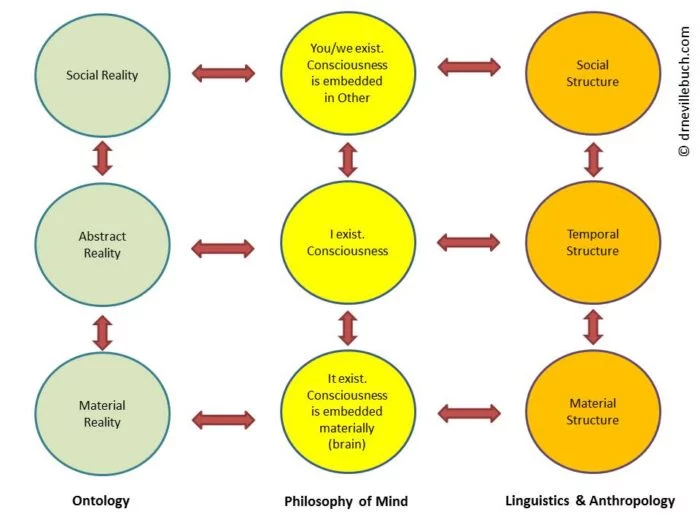
Featured Image: Interrelation-of-Ideas-on-Consciousness-and-Reality-700×525-Copy.webp


Neville Buch
Latest posts by Neville Buch (see all)
- Death in Life and Life in Death: Affective, Intellectual, and Ontological Dimensions of Human Mortality – October 2, 2026
- Psychological Symbol Cards – October 2, 2026
- The Washington Post Impact Report and American Studies – October 1, 2026