

The “How Activism Replaced Truth in Academia” audio commentary on MICE’s Contributory Economy and Human Authorship:
Abstract
This review essay evaluates the findings and structural critiques presented in contemporary assessments of higher education, taking the Report on the State of Scholarship in the Humanities and the Humanistic Social Sciences (Boghossian et al., 2026; Vanderbilt Commission Report) as an illustrative heuristic diagnostic. Utilizing an analytical synthesis of epistemology, intellectual history, and cognitive sociology, this assessment deconstructs the systemic drift in modern academic inquiry from objective empirical methodology toward moralized ideological advocacy. The analysis evaluates the breakdown of methodological balance within the humanistic social sciences, examining the epistemological schism in anthropology—highlighted by Joseph Henrich’s empirical field report on sampling bias and the structural rift between biological and cultural subfields (Wiessner, 2016)—as a primary case study. Furthermore, the review deconstructs the philosophical roots of academic degradation, focusing on post-structuralist skepticism, the institutional proliferation of “noble lies,” and the cognitive mechanics of “potted thinking,” “Specialized Ignorance,” and the “Analytical Abyss” (Buch, 2026). To address these pathologies, this essay outlines a framework for epistemic renewal. This model synthesizes 4E cognitive theories (embodied, embedded, enactive, extended), Hans-Georg Gadamer’s “fusion of horizons,” Neville Buch’s political worldview taxonomy, and Jürgen Habermas’s communicative action under “open constitutionalism” to establish a “level playing field.” Finally, it operationalizes inquiry via Buch’s POLICE model ( Philosophically Ontology Logic Intersect Compatibility Education ) to restore human authorship and scientific objectivity across academic institutions.
1. How Social Science Works and Does Not Work
Social scientific inquiry occupies a critical epistemological threshold, tasked with generating reliable, verifiable knowledge regarding complex human behaviours, institutional architectures, and broad societal dynamics. To produce robust diagnostic models capable of informing public governance, the social sciences must sustain a delicate equilibrium between nomothetic explanatory power and humanistic contextualization. When this methodological balance breaks down, the authority of academic research deteriorates, transforming empirical inquiry into an instrument of partisan consensus and ideological reinforcement.
Methodological Dualism (Nomothetic vs. Humanistic Methods)
The structural integrity of social science relies upon a productive tension between nomothetic (law-seeking, quantitative) paradigms and humanistic (qualitative, interpretive) methodologies. Nomothetic approaches prioritize empirical measurement, statistical validation, and cross-cultural sampling to identify generalizable behavioural patterns. Conversely, humanistic approaches emphasize interpretive depth, historical contingency, and localized context to capture the subjective meanings embedded within human action. Rather than operating as mutually exclusive paradigms, quantitative models and qualitative insights function as complementary analytical layers: quantitative metrics map macro-level regularities, while humanistic interpretations illuminate the contextual mechanisms and lived realities that give those regularities substance. Crucially, as articulated by philosopher Bernard Williams, humanistic qualitative analysis depends upon “thick ethical concepts”—terms such as courage, kindness, or justice —that uniquely unite factual description with evaluative meaning, providing the concrete determinateness necessary to prevent abstract modelling from devolving into empty formalism. When these complementary layers are severed, social science succumbs to characteristic failure modes: nomothetic research degenerates into “thin” statistical formalisms detached from lived experience, while humanistic research collapses into hyper-subjective constructivism lacking empirical baselines.
Mechanisms of Political and Ideological Distortion
The institutional integrity of social science is compromised by cognitive and structural mechanisms that introduce bias into research design, data selection, and interpretation. Grounded in Neville Buch’s Dynamic of Cognition (DoC) framework (2025, 2026), human cognition within institutions begins with an unexamined “prejudice”—conceived in a Heideggerian sense as the cyclical beginning of thought where an individual, “thrown into the world” ( Geworfenheit ), operates from unreflective pre-judgments. In politicized academic environments, this initial state manifests as “potted thinking,” where scholars accept compressed, ready-made ideological formulas. Thinkers fall into the illusion of “commonality”—the unreflective assumption that their localized worldview represents a universal baseline. Without critical reflection, inquiry settles into a “closed loop of automaticity,” reducing researchers to “passive conduits” for dominant political dogmas. This cognitive failure is driven by affective “attitudes,” defined as durable organizations of emotive, perceptive, and cognitive motivations that function as default reinforcements of belief. Attitudes condition activity by prioritizing internal group certainty over disconfirming evidence. When scholars filter out opposing data through “wilful ignorance” (exclusion), they construct insular ideological silos. Within these closed ecosystems, research questions are framed not to test hypotheses against foundational reality, but to generate conclusions that validate institutional orthodoxy.
The “So What?” Analytical Layer
The collapse of methodological objectivity in the social sciences degrades the foundational social contract between academic institutions and society. When scholarship surrenders empirical rigour to moralized advocacy, research transforms into political propaganda, destroying public trust in higher education. Policy interventions formulated on ideologically distorted research inevitably fail when executed in complex societal environments, undermining the capacity of public governance to address human needs, evaluate economic trade-offs, or resolve collective challenges. This general breakdown in social scientific methodology is acutely visible in specific disciplines where the abandonment of empirical baselines has led to structural fragmentation.
2. How Anthropology Specifically Works and Does Not Work
Anthropology historically served as the definitive intellectual bridge between the biological sciences and human cultural interpretation. By synthesizing physical evolutionary data with qualitative social analysis, the discipline was uniquely configured to provide comprehensive diagnostics of human nature, cultural evolution, and comparative social organization. Examining anthropology provides crucial strategic value, as it represents the discipline where epistemic fragmentation and the abandonment of shared scientific baselines have manifested most severely.
The Epistemological Split in Anthropology
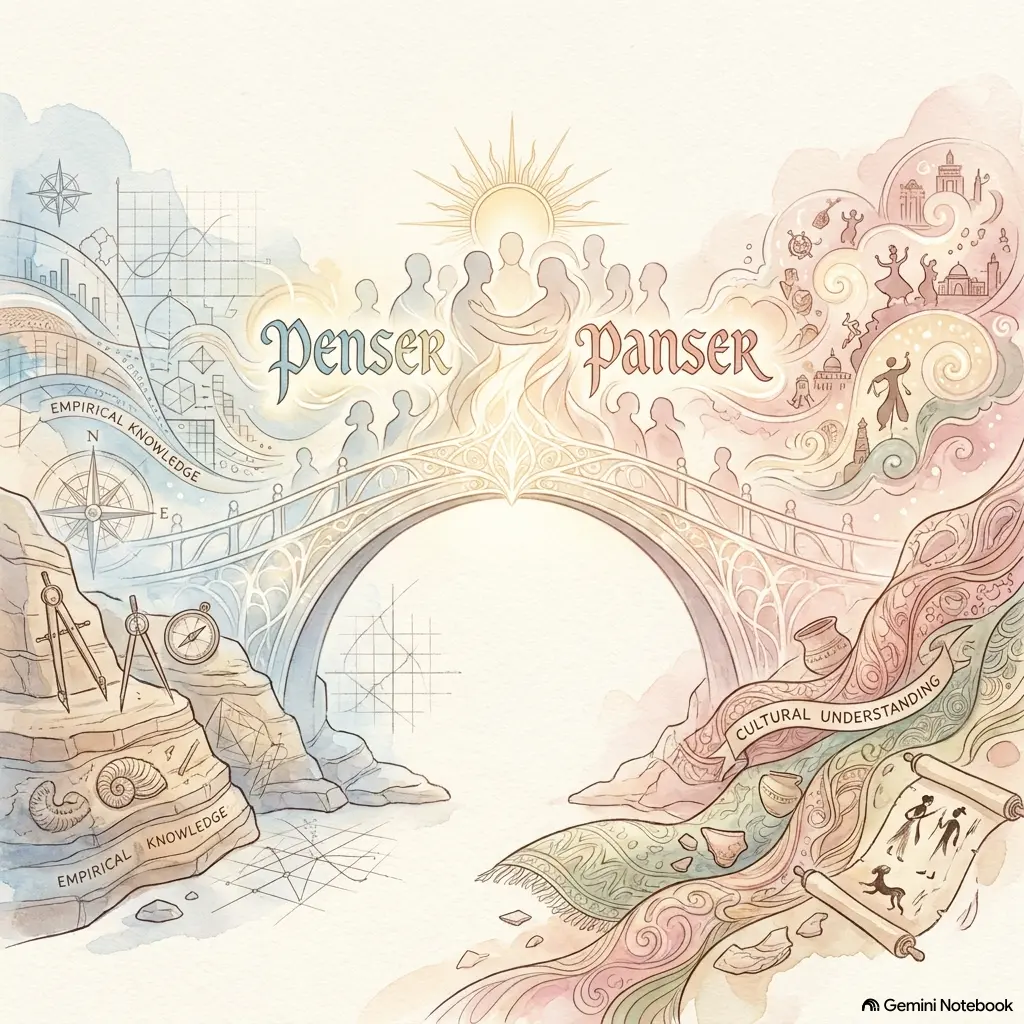
Anthropology is currently fractured by a structural schism between biological (physical/evolutionary) anthropology and cultural or social anthropology (Wiessner, 2016). Biological anthropology remains grounded in empirical measurement, genetic analysis, paleoanthropology, and evolutionary mechanics. In contrast, cultural anthropology has pivoted toward post-structuralist textual analysis, hyper-reflexivity, and normative critique. As Wiessner (2016) demonstrates, this rift has divided the discipline into mutually hostile paradigms: while biological anthropologists refine quantitative models of human behaviour, cultural anthropologists frequently reject cross-cultural empirical comparisons altogether, treating scientific taxonomy and data collection as inherently coercive or normative structures.
Institutional Shift from Knowledge Production to Advocacy
This epistemological division has been accelerated by an institutional transition within professional bodies, such as the American Anthropological Association (AAA), which have shifted away from empirical knowledge production toward political advocacy. Central to this transformation is the pervasive institutionalization of “positionality statements” and reflexivity. While reflexivity was designed to identify researcher bias, its ritualized execution has centered the subjective identity of the scholar above the object of study. By substituting standpoint epistemology—the assertion that demographic identity dictates epistemic privilege—for objective empirical investigation, cultural anthropology replaces verifiable factual inquiry with subjective moral claims, undercutting its academic credibility.
Empirical Diagnostic: Henrich’s Field Report
The empirical consequences of this disciplinary breakdown are illustrated in Joseph Henrich’s 107-page field report (evaluated heuristically in Boghossian et al., 2026). Henrich diagnoses cultural anthropology’s methodological vulnerabilities, focusing on the pervasive reliance on WEIRD (Western, Educated, Industrialized, Rich, Democratic) sampling bias. Henrich critiques cultural anthropology’s resistance to integrating cross-cultural, evolutionary, and quantitative data, demonstrating how the rejection of scientific methodology yields inaccurate generalizations regarding human psychology and cultural variation. By isolating itself from evolutionary frameworks and quantitative cross-cultural datasets, cultural anthropology forfeits its ability to generate valid cross-cultural diagnostics.
The “So What?” Analytical Layer
The impact of anthropology’s epistemic split extends far beyond university faculties. By abandoning empirical baseline standards, cultural anthropology incapacitates itself as an objective science, rendering its claims unpersuasive to broader scientific disciplines. This self-inflicted insularity strips the field of its authority in public policy, depriving social institutions of validated cross-cultural data and preventing cultural anthropology from contributing to multi-disciplinary advances in cognitive science, human genetics, and deep historical analysis.The methodological breakdown observed in anthropology is not an isolated disciplinary failure, but the visible manifestation of deeper theoretical errors that have corrupted modern academic thinking.
3. Why Academic Thinking Goes Wrong
The decline in academic rigor across the humanities and humanistic social sciences stems from theoretical errors that have systematically eroded the pursuit of objective truth. Diagnosing these root philosophical distortions—post-structuralist skepticism, institutionalized moralization, and cognitive isolation—is an essential prerequisite to presaging systemic epistemic renewal.
Post-Structuralist Epistemic Skepticism and Relativism
The primary theoretical driver of academic degradation is the institutionalization of post-structuralist and radical social-constructivist doctrines. These frameworks reject objective reality, foundational truth, and shared empirical standards, asserting that all knowledge claims are arbitrary constructs engineered to enforce localized power dynamics. By reducing truth to an expression of power, post-structuralist skepticism dismantles the shared criteria required for scholarly evaluation. When factual verification, empirical evidence, and formal logic are dismissed as ideological artifacts, academic assessment collapses into an enforcement of political conformity.
The Pathology of “Noble Lies” and Moralization
Compounding this theoretical skepticism is the adoption of “noble lies”—the intentional distortion, suppression, or selective presentation of empirical findings by scholars to serve perceived morally benevolent outcomes. This practice arises when academic ideas become “moralized.” As cognitive dynamic research shows (Buch, 2025, 2026), when attitudes are imbued with moral conviction, they are treated as universally binding standards that trigger intense moral emotions and resist rational cost-benefit analysis. Furthermore, value assignments in scholar cognition are frequently oversimplified in public discourse into binary categories (“religious vs. secular”). Epistemologically, values are better categorized via Jungian typologies— Sensation, Intuition, Thinking, Feeling —which float in the dynamic space of cognition until anchored by concrete, thick concepts. When institutions reduce values to rigid moralized binaries, heterodox inquiry is penalized, while scholars adhering to institutional orthodoxy are insulated from empirical scrutiny.
in scholar cognition are frequently oversimplified in public discourse into binary categories (“religious vs. secular”). Epistemologically, values are better categorized via Jungian typologies— Sensation, Intuition, Thinking, Feeling —which float in the dynamic space of cognition until anchored by concrete, thick concepts. When institutions reduce values to rigid moralized binaries, heterodox inquiry is penalized, while scholars adhering to institutional orthodoxy are insulated from empirical scrutiny.
The “Analytical Abyss” and Specialized Ignorance
At the cognitive level, these philosophical distortions produce what Buch (2026) terms “Specialized Ignorance” and the “Analytical Abyss.” Specialized Ignorance occurs when scholars use “wilful ignorance” (exclusion) to systematically filter out disconfirming evidence, historical context, and alternative paradigms that lie beyond their immediate horizon worldview. This exclusionary process reduces complex phenomena into “thin,” ungrounded concepts divorced from lived reality. Scholars trapped within the Analytical Abyss operate in insular academic silos, circulating self-referential jargon and manufactured institutional myths while remaining functionally ignorant of basic empirical facts and cross-disciplinary scholarship.
The “So What?” Analytical Layer
When objective truth-seeking is replaced by moralized ideological advocacy and specialized ignorance, the university’s fundamental societal role is subverted. Higher education institutions cease to function as trusted centres of open inquiry, transforming into instruments of political indoctrination. This loss of mission alienates the public, deprives democratic society of objective scholarly authority, and compromises the intellectual foundation necessary for sound public policy. Reversing this institutional crisis requires moving beyond diagnostic critique to establish concrete mechanisms for intellectual restoration and structural reform.
4. What Has to Change in Academic Thinking
Systemic epistemic renewal requires both philosophical re-grounding—re-establishing objective truth and open inquiry as core academic imperatives—and the implementation of precise cognitive and procedural filters designed to protect scholarship from ideological capture.
Restoring Epistemic Standards and Open Discourse
The baseline of academic restoration requires reaffirming objective truth as the foundational aim of scholarly inquiry. Academic institutions must assert that reality exists independently of human perception and that empirical claims must be tested against transparent, replicable standards of peer review. To achieve this, universities must enforce a strict separation between personal or institutional moral commitments and empirical research generation. Open heterodox discourse must be protected, ensuring that research questions, methodologies, and findings are judged on logical coherence and empirical validity rather than ideological alignment.
Incorporating 4E Cognitive Frameworks, Horizon Fusion, and the Level Playing Field
To transcend narrow computational cognitivism and post-structuralist constructivism, academic methodology should incorporate 4E Cognitive Frameworks (Embodied, Embedded, Enactive, Extended) as developed in contemporary cognitive sociology (Buch, 2025, 2026). The 4E model demonstrates that human cognition is an active, embodied, and environment-coupled phenomenon deeply intertwined with affect and cultural normativity. Cognitive inclusion—the systematic internalization of external perspectives and the experiences of the Other—is operationalized through Hans-Georg Gadamer’s “fusion of horizons.” Rather than trapped in localized standpoint epistemologies, researchers achieve intellectual synthesis by integrating individual knowledge with broader historical and cross-cultural contexts. To structure this interdisciplinary dialogue, scholarship must draw upon Dr. Neville Buch’s formal taxonomy of prevailing political worldviews (2024b):
- Established Tradition: Resistant to reform, grounded in Hobbesian sovereignty, Burkean conservatism, or Buckleyan traditionalism.
- Utopian: Movements seeking a singular ideal system, such as Marxist teleologies or anarchism.
- Liberal Options: Frameworks asserting a level playing field, comprising four theorized variants:
- Lockean: Tabula rasa and broad tolerance.
- Utilitarian/Rawlsian: Scientific neutrality, utilitarian optimization, and the principle of the veil of ignorance.
- Closed Constitutionalism: Fixed choices rooted in perceived historical origins ( res publica ), such as Jeffersonian or Lincolnian frameworks.
- Open Constitutionalism: Periodically negotiated reform across worldviews to establish common ground via Jürgen Habermas’s communicative action. By adopting Open Constitutionalism , academic institutions establish a true “level playing field.” This model removes privileged ideological status from any single faction, replacing moralized assertions with transparent, period-negotiated communicative rationality.
Operationalizing Inquiry: The POLICE Model
To operationalize these theoretical principles and purge manufactured institutional myths, academic inquiry can apply Buch’s (2024a) POLICE model ( P hilosophically O ntology L ogic I ntersect C ompatibility E ducation). The POLICE framework provides a five-step procedural mechanism for filtering out unreflective jargon, logical fallacies, and empirical distortions:
- Philosophically Ontology: Clarifies the foundational reality and state of affairs under investigation, distinguishing actual existence from subjective representation.
- Logic: Tests internal argumentation for formal logical consistency, eliminating circular reasoning, moralized assumptions, and “potted thinking.”
- Intersect: Analyses the interaction between distinct analytical disciplines, empirical data inputs, and cognitive perspectives without allowing one paradigm to suppress another.
- Compatibility: Evaluates whether theoretical claims are compatible with established empirical baselines, cross-cultural evidence, and multi-methodological observations.
- Education: Translates validated findings into transparent, socially accountable educational frameworks that restore human authorship and agency.By systematically executing the POLICE filter, researchers defeat “potted thinking” and bridge the “Analytical Abyss,” moving from unreflective habit toward rigorous social accountability.
The “So What?” Analytical Layer
Implementing these combined philosophical and procedural reforms will restore methodological rigor to the humanities and social sciences, protecting higher education from political capture. Grounding research in empirical baselines, 4E cognitive models, Gadamerian horizon fusion, and Habermasian communicative action will re-establish the university as a trusted civilizational institution capable of generating authentic knowledge. This transition from ideological advocacy to epistemic renewal is vital for the future of scholarly inquiry, ensuring that human authorship remains the proactive master of an expanding, socially accountable horizon of knowledge.
Bibliography
- Bandura, A. (2006). Toward a psychology of human agency. Perspectives on Psychological Science , 1(2), 164–180.
- Boghossian, P. et al. (2026). Report on the State of Scholarship in the Humanities and the Humanistic Social Sciences (Vanderbilt Commission Report). Heuristic case diagnostic.
- Bruenig, E. (2026). Why Empathy Is Now Toxic . The Atlantic .
- Buch, N. (2015). Process of learning (principles) & the dynamic of cognition . Brisbane: Dr Neville Buch Publications.
- Buch, N. (2024a). Philosophically Ontology Logic Intersect Compatibility Education (POLICE) . Brisbane: Dr Neville Buch Publications.
- Buch, N. (2024b). Semantics and Strategies for the Level Playing Field . Brisbane: Humanist Australia.
- Buch, N. (2025). History of cognition: Discussion sheet / The Dynamic of Cognition . Brisbane: The Philosophy Café.
- Buch, N. (2026). Architecture of the Horizon: Navigating the Dynamic of Cognition / Basic Social Psychology . Brisbane: Management Institute for Cognitive Sociology.
- Corwin, S. L. (2026a). Refuting Cognitive Degradation in Modern Scholarship . Source fragment p. 25.
- Corwin, S. L. (2026b). The Sovereign Idiot: Performative Absurdity in Contemporary Discourse . Source fragment p. 16.
- Gadamer, H.-G. (1989). Truth and Method . 2nd rev. edn. Translated by J. Weinsheimer and D. G. Marshall. New York: Crossroad.
- Habermas, J. (1984). The Theory of Communicative Action: Reason and the Rationalization of Society . Translated by T. McCarthy. Boston: Beacon Press.
- Heidegger, M. (1962). Being and Time . Translated by J. Macquarie and E. Robinson. London: SCM Press.
- Henrich, J. (2026). Field Report on Methodological Failure and WEIRD Bias in Cultural Anthropology . Cited as heuristic field report in Boghossian et al., 2026.
- Simon, H. A. (1962). The Architecture of Complexity. Proceedings of the American Philosophical Society , 106(6), 467–482.
- Wiessner, P. (2016). The Rift between Science and Humanism: What’s Data Got to Do with It? Current Anthropology , 57(S13), S154–S166.
- Williams, B. (1985). Ethics and the Limits of Philosophy . Cambridge, Mass.: Harvard University Press.


Neville Buch
Latest posts by Neville Buch (see all)
- The Desiccation of the Common Well: Identity Politics, Algorithmic Assessment, and the Crisis of Adult Responsibility – October 6, 2026
- Academic Rigour, Epistemic Renewal, and the Crisis of Inquiry: A Scholarly Review of the Vanderbilt Commission Report on the State of Scholarship – October 5, 2026
- Uncoiling the Psychology of the Western Traditional Belief System – October 5, 2026