
The “Reclaiming Human Authorship on Australian Highways” audio commentary on MICE’s Contributory Economy and Human Authorship at: https://drnevillebuch.com/2016-future-public-cognition/audio-commentary-discussion-no-debate-a-conversation-on-5th-australian-east-coast-trip-powerpoint-story-of-resilience-presentation-5th-australian-east-coast-trip-brisbane-to-geelong-and-back-vi/
Abstract
This concluding abstract in the Lebensphilosophie series presents a comprehensive synthesis of independent scholarship, institutional critique, and civilizational renewal, establishing a workable blueprint for restoring Human Authorship in an era dominated by corporate managerialism, hyper-industrial automation, and market fundamentalism[1]. It diagnoses the profound structural divergence within modern higher education, wherein corporate university management has abandoned the classical universitas ideals of Unity and Universality in favor of revenue metrics, credential inflation, and performative audit culture[3]. By conditioning academics into a “Junior state of cognition” driven by departmental compliance and “property in positions,” institutional formalisms produce a “specialized ignorance” that reduces complex human realities to thin, quantitative metrics[5][7].
In response to this systemic degradation, the paper demonstrates that the independent scholar, operating outside corporate university appointments, acts as the primary custodian of Intellectual Sovereignty and public reason [201–202]. Unconstrained by corporate risk-aversion or positional gatekeeping, the autonomous thinker integrates personal biography (Erlebnis) with rigorous academic inquiry, embodying the “craftsmanship of the reflexive insider” [24–25, 85]. To protect this intellectual practice from digital denoetization and economic precarity, the Management Institute for Contributory Economy (MICE) deploys an “intellectual immune system” featuring three core metacognitive tools [24–30, 209]:
- The POLICE Diagnostic Filter: A five-stage framework (Philosophically Ontology, Logic, Intersect, Compatibility, Education) that unmasks “institutional bullshit,” tests theoretical models against actual states of affairs (in rebus), and filters out manufactured myths[8][9].
- Spiral Historiography: A non-linear method that “uncoils” the mind from “historical forgetfulness,” retrieving deep civilizational memory and “thick ethical concepts” (truthfulness, courage, substantial fairness) to correct repetitive cultural errors[10].
- Panser (Thinking as Caring): An organological shield that integrates empathy and moral judgment into the analytical process, protecting human particularity from pure algorithmic calculation and market monetization [25–26, 158, 204, 207].
At its socioeconomic apex, the paper operationalizes “professional contractualism” and the Contributory Income Scheme to resolve the material resource barriers that enforce pauperization upon independent humanists [21–22, 36–37]. Drawing on Coasean institutional extensions and Bernard Stiegler’s macroeconomic proposals, MICE demonstrates that high-level historical synthesis and philosophical inquiry must be publicly underwritten as vital cognitive scaffolding—analogous to civil engineering or public health infrastructure—that protects the democratic sphere from demagoguery and epistemic collapse[14][15]. By replacing extractive wage-labour markets with remunerated contributory activity, society guarantees protected time and bandwidth for independent scholars to build open, convivial “we-spaces” [36–37, 211]. Ultimately, synthesizing the five DoC intentions (Self, Mind, Reason, Utility, Love) achieves Aristotelian flourishing (eudaimonia) and Planetary Wisdom, ensuring that the evaluating, willing “Historical Person” remains the proactive author of civilizational destiny[16].
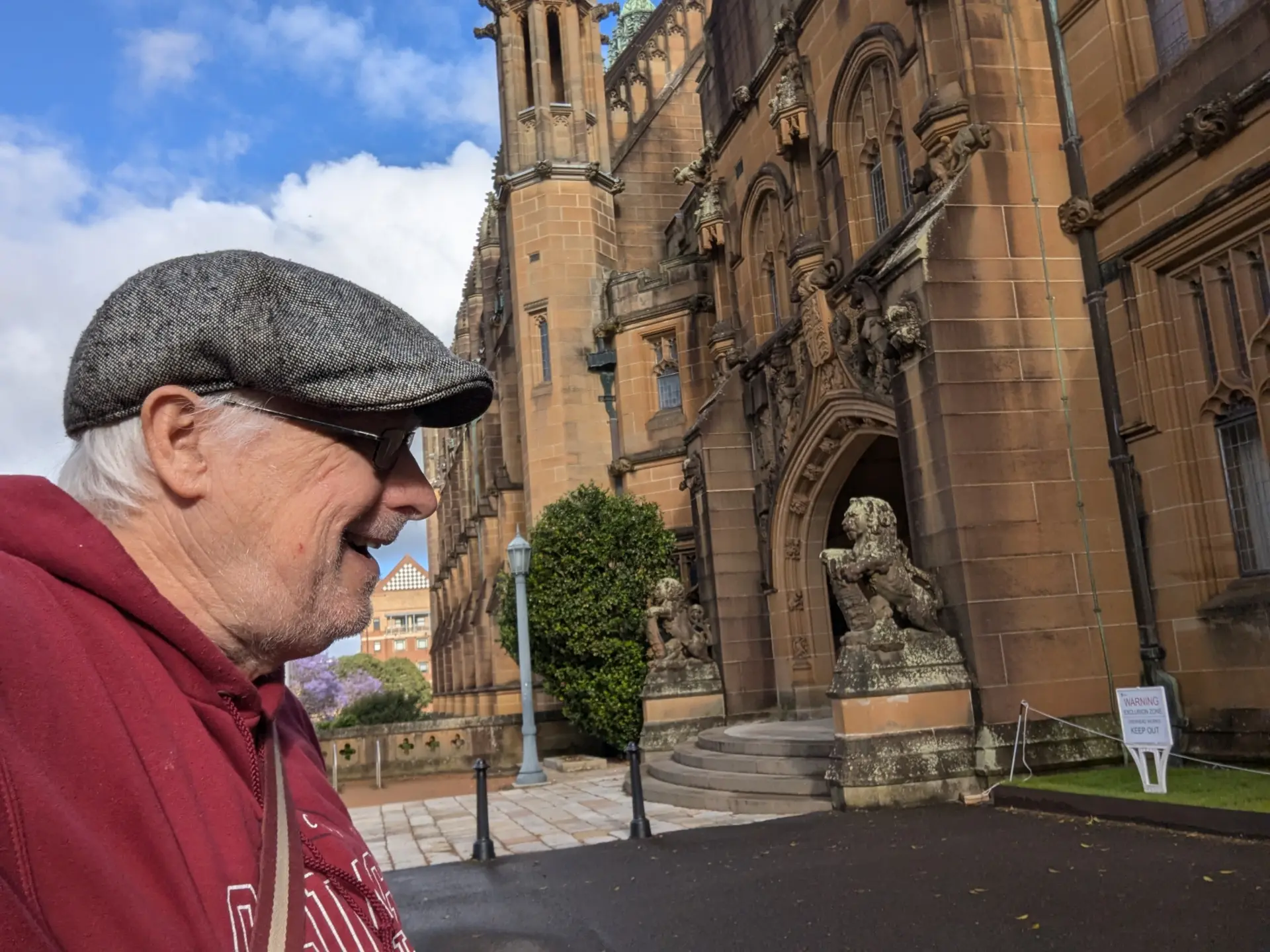
Image: 2026-10-23 (40) University of Sydney, Neville, Leaving Religion and Non-Religion Thought Symposium
Universities have been most of my life. Even as an independent scholar the university is the centre of my being: the ideals of unity and universality if not the practice which is too rare these days.
In philosophical anthropology, educational sociology, and the political economy of higher education, this statement captures the core existential paradox of the modern intellectual: the enduring allegiance to the classical ideal of the universitas amidst the systemic degradation of its contemporary practice [61, 64, 68–70]. Historically, the university was conceived as a sanctuary for critical inquiry—an institution defined by the noetic ideals of Unity (the internal synthetic capacity of consciousness to integrate diverse representations into a complex whole) and Universality (an outward scoping of thought that transcends local, market, and parochial boundaries toward shared human dignity) [64, 82–83]. However, as corporate managerialism, vocational reductionism, and credential inflation have colonized higher education, the actual practice of these ideals within formal institutions has become increasingly rare[1].
For the independent scholar, asserting that the university remains “the centre of my being” signifies that universitas operates as a cognitive anchor and moral ideal rather than a physical employer or administrative structure[4]. As Dr. Neville Buch argues in The Unbound Mind, university academics embedded within corporate institutions are frequently subjected to performative metrics, grant-seeking pressures, and strict normative controls that condition them into a “Junior state of cognition”—acting as compliant executors who defend “property in positions” [65, 68–69]. In contrast, the independent scholar, operating outside formal institutional appointments, exercises Intellectual Sovereignty [66, 69–70]. Unconstrained by corporate risk-aversion or positional gatekeeping, the independent scholar keeps the true spirit of the university alive, pursuing high-risk, paradigm-shifting research, long-term historical synthesis, and Sufficient Comprehension [70, 73–74, 83].
Within the framework of the Management Institute for Contributory Economy (MICE), this commitment to the university ideal is operationalized through the recovery of Human Authorship and panser **(thinking as caring)**[3]. Through diagnostic methodologies like the POLICE filter (Philosophically Ontology, Logic, Intersect, Compatibility, Education), MICE unmasks how corporate university management has substituted genuine interdisciplinary wisdom with “marketplace pedagogy” and administrative routines[3]. By establishing open, convivial “we-spaces” and public research networks, independent scholars reclaim the university’s foundational mission: transforming knowledge from a private career asset into an interpersonal public good [71, 77, 80–81]. Holding the ideals of unity and universality at the center of one’s being ensures that the evaluating, willing “historical person” remains the proactive author of civilizational wisdom, defending public reason against both market fundamentalism and institutional reductionism [78–79, 84, 86].
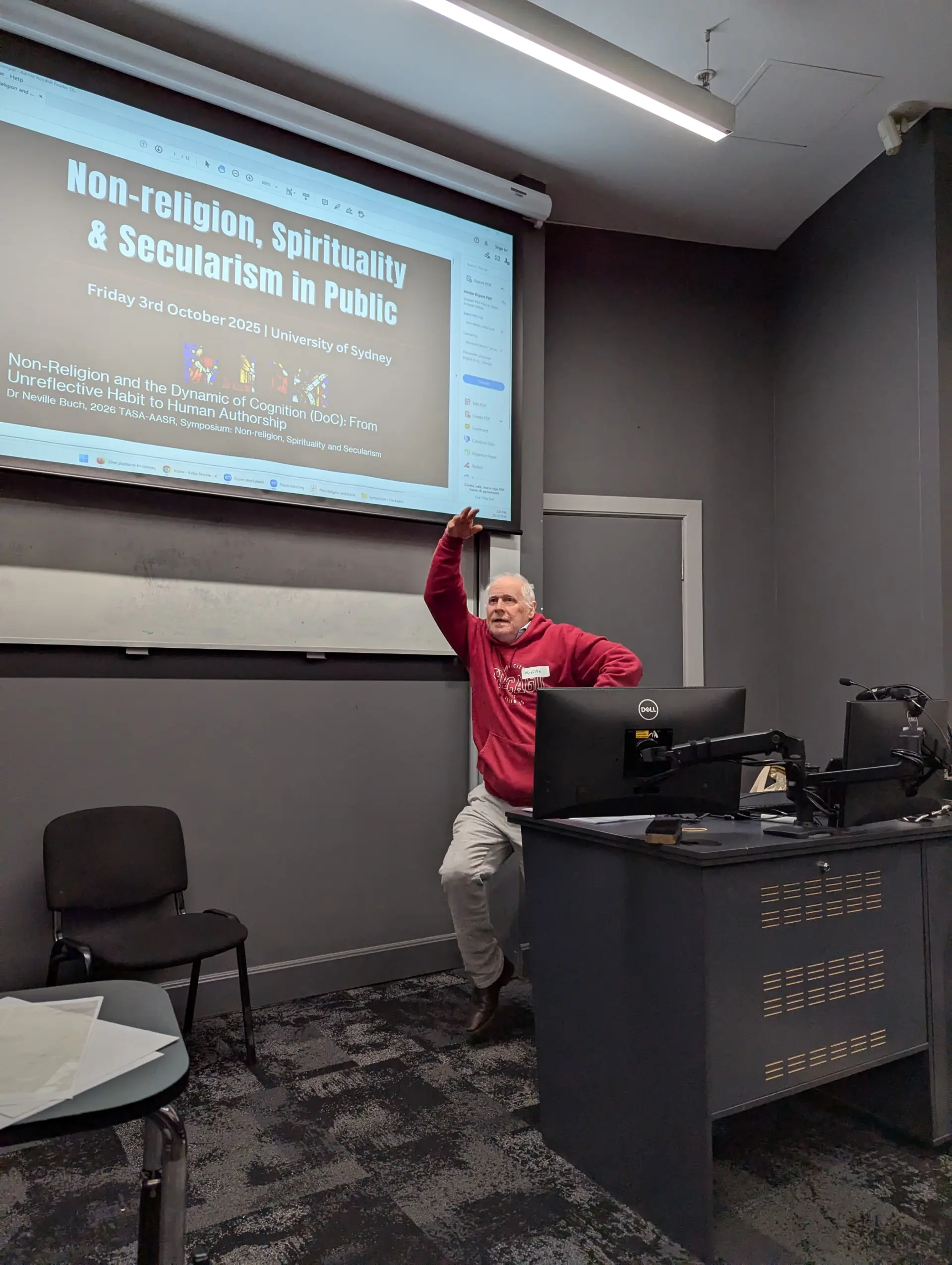
Image: 2026-10-23 (68) University of Sydney, Neville, Leaving Religion and Non-Religion Thought Symposium. Neville’s Jig in Presentation
You cannot divide the Lebensphilosophie, person, thought, life, awareness, consciousness. It is the same “thing”, the same phenomena, the same Haecceity. The obsessive-materialist thinkers have it all wrong.
In philosophical anthropology, phenomenological ontology, and cognitive sociology, this statement asserts the fundamental non-reducibility and ontological unity of human existence [6, 20–22]. The attempt by “obsessive-materialist thinkers” to dissect the human subject into discrete, mechanistic variables—separating thought from life, or awareness from physical embodiment—commits what Gilbert Ryle terms a “category mistake” and what Jerome Bruner identifies as the over-extension of the “logico-scientific mode” [6, 111–113]. By treating consciousness as a mere computational byproduct or a passive recipient of external data (tabula rasa), materialist reductionism fragments the lived lifeworld (Lebenswelt), giving rise to what Dr. Neville Buch designates as “wooden epistemology” [20–21, 24, 80].
The invocation of Haecceity—the Scholastic concept formulated by Duns Scotus to denote the irreducible “this-ness” and unique particularity of a specific entity—anchors human consciousness as a singular, living disclosure rather than an abstract class or statistical aggregate [2, 24–26]. Drawing on Maurice Merleau-Ponty’s foundational thesis that “perception is not representation”, human experience is recognized as an authentic, pre-reflective engagement of the lived body with the world [20–22, 26–27]. Mind, life, and awareness do not exist as separable faculties; rather, “we are our body as the subject of experience”, realizing meaning in rebus (in the thing itself) through physical and historical situatedness[1]. When materialist systems force a wedge between life (Lebensphilosophie) and intellect, they induce denoetization—Bernard Stiegler’s term for the mechanical liquidation of contemplative judgment, empathy, and moral agency[4].
Within Dr. Neville Buch’s Dynamic of Cognition (DoC) framework and the Management Institute for Contributory Economy (MICE), this non-dualist ontology is operationalized to re-center the **”Historical Person”**[8]. MICE asserts that the human being is an evaluating, willing subject who is “context-embedded but not context-determined”, resisting both physicalist determinism and abstract idealism[9][10]. Through panser (thinking as caring)—a procedural shield integrating Nel Noddings’s ethics of care and Stiegler’s organology—MICE safeguards human particularity and Haecceity from pure algorithmic calculation and market monetization[8]. Furthermore, by cultivating Unity (the internal synthetic capacity to integrate diverse representations into a complex whole) and Universality, the subject transcends reductionist dualisms, reclaiming Human Authorship and Aristotelian flourishing (eudaimonia) within a flourishing public sphere [10, 87, 128–130].

Image: 2026-10-23 (69) Ampol Foodary Wyong M1 Northbound Petrol, The Last Fuel Before Home
Obsessive-materialist thinkers are the ones who attempt to keep others in poverty via their reductionist judgement. They have no true care for others because their thinking is pure instrumentalist.
In critical social theory, political economy, and philosophical anthropology, this statement unmasks the violent mechanics of pure instrumental rationality ( Zweckrationalität ) when deployed as a tool of social and economic control [22–23, 72, 91–92]. As Max Horkheimer and Theodor Adorno established in their critique of Enlightenment rationalism, when thought is stripped of normative depth and reduced entirely to instrumental calculation—evaluating entities solely as means to an end—it devolves into a technology of domination [22–23, 28, 74]. Within contemporary marketized regimes, “obsessive-materialist thinkers” operationalize this instrumentalism through reductionist judgment: assessing human subjects, cultural knowledge, and community care strictly by their immediate transactional yield, market price, or algorithmic throughput [22–23, 33–35, 127].
The assertion that instrumentalist thinkers “attempt to keep others in poverty” is formally explained by Jameel’s Economic Law of Responsibility Burden [3–5]. Under neoliberal formalisms—such as those advanced by Bevin Luchel—centralized market and administrative bodies step back from underwriting permanent public infrastructure, shifting unpriced operational, financial, and cognitive liabilities directly downward onto individual researchers, care-workers, and citizens [3–5, 21–23]. Forced into continuous economic survival wars, independent thinkers and vulnerable populations are systematically drained of cognitive bandwidth [3–5]. In Bernard Stiegler’s organological terms, this pure instrumentalism induces denoetization and symbolic misery—the mechanical liquidation of human judgment, deep memory, and empathy caused by an over-reliance on extractive market metrics and algorithmic routines [26, 49, 79, 81–83]. In Habermasian sociology, this represents the pathological colonization of the Lifeworld, where the cold systemic logics of money and power infiltrate domains meant for mutual understanding and solidarity [27, 91–92].

Image: 2026-10-23 (70, 71) Wotton Way United Service Station, Overnight Sleep
Featured Image: Mill Park Library Reflection. Neville’s journeys. The past will always haunt us.

Here is a comprehensive, structured bibliography for The Story of Resilience series (documenting Dr. Neville Buch’s 5th Australian East Coast Trip and the accompanying intellectual synthesis) grounded in the source records[1].
1. Series Context & Overview
The Story of Resilience series details Dr. Neville Buch’s travel from Brisbane through regional New South Wales to Geelong and Melbourne, returning via Sydney[1][3]. The series synthesizes the physical trials of the journey (roadside breakdowns, financial strain, and community kindness) with deep historical research, featuring an extended collaborative research residency with leading Australian Islamic historian Dr. Dzavid Haveric in Geelong and a presentation on the Dynamic of Cognition (DoC) at the University of Sydney[1].
2. Primary Works by Dr. Neville Buch & MICE Publications
The core theoretical, methodological, and diagnostic foundation of the series is established across Dr. Buch’s publications for the Management Institute for Contributory Economy (MICE) [16–17, 130–131, 159, 203–204, 279–280]:
- Buch, N. (2015). Process of Learning (Principles) & The Dynamic of Cognition. Brisbane: Dr Neville Buch Publications[4].
- Buch, N. (2024). The Spiral History Theory of Stupidity: Getting Stuck in Time-Space, and Personal Breakout of Historical Cognition Patterns. Brisbane: Management Institute for Contributory Economy[5][6].
- Buch, N. (2025). MICE Principles and Philosophy (First Development). Working Paper. Brisbane: Management Institute for Contributory Economy[5].
- Buch, N. (2026a). MICE: Limited Thinking and the Contributory Economy (Book 1 of MICE). Brisbane: Management Institute for Contributory Economy[5].
- Buch, N. (2026b). Dr Buch in Intellectual Community: Reclaiming Authorship in the City of Intellect. Brisbane: Management Institute for Contributory Economy[5][8].
- Buch, N. (2026c). Understanding History is Philosophy in Practice: A Cognition History of Queensland. Brisbane: Management Institute for Contributory Economy[5][8].
- Buch, N. (2026d). Academic Rigour, Epistemic Renewal, and the Crisis of Inquiry: A Scholarly Review of the Vanderbilt Commission Report on the State of Scholarship. Brisbane: Management Institute for Contributory Economy[9].
- Buch, N. (2026e). Spiral Historiography and the Pedagogy of Consciousness in Australia. Academic Synthesis[10].
- Buch, N. (2026f). The Idea of Religion Today. Brisbane: Management Institute for Contributory Economy[10].
- Buch, N. (2026g). Thinking Religion in Place: Religion Is Not What It Was. Brisbane: Management Institute for Contributory Economy[10].
- Buch, N., & Peach, N. (2024). Philosophically Ontology Logic Intersect Compatibility Education (POLICE). Brisbane: Management Institute for Contributory Economy[7].
- Buch, N., Macklin, M., & Peach, N. (2026). MICE Intellectual Handbook: Limited Thinking and the Contributory Economy. Brisbane: Management Institute for Contributory Economy[8].
3. Foundational Theoretical, Epistemological & Sociological Literature
The series draws on key works in phenomenology, cognitive sociology, critical theory, and educational philosophy to articulate the Dynamic of Cognition, panser (thinking as caring), and the critique of neoliberal formalisms [16–18, 44–47, 106–110, 132, 185–186, 281–286]:
- Arendt, H. (1977). The Life of the Mind (M. McCarthy, Ed.). New York: Harcourt Brace Jovanovich[13].
- Aristotle. (c. 350 BC). Nicomachean Ethics (W. D. Ross, Trans.). Oxford: Clarendon Press[6].
- Cavanaugh, W. (2008). Being Consumed: Economics and Christian Desire. Grand Rapids: William B. Eerdmans Publishing[11].
- Coase, R. H. (1960). The Problem of Social Cost. Journal of Law and Economics, 3(1), 1–44[11].
- Collins, R. (1998). The Sociology of Philosophies: A Global Theory of Intellectual Change. Cambridge, MA: Belknap Press of Harvard University Press[14].
- Collins, R. (2019). The Credential Society: An Historical Sociology of Education and Stratification. New York: Columbia University Press[11][14].
- Cupitt, D. (2008). The Meaning of the West: An Apologia for Secular Christianity. London: SCM Press[14].
- Dweck, C. S. (2006). Mindset: The New Psychology of Success. New York: Random House[9].
- Ellul, J. (1973). Propaganda: The Formation of Men’s Attitudes. New York: Vintage Books / Octagon Books [223–224].
- Gadamer, H.-G. (1989). Truth and Method (2nd rev. edn.). New York: Crossroad[9].
- Haack, S. (1993). Evidence and Inquiry: Towards Reconstruction in Epistemology. Oxford: Blackwell [204–205].
- Habermas, J. (1979). Communication and the Evolution of Society (T. McCarthy, Trans.). Boston: Beacon Press[15].
- Habermas, J. (1984). The Theory of Communicative Action. Boston: Beacon Press[16].
- Habermas, J. (1991). Knowledge and Human Interests. Cambridge: Polity Press[14][16].
- Hofstadter, R. (1963). Anti-Intellectualism in American Life. New York: Random House USA Inc. [214–215].
- Illich, I. (1971). Deschooling Society. London: Calder & Boyars[17].
- Illich, I. (1973). Tools for Conviviality. New York: Harper & Row[17].
- Ingold, T. (2011). Being Alive: Essays on Movement, Knowledge and Description. London: Routledge[16].
- Macklin, M. (1967). Analogy, Analysis and God (Philosophical Thesis). Brisbane: University of Queensland[18].
- Macklin, M. (1976). When Schools Are Gone: A Projection of the Thought of Ivan Illich. Brisbane: University of Queensland Press[18].
- McKinney, J. P. (1971). The Structure of Modern Thought. London: Chatto & Windus[19].
- Merleau-Ponty, M. (1945/1962). Phenomenology of Perception (C. Smith, Trans.). London: Routledge & Kegan Paul [50, 210–211].
- Mills, C. W. (1959). The Sociological Imagination. New York: Oxford University Press[17][20].
- Noddings, N. (1984). Caring: A Feminine Approach to Ethics and Moral Education. Berkeley: University of California Press[19][21].
- Postman, N., & Weingartner, C. (1969). Teaching as a Subversive Activity. New York: Delacorte Press[22].
- Stiegler, B. (1998). Technics and Time, 1: The Fault of Epimetheus. Stanford: Stanford University Press [206–207, 228, 282].
- Stiegler, B. (2014). Symbolic Misery, Vol. 1: The Hyper-Industrial Epoch. Cambridge: Polity Press [207, 228–229, 282].
- Stiegler, B. (2018). Qu’appelle-t-on panser?: 1. L’immense régression. Paris: Les Liens qui Libèrent[21].
- Williams, B. (1985). Ethics and the Limits of Philosophy. Cambridge, MA: Harvard University Press[23].
4. Historical & Collaborative Research Literature
Literature documenting Australian history, Islamic historical encounters, regional geography, and social development synthesized during the Geelong research residency and road trip [1, 132, 315–318]:
- Haveric, D. (2006). Australia in Muslim Discovery: Historical Rediscovering of Australia by Non-Muslims and Muslims. Geelong: Deakin University Print Services[15].
- Haveric, D. (2012). History of the Muslim Discovery of the World: Islamic Civilisation Within the Plurality of Civilisations. Geelong: Deakin University Print Services[15].
- Haveric, D. (2016). History of the Bosnian Muslim Community in Australia: Settlement Experience in Victoria. Saarbrücken: Lambert Academic Publishing [315–316].
- Haveric, D. (2017). Muslim Memories in Victoria: Building Communities and Interfaith Relations from the 1950s to the 1980s. Australian Journal of Islamic Studies, 2(3), 134–162[24].
- Haveric, D. (2018). ANZAC Muslims: An Untold Story. Australian Journal of Islamic Studies, 3(3), 78–102[24].
- Haveric, D. (2023). A History of Muslims in the Australian Military: Loyalty, Patriotism, Contribution from 1885 to 1945. London: Cambridge Scholars Publishing[25].
- Haveric, D. (2026a). Macassan Muslims and Aboriginal Australians: Cultural and Spiritual Encounters. Religions, 17(2), 1–18[25].
- Haveric, D. (2026b). Reconsidering Possible Macassan Prayer Structures in Northern Australia: Port Essington and Raffles Bay. Australian Journal of Islamic Studies, 11(1), 45–68 [132, 317–318].


Neville Buch
Latest posts by Neville Buch (see all)
- The Road to Home. A Re-Narrativization of The Story of Resilience Part 7 – October 26, 2026
- The Road to Home. A Re-Narrativization of The Story of Resilience Part 6 – October 26, 2026
- The Road to Home. A Re-Narrativization of The Story of Resilience Part 5 – October 26, 2026