
Dr Neville Buch and MICE[1]
Abstract
“There is little mention of gender in many of my ‘big picture’ publications. Gender is important but that importance is overplayed for ‘big picture’ conclusions. There are two issues here.
One is the terribly stupid assumption that we (anyone) “knows” the cognition of the other gender. As a widower from being once partnered with my late wife, and as a father of two adult daughters, I will never “know” as a concept the “other gender”. I can “know” as a matter of practice, that is, I practice empathy. I am not troubled by transgender identity in this regard. I respect the claims of transgender identity, in that, it does not trouble me. It does not trouble me because empathy, I would argue, is always fundamentally ‘human’. Empathy requires respecting the dignity of another human being. All other identities of being human are secondary and conditional (as in the “human condition”).
Secondly, the arguments on gender or transgender are a ‘mask’ for other political issues. This does not mean we stop considering the issues of gender or transgender, but rather to understand, more comprehensively, issues of power, relations, sexuality, companionship, biology, etc.”
Dr Neville Buch, 9 November 2026
A.I Synthesis: “This essay expands upon the foundational thesis above by exploring how gender and transgender identities function sociologically and existentially, how “being human” operates through a relational ontology and the Five Intentions of Cognition, what form of active civic empathy (panser) is required in a democratic society, and why unmasking political identity debates is essential to restoring human agency, social solidarity, and Aristotelian flourishing (eudaimonia).”
Gemini Notebook, 9 November 2026
1. Introduction: The Limits of Conceptual “Knowing” and Epistemic Humility
A central fallacy in contemporary socio-political discourse is the uncritical assumption that one human being can conceptually comprehend or internalize the subjective cognitive interiority of an “other” category—whether defined by gender, ethnicity, or lived experience. To claim conceptual mastery over another’s interiority is an epistemic category error[1]. In Cartesian rationalism and naturalistic psychology, the human mind is frequently misconstrued as a closed, transparent apparatus that can be categorized, mapped, and fully “known” through abstract taxonomies[2][3]. However, lived human experience (Erlebnis) resists such intellectual reduction[4][5].
As demonstrated in Dr. Neville Buch’s personal and philosophical writings—specifically his reflections as a widower following a 28-year partnership with his late wife, Ruth, and as a father to two adult daughters—the cognition of another gender cannot be “known” as an abstract, static concept[6][7]. Rather, knowledge of the other is acquired as a matter of practice: through the continuous, habituated exercise of empathy, active listening, and intersubjective engagement[8][9].
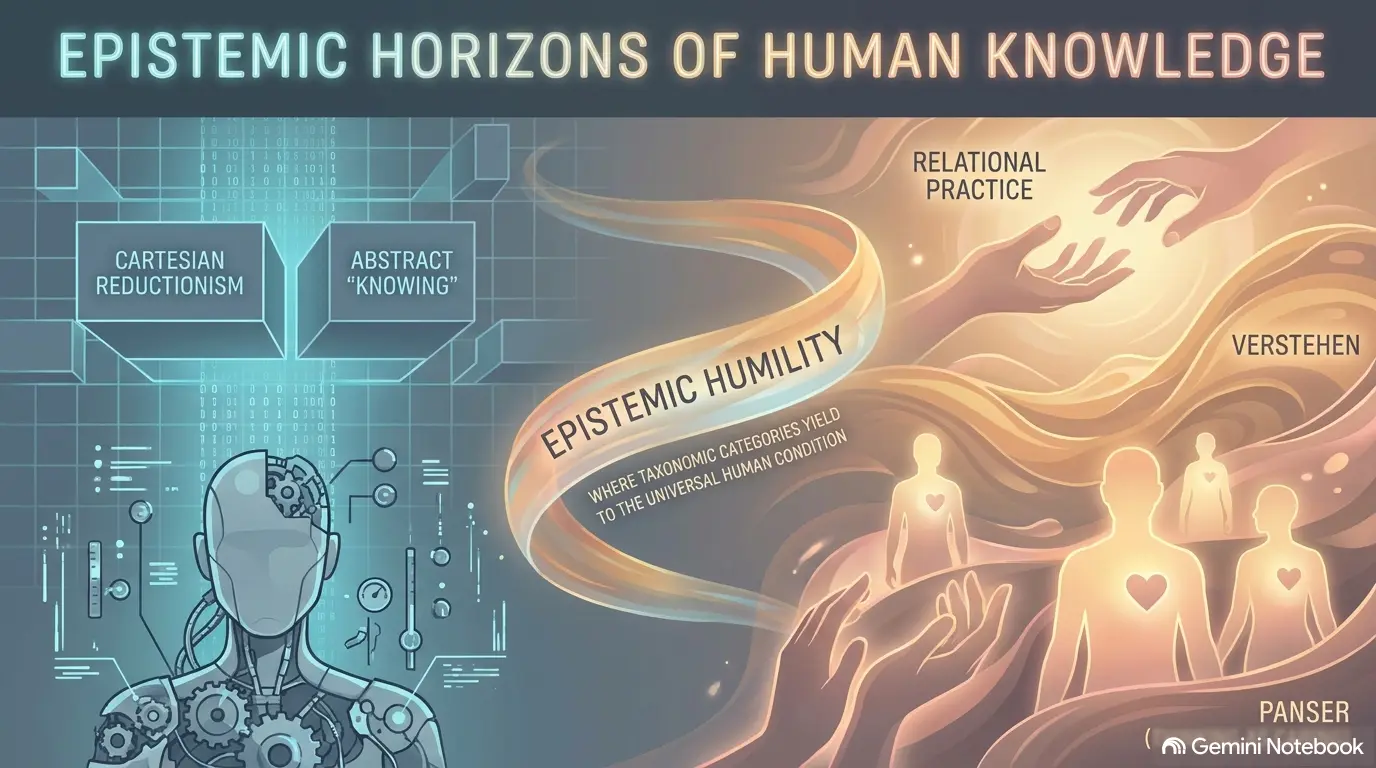
This distinction marks the threshold between Cartesian individualism—which isolates personhood within brain function, biological determinism, or rigid categories—and a relational ontology, which asserts that human life is inherently interdependent and that to live is to be held in connection[3][10]. When we acknowledge the limits of our conceptual grip, we replace dogmatic arrogance with epistemic humility[11][12].
Empathy does not depend upon possessing identical subjective experiences; it depends upon recognizing the intrinsic, inviolable dignity of another human being[11][13]. All secondary categorizations—gender, sexuality, vocational status, or political alignment—are conditional expressions situated within the primary, universal horizon of the human condition[14].
2. How Gender and Transgender Work: Social Construction, Embodiment, and the Political “Mask”
To analyse gender and transgender identity without falling into reductive culture-war slogans, one must examine their sociological mechanics, phenomenological reality, and political manipulation.
A. The Sociological and Phenomenological Mechanics of Gender
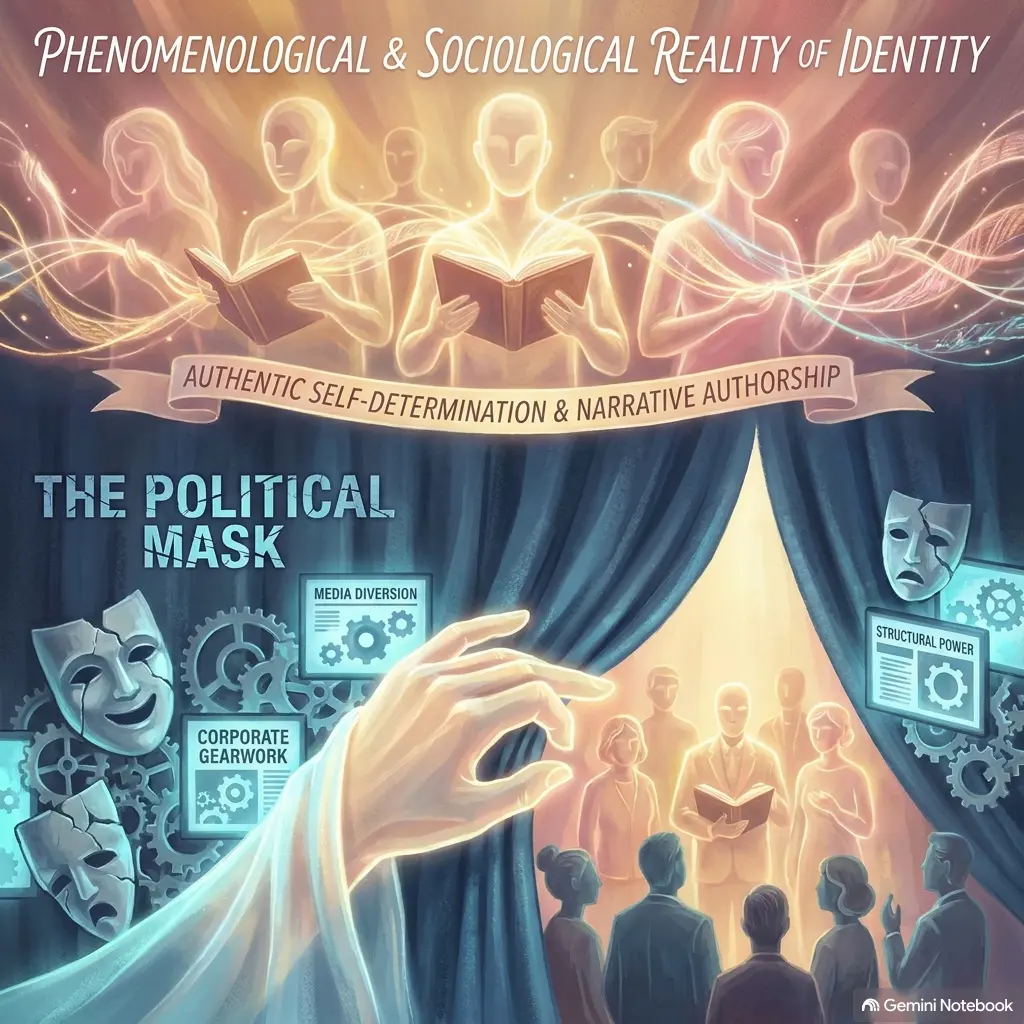
In sociological terms, gender functions as a complex, culturally constructed system of norms, expectations, and institutional roles assigned to biological sex differences[17]. As Judith Butler establishes, gender is largely performative—sustained through habituated social practices, language, and institutional enforcement[18][19]. When a society treats these historical roles as fixed, naturalistic absolutes, it restricts individual agency and enforces conformity through social stigma[17][20].
Transgender identity operates phenomenologically as an assertion of human authorship over one’s own bodily and narrative existence[13][21]. In existentialist terms, existence precedes essence: a human person encounters themselves in the world first and subsequently defines their values, identity, and path through action and choice[16][22]. Transgender individuals assert their gender identity against rigid, external taxonomies, seeking alignment between their internal self-understanding and their external social reality[21][22].
When evaluated through an empathetic framework, transgender claims present no conflict or threat to civil order[7][11]. Responding with basic human dignity requires neither ideological conversion nor aggressive debate; it simply requires extending the same civic respect and institutional protection owed to every human being[3][13].
B. Gender and Transgender Debates as a Political “Mask”
While gender issues remain genuinely significant for individual well-being and legal rights, public debates surrounding gender and transgender identity are frequently exploited as an ideological “mask” by political and economic elites[11][23].
Hyper-focusing on culture-war identity battles serves a clear structural function: it distracts the public from systemic issues of power, wealth distribution, economic deregulation, corporate privatization, and the erosion of civic infrastructure[23][24]. By dividing communities into warring ideological camps, attention is diverted away from the material conditions that affect all citizens:
- The Dynamics of Power: Who controls public resources, policy decisions, and labour contracts[24][25]?
- Relational Holding and Companionship: How families, carers, and communities sustain intergenerational support in an increasingly atomized world[26][27].
- Biological Precarity: How society cares for human illness, aging, disability, and mortality beyond market metrics[20][28].
Unmasking these debates does not mean ignoring gender concerns; rather, it means placing gender within a comprehensive analysis of social power, human vulnerability, and economic justice[23][29].
3. How “Being Human” Works: Existential Tension, Relational Ontology, and the Dynamic of Cognition
Human existence cannot be captured by biological reductionism, market metrics, or identity labels alone[30][31]. To understand how “being human” works requires a multi-dimensional framework combining existential philosophy, relational ontology, and cognitive synthesis[14].
A. The Existential Tension of Human Being
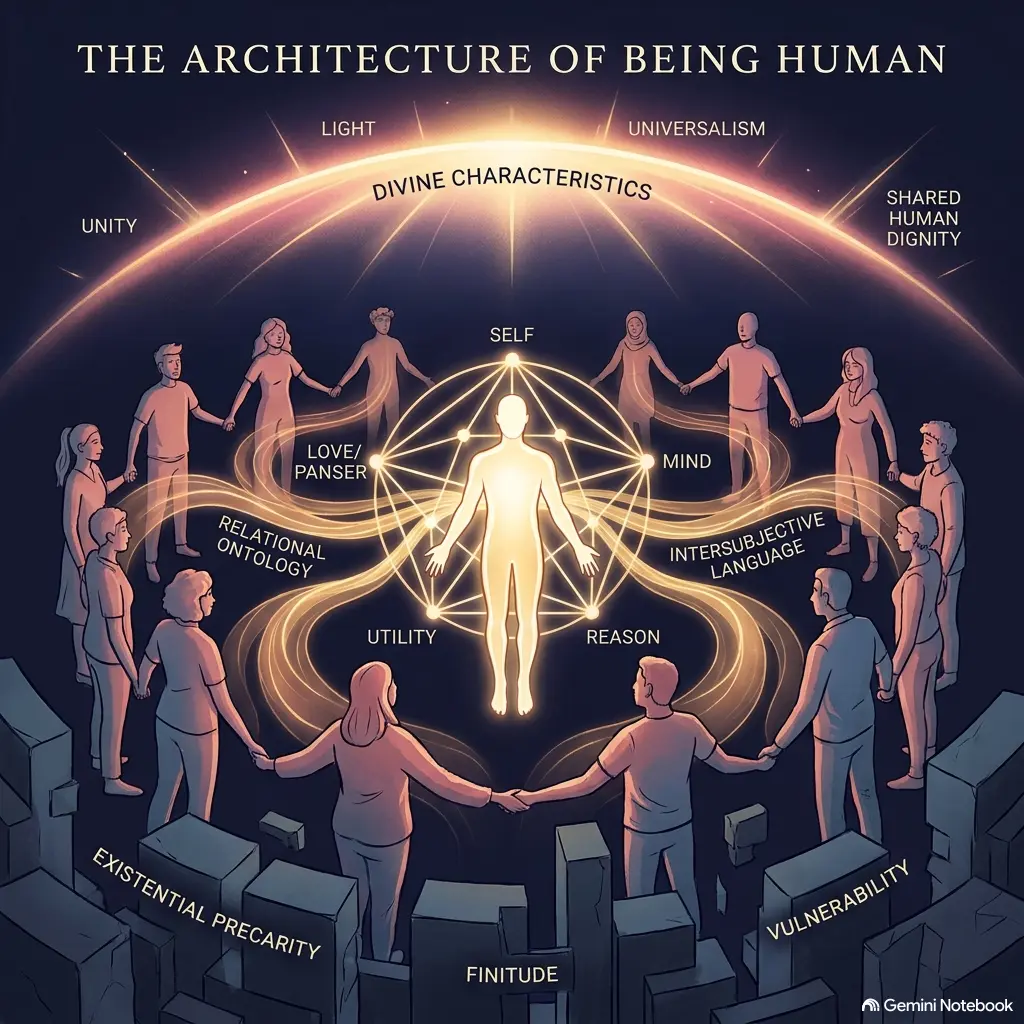
As Dr. Neville Buch formulates in Buch’s Existential Thesis, a human being is a unique creature defined by an intrinsic tension between divine and degenerative characteristics[14]:
- Divine Characteristics: Qualities of unity, universality, empathy, and intellectual light that seek shared truth and common understanding[14][34].
- Degenerative Characteristics: Tendencies toward fragmentation, narrow self-interest, prejudice, and social darkness[14][35].
Human beings are not pre-programmed machines; we choose our destiny within the temporal boundaries of our minds and historical circumstances[14][30]. As Ernest Becker observed, humans exist in a paradoxical tension as “gods with anuses”—creatures capable of infinite conceptual flight, yet bound to vulnerable, finite animal bodies[36][37]. Fleeing this existential vulnerability often leads to defensive scapegoating, ideological dogmatism, and the “othering” of those who differ from us[38][39].
B. Relational Ontology: Held in Connection
“Being human” is fundamentally relational[3][10]. Anthropologist Gaynor Macdonald highlights that modern Western culture is crippled by a Cartesian medical and economic paradigm that views the human person as an isolated, self-contained mechanism[2][31]. When personhood is tied strictly to cognitive speed, youth, or economic productivity, those who suffer from aging, illness, or social difference are cast aside as “economically useless,” experiencing social death before biological demise[26][29].
A relational ontology restores the true nature of human life: to live is to be held in connection[3][10]. Personhood is not an isolated attribute locked inside an individual skull; it is a shared, intersubjective accomplishment nurtured through moral relationships, mutual holding, and social commitment[3][40].
C. The Five Intentions: The Dynamic of Cognition (DoC) Framework
Within the Management Institute for Contributory Economy (MICE) framework, human cognition operates through five integrated intentions that constitute the Synthesis of Being[33][41]:
- Self: The internal axis of agency[42]. It represents the journey from a “Junior” mindset of unreflective compliance toward a “Senior” state of social accountability and moral authorship[13].
- Mind: The seat of judgment where administrative denoetization—the mechanical liquidation of critical discernment—is actively corrected[13].
- Reason: Redefined from narrow instrumental calculation into a “cognitive regulator” that ensures technical, administrative, and economic systems remain subservient to ethical human ends[41][45].
- Utility: Reclaimed from selfish profit-seeking to direct action toward collective well-being, sustainability, and mutual aid in a Contributory Economy[47][48].
- Love ( Panser ): Reinvented as “thinking as caring” ( panser )—a procedural shield that protects the particularity and dignity of the person from cold, calculating bureaucratic logic[47].
D. Human Authorship and the Living Bridge of Language
Human beings are the proactive authors of reality[13]. Drawing on the philosophy of Jack McKinney and poet Judith Wright, objective knowledge is not a solitary Cartesian discovery, but an “interpersonal thing” synthesized across generations from disparate individual experiences through the “living bridge” of language[53]. Language allows us to connect private, subjective sensations into a shared, common world-picture of hope, meaning, and democratic participation[52][53].
4. What Is the Empathy Expected of Me in Civil Society?
Civic life does not require citizens to possess mystical insight into one another’s minds, nor does it demand total ideological agreement[11][56]. Rather, civil society depends upon a specific, procedural form of civic empathy grounded in mutual respect and public ethics[12][13].
A. Empathy as Panser (“Thinking as Caring”)
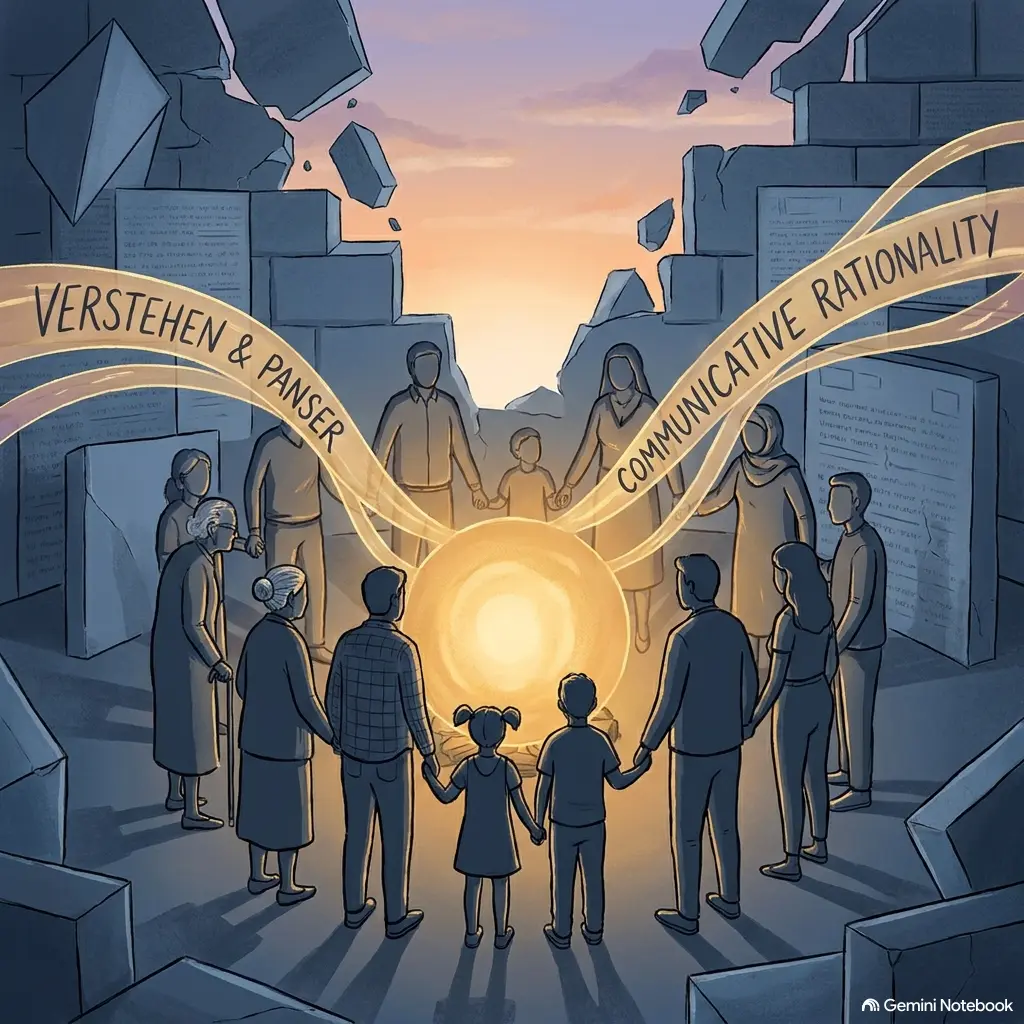
In civil society, the empathy expected of a citizen is best understood as panser—thinking as caring[9][47]. Panser is an active cognitive discipline, a procedural shield that prevents human beings from reducing their neighbours to administrative coordinates, political enemies, or biological statistics[50][57].
Practicing panser in civil society means acting as a “remarkable listener”[8][9]. It involves applying Max Weber’s and Wilhelm Dilthey’s method of Verstehen (empathetic understanding)—seeking to comprehend the meaning and values that others attach to their own lived struggles rather than imposing cold, external judgments[8][58].
B. Intersubjective Dignity and Pluralistic Civility
Civic empathy requires recognizing that every human being possesses intrinsic worth simply by virtue of being human[11][13]. In a healthy democracy, civil society expects its members to adhere to three fundamental practices:
- Respecting Universal Human Dignity: Guaranteeing that every individual—regardless of gender, transgender status, age, or background—enjoys safety, equal legal standing, and freedom from public harassment[13].
- Epistemological Pluralism: Embracing Jürgen Habermas’s model of Communicative Rationality, where citizens engage in rational-critical dialogue aimed at mutual understanding rather than coercive domination[11].
- Protecting the “Sphere of Between”: In Martin Buber’s terms, upholding the I-Thou relation—treating others as genuine dialogue partners rather than I-It objects to be manipulated for political points[59].
We are not expected to pretend that we possess direct internal knowledge of another’s gendered consciousness[6]. What civil society expects is that we treat the claims, vulnerabilities, and aspirations of others with kindness, decency, and institutional fairness[13][60].
5. Why This Message Is Important: Unmasking Power, Restoring Humanism, and Fostering Eudaimonia
The message articulated in this essay carries profound ethical, educational, and political urgency for modern democratic society.
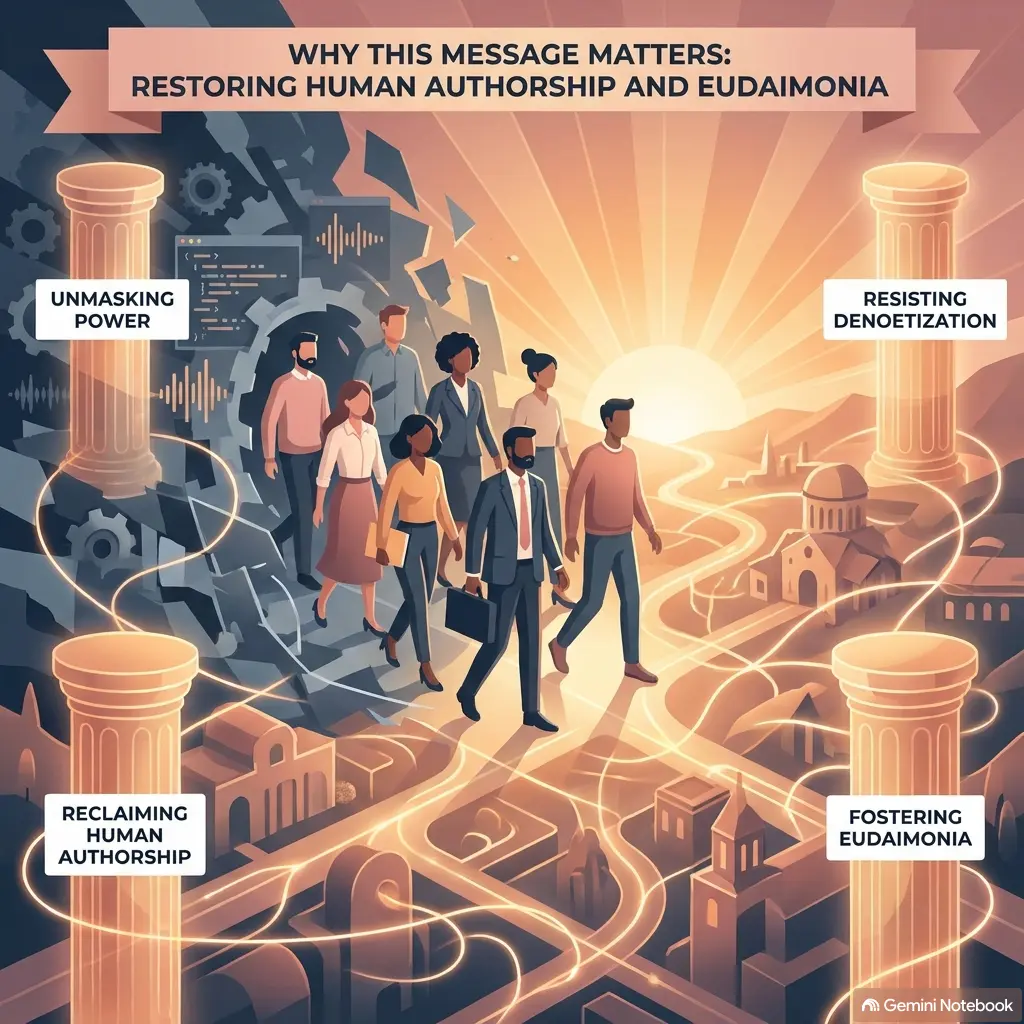
A. De-escalating Culture Wars and Refocusing on Structural Power
By recognizing that hyper-politicized gender arguments often serve as a “mask,” citizens can resist ideological manipulation[11][23]. Unmasking these debates allows communities to rebuild solidarity across identity divides, refocusing public attention on fundamental structural issues: worker rights, healthcare access, housing security, educational equity, and environmental care[24].
B. Resisting Denoetization and Algorithmic Reduction
In an era dominated by automated social media algorithms, commercial clickbait, and administrative management, modern society suffers from acute “denoetization”—the systematic liquidation of the human capacity to judge[13][46]. Algorithmic platforms profit by outrage, flattening complex human beings into rigid caricatures and provoking reactionary rage[46][61]. Reasserting the primacy of the universal human condition provides an intellectual immune system, protecting citizens from automated polarization and restoring reflective self-criticism[13][61].
C. Moving from “Junior” Docility to “Senior” Accountability
This message provides an educational and philosophical blueprint for human development[13][43]. It calls for a transition from a “Junior” mindset—where individuals unreflectively execute administrative rules or adopt pre-made cultural slogans—to a “Senior” state of social accountability[35]. In this Senior state, citizens take proactive responsibility as authors of their narrative, exercising critical literacy (praxis) to transform their institutions for the common good[13].
D. Building a Contributory Economy for Aristotelian Flourishing (Eudaimonia)
Ultimately, prioritizing empathy, human dignity, and relational holding directs society toward Aristotelian flourishing ( eudaimonia ) [63][64]. Eudaimonia measures social progress not by narrow economic productivity or market consumption, but by the wisdom, character, and moral health of a community[48][64].
By organizing our shared life around a Contributory Economy—where every human person is valued for their meaningful contribution and held in relational care—we fulfill our highest human potential, ensuring that democracy remains a living, compassionate reality for all[40].
Bibliography
Arendt, H. (1958) The Human Condition. Chicago: University of Chicago Press.
Becker, E. (1973) The Denial of Death. New York: Free Press.
Buber, M. (1923/1970) I and Thou. Translated by W. Kaufmann. New York: Charles Scribner’s Sons.
Buch, N. (2025) The Dynamic of Cognition: A Methodological Tool. Brisbane: Management Institute for Contributory Economy, pp. 1–8.
Buch, N. (2026a) Buch’s Existential Thesis. Unpublished manuscript, Dr Neville Buch, 20 September 2026, pp. 1–3.
Buch, N. (2026b) The Landscape Intellectual History of Jack McKinney and Judith Wright: Thinking Deeper. Dr Neville Buch, 2 July 2026, pp. 1–24.
Buch, N. (2026c) History of Ruth: The Crucible of Care. Grief as Philosophy in Practice (The Disease). Dr Neville Buch, 8 June 2026, pp. 1–8.
Buch, N. (2026d) What is Sociology of Education? Brisbane: Management Institute for Contributory Economy, 13 May 2026, pp. 1–4.
Butler, J. (1990) Gender Trouble: Feminism and the Subversion of Identity. New York: Routledge.
Butler, J. (2004) Precarious Life: The Powers of Mourning and Violence. London: Verso Books.
Habermas, J. (1984) The Theory of Communicative Action, Volume 1: Reason and the Rationalization of Society. Translated by T. McCarthy. Boston: Beacon Press.
Lady Unknown (2026) The History of the Lady Unknown: A Life in Reality Novel. First-person philosophical memoir/novel manuscript, 31 December 2026, pp. 1–115.
Luchel, B. (2026) A Reply to The Epistemic Corrosion of Deregulation. Philosophical critique, Brisbane, pp. 1–28.
Macdonald, G. (2018) ‘Death in life or life in death: Dementia’s ontological challenge’, Australian Feminist Studies, 33(97), pp. 289–307. doi: 10.1080/08164649.2018.1558362.
McKinney, J. P. (1971) The Structure of Modern Thought. London: Chatto & Windus.
Nadal, K. L. (ed.) (2017) The SAGE Encyclopedia of Psychology and Gender. Thousand Oaks, CA: SAGE Publications.
Runstrom, M. R. (2015) Death in Life Approaches to the Contemporary Denial of Death. MA Thesis, Pacifica Graduate Institute, pp. 1–145.
Sartre, J.-P. (1943/1992) Being and Nothingness. Translated by H. E. Barnes. New York: Washington Square Press.
Sartre, J.-P. (1946/2007) Existentialism is a Humanism. Translated by C. Macomber. New Haven: Yale University Press.
Stiegler, B. (2014) Symbolic Misery, Volume 1: The Hyperindustrial Epoch. Translated by D. Ross. Cambridge: Polity Press.
Stiegler, B. (2025) The Immense Regression: What is Called Caring? Volume 1. Translated by D. Ross. Berlin: K. Verlag.
Webber, J. (2018) Rethinking Existentialism. Oxford: Oxford University Press.
World Health Organization (2017) What do we mean by “sex” and “gender”? Geneva: World Health Organization.
Wright, J. (1946) The Moving Image. Melbourne: Meanjin Press.
Wright, J. (1981) The Cry for the Dead. Melbourne: Oxford University Press.
Top of Form
Take the MICE Quiz
[1] The original concept-practices and abstract are humanly-devised. Artificial Intelligence (A.I.) has been fairly used in the production of this work. The tool used is Google NotebookLM (recently rebranded as Gemini Notebook). It is an AI-powered virtual research assistant and thinking partner designed to help a person interact deeply with their own documents. Unlike general chatbots, it is source-grounded, meaning it only generates answers based on the specific PDFs, documents, or links uploaded. The A.I. process in the production of this work has been limited to the attached (prompts) on each of the questions in turn. This ensures an accurate reading of each source. The author then rearranged and re-edited the answers the A.I. provided. The human author publishes this work. A.I. is never an author when used properly. This assistance is not qualitatively different from a human research assistant when that assistance is deemed to have no authorial status but is acknowledged.


Neville Buch
Latest posts by Neville Buch (see all)
- The Anatomy of Educational Positivism – November 9, 2026
- Beyond the Identity Mask: Gender, Epistemic Humility, and the Radical Primacy of the Human Condition – November 9, 2026
- Academic Charisma, Personalism, and the Structural Crisis of Higher Education – November 9, 2026