
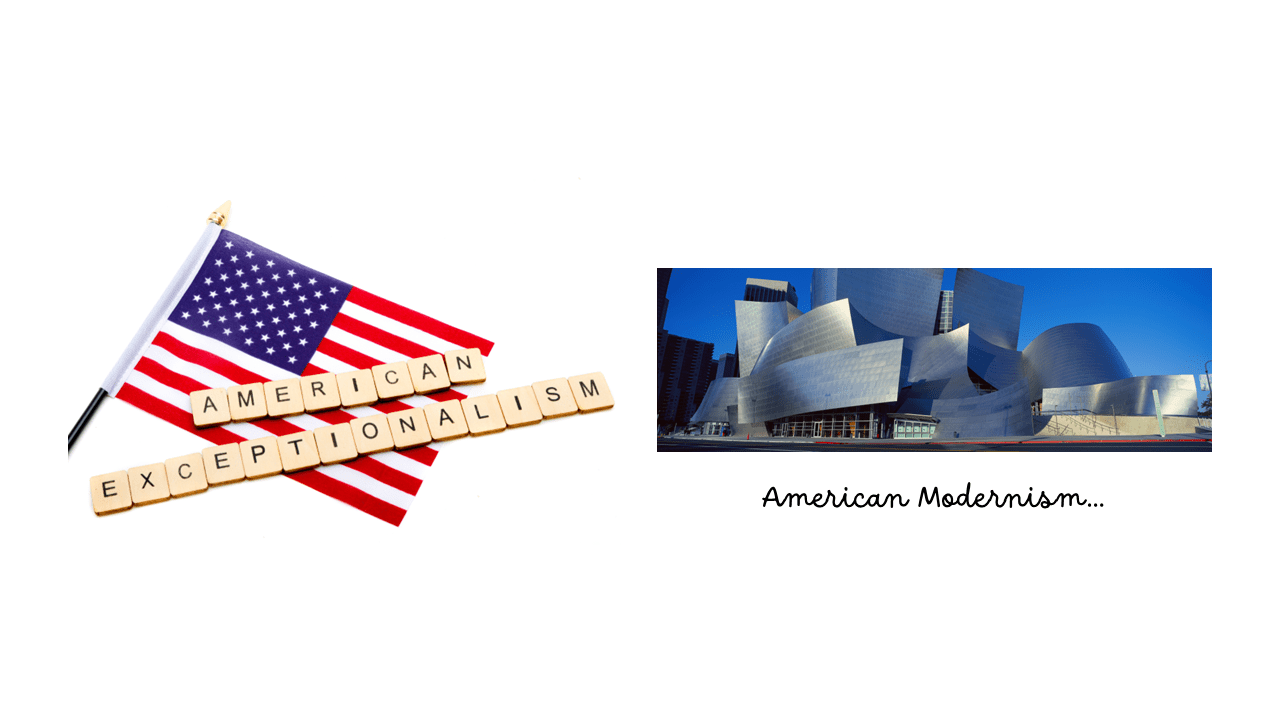
It is unsurprising that the “America First?” policy failed, as it is that “Australia First” policy would fail.
Will Gottsegen, Staff Writer, The Atlantic Daily:
“America First?”
Donald Trump spent the holidays drifting further and further from the “America First” doctrine he campaigned on. The president who once promised to disentangle the United States from foreign conflicts has turned his focus abroad: On Christmas Eve and Christmas Day, respectively, the U.S. bombed a dock in Venezuela and struck ISIS militants in Nigeria. And this morning, just over six months after the U.S. struck three nuclear facilities in Iran, Trump threatened to deploy military force in support of anti-government protesters in the country. “If Iran shots [sic] and violently kills peaceful protesters, which is their custom, the United States of America will come to their rescue. We are locked and loaded and ready to go,” he wrote on Truth Social.
Trump’s statement about Iran included no elaboration or specific plan for military action. But with only a few short lines on social media, the president effectively put Iran’s government on alert. “Trump should know that U.S. interference in this internal matter would mean destabilizing the entire region and destroying America’s interests,” wrote Ali Larijani, the head of Iran’s Supreme National Security Council, on X. “The American people should know—Trump started this adventurism. They should be mindful of their soldiers’ safety.”
As my colleague Nancy A. Youssef put it, Trump’s version of “America First” has so far meant avoiding large-scale military incursions “oriented around nation-building.” But the policy has also apparently allowed for aggressive interventions around the world, both to pursue America’s enemies and to aid its allies. When the U.S. conducted its clandestine operation in Iran in June under the code name “Operation Midnight Hammer,” Trump gave a televised address explaining his thinking: forcible disarmament to further American security interests in the Middle East.
Other strikes can’t be as easily slotted into “America First.” After the U.S. launched more than a dozen Tomahawk missiles at ISIS camps in northwest Nigeria on Christmas Day, Nigerian Foreign Minister Yusuf Maitama Tuggar said the strike had “nothing to do with a particular religion.” But Trump claimed in a Truth Social post that militants had “been targeting and viciously killing, primarily, innocent Christians at levels not seen for many years, and even Centuries!” (Although there have been several high-profile killings of Christians in northern Nigeria in recent years, Muslims have been deeply affected too—and it’s not clear what evidence Trump is drawing on for his claim that the rate of Christian deaths is the highest that it has been in centuries.) Trump’s focus on the plight of Christians abroad is in line with his explicit defense of Christian heritage at home. But these actions don’t seem to contribute to immediate American security needs, nor will they bring stability to the broader region. Military insurgency in northern Nigeria has been going on for decades, and these latest strikes aren’t likely to end it.
The Nigeria attack came a day after the CIA conducted a drone strike on a Venezuelan port facility. The White House has threatened Venezuela with land strikes for months as part of what my colleague Jonathan Chait has called a “slow roll to war” with the country: ostensibly a military campaign against drug cartels in Latin America, but also a kind of imperialistic push. Although Venezuela is a transit country for illegal drugs on their way to the U.S., plenty of other countries share that distinction. It could be that the conflict is a pretext for deposing the country’s autocratic leader, Nicolás Maduro, as White House Chief of Staff Susie Wiles recently suggested in an uncharacteristically candid interview, or for seizing Venezuela’s oil wealth (a theory that Maduro advanced in an interview this week). But so far, the president’s thinking remains largely unknowable.
Over the past two weeks, Trump has threatened foreign governments, unleashed military strikes in sovereign territories, and pledged his support for at least one American ally looking to conduct campaigns of its own: During a recent summit with Israeli Prime Minister Benjamin Netanyahu, Trump said the U.S. would back potential Israeli strikes on Iran. Rather than explicitly acknowledging the apparent shift in policy, Trump has simply slowed down on the “America First” rhetoric.
At the same time, his approach to announcing new foreign interventions has become more brazen. As my colleague Tom Nichols pointed out, today’s ungrammatical threat to Iran arrived on Truth Social at 2:58 a.m. EST, as if it just couldn’t wait. A “locked and loaded” country isn’t what Trump promised, but it’s what Americans should start to expect.
Featured Image: One side is losing because of the lack of genuine intelligence


Neville Buch
Latest posts by Neville Buch (see all)
- Volunteers Economically Abused: Neoliberal Formalism, MICE Philosophy, and the Capacity for Comprehensive Understanding – October 25, 2026
- University Academy Aggression: Corporate Managerialism, MICE Philosophy, and the Capacity for Comprehensive Understanding – October 25, 2026
- The Numbers Game Problem: Neoliberal Formalism, MICE Philosophy, and the Capacity for Comprehensive Understanding – October 25, 2026