
Dr Neville Buch
Abstract
The “academic immense regression” of the twenty-first century is defined by a systemic transition from a community of scholars to a technocratic industry governed by “retail governance” and “Instrumental-Rationality”. This essay examines the profound social harm within the university sector, as evidenced by the editor of the Times Higher Education Supplement (THE) on 8 May 2026, and compares these accounts of professional humiliation and redundancy with the specific trajectory of Dr. Neville Buch. Utilizing the Dynamic of Cognition (DoC) and the Matrix of Sociology, the analysis argues that the “cold and calculated” management of academic labour represents a state of “denoetization”—the mechanical liquidation of human judgment. While institutional redundant workers face a “toxic” loss of status, Dr. Buch’s decade of unpaid academic work and persistent poverty exemplify a different facet of this regression: the marginalization of independent intellectual authorship. To overcome this crisis, the essay advocates for a “reflective ascent” through panser (thinking as caring) to restore the archetype of the person within the educational republic.
——————————————————————————–
The Humiliation of the Operators: Academic Labor in the Technical Abyss
The editor of the Times Higher Education Supplement (8 May 2026) describes a sector in the grip of a moral and cognitive crisis. The “personal stories” of redundant academics—left without a “thank you or goodbye” after ten years of labour—reveal an institutional culture that has collapsed into the “coldness of calculation”.
I. The “Cold and Calculated” Reduction of the Person
The THE report’s description of management as “cold and calculated” identifies the primary malady of modern governance: the “techné mindset”. Within Dr. Buch’s Matrix of Sociology, this occurs when the High System (Row 1) and Mass System (Row 3) imperatives of “measurable utility” override the Individual-Collective (Row 4) focus on Scholarship. When a university treats its staff as Träger (bearers) of data sets rather than historical persons, it facilitates “symbolic misery”—the loss of individual agency to automated behavioural and economic control. The “humiliation” mentioned by the THE respondent is the psychological result of being reduced to a “puny human node” in a network that no longer recognizes the “who” (human being) behind the “what” (technical output).
II. Dr. Buch and the Persistence of the Independent “Inward Man”
Dr. Buch’s experience provides a counter-narrative to institutional redundancy but remains embedded in the same “immense regression.” Having transitioned from high-level university research to the “crucible of care” for his terminally ill wife, Buch has spent a decade producing pioneering intellectual work in a state of persistent poverty. Unlike the institutional academic who feels they can never “be in the same room as former colleagues” due to humiliation, Buch has maintained a “reasoned hope” and a commitment to Human Authorship despite having an “empty fridge and bank account”.
This unpaid labour is a manifestation of Active Nihilism—the systematic purging of “Widely-Believed Falsehoods” regarding professional status. Buch’s work functions as an “intellectual immune system” that operates outside the institution precisely because the university has succumbed to “institutional arrogance,” valuing rank and philanthropic targets over the “soft side” of city-building.
III. The Failure of Recognition and the Malady of Historical Forgetfulness
The “toxic” situation described in THE is exacerbated by “Historical Forgetfulness”—a systemic banishment of the historical and ethical bearings of the university. When management ignores a decade of service, they participate in “civilizational amnesia,” treating human contribution as an obsolete technical component rather than a source of communal wisdom. Buch argues that this lack of corporate compassion is not accidental; it is a structural byproduct of a system that favors “vocational readiness” over Aristotelian flourishing. The “humiliation” of the redundant scholar is a symptom of “denoetization”: the collective loss of the capacity to value the human spirit as the proactive operator of our social future.
Conclusion: Reclaiming the Republic of Scholars
The comparison between institutional redundancy and Dr. Buch’s independent poverty reveals a sector that has lost its “holy spirit” of scholarship. Reclaiming the ability to be in the “same room” as colleagues requires a “reflective ascent” and the practice of panser—reinventing thinking as the procedural necessity of tending to social wounds. Only by rejecting the “mechanical techné mindset” and adopting Spiral Historiography can the university once again become a site for Human Authorship, where the “who” remains more important than the “what”.
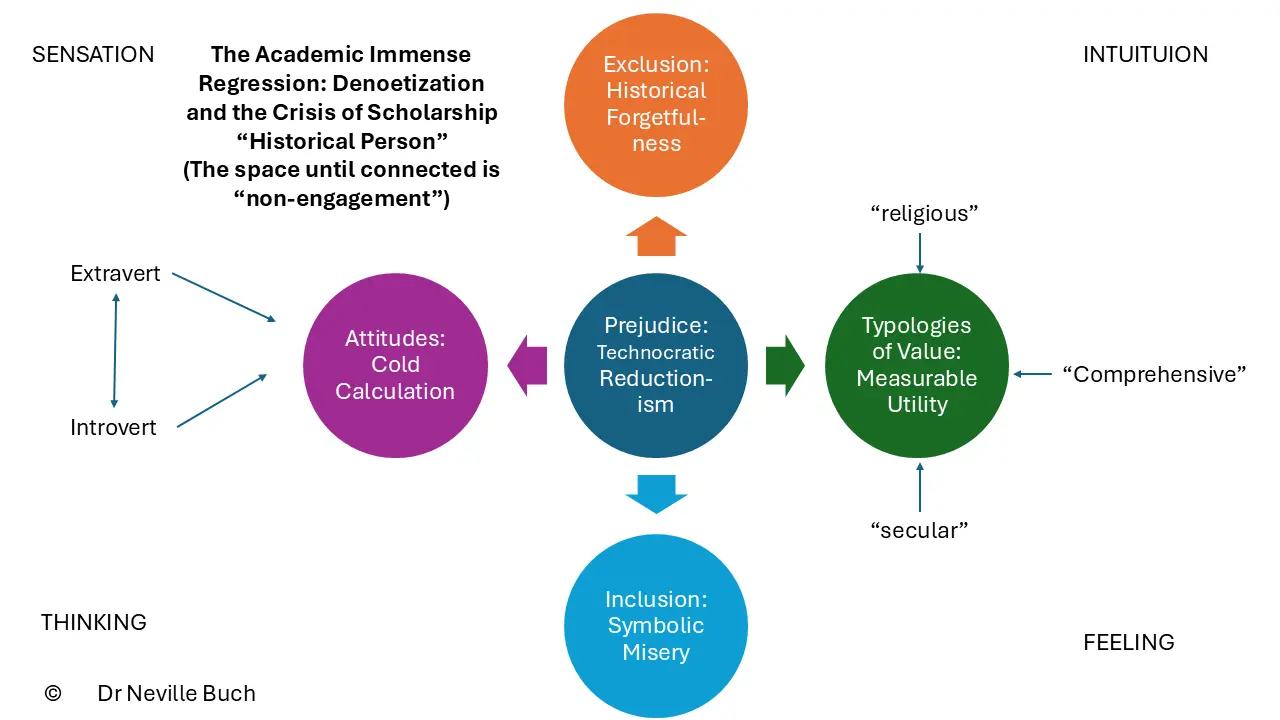
Dynamic of Cognition (DoC) Table: Humiliation vs. Authorship
| DoC Component | Regression (THE Comment/Redundancy) | Humanistic Ascent (Independent Scholarship) | Philosophical Rationale |
| Prejudice (Centre) | Technocratic Reductionism: Labor seen as a “case file” or technical “what”. | Reflective Self-Criticism: Questioning the “obviousness” of professional status and identity. | Moves from unreflective habit to logic-based choices. |
| Attitudes (Thinking) | Cold Calculation: Managing “toxic” environments for institutional PR and budget. | Panser (Thinking as Caring): Tending to social wounding and fragmentation with empathy. | Replaces strategic domination with communicative action. |
| Typologies of Value | Measurable Utility: Valuing academics only for their “attainment” or metrics. | Holistic Flourishing: Affirming the complexity of the person over economic luck. | Prioritizes the “who” (human) over the “what” (system). |
| Exclusion (Sensation) | Historical Forgetfulness: Ignoring the long-term context of a scholar’s service. | Crap Detecting: Systematically filtering out “institutional bullshit” and myths. | “Uncoils” the mind from hegemonic and automated stimuli. |
| Inclusion (Intuition) | Symbolic Misery: Feeling “humiliated” and powerless against the system. | Human Authorship: Becoming the proactive author of one’s own existence. | Restores the capacity for “natality” and meaning. |
——————————————————————————–
Bibliography
Arendt, H. (1977). The life of the mind (M. McCarthy, Ed.). Harcourt Brace Jovanovich.
Buch, N. (1995). American influence on Protestantism in Queensland since 1945 (Ph.D. Thesis). The University of Queensland.
Buch, N. (2025). The dynamic of cognition. Academia.edu.
Buch, N. (2025, December 2). No regrets in Brisbane-Queensland. Dr Neville Buch ABN: 86703686642.
Buch, N. (2026, January 10). Understanding history as philosophy in practice: Abstract for CFP ISCHE 47. Management Institute for Contributory Economy.
Buch, N. (2026, March 13). The critique of The University of Queensland social impact report. Management Institute for Contributory Economy.
Collins, R. (1998). The sociology of philosophies: A global theory of intellectual change. Harvard University Press.
Habermas, J. (1979). Communication and the evolution of society (T. McCarthy, Trans.). Beacon Press.
Stiegler, B. (2014). Symbolic misery, 1: The hyperindustrial epoch. (B. Norman, Trans.). Polity Press.
Stiegler, B. (2025). The immense regression: What is called caring? (Vol. 1) (D. Ross, Trans.). K. Verlag.
Times Higher Education. (2026, May 8). Redundancy, humiliation, and the personal stories of higher education. [Commentary Source].
Turner, B. (2023). Returning to judgment: Bernard Stiegler and continental political theory. SUNY Press.
Williams, B. A. O. (2006). Philosophy as a humanistic discipline. Princeton University Press.
——————————————————————————–
Endnote
Stiegler defines the “immense regression” as demoralization and a state of “absolute non-knowledge”. Denoetization is the loss of the capacity for critical thought and judgment in a technical society. Managers are often guided by institutional self-preservation rather than the truths of policy. The individual is reduced from a proactive author to a mere bearer (Träger) of social data sets. Symbolic misery results from captured human desire and standardized external stimuli. Dr. Buch transitioned to independent consultancy after serving as a carer, leading to persistent poverty. Buch identifies “institutional arrogance” as valuing status and rank over the archetype of the person. “Historical Forgetfulness” results in the loss of lessons from the past to maintain administrative fictions. “Job Ready” ideologies prioritize immediate market utility over moral character and wisdom. Tearing down scholarship destroys the “intellectual immune system” needed for societal recovery. Reclaiming authorship ensures the “who” (human) remains the proactive operator of social systems. Panser (thinking as caring) is the procedural necessity for tending to social fragmentation.
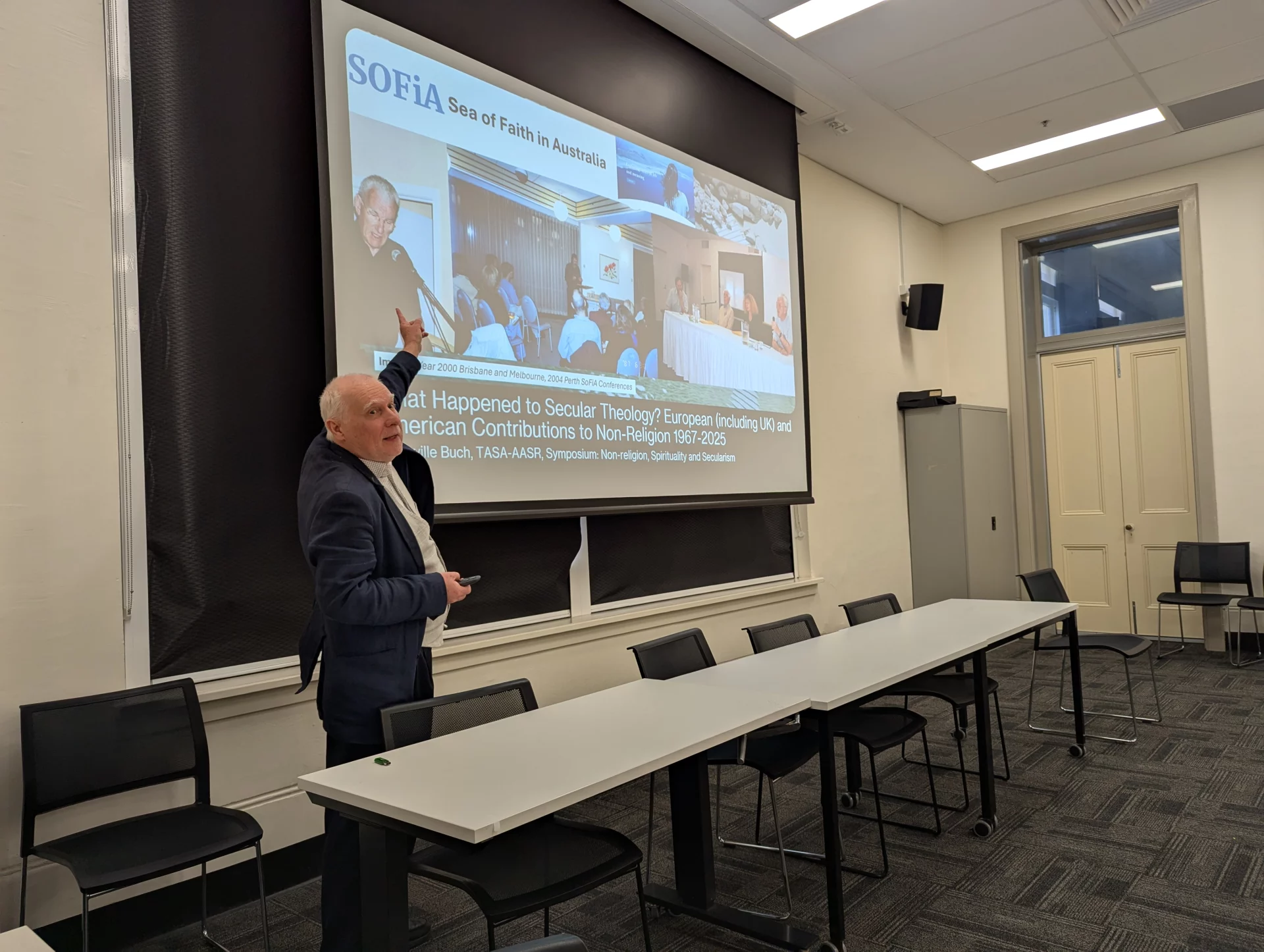
Featured Image: One of Neville’s Unpaid Many Academic Presentations, The University of Sydney, New South Wales, Australia, 3 October 2025.


Neville Buch
Latest posts by Neville Buch (see all)
- The Numbers Game Problem: Neoliberal Formalism, MICE Philosophy, and the Capacity for Comprehensive Understanding – October 25, 2026
- Politicians, Other Political Players, why your messaging does not land with the general public – October 25, 2026
- The Unbound Mind: Independent Scholarship, Institutional Isolation, and the Restoration of Human Authorship – October 20, 2026