
The Value of Public Sociology in 2024, and not 2004
Dr Neville Buch
There is for Humanism in the 21st century and Trumpocene a correct way of thinking available (Toulmin 1953: 219, 235), and the singular here is one summative thought that combines many other thoughts. There is both diversity and a singular message of structure. Unfortunately, in the last 20 years, university sociologists have put up barriers to the public discourses, for example:
If my interpretation of the meaning of ‘public sociology’ is correct, then a program encouraging sociologists to become more ‘public’ would appear to be a mistake. In my opinion, ‘public sociology’ (1) involves some false assumptions, (2) endangers what little legitimacy sociology has, thereby helping to undermine the chances of sociological knowledge ever being taken seriously in public arenas, and (3) is, in fact, incompatible with good “professional sociology.” Moreover, urging “public sociology” is contrary to one of the bases of a good society that Burawoy would probably endorse – participation on a more or less equal basis by all citizens. (Tittle 2004: 1639-40)
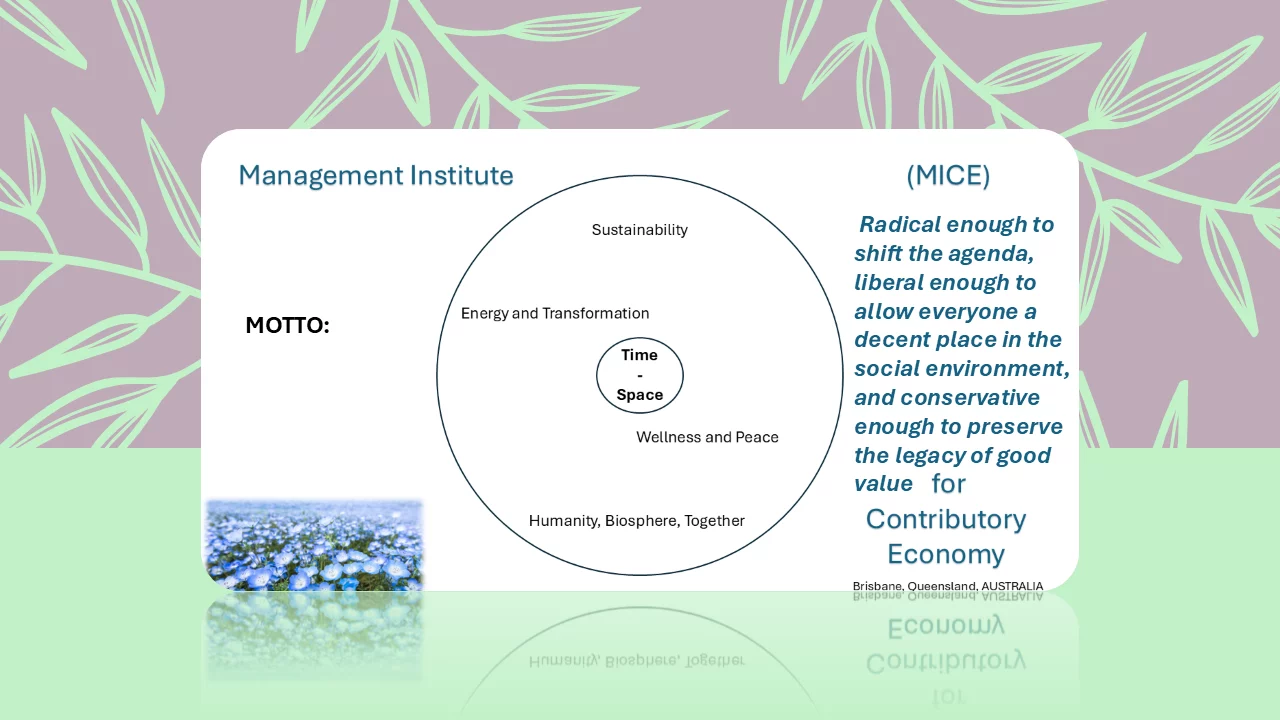
Our public sociology (MICE) is not a rejection of the old frameworks but reforming of the framing in thought, demonstrated in:
- Narrative Philosophies (White 1999: 229, 241, 242);
- Sociologies of Philosophies (Collins 1998: 377-8, 519);
- Phenomenology (Casey 1976: 1, 3, 7, 8, 11, 17, 18);
- History and Historiography (Hill 1980: 831, 833, 840, 841, 844, 845);
- Ethics (Williams 1995: 87, 88, 235, 238); and
- deep, wide, fair, thought (Stiegler in Alombert 2025).
Sociology in 2004 is different to Sociology in 2024. Twenty years have passed since the “public sociology debate” from inside the academia, with prejudices of what is best for the public.
The Tittle article was criticism of Michael Burawoy (2004-2005), so to the Tittle account of Burawoy:
Burawoy argues that (1) public sociology bears an interactive and mutually stimulating relationship with other forms of sociology, particularly what he calls “professional sociology,” (2) public sociology is a desirable activity to be encouraged; indeed, that it is vital to the health of the entire sociological enterprise, (3) public sociology depends on a base of strong professional sociology and that the two are not fundamentally incompatible. Further, from his remarks here and from his writings, I gather that public sociology encompasses many things, including: (1) engagement in political activities to promote somebody’s conception (I guess his) of social justice, (2) actively revealing to nonprofessional audiences the knowledge that sociologists think they have or the truths they think they know, (3) orienting our research and writing around moral issues, (4) engaging the public in debate about moral questions based on sociological insights, and (5) helping various “publics” solve problems or gather information relevant to their concerns, or helping to create such publics. (Tittle 2004: 1639)
Tittle’s argument (2004) went like this, “It [public sociology] assumes an unjustified moral superiority. It jeopardizes accomplishment of goals that would make sociology genuinely useful. It is somewhat dishonest in claiming more than can be delivered and in the process undermines sociological credibility.” However, the truth here is personal to a certain group of public sociologists where Tittle had only certain valid criticism, but not necessarily sound. Tittle’s counter-argument did not follow the rules of critical thinking, and felled for certain fallacies, and namely the ‘strawman’. To prove his point, Tittle looked to the weakest public sociologists in 2004, and did not allow that the field might improve to be legitimate, and not as he described it in 2004. This is another fallacy of short-term thinking.
Burawoy was not the only academic, sociologists, historians, and philosophers, to defend the public fields (public sociology, public history, and public philosophy). Both before and after Burawoy’s 2004 ASA Presidential address, the case had been made for the need and good of public sociology, which Australian sociologists (generally) ignored. For the last 30 years and more, the case can been well-truly established as sound arguments:
- Public Sociologies does have Contradictions, Dilemmas, and Possibilities, as any field of learning has (Burawoy 2004; Quah 2011);
- Public Sociology fits “The (good) Uses of Argument” (Toulmin 1958);
- Public Sociology fits Collins’ “The Sociology of Philosophies: A Global Theory of Intellectual Change”, where he criticises the inward-looking schools (Collins 1998);
- Public Sociology fits the contemporary historiography (Hill and Hill 1980);
- Public Sociology fits ‘Making Sense of Humanity’, and good ethical behaviour (Williams 1995); and
- This is because Public Sociology fits “Comparative Phenomenology of Mental Activity: Memory, Hallucination, and Fantasy Contrasted with Imagination” (Casey 1976);
- Public Sociology fits Democratisation and Discourse since it provides ‘The Public Sphere’ and ‘Comparative Historical Research’ (Clemens 2010);
- Public Sociology fits the good insights of interdisciplinary research (Mišina 2015);
- Public Sociology provides concepts of “applied and public sociology”: arguments for a bigger theoretical picture around the idea of a “university third mission” (Cooper 2017); and
- The attacks on public sociology from inside the universities, including aggressive silences, show sociology lost public opinion: a genealogy of a missing concept in the study of the political. (Manza & Brooks 2012); and
- Public Sociology now lies Between Utopia and Anti-Utopia (Burawoy 2021).
REFERENCES
Alombert, Anne (2025). Thinking with Bernard Stiegler: From the philosophy of technology to political ecology, puf.
Burawoy, Michael (2004). Public Sociologies: Contradictions, Dilemmas, and Possibilities. Social Forces, 82(4), 1603–1618. http://www.jstor.org/stable/3598448
Burawoy, Michael (2004). “Public Sociology: South African Dilemmas in a Global Context.” Society in Transition, 35(1), 11–26.
Burawoy, Michael (2005). 2004 ASA Presidential Address: For Public Sociology. American Sociological Review, 70(1), 4–28. http://www.jstor.org/stable/4145348
Burawoy, Michael (2021). Public Sociology: Between Utopia and Anti-Utopia. Polity Press.
Casey, Edward S. (1976). Comparative Phenomenology of Mental Activity: Memory, Hallucination, and Fantasy Contrasted with Imagination. Research in Phenomenology, 6(1), 1–25.
Clemens, E. S. (2010). Democratization and Discourse: The Public Sphere and Comparative Historical Research. Social Science History, 34(3), 373–381. http://www.jstor.org/stable/40927617
Collins, Randall (1998). The Sociology of Philosophies: A Global Theory of Intellectual Change, Harvard University Press.
Cooper, D. (2017). Concepts of “Applied and Public Sociology”: Arguments for a Bigger Theoretical Picture around the Idea of a “University Third Mission.” Journal of Applied Social Science, 11(2), 141–158. https://www.jstor.org/stable/26370944
Hill, Alette Olin, and Boyd H. Hill, Jr. (1980). “Marc Bloch and Comparative History.” The American Historical Review, 85(4), 828–846.
Manza, J., & Brooks, C. (2012). How Sociology Lost Public Opinion: A Genealogy of a Missing Concept in the Study of the Political. Sociological Theory, 30(2), 89–113. http://www.jstor.org/stable/41725505
Mišina, D. (2015). Who Now Needs Sociology? Transdisciplinarity Vs. Tradition. The Canadian Journal of Sociology / Cahiers Canadiens de Sociologie, 40(4), 527–546. http://www.jstor.org/stable/canajsocicahican.40.4.527
Tittle, Charles (2004). The Arrogance of Public Sociology, Social Forces 82:4, June 2004, 1639- 1643.
Toulmin, Stephen (1958). The Uses of Argument, Cambridge University Press.
Quah, S. R. (2011). Sociology: Opportunities and Professional Challenges. Asian Journal of Social Science, 39(1), 30–38. http://www.jstor.org/stable/43500536
White, Morton (1999). A Philosopher’s Story, Pennsylvania State University Press
Williams, Bernard (1995). Making Sense of Humanity, Cambridge: Cambridge University Press.


Neville Buch
Latest posts by Neville Buch (see all)
- Death in Life and Life in Death: Affective, Intellectual, and Ontological Dimensions of Human Mortality – October 2, 2026
- Psychological Symbol Cards – October 2, 2026
- The Washington Post Impact Report and American Studies – October 1, 2026