
Dr Neville Buch
Abstract
This essay introduces the complex interplay between education, religion, and the rising influence of non-religion in contemporary society. It explores how educational institutions have become primary battlegrounds for competing worldviews, ranging from conservative “combat concepts” to the Enlightenment-driven secular critiques of faith. Drawing on historical and sociological perspectives, the discussion examines the shift from sectarian-dominated schooling to the modern “secular age,” where religious commitment is no longer a consensus but one option among many. The introduction specifically highlights the role of “unbelief” as a self-sustaining phenomenon and the challenges posed by the Fourth Industrial Revolution to traditional religious pedagogies.
——————————————————————————–
Table of Contents
- The Secular Frame: Education in a Pluralistic Age
- Worldviews as Combat Concepts in the Classroom
- The Rise of Non-Religion and the “Evangelists of Unbelief”
- Pedagogy and Purpose: Between Educare and Educere
- Conclusion: The Future of Faith and Reason in Learning
- Endnotes
- Bibliography
——————————————————————————–
Introduction: Education, Religion, and Non-Religion
In the early twenty-first century, the relationship between education and religion has undergone a profound transformation, moving from traditional sectarian control toward a “secular age” characterized by a “dizzying range of alternatives” for belief and practice. While education was once provided primarily by religious institutions to a select few, the late nineteenth century saw the enactment of laws across Europe, America, and Australia to provide “free, secular, and compulsory” education to the general population. This transition was not merely administrative; it represented a fundamental shift in the “conditions for religious commitment,” where faith became a source of anxiety and doubt rather than a site of social consensus.
A central feature of this modern educational landscape is the deployment of the “worldview” as what Ian Hunter terms a “combat concept”. Conservative religious movements, particularly within Reformed and evangelical scaffolding, have utilized the Christian worldview as a tool for “differentiation from, and contention with, the ‘other’“ in educational contexts. This ideological conflict often surfaces in controversies over school curricula, such as the banning of materials perceived as promoting “secular humanism” or the introduction of “creation science” alongside evolutionary theory in state schools. These “history wars” and curriculum disputes reflect a deeper struggle between “naturalist” and “supernaturalist” historiographies, where the academy often resists “God-talk” in favour of methodological naturalism.
Simultaneously, the rise of “non-religion” has emerged as a self-sustaining and legitimate cultural niche. Historically, figures like Robert G. Ingersoll—the “Evangelist of Unbelief”—sought to supplant the Bible with a “gospel of humanity” that championed scientific progress and individual creativity as the “Sacred Scriptures of the human race”. This movement toward freethought and agnosticism has forced Religious Studies to expand its scope beyond dealing with “supernatural beings” to exploring the “sacred” as a subjective continuum of values that give life meaning, whether religious or spiritual.
The purpose of education itself is now debated through the lens of educare (training /imprinting) versus educere (leading out/eliciting innate ideas). While some religious educators aim to “instill proper attitudes and values” to protect against a “dehumanized world” in the era of the Fourth Industrial Revolution, more radical pedagogies—such as those of Paulo Freire—emphasize critical consciousness and the transformation of social reality. As online and automated learning modes gain momentum, producing virtual environments based on Artificial Intelligence, the traditional “banking system” of religious education is increasingly challenged by a need for “openness, cross-cultural relationships,” and innovative problem-solving.
Ultimately, hope remains the “indispensable precondition” of both religious practice and secular politics in education. In a pluralized society, the persistent search for meaning indicates that faith—whether in a deity or in the human imagination—retains a future even within the “immanent frame” of a secular age.
——————————————————————————–
- The Secular Frame: Education in a Pluralistic Age
In the contemporary era, the “secular frame” defines the boundaries of public education, representing a shift from a world where religion was a social consensus to one characterized by a “dizzying range of alternatives”. Secularization, as defined by Charles Taylor, signifies a change in the conditions of religious commitment rather than the total loss of faith. Historically, this transition was marked by the 1870s laws across Europe and America that established free, secular, and compulsory education for the general population. This movement aimed to protect religious freedom by removing sectarian influence from state mechanisms, yet it also relegated religious belief to the private sphere.
The “immanent frame” of this secular age allows the world to be understood on its own terms, without necessary reference to the supernatural. This frame has profoundly affected pedagogy, often favouring instrumental rationality over contemplative reflection. Modern education frequently operates within a “technological society” where communication and mediation replace traditional incarnations of truth. Furthermore, a growing formalization in education, particularly in online learning, risks creating a “simplistic, binary view of society” driven by algorithms rather than critical inquiry. This formalization modifies consciousness toward predetermined patterns, potentially stifling the “free, active, creative, investigative mind”.
Within this secularized environment, the “worldview” has emerged as a primary “combat concept” used by conservative religious movements to differentiate themselves from the secular “other”. These movements often view the secular frame as a “cosmic war” between the Christian worldview and various arrayed secular ideologies. Such tensions frequently manifest in “history wars” and curriculum disputes, such as the banning of materials perceived as promoting “secular humanism” or the push to include “creation science” alongside evolutionary theory in state schools. Proponents of these religious inclusions argue that the secular frame itself acts as a form of “non-neutrality” that excludes the “birthright” of children to receive a scriptural education.
Despite these conflicts, some scholars argue that “hope” serves as the “indispensable precondition” for both religious practice and secular politics in education. This “discipline of hope” is shared by believers and unbelievers alike, suggesting that faith—defined as a commitment vulnerable to disappointment—retains a future even in a secular age. Effective pedagogy in a pluralistic age requires a balance between educare (training and imprinting) and educere (leading out innate ideas). While educare provides the raw materials of culture, educere fosters the critical consciousness necessary to solve novel problems and transform social reality.
Ultimately, the secular frame does not mean the end of the sacred but its relocation into the “architecture of intention” and individual choice. In a pluralistic society, education becomes a “dialogue of myths,” where the task is not conversion but the cultivation of planetary wisdom and the recognition of “the pattern that connects” all things. By embracing a “kenotic” or self-emptying approach to power, educational communities can resist authoritarian captures of truth and recover a transcendent humility.
- Worldviews as Combat Concepts in the Classroom
n modern pedagogical discourse, the term “worldview” often suggests a neutral framework for understanding pluralism. However, historical and sociological analysis reveals that the “Christian worldview” frequently functions as a “combat concept”—a term used by Ian Hunter and applied by Simon Kennedy to describe how intellectual frameworks are wielded as weapons in cultural and political struggles. This combative stance is not accidental; it is baked into the very genesis of the modern Christian worldview movement.
Defining the Combat Concept: Origins in the Nineteenth Century
The use of worldview as a tool for conflict began in the late nineteenth century with thinkers like James Orr and Abraham Kuyper. Orr utilized the German concept of Weltanschauung to systematize Christian belief, explicitly presenting it as a “weapon” in the “battle between faith and unbelief”. He argued that Christianity was under attack from a “comprehensive method” of “modern” worldviews characterized by a “thoroughgoing opposition to the supernatural”. Similarly, Kuyper characterized the relationship between Christianity and modernism as “mortal combat,” asserting that Protestants could only defend their position by placing their own “life and world-view” in total opposition to the secular state.
The Re-Emergence: Francis Schaeffer and the Totalizing Worldview
The second major emergence of the combat concept occurred in the 1960s and 70s, popularized by Francis Schaeffer. Schaeffer moved beyond Orr and Kuyper by presenting history and culture as a “cosmic struggle” between worldviews vying for dominance. For Schaeffer, ideas drove ethics, and ethics drove culture; thus, having the “wrong” worldview had catastrophic societal results. This totalizing framework insisted that there was “no way to mix” or “synthesize” the two worldviews, creating a binary landscape where any departure from scriptural literalism was seen as a surrender to “pagan, materialist” order.
From Theory to Textbook: Classroom Conflicts in the 1970s and 80s
This ideological “war” found its most intense expression in the classroom, particularly through disputes over curricula. In Australia, specifically Queensland, the 1970s saw militant fundamentalist groups like STOP (Society to Outlaw Pornography) and CARE (Campaign Against Regressive Education) deploy the worldview combat concept to successfully lobby for the banning of progressive materials like MACOS and SEMP. These groups viewed the curriculum as a vehicle for “secular humanism”—a perceived worldview designed to subvert the “Judeo-Christian foundations” of society.
The conflict extended into science education through the promotion of “Creation Science”. Proponents argued that since evolutionary theory represented a secular worldview, pluralism demanded that creationist theories be taught alongside it in state schools to provide “balance”. Critics, however, viewed this not as pluralism but as the “fundamentalising” of religious culture and an attempt to use the classroom to enforce a specific, exclusivist worldview.
The Impact on Pedagogy: Education as a Battlefield
When worldviews are treated as combat concepts, the nature of pedagogy shifts from critical inquiry (educere) to ideological imprinting (educare). Instead of encouraging students to investigate and solve novel problems, this model often seeks to “instill proper attitudes and values” to protect them from the secular “other”. Furthermore, the growing formalization of education, particularly in online and automated learning, can reinforce these binary views by using algorithms to present a “simplistic, binary view of society,” stifling the “free, active, creative, investigative mind”.
Section Conclusion: Beyond the Binary
The legacy of worldviews as combat concepts remains a significant force in educational policy and cultural identity. While these frameworks provide a sense of epistemic certainty for their adherents, they often transform the classroom into a site of “history wars” rather than a space for dialogue. Moving beyond this binary struggle requires a shift toward what some scholars call a “pedagogy of hope” or a “problem-posing” model, which emphasizes critical consciousness, social transformation, and the recognition of “the pattern that connects” across diverse cultural and religious landscapes.
- The Rise of Non-Religion and the “Evangelists of Unbelief”
The “rise of non-religion” represents more than a decline in church attendance; it signifies a fundamental shift in what Charles Taylor describes as the “conditions for religious commitment”. In this “secular age,” religious belief is no longer the social default but is instead one option among a “dizzying range of alternatives,” often experienced in a condition of doubt and uncertainty. Historically, this transition gained significant momentum within twenty years after the American Civil War, when agnosticism emerged as a self-sustaining cultural phenomenon rather than a rare eccentricity. This period saw the “Sea of Faith” begin its “long, withdrawing roar,” leaving behind a cultural vacuum that secular movements sought to fill.
Robert G. Ingersoll: The Evangelist of Unbelief
Central to this transition was Robert Green Ingersoll (1833–1899), who earned the title “Evangelist of Unbelief” as the most public opponent of Christianity in nineteenth-century America. Ironically, Ingersoll’s promotion of unbelief was deeply shaped by the very evangelical culture he sought to dismantle. Raised in a pious home by a revivalist father, Ingersoll utilized his oratorical skills to transform the lecture podium into a “secular pulpit”. By the 1880s, he was recognized as “infidelity incarnate,” drawing millions of listeners to his lectures which “cross-examined” the Bible for its perceived inconsistencies and moral “mistakes”.
The Gospel of Humanity and the New Sacred Scriptures
Ingersoll did not merely deconstruct faith; he offered a “gospel of humanity” as a substitute for Christian orthodoxy. He famously declared that “Shakespeare is my Bible and Burns my Hymn-book,” essentially deifying human creativity and genius. In this new creed, scientific progress was hailed as the “only savior of this world,” and individual creativity was described as the “Sacred Scriptures of the human race”. This “religion of reason” aimed to replace the fear of hell with a commitment to “health, wealth, and happiness” in the present life, effectively sacralizing the immanent world.
Varieties of Atheism: Beyond Science and Faith Polemics
Modern scholarship suggests that non-religion is more varied and interesting than simple polemics over the authority of science would indicate. Atheism, like religion, is now understood as a matter of “meaning, emotion, and moral formation” rather than just the absence of belief. Contemporary thinkers argue that “non-religion” constitutes its own legitimate Cultural niche, where individuals constitute communities not by social designation but by voluntary choice. This shift allows Religious Studies to move beyond supernatural entities to study the “sacred” as a continuum of values—subjective “centres and sources of meaning”—that give life its purpose, whether or not a deity is involved.
Section Conclusion: Hope and Meaning in the Immanent Frame
Ultimately, the rise of non-religion has not led to a purely disenchanted world but to a relocation of the sacred into human experience. As David Newheiser argues, “hope” serves as the indispensable precondition for both religious practice and secular politics, shared by believers and unbelievers alike. In a pluralized society, the “Evangelists of Unbelief” did not end the human search for meaning; they instead integrated the “discipline of hope” into an immanent frame where faith survives as a commitment vulnerable to disappointment.
- Pedagogy and Purpose: Between Educare and Educere
From antiquity, thinkers have grappled with the nature and purpose of education, leading to a central etymological controversy involving two Latin roots: educare and educere. These terms represent more than mere linguistic variations; they reflect the “bipolarization” of educational philosophy along two distinct metaphysical and epistemological orientations. Educare, translating to the “act of training,” is rooted in the materialist-empiricist camp. Associated with John Locke, this view posits that the learner’s mind is a tabula rasa (empty slate) at birth, onto which knowledge, skills, and culture are mechanically imprinted. Conversely, educere, meaning “to lead out,” is favored by the idealist-rationalist camp, including Socrates and Descartes, who believe humans possess innate ideas. In this model, the educator serves as a “mid-wife,” eliciting knowledge that already exists within the learner.
The sources suggest that an educational system relying solely on one of these roots is destined to fail. An education focused exclusively on educare dooms each generation to “starting over,” while an education that ignores educere produces students who are “incapacitated in solving novel problems”. Therefore, modern pedagogy requires a blend where the cultural raw materials internalized through educare provide the foundation for the critical and creative transformation prompted by educere.
This synthesis is most prominently reflected in the work of Paulo Freire, who critiqued what he termed the “banking system” of education. In the banking model, the teacher is a “narrating subject” and the student is a “listening object,” a relationship characterized by the “sonority of words” rather than their “transforming power”. This approach treats students as “containers to be filled,” effectively stifling their “senses of creativity, invention, and innovation”. In contrast, Freire’s “problem-posing” model breaks the teacher-student dichotomy, viewing students as “critical co-investigators”. Central to this method is dialogue, which Freire defines as an encounter mediated by the world to “name and transform” it.
In the contemporary landscape, these pedagogical tensions are exacerbated by the “growing formalization” of online education. Standardized, machine-based learning often imposes rigid trajectories and routines that can “modify consciousness to a predetermined pattern,” creating a rift between an investigative mind and a “passive, dependent, filled one”. As Peter Serdyukov observes, the algorithmic nature of online learning can result in a “simplistic, binary view of society”. This is particularly concerning as society enters the Fourth Industrial Revolution (4IR), which demands “sense-making skills,” “novel and adaptive thinking,” and “cross-cultural competencies”—traits that align more closely with educere than with rote training.
The purpose of education, therefore, must shift from simple piety or the transfer of data toward a “pedagogy of contingency” that responds to the “uncertainty, chance, and conditionality” of real life. This is especially true for religious education, which must move beyond merely promoting “strength of belief” to fostering a learning process that includes “openness, cross-cultural relationships,” and “innovative problem-solving”. By recognizing that “truth is not a static proposition” but a “living disclosure” realized through participation, pedagogy can fulfill its ultimate purpose: the restoration of the soul and the transformation of society.
- Essay Conclusion: The Future of Faith and Reason in Learning
The future of learning is currently being shaped by the convergence of two powerful forces: the rapid formalization of technology-based education and a persistent human search for meaning within a secularized “immanent frame.” As education transitions toward a virtual environment based on Artificial Intelligence (AI), the central challenge for educators is to balance the instrumental rationality of “smart automation” with the spiritual and ethical dimensions of human consciousness.
Pedagogical Foundations: Educare vs. Educere
A fundamental etymological controversy defines the pedagogical landscape: the tension between educare (to train or imprint) and educere (to lead out). The future of learning risks a collapse into a purely materialist-empiricist model where the student’s mind is treated as a tabula rasa—a blank slate for mechanical data deposits. This “banking system” of education, as critiqued by Paulo Freire, creates “listening objects” rather than “critical co-investigators,” effectively stifling creativity and innovation.
To solve “novel problems” in a complex future, a synthesis is required: educare must provide the raw materials of culture, while educere must provide the critical and creative “mid-wifery” to elicit an investigative mind. Without this balance, learning becomes a “mechanical process” that dooms each generation to merely repeating the patterns of the past.
The Technological Challenge: Algorithms and Automation
The Fourth Industrial Revolution (4IR) introduces a “growing formalistic trend” driven by algorithms that may adversely affect human cognition. Standardized, machine-based education often imposes rigid trajectories that can “modify consciousness to a predetermined pattern,” creating a rift between an active mind and a “passive, dependent, filled one”. Rowan Atkinson notably observed that when an algorithm decides what we see, it creates a “simplistic, binary view of society”.
Furthermore, the automation of education—where AI systems may eventually replace live instructors—threatens to deprive learners of the “socio-emotional benefits” and informal social learning essential for human development. To counteract this, educators must lead the technological revolution with a holistic, humanistic view, integrating discovery and problem-solving rather than following a “formal, predetermined route”.
Faith as a “Rational Observance” and Source of Meaning
In a secular age, “faith” is often redefined not as dogmatic certainty but as a “discipline of hope” shared by believers and unbelievers alike. This discipline serves as an “indispensable precondition” for both religious practice and secular politics, allowing individuals to hold commitments that transcend the self-sufficient “immanent frame” of the modern world.
Insights from Mandaeism suggest that knowledge is not an arbitrary abstraction but a “living disclosure” of reality achieved through participation and experience. In this view, “truth” is earned through lived engagement, where revelation and reason are inseparable. Similarly, contemporary Religious Studies is shifting toward the study of the “sacred” as a continuum of values that give life its “why to live,” regardless of supernatural verification. In the era of the 4IR, “religiosity” may serve as the vital element that balances “humanity and insanity,” helping to answer logical questions about identity and free will that science alone cannot address.
The Future Synthesis
The future of learning requires a “pedagogy of contingency” that responds to the uncertainty and conditionality of real life. Learning must move beyond “learning for earning” to include openness, cross-cultural relationships, and innovation. By recognizing that “the pattern that connects” is what sustains both knowledge and purpose, the classroom can become a site of “planetary wisdom” rather than just data acquisition. Ultimately, the goal is to foster a “free, active, creative, and investigative mind” capable of recognizing that the “age of miracles”—the age of the sacred speaking to the human—has not passed, but has merely found new forms in the human imagination.
Endnotes
- Secularization in this context refers to Charles Taylor’s (2007) definition: a change in the conditions of belief where it is no longer the default but one option among many.
- Combat Concept is a term used by Simon P. Kennedy (2024) to describe how worldviews are used as weapons for cultural and intellectual conflict.
- Religious Naturalism is a perspective that regards nature as exhaustive of reality yet worthy of deep reverence, effectively bridging the gap between religious awe and secular materialism.
- Fourth Industrial Revolution (4IR) involves the integration of smart automation and interconnectivity, raising new ethical questions for religious leaders and educators alike.
——————————————————————————–
Bibliography
Adnan, A. A. Z., Yunus, N. K. Y., & Ghouri, A. M. (2019). Does religiosity matter in the era of Industrial Revolution 4.0? Asian Academy of Management Journal, 24(Supp. 2), 67–77.
Brandt, E. T. (2011). Evangelist of unbelief: Robert G. Ingersoll, the Bible, and freethought in Gilded Age America [master’s thesis, Wheaton College Graduate School].
Clary, I. H. (2015). Evangelical historiography: The debate over Christian history. Evangelical Quarterly, 87(3), 225–251.
Harrison, J. (2004). Pietism and political culture in Queensland [Doctoral dissertation, The University of Queensland].
Hudson, W. (2005). The Enlightenment critique of ‘religion’. Australian eJournal of Theology, 5.
Jaron, G. (2021). Religious Studies as the study of the sacred and our response to what we consider sacred. Academia Letters, Article 1888. https://doi.org/10.20935/AL1888
Kennedy, S. P. (2024). Christian worldview and cosmic war: Contexts and origins of a religious combat concept. Church History, 93(1), 63–84. https://doi.org/10.1017/S0009640724000064
Maddox, M. (2014). Taking God to school: The end of Australia’s egalitarian education? Allen & Unwin.
Newheiser, D. (2019). Hope in a secular age: Deconstruction, negative theology, and the future of faith. Cambridge University Press.
Ngwoke, H. C., & Ugwu, A. K. (2022). Promoting innovation for development through Freirean pedagogical model. Nnadiebube Journal of Education in Africa (NJEA), 7(1), 35-50.
Ramalho, C. (2025). The theological capture of society: How Donald Trump’s Christian nationalist revolution seeks to control the media, judiciary, and universities under the banner of cultural sovereignty [Master’s thesis, Luther Seminary].
Rovero, J. K. T. (2026). Introspections on Mandaeism: On the experience. [Self-published manuscript].
Serdyukov, P. (2021). A growing formalization of contemporary online education. Academia Letters, Article 2601. https://doi.org/10.20935/AL2601
POSTSCRIPT QUESTIONS
What is the difference between ‘educare’ and ‘educere’ in pedagogy?
The difference between educare and educere represents two fundamental etymological and philosophical orientations in pedagogy:
- Educare (Training/Imprinting): This term translates to the “act of training”. It is championed by the materialist-empiricist camp, with thinkers like John Locke positing that a learner’s mind is a “tabula rasa” or empty slate at birth. In this model, education is seen as a mechanical process of imprinting knowledge, skills, and culture onto the student. This is often associated with the “banking system” of education, where the teacher deposits information into passive students.
- Educere (Leading Out/Eliciting): This term denotes “to lead out”. It is favoured by the idealist-rationalist camp, including philosophers like Socrates and Descartes, who believe humans are born with innate ideas. The educator’s role here is described as “mid-wifery,” focused on eliciting or drawing out the knowledge that already exists within the learner.
The Necessity of Balance
The sources argue that a balanced educational system must integrate both concepts to be successful:
- The Risk of Only One: Education focused solely on educare dooms each generation to “starting over,” while ignoring educere produces students who are incapacitated in solving novel problems.
- The Ideal Synthesis: Solving modern problems requires a blend where the components of culture internalized through educare provide the raw materials for the critical and creative change prompted by educere.
This synthesis is central to Freirean pedagogy, which seeks to move beyond the “banking system” by using a “problem-posing” model that encourages dialogue, critical thinking, and innovation. In this view, education is not just about instilling values (educare) but about fostering an active, investigative mind capable of transforming social reality (educere).
How did the ‘history wars’ affect religious education in schools?
The “history wars” and associated curriculum disputes significantly altered the landscape of religious education and public schooling by becoming a primary site for ideological conflict between secular and religious worldviews. In this context, the “Christian worldview” was often deployed as a “combat concept”—a tool for differentiation and contention with the secular “other” in educational settings.
These conflicts manifested in several key ways:
- Banning of Progressive Curriculum Materials
In the late 1970s, particularly in Queensland, militant and separatist fundamentalist groups successfully lobbied for the banning of materials perceived as promoting “secular humanism”.
- MACOS and SEMP: The Man: A Course of Study (MACOS) and Social Education Materials Project (SEMP) were banned by the Queensland Cabinet in 1978.
- Ideological Basis: Opponents, such as the groups STOP (Society to Outlaw Pornography) and CARE (Campaign Against Regressive Education), argued these materials were “anti-scriptural” and subverted the “Judeo-Christian foundations” of society. They advocated for an “essentialist” view of education based on the Bible as the guideline for all textbooks.
- The Introduction of Creation Science
The “history wars” extended into the science classroom through a struggle over the origins of life.
- Instruction to Schools: In 1981, the Queensland Department of Education issued an instruction that creationist theories be taught in state secondary schools alongside evolutionary theory.
- Justification: Proponents argued this was an acknowledgement of pluralism, ensuring schools did not “blatantly contradict” what religious parents taught their children at home.
- Counter-Response: Mainline religious organizations, such as the Uniting Church, criticized “Creation Science” as “sub-Christian,” arguing it misused the Bible as a scientific textbook and created a false choice between faith and science.
- Debate Over Human Relationships and Sex Education
The conflict also affected courses on human relationships, which were viewed by fundamentalists as a vehicle for a “permissive secular humanism”.
- Theocratic Tensions: Some religious activists argued that because Australia was a “Christian-constituted country,” every child had a “birthright” to an education based on scriptural precepts.
- Outcome: Public pressure led to policy decisions where sex education courses were often restricted to being conducted only outside of school hours to avoid contradicting “traditional Judeo-Christian ethics”.
- Shifts in Funding and Accreditation
More broadly, these “culture wars” have influenced federal policies regarding the funding of religious schools.
- Support for Conservative Schools: Policy shifts have favoured small, non-denominational Christian schools that teach creation science and require staff to adhere to strict scriptural standards.
- Erosion of Egalitarian Education: Critics like Marion Maddox argued that these changes have undermined the traditional Australian commitment to “free, secular, and compulsory” public education by diverting resources to schools that promote exclusivist religious views.
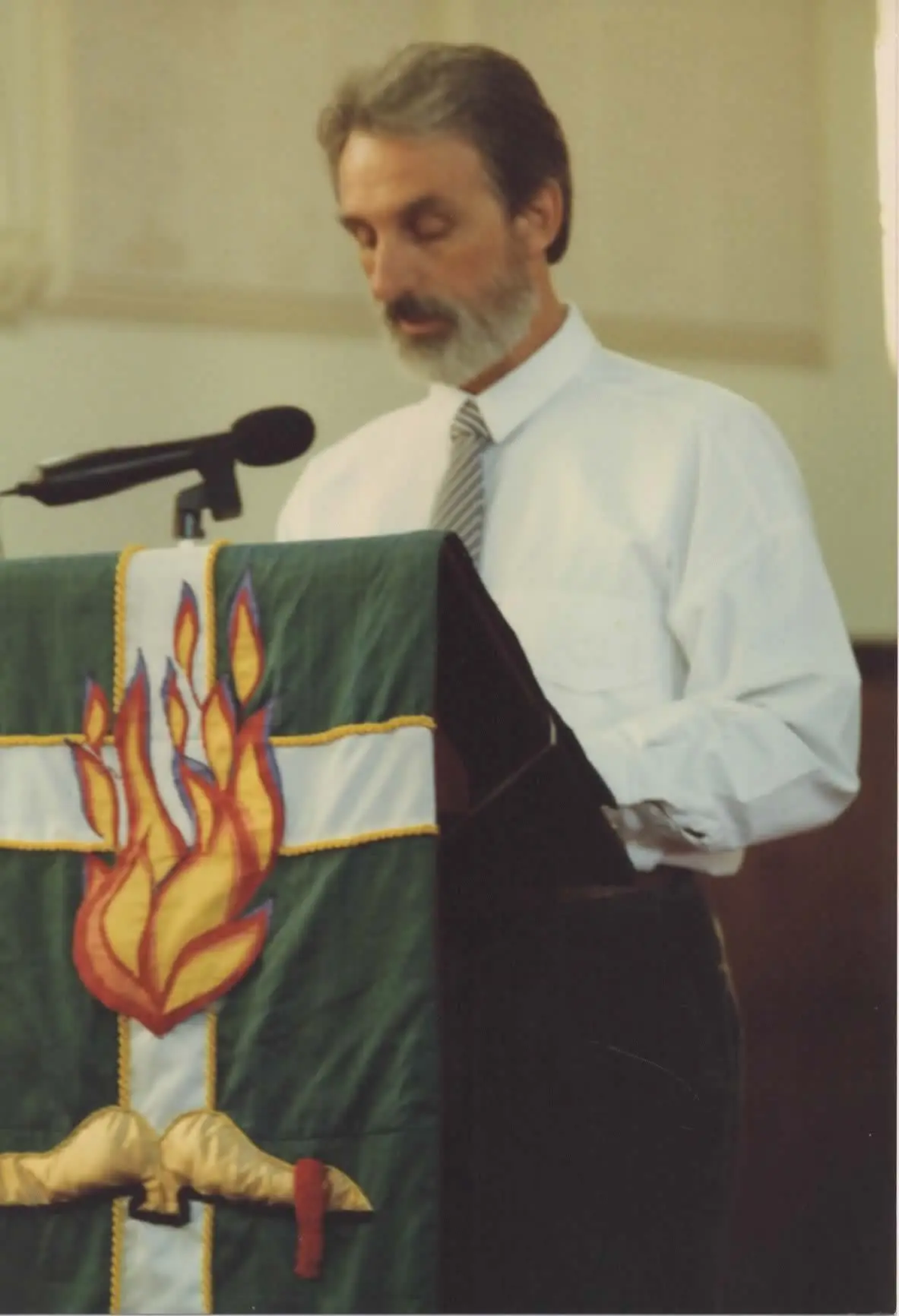
Featured Image: Charles Ringma,18 June 1988, Kangaroo Point, Queensland, Australia.


Neville Buch
Latest posts by Neville Buch (see all)
- Part 3:The Failure of an Educational Institution and How to Spiral Forward – October 10, 2026
- Part 2:The Failure of an Educational Institution and How to Spiral Forward – October 10, 2026
- Part 1:The Failure of an Educational Institution and How to Spiral Forward – October 10, 2026