
Liberal Historiography and the Philosophy of Kay Saunders
HAPI Past Series
Dr Neville Buch
Series Abstract: For the past few years, I have been researching and writing about the defuncted Department of History, University of Queensland, 1911-2000. It will take a few more years before a tome on the subject may be published. In the meantime, it has occurred to me to write up on the past academics of what is now called the school of “Historical and Philosophy Inquiry”. It is certainly appropriate for myself as my career at UQ began in this direction of interdisciplinary thought. The series publishes the articles in no particular order, and selection is based on the availability of materials. Currently the plan for the remainder of the series is Peter Tarlings, and then a conclusion on the Department of History, University of Queensland, 1911-2000.
Abstract
This essay examines the historiography of late Kay Saunders (1947-2026), Professor Emerita at the University of Queensland’s School of Historical and Philosophical Inquiry (HAPI). Originally trained in anthropology and sociology, Saunders brought a distinct interdisciplinary and theoretical rigour to the study of Australian history, specifically challenging the “Whig” traditions of underlying progress.
Her work is characterized by a “dark vision” of the Australian past, focusing on the systemic mechanics of exclusion, exploitation, and extermination regarding race and gender relations.
By utilizing local empirical research to answer macro-theoretical questions, Saunders’ historiography unmasks the power dynamics of the plantation system, wartime internment, and state intervention, effectively moving the discipline beyond narrow regionalism toward a comprehensive socio-intellectual critique.
——————————————————————————–
The Historiography of Kay Saunders
1. The Interdisciplinary Foundation: Anthropology and Sociology
Kay Saunders occupies a unique position in the UQ intellectual lineage because her foundational training was not in history, but in anthropology and sociology. Entering the Department of History in 1975, she initially viewed herself as an “apprentice” to “master craftsmen” like Denis Murphy, yet her colleagues frequently reminded her of her lack of an undergraduate history degree. This sociological background, however, became her greatest strength, allowing her to apply a “Synoptic Vision” that linked individual biographies to macro-historical structures. Her work consistently utilized empirical research from Queensland not for its own sake, but as a laboratory to explore broader questions of political economy, political culture, and social stratification.
2. Challenging the “Whig” Tradition: The Dark Vision
Saunders’ historiographical contribution is defined by its resistance to the conservative tradition that viewed Australian history as a narrative of steady progress. Alongside Raymond Evans and Kathryn Cronin, she published the seminal work Exclusion, Exploitation, and Extermination (1975), which she describes as the “most hard-hitting book ever written about race in this country”. This work presented an “absolute dark vision” of colonial race relations, grounded in rigorous research that her more traditional colleagues often found unsettling. Her historiography insists on looking “under the skin” of social myths—such as the “Queensland Character”—to reveal the realities of frontier violence and systemic oppression.
3. Macro-Theoretical Historiography and State Power
While she utilized local settings like the Moreton Bay settlement or the Mary River Valley, Saunders rejected the label of “local historian,” viewing her work as an exploration of macro questions. Her research focused on the plantation system, maritime industries, and the “younger sons of aristocrats” who ran the early government. A major theme in her work is state intervention, particularly during periods of crisis. In works like War on the Homefront, she analysed how the state utilized the pressures of World War II to implement patterns of segregation and internment, challenging the basic precepts of racial homogeneity in the “White Australia” policy.
4. Gender, Activism, and the Academic Field
Saunders’ historiography is also a reflection of her identity as a woman in a male-dominated academic field. She describes the early department culture as one where women were often treated like “domestic servants”. Her commitment to social reform was not merely academic; she was an active participant in civil liberties demonstrations against the Bjelke-Petersen administration’s ban on street marches. This practical engagement informed her scholarship, particularly her work on gender relations and the “Notorious Australian Women” who defied social conventions. Within the Matrix of Sociology, Saunders’ work fits into the analysis of Disciplinary Power and the unmasking of “controlling images” used to maintain social hierarchies.
——————————————————————————–
BIBLIOGRAPHY
Summary of Key Articles and Essays
- Exclusion, Exploitation and Extermination: Race Relations in Colonial Queensland (1975/1988): Co-authored with Raymond Evans and Kathryn Cronin, this is Saunders’ most influential work. It provides a foundational critique of the systemic violence and dehumanization of Aboriginal people, Melanesian labourers, and Chinese immigrants in the 19th century.
- Workers in Bondage: The Origins and Bases of Unfree Labour in Queensland, 1824–1916 (1982): This study examines the economic and legal structures of indentured labour, specifically focusing on the Melanesian “servants” in the sugar industry and the transition from convictism to free labour.
- War on the Homefront: State Intervention in Queensland, 1938–1948 (1993): Saunders analyzes the expansion of state power during WWII, exploring how the government managed civil-military relations, racial segregation (particularly regarding Black American GIs), and the surveillance of perceived “internal enemies”.
- Alien Justice: Wartime Internment in Australia and North America (2000): Co-authored with Roger Daniels, this transnational study compares internment policies during both World Wars, documenting the suspension of individual liberty and the legal mechanisms used to exclude “aliens” from the national body.
- “The Reception of Black American Servicemen in Australia During World War II” (1995): This article explores the “resilience of White Australia” by detailing the complex patterns of segregation and social anxiety triggered by the deployment of Black US troops, specifically the bitter disputes over access to white Australian women.
——————————————————————————–
APA General Bibliography
Arendt, H. (1977). The life of the mind (M. McCarthy, Ed.). Harcourt Brace Jovanovich.
Buch, N. (2015). No regrets in the evening of life: The history of Junction Park State School (1888–2013). Salisbury, QLD: Boolarong Press.
Buch, N. (2023). Evangelicals and nation-building: Radical and transformational criticism from across Christian traditions in Queensland history parts 1 & 2. Lucas: An Evangelical History Review, 3(1-2).
Buch, N. (2026, April 19). Getting under the skin: Queensland history and sociology. Management Institute for Contributory Economy.
Evans, R., Saunders, K., & Cronin, K. (1975). Exclusion, exploitation and extermination: Race relations in colonial Queensland. University of Queensland Press.
Harrison, S. M. (2014). Saunders, Kay Elizabeth Bass (1947 – ). In The Encyclopedia of Women and Leadership in Twentieth-Century Australia. University of Melbourne.
Saunders, K. (1982). Workers in bondage: The origins and bases of unfree labour in Queensland, 1824–1916. University of Queensland Press.
Saunders, K. (1993). War on the homefront: State intervention in Queensland, 1938–1948. University of Queensland Press.
Saunders, K., & Daniels, R. (2000). Alien justice: Wartime internment in Australia and North America. University of Queensland Press.
Saunders, K., & Taylor, H. (1995). The reception of black American servicemen in Australia during World War II: The resilience of “White Australia”. Journal of Black Studies, 25(3), 331–348.
*****
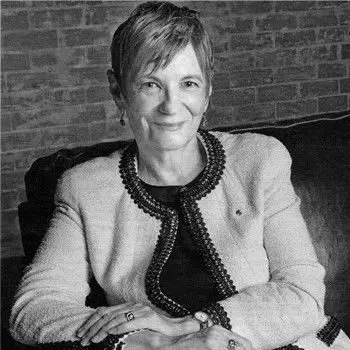
Featured Image: Kay Saunders (1947-2026)


Neville Buch
Latest posts by Neville Buch (see all)
- The Unbound Mind: Independent Scholarship, Institutional Isolation, and the Restoration of Human Authorship – October 20, 2026
- The Road to Geelong: A Re-Narrativization of The Story of Resilience Part 1 – October 20, 2026
- The Human Being Above the Transaction and Why Markets Cannot Measure Human Worth – October 15, 2026