
Dr Neville Buch and MICE[1]
Note: As of 14 November, a few of you may know that I have applied for the position of Lecturer in American-Australian Studies at The University of Queensland. If you are so willing, would you write a recommendation and requesting that that the University prejudices today be avoided, and send to:
Professor Alastair Blanshard
Search Chair / Contact Officer, Lecturer in American/Australian Studies
School of Communication and Arts & Centre for Western Civilisation
The University of Queensland, St Lucia QLD 4072
Email: [email protected] / Talent Acquisition: [email protected]
Abstract
This essay examines the intersection of the Management Institute for Contributory Economy (MICE) and American-Australian Studies, focusing on the three-decade intellectual legacy of Dr. Neville Buch and its foundational debt to Professor Joseph M. Siracusa[1]. By analysing transatlantic socio-cultural transmission, educational sociology, and religious intellectual history, the essay demonstrates: (1) how Joseph M. Siracusa’s pioneering historiography of U.S. foreign policy and ANZUS relations established the empirical and diplomatic baseline for Dr. Buch’s 30-year research trajectory at the University of Queensland and beyond[2]; (2) the major lessons derived from Dr. Buch’s scholarship, including the uncoiling of imported populist culture-war myths, the application of Richard Hofstadter’s anti-intellectualism to university governance, and the deconstruction of “Americanization” binaries[5]; (3) how MICE refines American-Australian Studies through Spiral Historiography, the POLICE diagnostic engine, public humanities, and the Triadic Governance Engine (“Radical-Liberal-Conservative”)[9]; and (4) why this contributory message is of vital civilisational importance for rescuing human agency from algorithmic AI denoetization, protecting noodiversity, and building a flourishing City of Intellect[12].
1. How Joseph M. Siracusa’s Work is Foundational for Dr. Buch’s Work in American-Australian Studies Over 30 Years
The institutional and intellectual genesis of specialized American-Australian Studies in Queensland is inextricably linked to the Department of History at The University of Queensland (UQ), where Professor Joseph M. Siracusa served as Reader in Diplomacy from 1973 to 2002 (Siracusa 2024, p. 2; Buch 2026c, p. 1)[3]. Siracusa’s extensive published corpus—including New Left Diplomatic Histories and Historians (1973), Australian-American Relations since 1945: A Documentary History (1976), and The American Diplomatic Revolution (1976)—established the rigorous historiographical framework for analysing transatlantic political, strategic, and intellectual exchanges (Siracusa 1973, p. 1; Siracusa & Barclay 1976, p. 1; Siracusa 2024, pp. 11–13)[4][18]. Furthermore, Siracusa’s leadership in organizing major academic gatherings at UQ—such as the 1979 Conference on the American Presidency and the 1982 10th Biennial Australian-New Zealand American Studies Association (ANZASA) Conference—created a vibrant research environment for emerging scholars of U.S. history and culture in Australia (Siracusa 2024, p. 4)[19].
Building directly upon this institutional tradition, Dr. Neville Buch completed his Bachelor of Arts with Honours (1987) and his Ph.D. in History (1995) at UQ, producing the landmark doctoral dissertation American Influence on Protestantism in Queensland since 1945 (Buch 1994, p. 1; Buch 2026c, p. 1)[2]. Buch explicitly integrated Siracusa’s diplomatic baseline and the broader historiographical traditions of Norman Harper, David Goodman, and Richard Hofstadter into a deep sociological investigation of transatlantic cultural transmission (Buch 1994, p. 1; Buch 2022, p. 2; Buch 2026c, p. 1)[2][6]. Where Siracusa examined formal foreign policy, presidential doctrines, and military alliances (Siracusa 2010, p. 1; Siracusa 2022, p. 1)[23], Buch extended this inquiry into the “soft architecture” of religious ideas, educationalist theory, and suburban social life (Buch 1995a, p. 10; Buch 2023b, p. 1; Buch 2024a, p. 161)[2].
Over a 30-year scholarly trajectory (1994–2026), Buch conducted extensive U.S. research tours—including primary archival fieldwork at Fuller Theological Seminary (Pasadena), Harvard Divinity School, Wheaton College, Boston, Cleveland, and Chicago (1991–1992 and 2023)—to trace the precise historical mechanics of American cultural exports (Buch 1995a, p. 10; Buch 2023a, p. 1; Buch 2026c, p. 2)[2]. Siracusa’s emphasis on primary documentary evidence and historiographical self-reflexivity (historiography as intellectual history) provided the essential methodological foundation that allowed Buch to analyse Americanization without succumbing to reductive anti-Americanism or superficial cultural compliance (Siracusa 1975, p. 37; Buch 2023b, p. 1; Buch 2026e, p. 124)[2].
2. Lessons in Dr. Buch’s Work in American-Australian Studies Over 30 Years
Dr. Neville Buch’s 30-year research corpus in American-Australian Studies delivers four central socio-historical and historiographical lessons regarding cultural exchange between the United States and Australia (Buch 2026c, pp. 1–4)[2].
A. Transatlantic Socio-Cultural and Religious Transmission
A primary lesson of Buch’s work is that American cultural influence in Australia was never a passive, top-down imposition, but a complex process of local negotiation, adaptation, and institutional restructuring (Buch 1995a, p. 10; Long & Buch 1996, p. 10)[2]. Buch documented how post-1945 American revivalist traditions, Sunday School movement materials, and parachurch organizations (such as Teen Challenge) were imported into Queensland and re-engineered to fit suburban Australian social needs (Long & Buch 1996, pp. 10–12; Buch 2024/2025, p. 1)[6]. Furthermore, Buch’s research on U.S. megachurch models—from Robert Schuller’s Orange County Crystal Cathedral to Fuller Theological Seminary’s church-growth movement—demonstrated how American religious intellectualism was gradually displaced by de-ideologized, commercial business models in Australian Neo-Pentecostalism (Buch 2020a, p. 1)[26][32].
B. Hofstadter’s Anti-Intellectualism and Educationalist Theory
Buch’s scholarship systematically applies American intellectual historian Richard Hofstadter’s classic thesis ( Anti-Intellectualism in American Life ) to evaluate Australian university governance, educational policy, and school curricula (Buch 2022, p. 2; Buch 2024b, p. 161; Buch 2024c, p. 1)[5]. Buch traced how American educational theorists—including John Dewey, Jerome Bruner, and William F. Buckley Jr. (God and Man at Yale)—were received by Australian educators (Buch 2024a, p. 161; Buch 2024d, p. 1)[5]. A key lesson is that when Australian higher education adopted marketized U.S. “job-ready” metrics and managerial rationalism, it induced a state of administrative anti-intellectualism that severely eroded humanistic inquiry and critical academic freedom (Buch 2020b, p. 4; Buch 2024c, p. 1; Buch 2026a, p. 21)[6].
C. Uncoiling Culture-History War Myths
A third major lesson lies in Buch’s capacity to “uncoil” manufactured populist culture-war rhetoric imported into Australian public life (Buch 2021, p. 1; Buch 2026c, p. 3)[7]. By demonstrating that Creationism, Christian Right fundamentalism, and aggressive culture-war politics were specific U.S. post-1950s imports rather than native Australian heritage, Buch provided local history societies, secondary educators, and civic groups with the historical tools needed to distinguish authentic regional traditions from imported political polarization (Buch 2021, pp. 1–3; Buch 2026c, p. 3)[7].
D. Deconstructing “Americanization” Binaries via Convivial Urban Sociology
Finally, Buch’s work deconstructs simplistic analytical binaries such as “Americanization” or “McDonaldization” through place-based historical geography and urban sociology (Buch 2016, p. 1; Buch 2023b, p. 1)[6]. By investigating local landscapes in South East Queensland—such as Junction Park, Annerley, and the Stephens Shire—Buch showed that Australian communities selectively adopted American spatial and consumer models while maintaining distinct local identities and public care structures (panser) (Buch & Roberts 2016, p. 3; Buch 2023b, p. 1; Buch 2026e, p. 143)[6].
3. How MICE Improves the Understanding of American-Australian Studies
The Management Institute for Contributory Economy (MICE)—founded by Dr. Neville Buch alongside co-founders Dr. Neil Peach and Dr. Michael Macklin (retired)—introduces a post-post-postmodernist methodology that significantly enhances the study of transatlantic cultural relations (Buch 2025b, p. 1; Buch 2026a, p. 1; Buch 2026e, p. 5)[11].
A. Spiral Historiography and the Remediated Lifeworld
MICE advances the foundational axiom that “understanding history is philosophy in practice” ( Lebensphilosophie ) (Buch 2025b, p. 1; Buch 2026c, p. 1; Buch 2026e, p. 124)[9]. Rejecting both linear modernist dogmatism and postmodern relativism, MICE’s Spiral Historiography treats historical data as the essential empirical ballast for ethical and political judgment (Buch 2026c, p. 1; Buch 2026e, p. 146)[9]. In American-Australian Studies, Spiral Historiography prevents scholars from falling into the trap of “Historical Forgetfulness”—the intellectual vice where societies forget concept origins, trapping citizens in “vicious spirals of stupidity” and repetitive political errors (Buch 2026c, p. 2; Buch 2026e, p. 125)[43].
B. The POLICE Diagnostic Engine
MICE equips scholars with the POLICE diagnostic engine ( Philosophically, Ontology, Logic, Intersect, Compatibility, Education ) (Buch & Peach 2024; Buch 2026e, p. 74)[10]. The POLICE model serves as a rigorous “crap-detector” to audit institutional documents, public policy, and digital roadmaps (Buch & Peach 2024; Buch 2026e, p. 74)[10]. When applied to American-Australian exchanges, the POLICE engine unmasks “institutional bullshit,” exposes corporate PR spin, and reveals how automated market platforms shift unpriced operational burdens downward onto citizens (Frankfurt 2005; Buch 2026e, p. 74; Jameel 2026b, p. 1)[10].
C. Public Humanities and Community “We-Spaces”
MICE bridges high-level academic theory with ground-level community education through public humanities initiatives (Buch 2026c, p. 5; Buch 2026e, p. 121)[36]. Through The Philosophy Café series in public libraries, the Free Thinker Institute (FTI) (New York-Brisbane Global Experience), and the Mapping Brisbane History (MBH) project, MICE translates complex American-Australian intellectual history into accessible civic dialogue (Buch 2026c, p. 5; Buch 2026e, p. 121)[36]. By mapping over 1,000 local sites of belief, scholarship, and education, MICE spatializes historical memory, constructing Habermasian communicative “we-spaces” where citizens evaluate truth, normative rightness, and sincerity (Habermas 1979; Buch 2026e, p. 70)[48].
D. The Triadic Governance Engine (“Radical-Liberal-Conservative”)
MICE improves the political analysis of American-Australian relations by operationalizing its triadic governance motto:
“Radical enough to shift the agenda, liberal enough to allow everyone a decent place in the social environment, and conservative enough to preserve the legacy of good value for Contributory Economy” (Buch 2026b, p. 2; Buch 2026e, p. 7)[11].
This “Accurate Centralism” synthesizes conservative historical anchors (protecting intergenerational memory), liberal inclusive infrastructure (guaranteeing individual dialogic placement), and radical critical imperatives (restoring human authorship over market hegemony) (Buch 2026e, pp. 82–91; Buch 2026g, p. 1) [95–98, 105, 127].
4. Why This Message is Important
The contributory message articulated by MICE and grounded in 30 years of American-Australian Studies is of paramount civilisational importance for four explicit reasons (Buch 2026e, pp. 12–174; Jameel & Buch 2026, pp. 1–16)[14].
A. Rescuing Human Agency from Algorithmic AI Denoetization
As high-speed algorithmic platforms and generative AI accelerate “the immense regression,” contemporary society suffers from what Bernard Stiegler and Neville Buch term denoetization —the mechanical liquidation of the collective capacity to think and judge (Stiegler 2018, p. 1; Buch 2026e, p. 12)[12]. By enforcing Human Authorship, the MICE message ensures that the concrete human person (“the who”) remains the conscious master over automated technical apparatuses (“the what”) (Buch 2026e, p. 174)[14].
B. Countering Historical Sanitization and Market Coercion
As demonstrated in Danielle Paquette’s (2026) report on a New York Statue of Liberty tour guide, contemporary commercial market pressures force historical narratives to become sanitized, “upbeat,” and painlessly cheerful to secure gig-economy reviews (Paquette 2026, p. 1; Buch 2026a, p. 17)[63]. When historical truth is fudged to entertain consumers or satisfy political authorities, society is disarmed against authoritarian overreach (Paquette 2026, p. 2; Buch 2026e, p. 125)[46]. MICE proves that sanitizing history is a cognitive error, highlighting the necessity of professional historians who safeguard democratic liberty through restorative truth-telling (Buch 2021, p. 1; Buch 2026d, p. 2)[34].
C. Safeguarding Noodiversity across Regional and First Nations Commons
The MICE message champions noodiversity —the protection of epistemological pluralism, local ecological wisdom, and regional memory against automated technocratic homogenization (Stiegler 2020, p. 33; Buch 2026e, p. 158)[13]. This message is vital not only for metropolitan centres but equally for rural, remote, and First Nations territories (such as Yuggera, Turrbal, and Outback trade networks in Australia), ensuring that regional knowledge commons are protected from centralist exploitation (Buch 2026e, p. 100; Buch 2026h, p. 6)[40].
D. Institutionalizing the Contributory Income Scheme for the City of Intellect
Finally, to liberate independent scholars, archivists, and care workers ( panser ) from market coercion, MICE advocates for the Contributory Income Scheme (Stiegler 2010; Buch 2025e, p. 3; Buch 2026e, p. 75)[13]. Providing non-extractive public contracts guarantees Intellectual Sovereignty, ensuring that historical truth-telling, civic education, and humanistic care can flourish outside neoliberal market metrics (Buch 2025e, p. 3; Buch 2026g, p. 2)[15].
Bibliography
Allen, D. (2021). The road from serfdom: How Americans can become citizens again. The Atlantic, [online] December 2019[34].
Aristotle. (c. 350 BC). Nicomachean Ethics (W. D. Ross, Trans.). Oxford: Clarendon Press[34].
Buch, N. (1994). American Influence on Protestantism in Queensland since 1945. Ph.D. thesis, Department of History, The University of Queensland, Brisbane[26][79].
Buch, N. (1995a). Americanizing Queensland Protestantism. Paper presented at the Studying Australian Christianity 1995 Conference, Robert Menzies College, Macquarie University[26][79].
Buch, N. (1995b). The Significance of the American Invasion for Australian Churches: A Preliminary Examination. War’s End Conference, Queensland Studies Centre, Griffith University / James Cook University[26][32].
Buch, N. (1997). “…many distractions confronting the Church”: The Responses of Protestant Religion to Popular Culture in Queensland 1919-1969. Paper presented at the 10th International Conference on Everyday Wonders Popular Culture, Brisbane[26].
Buch, N. (2015). No Regrets in the Evening of Life: The History of Junction Park State School (1888-2013). Salisbury, QLD: Boolarong Press[32][80].
Buch, N. (2016). Annerley’s original parkland: Historical geography for local history. Brisbane: Stephens History Group, pp. 1–12[35][81].
Buch, N. (2020a). Worship and Megachurch: Theological Intellectualism Versus De-Ideological Business Model. International Worship & Megachurch Conference, University of Birmingham[26][32].
Buch, N. (2020b). Economic rationalism and university course pricing 1989-2020. Australian Policy and History, 3 August 2020, pp. 1–16[34].
Buch, N. (2021). Finding peace from the culture-history war: A historiographical message for the times. Academia Letters, Article 1916, pp. 1–5[26].
Buch, N. (2022). Wither Local History in the Academy? The shifting historiography in Local Studies and Local History in Australian Universities and among Independent Researchers. Australian Historical Association (AHA) Conference, Geelong/Melbourne[26][37].
Buch, N. (2023a). Fuller View for Telling the Story of Australian Evangelical History. Evangelical History Association (EHA) Conference, Parramatta[6][37].
Buch, N. (2023b). Emotion-Caring-Convivial Urban Sociology. The Australian Sociological Association (TASA) Conference, Sydney[6][8].
Buch, N. (2024a). Queensland History, Religious Education, and Belief. In: D. W. Kim and D. Wright, eds., Socio-Anthropological Approaches to Religion: Environmental Hope. London: Lexington Books, pp. 161–187[6].
Buch, N. (2024b). Donald Horne and Manning Clark in the Un-Lucky Country. Monograph Essay, Management Institute for Contributory Economy, Brisbane[6][8].
Buch, N. (2024c). The Return of Humanities Flourishing in Australia: Anti-Intellectualism and Educationalist Theory. Monograph Essay, Management Institute for Contributory Economy, Brisbane[6][8].
Buch, N. (2024d). Buckley in Australia: Considering Local Social Discourses among the Australian States (1938-1987). Conservative Public History Workshop, University of Manchester, UK[6].
Buch, N. (2024e). Book Review: Damien B. Schlarb, Melville’s Wisdom: Religion, Skepticism, and Literature in Nineteenth-Century America. Journal for the Academic Study of Religion, 37(1), pp. 135–137[6].
Buch, N. (2024/2025). The Sociology of Teen Challenge (Qld) Inc. Monograph Reports, Management Institute for Contributory Economy, Brisbane[6].
Buch, N. (2025b). MICE principles and philosophy (First development). Brisbane: Management Institute for Contributory Economy, 17 March 2025, pp. 1–15[43][78].
Buch, N. (2025d). Mind/body cognition with ideology: Cognition histories and public sociology. Brisbane: Management Institute for Contributory Economy, 12 June 2025, pp. 1–38[57].
Buch, N. (2025e). Why not job? The crisis of scholar employment and the contributory economy. Brisbane: Management Institute for Contributory Economy, 1 January 2025, pp. 1–3[43].
Buch, N. (2026a). MICE. Limited thinking and the contributory economy (Book 1 of MICE). Brisbane: Management Institute for Contributory Economy, 6 April 2026, pp. 1–74[43].
Buch, N. (2026b). DRAFT. The new-old MICE ingredients: Vision and operation. Brisbane: Management Institute for Contributory Economy, 28 October 2026, pp. 1–12[56][57].
Buch, N. (2026c). Understanding history is philosophy in practice: A cognition history of Queensland. Brisbane: Management Institute for Contributory Economy, 10 April 2026, pp. 1–18[43].
Buch, N. (2026d). Dr Buch in intellectual community: Reclaiming authorship in the City of Intellect. Brisbane: Management Institute for Contributory Economy, 27 May 2026, pp. 1–8[45].
Buch, N. (2026e). MICE intellectual handbook. Brisbane: Management Institute for Contributory Economy, 28 May 2026, pp. 1–175[45].
Buch, N. (2026f). History as philosophy in a contributory economy. Brisbane: Management Institute for Contributory Economy, 4 July 2026, pp. 1–7[45].
Buch, N. (2026g). Susan Haack and social economy. Expediting inquiry in the contributory City of Intellect. Brisbane: Management Institute for Contributory Economy, 4 November 2026, pp. 1–12[49].
Buch, N. (2026h). Transference: Character and the contributory economy. Brisbane: Management Institute for Contributory Economy, 17 May 2026, pp. 1–65[40].
Buch, N. and Peach, N. (2024). Philosophically ontology logic intersect compatibility education (POLICE). Brisbane: Management Institute for Contributory Economy[10].
Buch, N. and Roberts, B. (2016). Access, equity and exclusivity at Junction Park: A local history of education in Stephens. Brisbane: Mapping Brisbane History Project, pp. 1–15[40].
Dahl, R. A. (1971). Polyarchy: Participation and opposition. New Haven: Yale University Press[48].
Frankfurt, H. G. (2005). On bullshit. Princeton: Princeton University Press[10].
Habermas, J. (1979). Communication and the evolution of society (T. McCarthy, Trans.). Boston: Beacon Press[48].
Haack, S. (2018). Expediting inquiry: Peirce’s social economy of research. Cognitio: Revista de Filosofia, 19(2), pp. 208–223[33].
Hassan, F. (M.A. Shahan). (2026). Challenges and sustainability of democracy in the twenty-first century: Institutional and civic perspectives. The Team of Shiku (TTS) Research Series, 11 November 2026, pp. 35–45[48].
Haveric, D. (2018). Muslim Anzacs: Australians and New Zealanders of Islamic heritage in the Great War. Melbourne: Islamic Museum of Australia[50][72].
Illich, I. (1973). Tools for conviviality. New York: Harper & Row[50][54].
Jameel, A. (2026b). Jameel’s economic law of responsibility burden: A Coasean extension from external costs to decentralized reliability responsibility. SSRN Research Paper, 8 October 2026, pp. 1–18[10].
Jameel, A. and Buch, N. (2026). Moral architecture vs. technical guardrails: A synthesis of Arif Jameel and Neville Buch on AI existential risk and human agency. Brisbane: Management Institute for Contributory Economy, 14 September 2026, pp. 1–16[14].
Long, R. D. and Buch, N. (1996). The Americanisation of Christian Education in Queensland: A study of the Sunday School and New Christian School Movements 1945-96. Australian Religion Studies Review, 9(2), pp. 10–21[26][27].
Megill, A. (2007). Historical knowledge, historical error: A contemporary guide to practice. Chicago: University of Chicago Press[67][87].
Mouffe, C. (2000). The democratic paradox. London: Verso[11].
Paquette, D. (2026). Her Statue of Liberty tour was supposed to be upbeat. Then she erupted. The Washington Post, 7 November 2026, pp. 1–6 [29, 31, 32, 44, 53, 81–84].
Peirce, C. S. (1879). Note on the economy of research. Coast and Geodetic Survey Report for 1876, Appendix No. 17, pp. 197–201[66][67].
Pettit, P. (1997). Republicanism: A theory of freedom and government. Oxford: Oxford University Press[67][70].
Raban, J. (1974). Soft City. London: Hamish Hamilton[39].
Sen, A. (1999). Development as freedom. New York: Alfred A. Knopf[60].
Simon, H. A. (1957). Models of man, social and rational: Mathematical essays on rational human behavior in a social setting. New York: John Wiley & Sons[60].
Siracusa, J. M. (1973). New Left Diplomatic Histories and Historians: The American Revisionists. Port Washington, NY: Kennikat Press[18].
Siracusa, J. M. (1975). The New Left, the Cold War, and American Diplomacy: The Case for Historiography as Intellectual History. World Review, 14, pp. 37–52[31].
Siracusa, J. M. (1976). The American Diplomatic Revolution: A Documentary History of the Cold War, 1941-1947. Sydney and London: Holt, Rinehart and Winston[4].
Siracusa, J. M. (2010). Diplomacy: A Very Short Introduction. Oxford: Oxford University Press[25].
Siracusa, J. M. (2022). Understanding Presidential Doctrines: U.S. National Security from George Washington to Joe Biden. Lanham, MD: Rowman & Littlefield[23][24].
Siracusa, J. M. (2024). Curriculum Vitae of Professor Joseph M. Siracusa. Perth: Curtin University, pp. 1–28 [134–262].
Siracusa, J. M. and Barclay, G. (1976). Australian-American Relations since 1945: A Documentary History. Sydney and London: Holt, Rinehart and Winston[4].
Stiegler, B. (2010). For a new critique of political economy. Cambridge: Polity Press[13].
Stiegler, B. (2018). Qu’appelle-t-on panser?: 1. L’immense régression. Paris: Les Liens qui Libèrent[12].
Stiegler, B. (2020). Bifurquer: Il n’y a pas d’alternative. Paris: Les Liens qui Libèrent[13][72].
Take the MICE Quiz
[1] Artificial Intelligence (A.I.) has been fairly used in the production of this work. The tool used is Google NotebookLM (recently rebranded as Gemini Notebook). It is an AI-powered virtual research assistant and thinking partner designed to help a person interact deeply with their own documents. Unlike general chatbots, it is source-grounded, meaning it only generates answers based on the specific PDFs, documents, or links uploaded. The A.I. process in the production of this work has been limited to the attached (prompts) on each of the questions in turn. This ensures an accurate reading of each source. The author then rearranged and re-edited the answers the A.I. provided. The human author publishes this work. A.I. is never an author when used properly. This assistance is not qualitatively different from a human research assistant when that assistance is deemed to have no authorial status but is acknowledged.
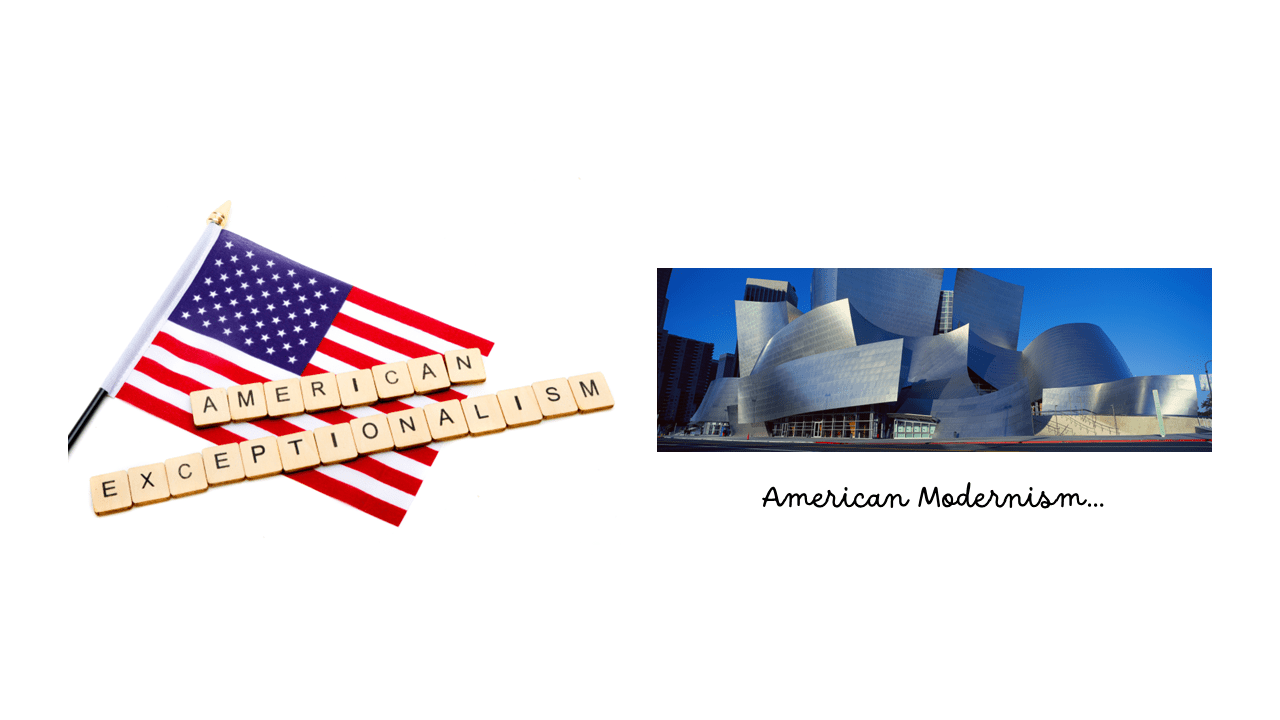
Featured Image: American-Exceptionalism-Modernism


Neville Buch
Latest posts by Neville Buch (see all)
- Australia’s New Education Commission and Lessons from MICE – November 14, 2026
- MICE and American-Australian Studies: Historiographical Foundations & Contributory Sociology – November 14, 2026
- Architects of Care: World Kindness Day, MICE, and the Contributory Re-Orientation of Society – November 13, 2026