
Dr Neville Buch
Abstract
This essay examines the failures of applied philosophy through the lens of Dr. Neville Buch’s Dynamic of Cognition (DoC), focusing on the intellectual superficiality of the “New Atheism” and the pietistic political corruption of the Bjelke-Petersen administration. It argues that applied philosophy fails when it regresses into a “techné mindset”—a state where philosophical tools are used for rhetorical weaponisation, strategic manipulation, or the maintenance of “bubble thinking” rather than the pursuit of truth and mutual understanding. By analysing the genetic fallacies of the New Atheists and the dissonant piety of Bjelke-Petersen, the essay demonstrates that genuine applied philosophy requires a Synoptic Vision that anchors abstract principles in historical contingency and social accountability. Ultimately, it proposes that the path to Aristotelian flourishing lies in the rejection of “potted thinking” and the restoration of human authorship over shared lifeworld narratives.
——————————————————————————–
The Architecture of Intellectual Failure: How Not to Do Applied Philosophy
Applied philosophy is often misconstrued as the mechanical application of abstract theories to concrete problems. However, the sources suggest that genuine applied philosophy is “philosophy in practice”—an ongoing, reflective living that assist the self-understanding of individuals within their lived experience. When philosophy is divorced from this historical and social grounding, it falls into several pathological traps.
1. The Rhetorical Trap: New Atheism and Intellectual Superficiality
A primary way not to do applied philosophy is to substitute rhetorical critique for genuine philosophical engagement. The New Atheist movement, led by figures like Dawkins and Hitchens, exemplifies this failure by choosing criticism over philosophy. Their approach is marked by three distinct errors:
- Ignoring the Tradition: New Atheists largely ignore over 2,500 years of rigorous inquiry into reality, treating theological questions as superstitions rather than deep metaphysical puzzles.
- The Genetic Fallacy: Hitchens, in particular, relies on the genetic fallacy, pointing to the crimes of religious institutions to “disprove” the existence of God. Philosophy, however, maintains that the truth of a claim is not determined by its history or the behaviour of its adherents.
- Misrepresenting Arguments: Dawkins attacks strawman versions of the cosmological argument that no serious philosopher has ever defended, thereby achieving “applause” rather than understanding.
By confusing social critique with metaphysical argument, the New Atheists impoverish public discourse, leaving millions with the illusion that complex philosophical questions can be settled by ridicule and soundbites.
2. The Masking Trap: Piety and the Bjelke-Petersen Paradox
A second failure of applied philosophy occurs when internal worldviews are used as “theological masks” to justify systemic corruption. This is evident in the “Bjelke-Petersen Paradox”—the profound dissonance between Sir Joh’s intense personal piety and the political “rat cunning” of his administration.
- Piety as a Shield: Joh publicly claimed the “moral high ground” while operating a system characterized by corruption. This represents a failure of “Sufficient Comprehension”, where unreflective prejudice is used to shield the self from social accountability.
- Bubble Thinking: This administration operated within a “closed loop” of institutional wisdom that ignored the Socratic question of how one should live. By treating governance as a set of technical-administrative tasks rather than an ethical practice, it fostered “Historical Forgetfulness” and the “authoritarianism of the stupid”.
3. The Failure of Reductionism and “Potted Thinking”
Applied philosophy fails fundamentally when it relies on “potted thinking”—compressed, ready-made statements that save the individual from the “actual trouble of thinking”. This reductionism treats human experience as a “meaningless checkerboard of parts”.
- The “Techné” Mindset: Modern systems often prioritize quantifiable data and instrumental efficiency over human depth. This leads to “denoetization”—the mechanical liquidation of human judgment.
- The Illusion of the Archimedean Point: Philosophy fails when it attempts to provide a universal, context-free theory to rule human conduct, ignoring that ethical concepts achieve “genuine determinateness only in the concrete reality of the case”.
Conclusion: Reclaiming Human Authorship
The remedy for these failures is a transition from a “Junior” mindset of unreflective execution to a “Senior” state of social accountability. This requires a Synoptic Vision—an interdisciplinary synthesis of history, sociology, and philosophy—that filters out “institutional bullshit” and manufactured myths. By applying the POLICE model (Philosophically Ontology Logic Intersect Compatibility Education) to our internal and institutional narratives, we can uncoil the circles of Historical Forgetfulness and emerge as the proactive authors of our own lives.
——————————————————————————–
Dynamic of Cognition (DoC) Table: Ways Not to Do Applied Philosophy
| DoC Component | Pathological Application (Failure) | Corrective Philosophical Ascent | Cognitive Impact and Rationale |
| Prejudice (Centre) | “Potted Thinking” / Dogma | Reflective Generality | Shifting from compressed stereotypes to a “Cartesian stance” of questioning. |
| Exclusion (Sensation) | “Techné” Mindset / Reductionism | Synoptic Vision | Filtering out “thin” formalisms to reveal the “thick” historical grounding. |
| Inclusion (Intuition) | Manufactured Myths / Piety Masking | Historical Contingency | Reasserting that concepts achieve determinateness only in the concrete case. |
| Attitude (Thinking) | Rhetorical Weaponisation / Ridicule | Communicative Action | Replacing “rat cunning” and soundbites with rational-critical dialogue. |
| Value (Feeling) | “Political Profit” / Systemic Utility | Aristotelian Flourishing | Measuring success by human dignity and wisdom (eudaimonia). |
——————————————————————————–
Endnotes
- Applied Philosophy vs. Philosophy in Practice: Applied philosophy is often misused as the imposition of theory onto life, whereas Dr. Buch defines it as the empirical grounding of reflection in history and social practice.
- Techné Mindset and Denoetization: The “techné mindset” refers to a cognitive pathology that prioritizes measurable, shallow data over human experience, leading to “denoetization”—the liquidation of discernment.
- Genetic Fallacy: A logical error where a claim is dismissed based on its origins or the behaviour of its adherents rather than its internal validity.
- The Bjelke-Petersen Paradox: A state of cognitive dissonance where personal piety is used to mask systemic political corruption and the “authoritarianism of the stupid”.
- Potted Thinking: The habit of accepting compressed, ready-made catch-words to avoid the labour of deep reflection.
- The POLICE Model: A procedural mechanism—Philosophically Ontology Logic Intersect Compatibility Education—designed as an “intellectual immune system” against institutional bullshit.
- Sufficient Comprehension: A historically grounded awareness that is permanently open to correction, seeking the whole of a matter while filtering out fallacies.
——————————————————————————–
APA Bibliography
- Buch, N. (2015, May 31). Process of learning (principles) & the dynamic of cognition. Dr Neville Buch ABN: 86703686642.
- Buch, N. (2023, July 27). Research note: Anglo-American major belief-doubt systems. Academia.edu.
- Buch, N. (2024, March 4). Philosophically Ontology Logic Intersect Compatibility Education (POLICE). Dr Neville Buch ABN: 86703686642.
- Buch, N. (2025, December 1). The challenge to all thinkers and non-thinkers. Dr Neville Buch ABN: 86703686642.
- Buch, N. (2026, March 17). A matrix of sociology. Management Institute for Contributory Economy.
- Habermas, J. (1979). Communication and the evolution of society (T. McCarthy, Trans.). Beacon Press.
- Haack, S. (2021). Philosophy as a profession, and as a calling. Syzetesis VIII, 33-51.
- Harrison, J. (n.d.). Joh Bjelke-Petersen: Pietism and the political culture of Queensland. The University of Queensland.
- Stiegler, B. (1998). Technics and time, 1: The fault of Epimetheus (R. Beardsworth & G. Collins, Trans.). Stanford University Press.
- Toulmin, S. (1992). Cosmopolis: The hidden agenda of modernity. University of Chicago Press.
- Williams, B. (1985). Ethics and the limits of philosophy. Fontana Press.
- Williams, B. (2005). The sense of the past. Princeton University Press.
- Unnamed Author (n.d.). A critique of New Atheism. Facebook.
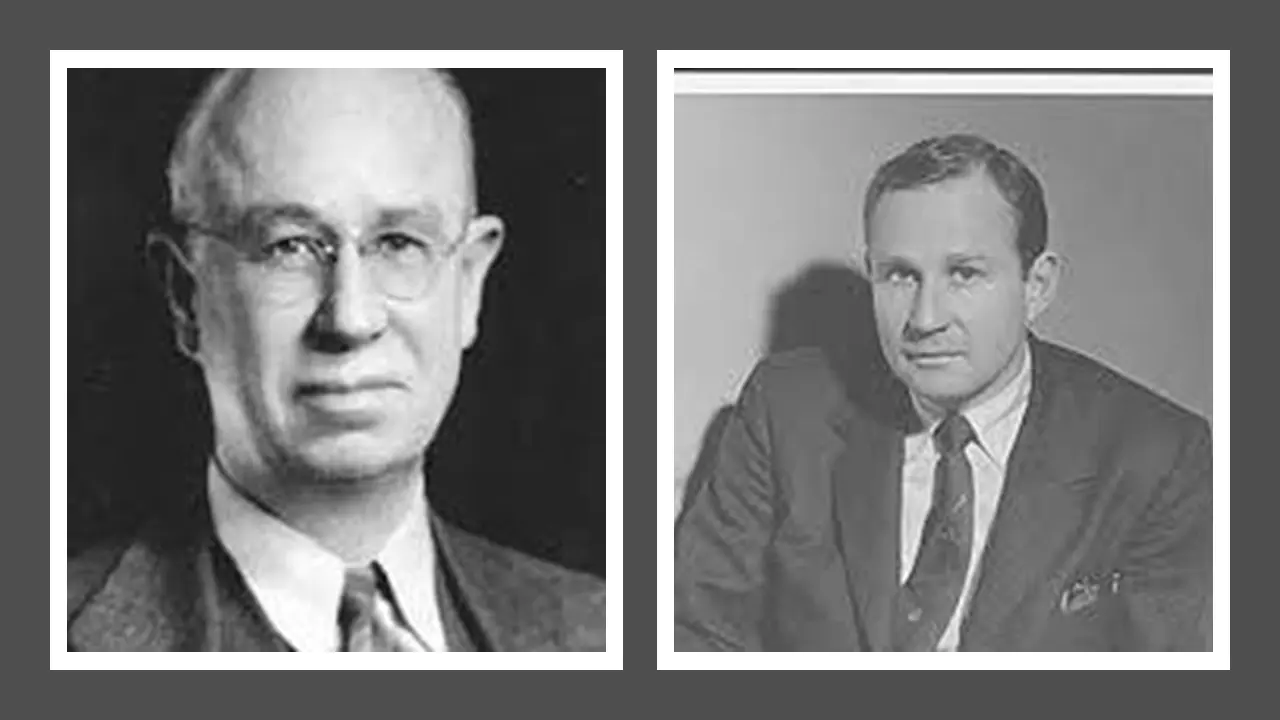
Featured Image: Roy Wood Sellars and Wilfrid Sellars
https://en.wikipedia.org/wiki/Roy_Wood_Sellars
https://en.wikipedia.org/wiki/Wilfrid_Sellars


Neville Buch
Latest posts by Neville Buch (see all)
- The Road to Geelong: A Re-Narrativization of The Story of Resilience Part 1 – October 20, 2026
- The Human Being Above the Transaction and Why Markets Cannot Measure Human Worth – October 15, 2026
- Beyond Neoliberal Formalism: Should Taxpayers Fund Independent Philosophy – October 14, 2026