
Dr Neville Buch
Abstract
Workplace learning is traditionally conceptualized as a narrow process of skill acquisition designed to fulfill institutional objectives. However, contemporary scholarship, particularly within the Australian context, argues that this “objective” view fails to address the “skills crisis” or the complexities of the Fourth Industrial Revolution (4IR). This essay explores workplace learning as a dual process: the acquisition of “useful knowledge” (technical competency) and “really useful knowledge” (contextual understanding of employer-employee relations and class consciousness). By synthesizing Dr. Neville Buch’s framework of “Planetary Wisdom” and the “Pedagogy of Choice” with theories of Cognitive Capitalism, the narrative demonstrates that true learning at work requires resisting the “banking system” of job-ready training. Instead, it must foster an investigative mind capable of navigating the precarious landscapes of zero-hours contracts and algorithmic management.
——————————————————————————–
Workplace Learning: Beyond the “Learning for Earning” Paradigm
In the first decade of the twenty-first century, “learning” has moved to the centre of organizational research, yet a significant contradiction persists between management-driven productivity and worker-centred education. For decades, Australian training reform has operated under a neoliberal discourse of “learning for earning”—the pursuit of vocational skills to transform workers into more productive “human resources”. This approach treats knowledge as a commodity produced by institutions rather than a “living disclosure” earned through active participation.
The Relational Dimension: “Really Useful Knowledge”
Scholars like Bob Boughton and Peter Sawchuk argue that skills training is only one element of workplace learning; the other is the acquisition of contextual knowledge about the employer-employee relationship. This “relational” perspective addresses the political education of workers, starting from the premise that workplace learning inevitably includes learning about labour and class relations.
- Class Consciousness as a Matrix: Sawchuk’s model, derived from activity theory, positions class as a matrix for learning. It explains why some workers develop class consciousness through their work, while others fall into “despondency, withdrawal, or enthusiastic self-commodification”.
- The Problem of “Job-Ready” Ideals: Dr. Neville Buch identifies a profound “historical forgetfulness” in modern policy, where “job-ready” technocratic ideals replace true educational aims. This creates an “instrumental rationality” that values job tickets and end products over the actual process of learning.
Workplace Learning in the Fourth Industrial Revolution
The transition to the 4IR introduces new cognitive hazards, such as “Denoetization”—the mechanical liquidation of human judgment. As machine-based routines and algorithms increasingly dictate the trajectory of work, there is a risk of creating a “rift” between an investigative mind and a “passive, dependent, filled one”.
- The New Professional Landscape: The 4IR is shifting professional roles toward AI and machine learning specialties, big data, and digital transformation. To survive, employees must invest in specific human skills that are harder to replace, such as creative thinking, cross-cultural competencies, and social abilities.
- The Gig Economy and Precarity: The emergence of “zero-hours contracts” and “crowd workers” creates a highly contingent environment where employers do not guarantee working time. In this context, a “pedagogy of contingency” is required—one that responds to uncertainty, chance, and the livelihood rhythms of the community.
Applying the Pedagogy of Choice to Industry
To prevent the intellectual collapse of the workforce, the “banking system” of training must be replaced by a “problem-posing” model. This requires a synthesis of:
- Educare (Training): Providing the cultural “raw materials” and technical skills required for the job.
- Educere (Leading Out): Enabling the worker to solve novel problems through critical inquiry and independent thought.
True personal growth in the workplace should be recognized as “growth in disciplined dissidence” and “immeasurable recreation” rather than a measurable entity or institutional achievement. This is supported by the “craftsmanship of the reflexive insider,” where workers use their own life experience to continually interpret and transform their environment.
Conclusion: Toward Planetary Wisdom in Work
Ultimately, workplace learning must move beyond the goal of profitability to a model that puts the direct social needs of the majority first. By fostering “Planetary Wisdom”—a pluralistic understanding of reality derived from a “dialogue of myths”—workplaces can become sites of Aristotelian flourishing (eudaimonia). In this vision, the human person remains the proactive operator of the social and technical systems they inhabit, reclaiming human authorship over the history of their own labour.
The following documentation provides the Dynamic of Cognition (DoC) framework, the APA Bibliography, and detailed Endnotes for the essay “Beyond Learning for Earning: The Pedagogy of Work.”
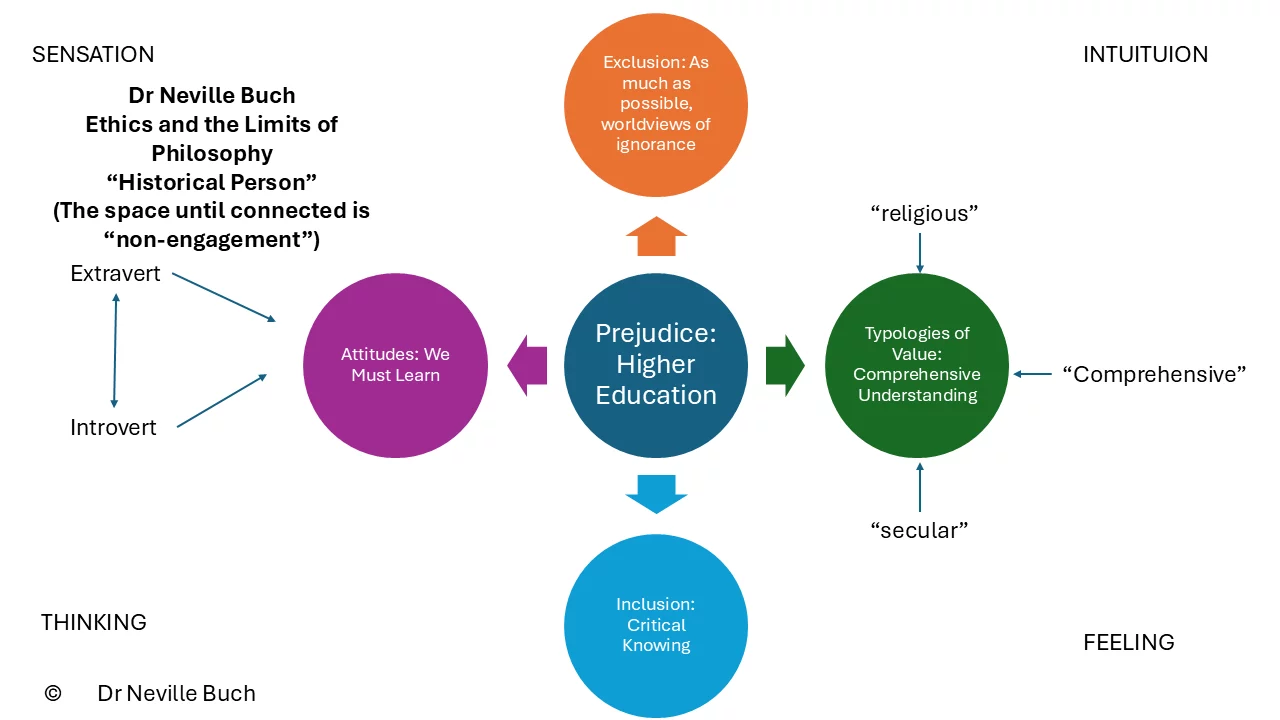
Dynamic of Cognition (DoC) Table: The Pedagogy of Work
| DoC Component | Regression (Populist Stagnation / Constraint) | Required Humanistic Ascent (Comprehension / Choice) | Philosophical Rationale / Source |
| Prejudice (Centre) | Learning for Earning: Neoliberal discourse reducing workers to productive “human resources”. | Relational Project: Acquiring “really useful knowledge” about labour, class, and employer relations. | Shifts focus from profitability to direct social needs. |
| Attitudes (Thinking) | Instrumental Rationality: Valuing job tickets and end products over the process of learning. | Critical Inquiry: Adopting a “problem-posing” model to solve novel problems. | Replaces mechanical imprinting with independent thought. |
| Typologies of Value | Self-Commodification: Measuring growth via institutional outputs or “manic careerism”. | Aristotelian Flourishing: Prioritizing eudaimonia and “Planetary Wisdom” in the workplace. | Restores the person as the proactive operator of the system. |
| Exclusion (Sensation) | Denoetization: Liquidation of judgment through adherence to algorithmic, machine-based routines. | Pedagogy of Contingency: Responding to uncertainty, precarity, and community livelihood rhythms. | “Uncoils” the mind from rigid, predetermined trajectories. |
| Inclusion (Intuition) | Banking System: Treating workers as “receptacles” to be filled with technical training. | Reflexive Craftsmanship: Using personal life experience to interpret and transform the environment. | Restores the “initiative in education” to the human author. |
——————————————————————————–
APA Bibliography
- Boughton, B. (2013). Popular education and the ‘party line’. Globalisation, Societies and Education, 11(2), 239–257.
- Boughton, B., & Junor, A. (2007). Varieties of Workplace Learning: An Introduction. University of New England.
- Boughton, B., & Williamson, F. (2015). ‘A strong belief in the possibility of a better life’: The pedagogy of contingency in north-western New South Wales. In Indigenous education (pp. 294-312). Springer.
- Buch, N. (2024). Rethinking school: Historical forgetfulness and educationalist theory 1971-1989. Management Institute for Contributory Economy.
- Buch, N. (2026). A matrix of sociology. Management Institute for Contributory Economy.
- Collins, R. (2019). The Credential Society: An Historical Sociology of Education and Stratification. Columbia University Press.
- Freire, P. (1970). Pedagogy of the Oppressed. Seabury Press.
- Illich, I. (1973). Tools for Conviviality. Harper & Row.
- Kotze, A. (2013). A pedagogy of contingency for precarious work. Bonn Conference on Adult Education and Development.
- Sawchuk, P. (2001). Trade union-based workplace learning: A case study in workplace reorganisation and worker knowledge production. Journal of Workplace Learning, 13(7/8), 344–351.
- Sawchuk, P. (2008). Lifelong learning and work as ‘value’ production. In The Future of Lifelong Learning and Work (pp. 73-83). Sense Publishers.
- Serdyukov, P. (2021). A growing formalization of contemporary online education. Academia Letters, Article 2601.
——————————————————————————–
Endnotes and References
- Objective View: Traditionally, workplace learning is seen as a simple mechanism for institutional skill acquisition.
- 4IR Complexities: The Fourth Industrial Revolution introduces rapid shifts in professional roles toward AI and big data.
- Useful vs. Really Useful Knowledge: Distinguishes between technical skills (“useful”) and the political/relational understanding of labour (“really useful”).
- Class Consciousness: A relational perspective that views class as a matrix for understanding workplace dynamics.
- Planetary Wisdom: A pluralistic understanding of reality that moves beyond the God-centred framework to “loving life” and “co-humanity”.
- Banking System: Paulo Freire’s term for a model of education where students are treated as passive “receptacles”.
- Algorithmic Management: The use of machine-based routines to dictate the trajectory of work and learning.
- Precarity: The rise of zero-hours contracts and crowd work that do not guarantee working time.
- Learning for Earning: A neoliberal discourse prioritizing vocational productivity over human flourishing.
- Commodity Knowledge: When knowledge is treated as a product of institutional enterprise rather than a lived disclosure.
- Historical Forgetfulness: The abandonment of 1970s critical theory by current policy-makers.
- Instrumental Rationality: A mindset that values job tickets (credentials) over the intrinsic process of learning.
- Denoetization: The mechanical liquidation of the capacity to judge the sacred within the ordinary.
- Rift in Consciousness: Serdyukov’s term for the separation of the investigative mind from the passive mind caused by formalization.
- Educare vs. Educere: The pedagogical tension between training (educare) and critical leading-out (educere).
- Problem-Posing Model: Freire’s alternative to the banking model, centred on dialogue as an epistemological relationship.
- Disciplined Dissidence: Defining growth not as a measurable institutional entity but as a commitment to critical inquiry.
- Reflexive Insider: A methodology where the worker uses their own life experience to ground intellectual work.
- Aristotelian Flourishing (Eudaimonia): The ultimate goal of a convivial society where technology serves interrelated individuals.
- Human Authorship: Reclaiming the individual as the proactive author of their own labour history.
Work Profile:


Neville Buch
Latest posts by Neville Buch (see all)
- The Personalist Approach to Argument: Dialectic, Relationality, and the Spiral of Human Authorship – October 12, 2026
- From Augustine’s Pears to Academic Boycotts: Fundamental Sociological Change in Australian Cultural Relations – October 11, 2026
- Yes, I want Anger Expressed But Then Resolved – October 11, 2026