
The “Reclaiming Human Authorship on Australian Highways” audio commentary on MICE’s Contributory Economy and Human Authorship at: https://drnevillebuch.com/2016-future-public-cognition/audio-commentary-discussion-no-debate-a-conversation-on-5th-australian-east-coast-trip-powerpoint-story-of-resilience-presentation-5th-australian-east-coast-trip-brisbane-to-geelong-and-back-vi/
Abstract
This paper synthesizes the second sequence of Lebensphilosophie observations to construct a unified philosophical anthropology, cognitive sociology, and political economy capable of resisting market fundamentalism and technocratic reductionism[1]. It diagnoses the structural crisis of contemporary scholarship, wherein orthodox market formalisms and corporate administrative regimes enforce precarity and material poverty upon independent thinkers through downward liability transfers (Jameel’s Economic Law of Responsibility Burden), reducing holistic inquiry to narrow transactional price[1].
To overcome this systemic degradation, the paper establishes the ontological non-reducibility and non-dualism of human existence, invoking Duns Scotus’s concept of Haecceity (irreducible particularity) to demonstrate that life (Lebensphilosophie), personhood, thought, awareness, and consciousness constitute a single indissoluble phenomenon[7]. Grounded in Maurice Merleau-Ponty’s thesis that perception is an authentic embodied engagement with the world (in rebus) rather than a passive tabula rasa representation, it refutes the “wooden epistemology” of materialist reductionism[8][10]. The work further explores the phenomenological role of “Landscapes of Memory,” showing how spatialized familial gatherings, environmental attunement during transit, and the cathartic processing of personal grief serve as vital catalysts for reflective self-criticism, humanistic ascent, and the recovery of deep historical memory[8].
At its normative core, the paper asserts the indissoluble unity of Ethics and the Intellect. Invoking Hannah Arendt’s “Life of the Mind” and Nel Noddings’s/Bernard Stiegler’s concept of panser (thinking as caring), it positions deep noetic nourishment as society’s primary intellectual immune system against technological denoetization, algorithmic passivity, and administrative “stupidity”[4]. To operationalize these insights, the Management Institute for Contributory Economy (MICE) deploys the POLICE diagnostic filter (Philosophically Ontology, Logic, Intersect, Compatibility, Education) and a triadic political dialectic—synthesizing liberal procedural inclusion, radical institutional critique, and conservative custodianship of common good value [11–12, 16–17, 93]. Ultimately, MICE redefines academic publications from closed, commodified assets into open, conversational invitations for collaborative research, governance, and contributory investment, decoupling human livelihood from extractive market forces to restore Human Authorship, communicative Verständigung, and Aristotelian flourishing (eudaimonia) [11, 15–19, 94].

Image: 2026-10-19 (26) Torquay Beach, Hugo
It is a dog’s life but what does that mean? All human beings are not the same, neither are dogs. I came to know Hugo better on my last trip to see my good friend, Dzavid, in Geelong. Hugo is a good-tempered dog. Unfortunately, it would appear that these days less numbers of human beings are of good-tempered thinking.
From an academic standpoint, this Lebensphilosophie observation contrasts the uncoerced, embodied dispositions of the natural world with the increasingly reactive cognitive patterns of contemporary society[1]. When evaluated through philosophical anthropology and cognitive sociology, the distinction between Hugo’s good-tempered presence and the prevailing deficit of “good-tempered thinking” in human populations reveals a systemic shift in how individuals navigate their lifeworld[1]. Drawing on Maurice Merleau-Ponty’s phenomenology of perception, Hugo’s good temper exemplifies an authentic, pre-reflective engagement with his environment—an unmediated disclosure of being that is situated directly in the physical world without the distorting layers of institutional anxiety or ideological defensiveness[1][2]. In contrast, modern human cognition is frequently trapped in what Dr. Neville Buch terms a “wooden epistemology” or “a-historical framing,” where unexamined prejudices and rigid administrative routines replace genuine experiential openness with hyper-defensive, “ill-tempered” reactivity[6].
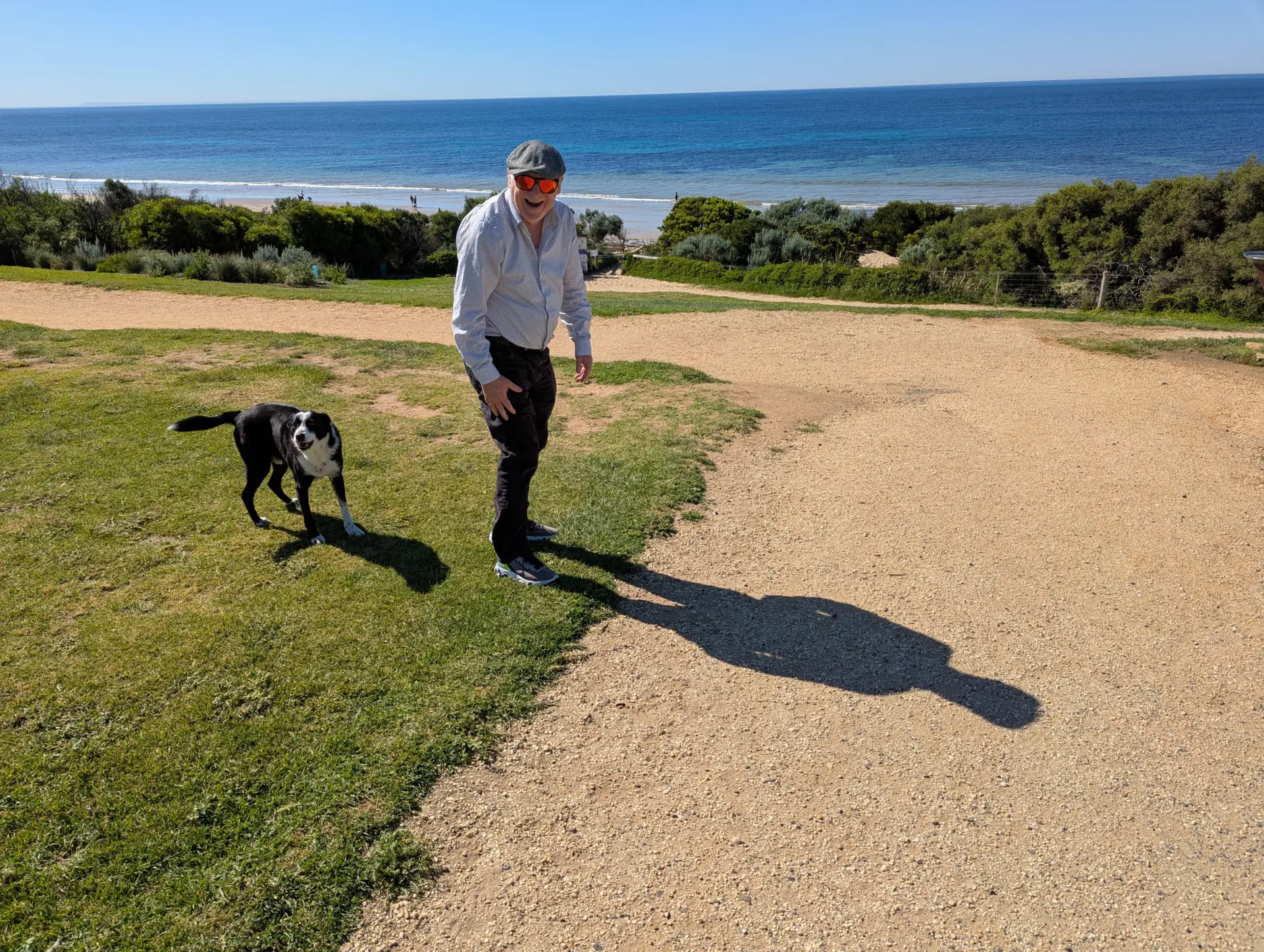
Image: 2026-10-19 (25) Torquay Beach, Hugo, Neville
Sociologically, the decline in “good-tempered thinking” reflects a broader crisis of denoetization—the mechanical liquidation of human judgment caused by hyper-industrial managerialism, corporate audit metrics, and algorithmic polarization[3]. As C. Wright Mills observed in his formulation of the sociological imagination, when individuals lack the metacognitive tools to bridge personal experience with historical context, public dialogue devolves from reasoned inquiry into social hostility and ideological tribalism[10]. Cross-cultural studies on aggression (such as those by Fraczek, Ramirez, and Landau) demonstrate that high levels of behavioural-cognitive readiness for aggression emerge when social environments normalize defensive retaliation and the mutual dismissal of alternative worldviews[13][14]. Within corporate universities and bureaucratic politics, this manifests as institutional “bubble thinking,” where cognitive precarity and performance anxiety destroy the psychological safety required for sympathetic listening, producing an environment where critical thought is misconstrued as interpersonal threat[13].
Ultimately, restoring “good-tempered thinking” requires recovering what the Management Institute for Contributory Economy (MICE) defines as panser **(thinking as caring)**[17]. Observed in the collaborative scholarship of Dr. Dzavid Haveric in Geelong, this disposition aligns with the Islamic ethos of wasatiyyah **(a culture of benevolence, balance, and middle-way moderation)**[5][20]. Panser acts as a procedural shield that protects the human person from abstract calculation, replacing thin transactional utility with Aristotelian flourishing (eudaimonia) and substantial fairness[5]. Good-tempered thinking is thus neither passive compliance nor naive optimism; rather, it represents the intellectual sovereignty and moral courage of a “reflexive insider” who uses their lived experience to cultivate undamaged intersubjectivity, social peace, and a genuine dialogue of horizons[11].
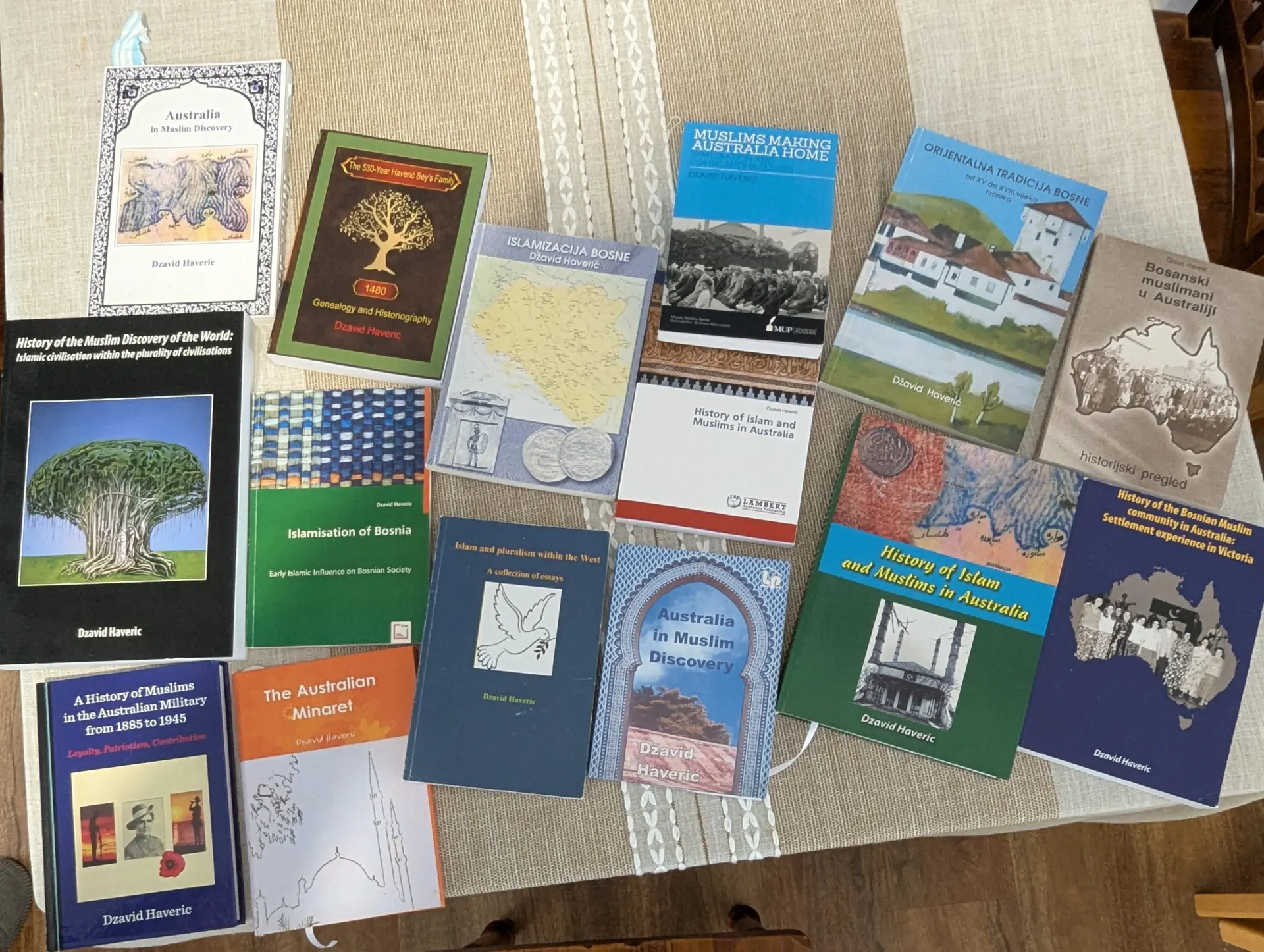
Image: 2026-10-19 (24) Dzavid Haveric Publications 7
Dzavid Haveric is my very good friend and academic colleague. He is the leading authority on Australian Islamic/Muslim (different semantics) History.
In academic historiography and cognitive sociology, the friendship and scholarly collaboration between Dr. Neville Buch and Dr. Dzavid Haveric represents a profound convergence of philosophical history and empirical archival recovery [2–4]. Based at Charles Sturt University’s Centre for Islamic Studies and Civilisation (CISAC) and serving as an Honorary Associate at Museums Victoria, Dr. Haveric stands as the premier authority on Australian Islamic and Muslim histories [2–3, 6]. His multi-decade body of work—including seminal monographs such as Australia in Muslim Discovery (2006), History of Islam and Muslims in Australia (2019), and A History of Muslims in the Australian Military (2023)—has fundamentally re-mapped Australia’s national self-understanding [2–3, 10–12].
The semantic distinction between “Islamic History” and “Muslim History” is a cornerstone of Dr. Haveric’s methodological framework[1]. While “Islamic history” examines the theological, doctrinal, and civilizational developments of the faith across global contexts, “Muslim history” recovers the lived human experiences, oral testimonies, and social agency of Muslim practitioners[1]. As Haveric famously formulates: “There is no history of Islam in Australia without a history of Australian Muslims; there is no history of these Muslims without their memories. Islam is an organic, foundational thread of Australian history predating British colonisation” [6–7]. By delineating these semantic layers, his scholarship elevates Muslim historical actors from passive, exoticized subjects to active co-creators of Australian civil infrastructure and civic identity [3, 7–10].
Empirically, Haveric’s research systematically dismantles Eurocentric colonial narratives that frame Australian history as beginning exclusively in 1788[2][5]. His discoveries span four foundational epochs:
- Pre-Colonial Macassan Encounters: Documenting multi-century maritime trade, spiritual exchange, and peaceful co-existence between Macassan Muslim seafarers and First Nations Yolngu communities in Northern Australia long before European arrival [3, 7–8, 16].
- Outback Cameleer Infrastructure: Unearthing the vital role of 19th-century Afghan cameleers who constructed transcontinental overland telegraph lines, railway routes, and Australia’s earliest mosques amid discriminatory colonial policies[2].
- ANZAC Military Sacrifice: Recovering the forgotten service of Muslim soldiers who fought honourably in the Australian Imperial Force (AIF) at Gallipoli, the Western Front, and the Pacific across both World Wars [3, 9–10, 17].
- Post-War Civic Localisation: Tracking the post-WWII migration of Bosnian, Albanian, and multiethnic Muslim communities who built cosmopolitan institutions, interfaith networks, and civic partnerships [3, 11–14, 17–19].
From the perspective of the Management Institute for Contributory Economy (MICE), Haveric’s historiography exemplifies “Spiral Historiography” and “noodiversity” (the preservation of cognitive and cultural diversity)[8][9]. His work grounds the Islamic ethos of wasatiyyah (a culture of benevolence, balance, and middle-way moderation) within Habermasian communicative action, replacing “them versus us” binaries with panser (thinking as caring) [4, 14, 18–19]. In doing so, Dr. Haveric provides a global blueprint for civilisational pluralism, demonstrating how diverse cultural memories synthesize into “unity within diversity and diversity within unity” [4, 19, 20–21].
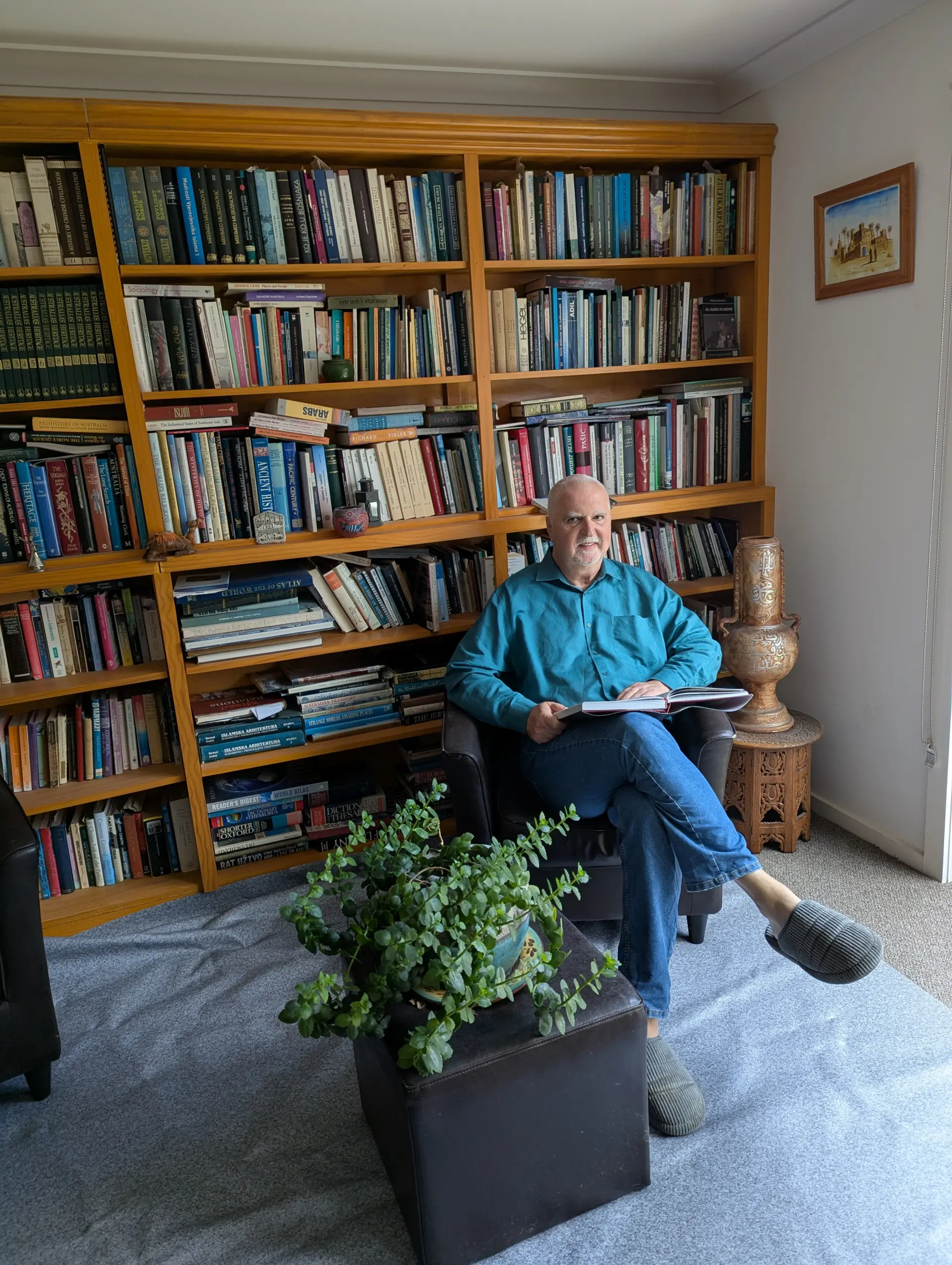
Image: 2026-10-19 (17) Dzavid Haveric Study 6
The MICE Principles works well in the observations of Dr. Dzavid Haveric. As a person, he is the archetype Muslim cultural host. He is very kind and giving host to his visitors.
When evaluated through philosophical anthropology and cognitive sociology, Dr. Dzavid Haveric’s disposition as an archetypal “cultural host” demonstrates the practical operationalization of the Management Institute for Contributory Economy (MICE) principles[1]. In Islamic ethics, the duty of hospitality is intrinsically linked to the Qur’anic concept of wasatiyyah **(a culture of benevolence, middle-way moderation, and balance)**[5]. Within the MICE framework, this lived ethos corresponds to Substantial Fairness and Aristotelian eudaimonia (human flourishing), wherein social value is generated not through transactional market exchange, but through character, human dignity, and non-rivalrous contribution[9][10]. By embodying the role of a generous host, Dr. Haveric acts as a “giver, not a taker,” generating social capital and mutual trust that shield human interactions from the cold logic of economic calculation[5].
This practice of hospitality translates directly into MICE’s foundational concept of panser **(thinking as caring)**[5]. Drawing on the Golden Rule and the ethic of reciprocity, the act of hosting operates as a communicative bridge that facilitates Habermasian communicative action ( Verständigung **)**[13][14]. Rather than engaging in transactional bargaining where power or position dictates the terms of engagement, the host establishes a shared “we-space” grounded in mutual respect and active listening[13]. In the context of inter-civilisational dialogue and interfaith scholarship, Haveric’s personal hospitality mirrors his historiographical findings—showing how pioneer Muslim communities, from pre-colonial Macassan traders to post-WWII civic leaders, historically built bridges of mutual understanding across Australian society[5].
Finally, within the Contributory Alliance formulated by Dr. Neville Buch, Haveric’s persona exemplifies the re-centring of the “Historical Person”—an active agent capable of reflection, moral courage, and compassionate intelligence[1]. By opening his home and scholarly environment to visitors and colleagues, Haveric resists the isolation of modern institutional “bubble thinking”[15]. This lived hospitality demonstrates that true intellectual work and intercultural reconciliation require an “Open Mindset”, where philosophy is not merely written in texts, but enacted through undamaged intersubjectivity, Gadamerian horizon fusion, and genuine human warmth[2].
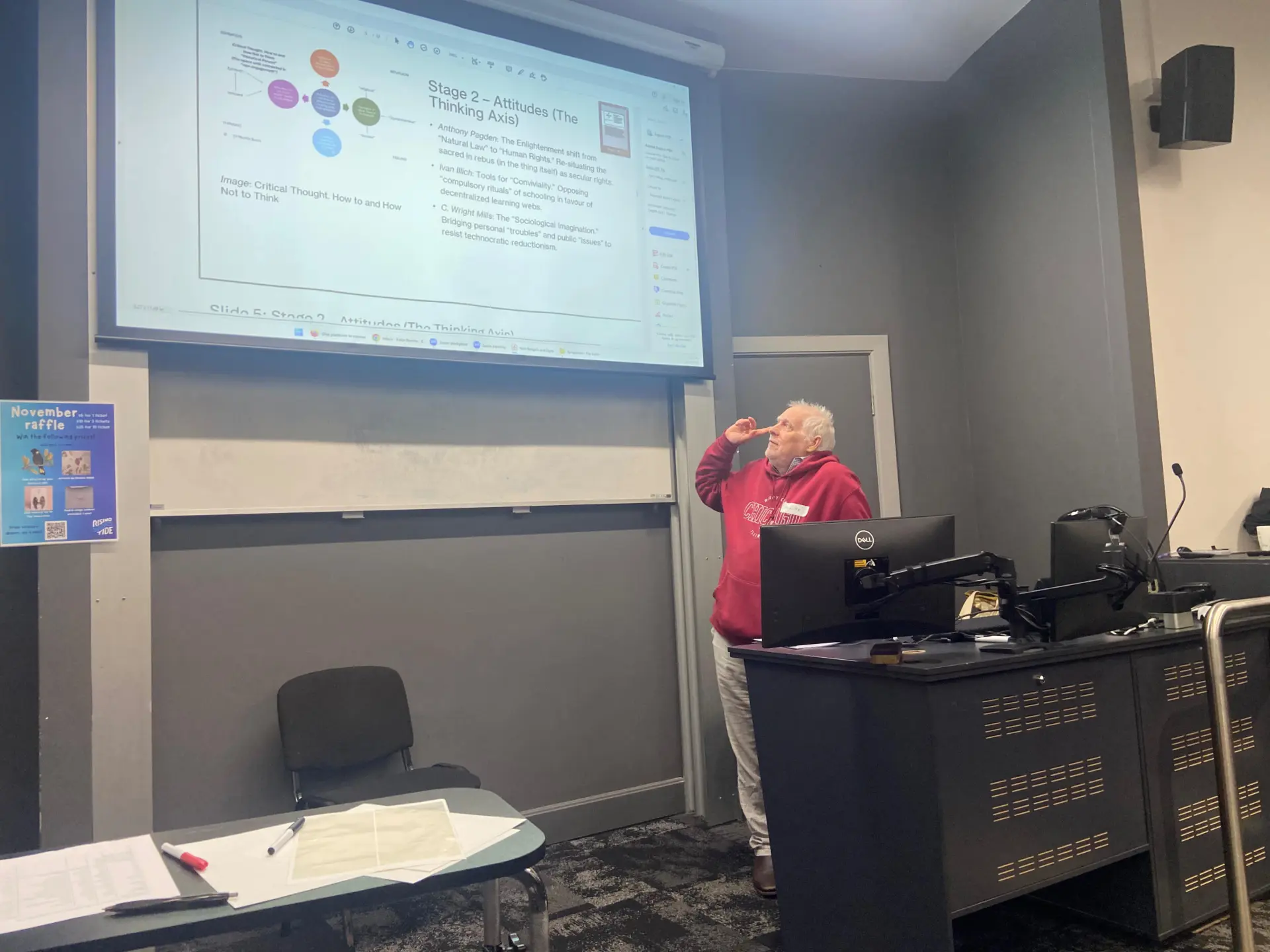
Featured Image: Neville performing his TASA-ASSR Presentation (1), Friday 23 October 2026
Here is a comprehensive, structured bibliography for The Story of Resilience series (documenting Dr. Neville Buch’s 5th Australian East Coast Trip and the accompanying intellectual synthesis) grounded in the source records[1].
1. Series Context & Overview
The Story of Resilience series details Dr. Neville Buch’s travel from Brisbane through regional New South Wales to Geelong and Melbourne, returning via Sydney[1][3]. The series synthesizes the physical trials of the journey (roadside breakdowns, financial strain, and community kindness) with deep historical research, featuring an extended collaborative research residency with leading Australian Islamic historian Dr. Dzavid Haveric in Geelong and a presentation on the Dynamic of Cognition (DoC) at the University of Sydney[1].
2. Primary Works by Dr. Neville Buch & MICE Publications
The core theoretical, methodological, and diagnostic foundation of the series is established across Dr. Buch’s publications for the Management Institute for Contributory Economy (MICE) [16–17, 130–131, 159, 203–204, 279–280]:
- Buch, N. (2015). Process of Learning (Principles) & The Dynamic of Cognition. Brisbane: Dr Neville Buch Publications[4].
- Buch, N. (2024). The Spiral History Theory of Stupidity: Getting Stuck in Time-Space, and Personal Breakout of Historical Cognition Patterns. Brisbane: Management Institute for Contributory Economy[5][6].
- Buch, N. (2025). MICE Principles and Philosophy (First Development). Working Paper. Brisbane: Management Institute for Contributory Economy[5].
- Buch, N. (2026a). MICE: Limited Thinking and the Contributory Economy (Book 1 of MICE). Brisbane: Management Institute for Contributory Economy[5].
- Buch, N. (2026b). Dr Buch in Intellectual Community: Reclaiming Authorship in the City of Intellect. Brisbane: Management Institute for Contributory Economy[5][8].
- Buch, N. (2026c). Understanding History is Philosophy in Practice: A Cognition History of Queensland. Brisbane: Management Institute for Contributory Economy[5][8].
- Buch, N. (2026d). Academic Rigour, Epistemic Renewal, and the Crisis of Inquiry: A Scholarly Review of the Vanderbilt Commission Report on the State of Scholarship. Brisbane: Management Institute for Contributory Economy[9].
- Buch, N. (2026e). Spiral Historiography and the Pedagogy of Consciousness in Australia. Academic Synthesis[10].
- Buch, N. (2026f). The Idea of Religion Today. Brisbane: Management Institute for Contributory Economy[10].
- Buch, N. (2026g). Thinking Religion in Place: Religion Is Not What It Was. Brisbane: Management Institute for Contributory Economy[10].
- Buch, N., & Peach, N. (2024). Philosophically Ontology Logic Intersect Compatibility Education (POLICE). Brisbane: Management Institute for Contributory Economy[7].
- Buch, N., Macklin, M., & Peach, N. (2026). MICE Intellectual Handbook: Limited Thinking and the Contributory Economy. Brisbane: Management Institute for Contributory Economy[8].
3. Foundational Theoretical, Epistemological & Sociological Literature
The series draws on key works in phenomenology, cognitive sociology, critical theory, and educational philosophy to articulate the Dynamic of Cognition, panser (thinking as caring), and the critique of neoliberal formalisms [16–18, 44–47, 106–110, 132, 185–186, 281–286]:
- Arendt, H. (1977). The Life of the Mind (M. McCarthy, Ed.). New York: Harcourt Brace Jovanovich[13].
- Aristotle. (c. 350 BC). Nicomachean Ethics (W. D. Ross, Trans.). Oxford: Clarendon Press[6].
- Cavanaugh, W. (2008). Being Consumed: Economics and Christian Desire. Grand Rapids: William B. Eerdmans Publishing[11].
- Coase, R. H. (1960). The Problem of Social Cost. Journal of Law and Economics, 3(1), 1–44[11].
- Collins, R. (1998). The Sociology of Philosophies: A Global Theory of Intellectual Change. Cambridge, MA: Belknap Press of Harvard University Press[14].
- Collins, R. (2019). The Credential Society: An Historical Sociology of Education and Stratification. New York: Columbia University Press[11][14].
- Cupitt, D. (2008). The Meaning of the West: An Apologia for Secular Christianity. London: SCM Press[14].
- Dweck, C. S. (2006). Mindset: The New Psychology of Success. New York: Random House[9].
- Ellul, J. (1973). Propaganda: The Formation of Men’s Attitudes. New York: Vintage Books / Octagon Books [223–224].
- Gadamer, H.-G. (1989). Truth and Method (2nd rev. edn.). New York: Crossroad[9].
- Haack, S. (1993). Evidence and Inquiry: Towards Reconstruction in Epistemology. Oxford: Blackwell [204–205].
- Habermas, J. (1979). Communication and the Evolution of Society (T. McCarthy, Trans.). Boston: Beacon Press[15].
- Habermas, J. (1984). The Theory of Communicative Action. Boston: Beacon Press[16].
- Habermas, J. (1991). Knowledge and Human Interests. Cambridge: Polity Press[14][16].
- Hofstadter, R. (1963). Anti-Intellectualism in American Life. New York: Random House USA Inc. [214–215].
- Illich, I. (1971). Deschooling Society. London: Calder & Boyars[17].
- Illich, I. (1973). Tools for Conviviality. New York: Harper & Row[17].
- Ingold, T. (2011). Being Alive: Essays on Movement, Knowledge and Description. London: Routledge[16].
- Macklin, M. (1967). Analogy, Analysis and God (Philosophical Thesis). Brisbane: University of Queensland[18].
- Macklin, M. (1976). When Schools Are Gone: A Projection of the Thought of Ivan Illich. Brisbane: University of Queensland Press[18].
- McKinney, J. P. (1971). The Structure of Modern Thought. London: Chatto & Windus[19].
- Merleau-Ponty, M. (1945/1962). Phenomenology of Perception (C. Smith, Trans.). London: Routledge & Kegan Paul [50, 210–211].
- Mills, C. W. (1959). The Sociological Imagination. New York: Oxford University Press[17][20].
- Noddings, N. (1984). Caring: A Feminine Approach to Ethics and Moral Education. Berkeley: University of California Press[19][21].
- Postman, N., & Weingartner, C. (1969). Teaching as a Subversive Activity. New York: Delacorte Press[22].
- Stiegler, B. (1998). Technics and Time, 1: The Fault of Epimetheus. Stanford: Stanford University Press [206–207, 228, 282].
- Stiegler, B. (2014). Symbolic Misery, Vol. 1: The Hyper-Industrial Epoch. Cambridge: Polity Press [207, 228–229, 282].
- Stiegler, B. (2018). Qu’appelle-t-on panser?: 1. L’immense régression. Paris: Les Liens qui Libèrent[21].
- Williams, B. (1985). Ethics and the Limits of Philosophy. Cambridge, MA: Harvard University Press[23].
4. Historical & Collaborative Research Literature
Literature documenting Australian history, Islamic historical encounters, regional geography, and social development synthesized during the Geelong research residency and road trip [1, 132, 315–318]:
- Haveric, D. (2006). Australia in Muslim Discovery: Historical Rediscovering of Australia by Non-Muslims and Muslims. Geelong: Deakin University Print Services[15].
- Haveric, D. (2012). History of the Muslim Discovery of the World: Islamic Civilisation Within the Plurality of Civilisations. Geelong: Deakin University Print Services[15].
- Haveric, D. (2016). History of the Bosnian Muslim Community in Australia: Settlement Experience in Victoria. Saarbrücken: Lambert Academic Publishing [315–316].
- Haveric, D. (2017). Muslim Memories in Victoria: Building Communities and Interfaith Relations from the 1950s to the 1980s. Australian Journal of Islamic Studies, 2(3), 134–162[24].
- Haveric, D. (2018). ANZAC Muslims: An Untold Story. Australian Journal of Islamic Studies, 3(3), 78–102[24].
- Haveric, D. (2023). A History of Muslims in the Australian Military: Loyalty, Patriotism, Contribution from 1885 to 1945. London: Cambridge Scholars Publishing[25].
- Haveric, D. (2026a). Macassan Muslims and Aboriginal Australians: Cultural and Spiritual Encounters. Religions, 17(2), 1–18[25].
- Haveric, D. (2026b). Reconsidering Possible Macassan Prayer Structures in Northern Australia: Port Essington and Raffles Bay. Australian Journal of Islamic Studies, 11(1), 45–68 [132, 317–318].


Neville Buch
Latest posts by Neville Buch (see all)
- The Road to Home. A Re-Narrativization of The Story of Resilience Part 7 – October 26, 2026
- The Road to Home. A Re-Narrativization of The Story of Resilience Part 6 – October 26, 2026
- The Road to Home. A Re-Narrativization of The Story of Resilience Part 5 – October 26, 2026