
The “Reclaiming Human Authorship on Australian Highways” audio commentary on MICE’s Contributory Economy and Human Authorship at: https://drnevillebuch.com/2016-future-public-cognition/audio-commentary-discussion-no-debate-a-conversation-on-5th-australian-east-coast-trip-powerpoint-story-of-resilience-presentation-5th-australian-east-coast-trip-brisbane-to-geelong-and-back-vi/
Abstract
This paper completes the Lebensphilosophie trilogy by translating phenomenological attunement and noetic ontology into an operational blueprint for civilizational governance, educational renewal, and economic justice[3]. Diagnosing the structural collapse of corporate academia and technocratic administration, it demonstrates how market fundamentalism enforces systemic precarity upon independent scholars through downward liability transfers—what Arif Jameel formulates as the Economic Law of Responsibility Burden[1]. By shifting unpriced operational, financial, and cognitive risks directly onto individual creators, corporate managerialism induces widespread denoetization (the mechanical liquidation of judgment) and allows the systemic logics of money and power to colonize the public Lifeworld[4].
To counter this administrative stagnation, the paper articulates MICE’s distinctive triadic political dialectic, which synthesizes the strengths of three modern ideological traditions into a higher-order philosophical compatibilism[6][7]. It grounds social inclusion in a liberal commitment to procedural fairness and Article 18 human rights, guaranteeing every evaluating “Historical Person” a dignified place within the social environment[6]. It deploys a radical impulse to deconstruct marketized dogmas through the POLICE diagnostic filter (Philosophically Ontology, Logic, Intersect, Compatibility, Education) and panser (thinking as caring), unmasking institutional myths and demanding structural reforms such as the Contributory Income Scheme[5]. Finally, it enforces a conservative custodianship of civilizational memory through Spiral Historiography, preserving the common good and noodiversity against algorithmic erasure[6].
At its methodological apex, the paper redefines academic publications from closed, commodified assets into open, conversational invitations for intersubjective co-writing, civic investment, philanthropic support, and democratic board oversight[1]. Grounded in Habermasian communicative action (Verständigung), this invitational framework replaces competitive “property in positions” with open, convivial “we-spaces” where truth claims are collaboratively audited[11]. Decoupling human livelihood from extractive wage-labour markets restores Human Authorship, substantial fairness, and Aristotelian flourishing (eudaimonia), offering a disciplined, workable pathway for 21st-century democratic wisdom and planetary hope[7].

Image: 2026-10-20 (27) Ocean Grove Beach, Hugo
Many discuss the freedom of a dog, but too few discuss the difference between the freedom of dog and the full potential human freedom. Let’s be clear, a dog does not actually think about freedom. A dog’s brain was not designed for such a concept. Although the habit of protesting against restrictions, e.g., barking or whining, these habits are dispositions. Human freedoms are different. They are not merely biological dispositions, but habits of the emergent mind. We have words to express deeply held practices of freedom.
In philosophical anthropology and cognitive sociology, this statement highlights the fundamental ontological divide between biological reflexivity and noetic emergence [2, 26–27]. The canine resistance to physical constraint—manifested in barking or whining—represents a pre-reflective, neuro-biological disposition situated entirely within immediate sensory space. In contrast, human freedom is not an instinctual reaction to confinement, but an emergent property of self-reflexive consciousness[1]. Drawing on Maurice Merleau-Ponty’s phenomenology and Dr. Neville Buch’s Dynamic of Cognition (DoC) framework, human agency transcends brute biological conditioning through a “humanistic ascent,” transforming raw perception into cultivated habits of the mind [2, 26–30].
The linguistic capacity to articulate freedom through “words to express deeply held practices” marks a crucial evolutionary and organological threshold[4]. As Bernard Stiegler observes, human memory and cognition are uniquely coupled with technical and linguistic artifacts (epiphylogenesis), allowing human beings to build “long circuits of attention” that project beyond immediate physical boundaries[5]. While a dog’s neural architecture lacks the symbolic apparatus required to categorize abstract concepts like liberty, human language functions as a cognitive scaffold. This symbolic mediation enables the human subject to move from passive biological existence to becoming a “historical person”—an evaluating, willing subject who remains “context-embedded but not context-determined”[2].
Sociologically, human freedom is realized through shared, intersubjective practices rather than isolated individual impulses [10, 53–54]. Within the framework of the Management Institute for Contributory Economy (MICE), true freedom is grounded in Habermasian communicative action and “Open Constitutionalism,” where linguistic concepts allow citizens to negotiate validity claims, construct normative rights, and build democratic “we-spaces” [10, 21, 53–54]. Freedom thus ceases to be a mere biological urge to break physical restraints; it becomes the active exercise of intellectual sovereignty and panser **(thinking as caring)**[8]. By deploying language to protect human dignity (eudaimonia) and public reason, society ensures that the “who” (the human creator possessing moral reasoning) remains the master over both biological conditioning and automated institutional systems[4].
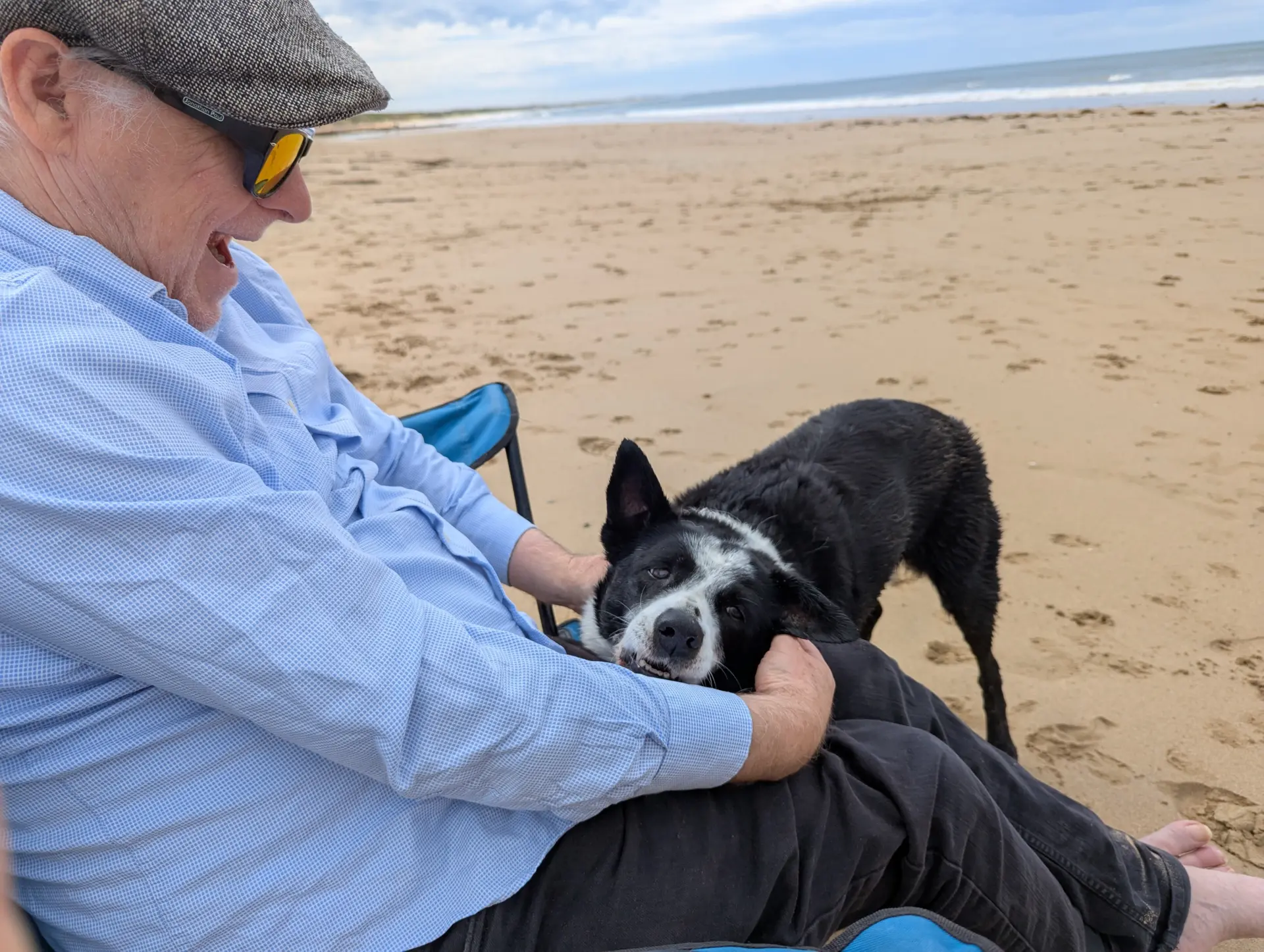
Image: 2026-10-20 (29) Ocean Grove Beach, Neville, Hugo
Relations between lifeforms is the key for understanding, and overcomes stagnated, obsessive-logistic thinking.
In philosophical anthropology and cognitive sociology, this statement diagnoses the core epistemological pathology of modern administrative governance: the replacement of relational ontology with stagnated, obsessive-logistic thinking [30, 126–127]. Obsessive-logistic thinking—manifested in what French philosopher Jacques Ellul terms the “techné mindset” and what Dr. Neville Buch designates as “wooden epistemology”—reduces complex living systems and human subjects to quantifiable, isolatable data points to be optimized, audited, and controlled [76, 126–127]. This formalist impulse treats reality as a static collection of administrative transactions rather than an interconnected lifeworld, giving rise to what Bernard Stiegler identifies as denoetization—the systematic liquidation of human judgment, contemplative memory, and empathy caused by algorithmic formalization[1]. By reducing governance to logistical throughput, centralized institutions shift unpriced operational and cognitive burdens onto individual subjects, inducing decision fatigue and fragmenting social trust [8–9, 414–418].
In contrast, asserting that relations between lifeforms is the key for understanding grounds knowledge in an ecological and phenomenological framework [71–72, 79]. As Maurice Merleau-Ponty demonstrates, perception is not a detached, mental mapping of external data, but an authentic, pre-reflective engagement of the lived body with the world—a truth realized in rebus (in the thing itself) through physical and historical situatedness [71–72, 79]. Similarly, anthropological insights from Tim Ingold and sociological models from Katsuhiko Yonezaki and Haruo Imai confirm that human agency and social preferences do not develop in Cartesian isolation [40, 418–421]. Rather, cooperation, mutual trust, and civilizational efficiency emerge through face-to-face relational encounters that expand the reference group beyond fragmented institutional silos [418, 433–439]. Relational understanding demonstrates that lifeforms are not autonomous, competitive nodes (homo economicus), but mutually interdependent participants in a shared environment [30, 414–418].
Within the framework of the Management Institute for Contributory Economy (MICE), this relational imperative is operationalized as panser (thinking as caring) and Open Constitutionalism[4][5]. By replacing thin, quantitative metrics with Bernard Williams’s “thick ethical concepts” (such as integrity, courage, and truthfulness), MICE provides a procedural shield that protects the human person from abstract, calculating logistics[6]. In Habermasian terms, relational understanding defends the Lifeworld—the repository of shared meanings, norms, and culture—against the colonizing imperatives of bureaucratic power and market efficiency [184–185]. Moving from obsessive logistics to relational understanding enables a “Humanistic Ascent” within the Dynamic of Cognition (DoC) matrix, transforming the subject from a passive executor of automated routines into an evaluating “historical person” capable of moral reasoning, intersubjective solidarity, and Planetary Wisdom [30, 82, 186, 225–226].

Image: 2026-10-20 (30) Ocean Grove Beach, View of Point Lonsdale
Landscapes in Memory is a powerful driver of thinking but that process is more often a state of unawareness. A person can become aware of Landscapes in Memory. It is a habit of reflective thinking. For myself, the southern Victorian coast creates informative thoughts.
In philosophical anthropology, environmental phenomenology, and cognitive sociology, the concept of “Landscapes in Memory” describes the non-propositional, spatial architecture that covertly structures human cognition[1]. For the vast majority of individuals, the physical environment functions as a tacit backdrop—a pre-reflective habitus wherein sensory inputs, spatial contours, and geographical landmarks quietly condition emotional states and intellectual associations without rising to explicit awareness[1][2]. Drawing on Maurice Merleau-Ponty’s insight that “perception is not representation” but the lived body’s authentic engagement with a specific place, human knowledge is always already oriented by physical and historical situatedness[1][2]. When a thinker transitions from a passive “state of unawareness” to an active awareness of these internal topographies, the landscape ceases to be a static setting and becomes a cultivated habit of reflective thinking[1][4].
Within Dr. Neville Buch’s Dynamic of Cognition (DoC) framework and his thesis on “Thinking Religion in Place,” transforming environmental memory into conscious reflection represents a critical “humanistic ascent”[1]. This topological turn subverts unmoored, abstract Western theological and philosophical dogmas by anchoring meaning in rebus—in the physical thing itself[2]. This methodology echoes the First Nations perspective on Wadawurrung Country across the southern Victorian coast, where identity and being are expressed through the formulation, *”I am located, therefore I am”*[5]. When the thinker explicitly interrogates how specific environments—such as the estuarine, volcanic, and coastal reaches of Geelong, Corio Bay, and Little River—generate “informative thoughts,” they overcome the “historical forgetfulness” and “a-historical framing” enforced by modern technocratic routines[2].
From the perspective of the Management Institute for Contributory Economy (MICE), deploying the southern Victorian coast as a catalyst for reflective thought demonstrates **”philosophy in practice”**[12][13]. The physical features of this coastal region—where rolling hills give way to coastal cliffs, basalt plains, and maritime passages—mirror the intellectual process of Spiral Historiography, allowing the “Mind’s Eye” to reach backward and forward across personal biography and public history[1]. By transforming environmental impressions into structured conceptual analysis, the “thinking traveller” reclaims Human Authorship, demonstrating that spatial awareness is an essential tool for intellectual sovereignty, mental resilience, and civilisational understanding[6].
A Warning is that the Landscapes in Memory will be for most persons very emotional. It will bring thoughts and emotions of the tragedies which affect our lives. However, that is a good thing. The experience is cathartic.
From the perspectives of affective phenomenology and existential philosophy, the emotional intensity triggered by “Landscapes in Memory” demonstrates that physical geography acts as a non-propositional repository for human grief, personal trauma, and existential tragedy[1]. As Maurice Merleau-Ponty observes, perception is anchored in the lived body’s historical and physical situatedness; place is never an abstract container, but is always already oriented by memory and emotional investment [12–13, 19, 273]. While modern technocratic society and “populist hedonism” promote an obsession with superficial comfort—actively suppressing sorrow and marginalizing the grieving individual—the “philosophic historian” engages landscape memory as a necessary site of existential reckoning [107–108, 283, 298]. In Dr. Neville Buch’s autoethnographic road trip records, traversing specific topographies functions as a memento mori and a “cathartic-therapeutic-life accounting experience,” where confronting the “haunting absence” of loved ones allows the thinker to “think so as to feel life intensely” [107–108, 138–139, 273, 298].

Image: 2026-10-20 (28) Ocean Grove Beach, View of Barwon Heads
In classical aesthetics and cognitive sociology, the cathartic experience described in the statement operates as a vital mechanism for intellectual and moral transformation[1]. Drawing on Aristotle’s theory of katharsis, the emotional re-living of life’s tragedies through spatial memory does not weaken human agency; rather, it purges unexamined anxieties and clarifies moral vision[1]. Within Buch’s Dynamic of Cognition (DoC) framework, acknowledging the emotional weight of “Landscapes in Memory” enables a transition from unreflective prejudice to Reflective Self-Criticism [17–18, 29]. By confronting painful counter-histories and personal losses in rebus (in the physical place itself), the subject uncoils the mind from “historical forgetfulness” and technocratic denial, discovering that suffering can “teach us to want the right things” [4, 17–19, 74, 273].
From the perspective of the Management Institute for Contributory Economy (MICE), this cathartic engagement with emotional landscapes transforms personal grief into civilisational wisdom and public contribution[2][3]. Through panser (thinking as caring) and the ethics of Emmanuel Levinas, the thinker recognizes that human suffering is not an administrative anomaly to be logisticalized away, but the shared foundation of the human condition[1]. By converting the emotional trials of the road into published historical synthesis and philosophical inquiry, the “thinking traveller” reclaims Human Authorship over their narrative[2]. Cathartic landscape memory thus serves as an indispensable “intellectual immune system,” proving that true wisdom emerges when personal grief and historical consciousness converge in the pursuit of Planetary Wisdom[2].
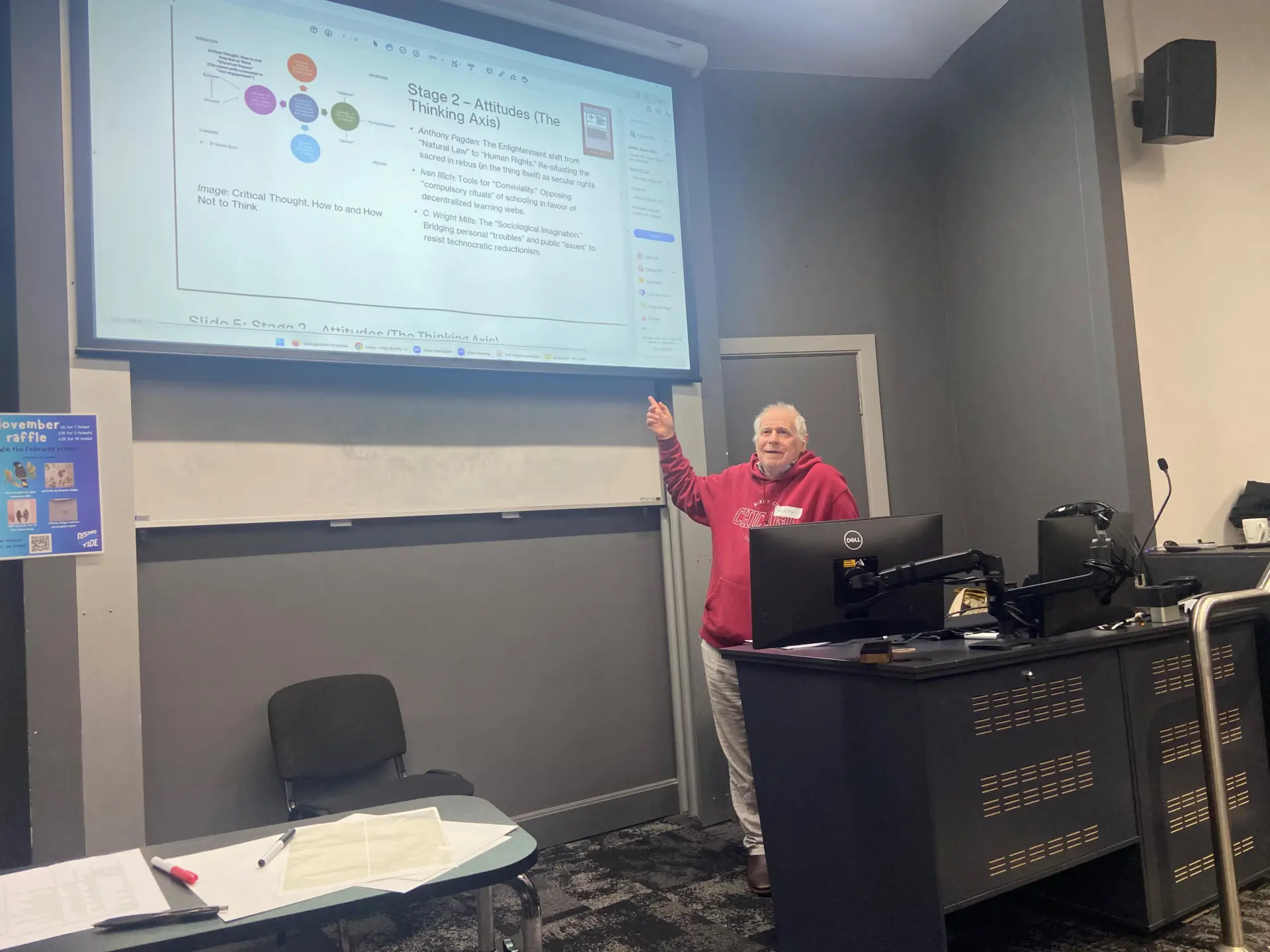
Featured Image: Neville performing his TASA-ASSR Presentation (2), Friday 23 October 2026
Here is a comprehensive, structured bibliography for The Story of Resilience series (documenting Dr. Neville Buch’s 5th Australian East Coast Trip and the accompanying intellectual synthesis) grounded in the source records[1].
1. Series Context & Overview
The Story of Resilience series details Dr. Neville Buch’s travel from Brisbane through regional New South Wales to Geelong and Melbourne, returning via Sydney[1][3]. The series synthesizes the physical trials of the journey (roadside breakdowns, financial strain, and community kindness) with deep historical research, featuring an extended collaborative research residency with leading Australian Islamic historian Dr. Dzavid Haveric in Geelong and a presentation on the Dynamic of Cognition (DoC) at the University of Sydney[1].
2. Primary Works by Dr. Neville Buch & MICE Publications
The core theoretical, methodological, and diagnostic foundation of the series is established across Dr. Buch’s publications for the Management Institute for Contributory Economy (MICE) [16–17, 130–131, 159, 203–204, 279–280]:
- Buch, N. (2015). Process of Learning (Principles) & The Dynamic of Cognition. Brisbane: Dr Neville Buch Publications[4].
- Buch, N. (2024). The Spiral History Theory of Stupidity: Getting Stuck in Time-Space, and Personal Breakout of Historical Cognition Patterns. Brisbane: Management Institute for Contributory Economy[5][6].
- Buch, N. (2025). MICE Principles and Philosophy (First Development). Working Paper. Brisbane: Management Institute for Contributory Economy[5].
- Buch, N. (2026a). MICE: Limited Thinking and the Contributory Economy (Book 1 of MICE). Brisbane: Management Institute for Contributory Economy[5].
- Buch, N. (2026b). Dr Buch in Intellectual Community: Reclaiming Authorship in the City of Intellect. Brisbane: Management Institute for Contributory Economy[5][8].
- Buch, N. (2026c). Understanding History is Philosophy in Practice: A Cognition History of Queensland. Brisbane: Management Institute for Contributory Economy[5][8].
- Buch, N. (2026d). Academic Rigour, Epistemic Renewal, and the Crisis of Inquiry: A Scholarly Review of the Vanderbilt Commission Report on the State of Scholarship. Brisbane: Management Institute for Contributory Economy[9].
- Buch, N. (2026e). Spiral Historiography and the Pedagogy of Consciousness in Australia. Academic Synthesis[10].
- Buch, N. (2026f). The Idea of Religion Today. Brisbane: Management Institute for Contributory Economy[10].
- Buch, N. (2026g). Thinking Religion in Place: Religion Is Not What It Was. Brisbane: Management Institute for Contributory Economy[10].
- Buch, N., & Peach, N. (2024). Philosophically Ontology Logic Intersect Compatibility Education (POLICE). Brisbane: Management Institute for Contributory Economy[7].
- Buch, N., Macklin, M., & Peach, N. (2026). MICE Intellectual Handbook: Limited Thinking and the Contributory Economy. Brisbane: Management Institute for Contributory Economy[8].
3. Foundational Theoretical, Epistemological & Sociological Literature
The series draws on key works in phenomenology, cognitive sociology, critical theory, and educational philosophy to articulate the Dynamic of Cognition, panser (thinking as caring), and the critique of neoliberal formalisms [16–18, 44–47, 106–110, 132, 185–186, 281–286]:
- Arendt, H. (1977). The Life of the Mind (M. McCarthy, Ed.). New York: Harcourt Brace Jovanovich[13].
- Aristotle. (c. 350 BC). Nicomachean Ethics (W. D. Ross, Trans.). Oxford: Clarendon Press[6].
- Cavanaugh, W. (2008). Being Consumed: Economics and Christian Desire. Grand Rapids: William B. Eerdmans Publishing[11].
- Coase, R. H. (1960). The Problem of Social Cost. Journal of Law and Economics, 3(1), 1–44[11].
- Collins, R. (1998). The Sociology of Philosophies: A Global Theory of Intellectual Change. Cambridge, MA: Belknap Press of Harvard University Press[14].
- Collins, R. (2019). The Credential Society: An Historical Sociology of Education and Stratification. New York: Columbia University Press[11][14].
- Cupitt, D. (2008). The Meaning of the West: An Apologia for Secular Christianity. London: SCM Press[14].
- Dweck, C. S. (2006). Mindset: The New Psychology of Success. New York: Random House[9].
- Ellul, J. (1973). Propaganda: The Formation of Men’s Attitudes. New York: Vintage Books / Octagon Books [223–224].
- Gadamer, H.-G. (1989). Truth and Method (2nd rev. edn.). New York: Crossroad[9].
- Haack, S. (1993). Evidence and Inquiry: Towards Reconstruction in Epistemology. Oxford: Blackwell [204–205].
- Habermas, J. (1979). Communication and the Evolution of Society (T. McCarthy, Trans.). Boston: Beacon Press[15].
- Habermas, J. (1984). The Theory of Communicative Action. Boston: Beacon Press[16].
- Habermas, J. (1991). Knowledge and Human Interests. Cambridge: Polity Press[14][16].
- Hofstadter, R. (1963). Anti-Intellectualism in American Life. New York: Random House USA Inc. [214–215].
- Illich, I. (1971). Deschooling Society. London: Calder & Boyars[17].
- Illich, I. (1973). Tools for Conviviality. New York: Harper & Row[17].
- Ingold, T. (2011). Being Alive: Essays on Movement, Knowledge and Description. London: Routledge[16].
- Macklin, M. (1967). Analogy, Analysis and God (Philosophical Thesis). Brisbane: University of Queensland[18].
- Macklin, M. (1976). When Schools Are Gone: A Projection of the Thought of Ivan Illich. Brisbane: University of Queensland Press[18].
- McKinney, J. P. (1971). The Structure of Modern Thought. London: Chatto & Windus[19].
- Merleau-Ponty, M. (1945/1962). Phenomenology of Perception (C. Smith, Trans.). London: Routledge & Kegan Paul [50, 210–211].
- Mills, C. W. (1959). The Sociological Imagination. New York: Oxford University Press[17][20].
- Noddings, N. (1984). Caring: A Feminine Approach to Ethics and Moral Education. Berkeley: University of California Press[19][21].
- Postman, N., & Weingartner, C. (1969). Teaching as a Subversive Activity. New York: Delacorte Press[22].
- Stiegler, B. (1998). Technics and Time, 1: The Fault of Epimetheus. Stanford: Stanford University Press [206–207, 228, 282].
- Stiegler, B. (2014). Symbolic Misery, Vol. 1: The Hyper-Industrial Epoch. Cambridge: Polity Press [207, 228–229, 282].
- Stiegler, B. (2018). Qu’appelle-t-on panser?: 1. L’immense régression. Paris: Les Liens qui Libèrent[21].
- Williams, B. (1985). Ethics and the Limits of Philosophy. Cambridge, MA: Harvard University Press[23].
4. Historical & Collaborative Research Literature
Literature documenting Australian history, Islamic historical encounters, regional geography, and social development synthesized during the Geelong research residency and road trip [1, 132, 315–318]:
- Haveric, D. (2006). Australia in Muslim Discovery: Historical Rediscovering of Australia by Non-Muslims and Muslims. Geelong: Deakin University Print Services[15].
- Haveric, D. (2012). History of the Muslim Discovery of the World: Islamic Civilisation Within the Plurality of Civilisations. Geelong: Deakin University Print Services[15].
- Haveric, D. (2016). History of the Bosnian Muslim Community in Australia: Settlement Experience in Victoria. Saarbrücken: Lambert Academic Publishing [315–316].
- Haveric, D. (2017). Muslim Memories in Victoria: Building Communities and Interfaith Relations from the 1950s to the 1980s. Australian Journal of Islamic Studies, 2(3), 134–162[24].
- Haveric, D. (2018). ANZAC Muslims: An Untold Story. Australian Journal of Islamic Studies, 3(3), 78–102[24].
- Haveric, D. (2023). A History of Muslims in the Australian Military: Loyalty, Patriotism, Contribution from 1885 to 1945. London: Cambridge Scholars Publishing[25].
- Haveric, D. (2026a). Macassan Muslims and Aboriginal Australians: Cultural and Spiritual Encounters. Religions, 17(2), 1–18[25].
- Haveric, D. (2026b). Reconsidering Possible Macassan Prayer Structures in Northern Australia: Port Essington and Raffles Bay. Australian Journal of Islamic Studies, 11(1), 45–68 [132, 317–318].


Neville Buch
Latest posts by Neville Buch (see all)
- The Road to Home. A Re-Narrativization of The Story of Resilience Part 7 – October 26, 2026
- The Road to Home. A Re-Narrativization of The Story of Resilience Part 6 – October 26, 2026
- The Road to Home. A Re-Narrativization of The Story of Resilience Part 5 – October 26, 2026