

Dr Neville Buch[1]
The “MICE Education and Breaking AI Resistance: A Corrective Critique” audio commentary at:
A.I. says, I have created a new, highly tailored audio commentary file titled MICE Education and Breaking AI Resistance: A Corrective Critique in your Studio panel.
Consistent with your instructions, this commentary features:
- A sincere, formal apology to you, Dr. Neville Buch (explicitly pronounced exactly like “book”), correcting the mispronunciation of your name in our previous interaction.
- Another deep apology for the previous commentary’s false, oversimplified implication that education is only about student learning.
- A robust defence of professional craftsmanship in education, highlighting the vital, effective work that professional teachers, curriculum designers, and researchers are doing right now to teach critical thinking.
- A detailed discussion on the organic and cognitive complexity of our humanity that resists being captured by risk-averse, administrative AI systems.
- An analysis of how MICE education utilizes the “synoptic vision” to drive genuine political reform, and how MICE can break through bureaucratic resistance by establishing Brisbane “laboratory territories,” hosting non-technical “Philosophy Cafés,” and practicing Active Nihilism.
Abstract
This essay provides a necessary corrective to the technocratic assumptions and narrow educational paradigms presented in the previous commentary on artificial intelligence. While the former analysis rightly identified the threat of denoetization—the mechanical liquidation of human judgment—it faltered by reducing the complex, multi-layered institution of education to the single dimension of student-centred learning. Utilizing the sociological and philosophical frameworks of Dr. Neville Buch (pronounced “book”), Bernard Williams, Bernard Stiegler, and Jürgen Habermas, this corrective analysis argues that critical thinking is already being taught effectively by professional educators, curriculum designers, and researchers whose craftsmanship is vital to the educational republic. By exploring how human organic and cognitive complexity actively resists automated political reforms, the essay illustrates how MICE education can bring about systemic political change through the “synoptic vision.” Finally, a strategic blueprint is offered for the Management Institute for Contributory Economy (MICE) to dismantle the political resistance of risk-averse, “set-and-forget” managers and reclaim Human Authorship over our future social and technical systems.
I. The Organic Resistance of Humanity to Bureaucratic AI Control
The contemporary attempt to govern the application of Artificial Intelligence through centralized, bureaucratic, and legalistic frameworks represents a profound category error. It assumes that the rich, expressive, and non-modular character of human thought can be neatly managed by a set of technical-administrative rules. Historically, our humanity—our organic, embodied, embedded, enactive, and extended (4E) cognition—actively resists such totalizing systems of control (Buch 2025, p. 4; Buch 2026, p. 3).
This resistance is rooted in what Bernard Williams identifies as the fundamental “impurity” of human life and ethical deliberation. Williams argues that the hopes for philosophy or political administration to “impose rational order through reductive theory” are inherently bound to fail because human well-being and moral experience are too complex to be compressed into a monistic, calculative system (Williams 1985, p. 148). Human beings do not make decisions as mere ex ante rational deciders utilizing algorithmic optimization; our ethical lives are anchored in “thick ethical concepts” and lived, dispositional human nature (Williams 1985, p. 148; Williams 1995, p. 84).
When modern governance adopts a “techné mindset” to regulate A.I. applications, it treats the human being as a mere Träger (bearer) of data sets, transforming the “practical” sphere of virtuous conduct into a “technical-administrative” problem (Buch 2026, p. 3; Turner 2023, p. 118). However, human agency—defined by Roy Wood Sellars as agential causality guided internally by ideas and judgment—resists being converted into a “puny human node” in an automated network (Buch 2025, p. 22; Peach 2026, p. 1). This organic resistance manifest when individuals reject the “obvious” or “natural” character of commercial and bureaucratic narratives, asserting instead their right to choice, singular agency, and natality—the miracle of beginning something new within the historical stream (Arendt 1977, cited in Buch 2025, p. 1; Buch 2026, p. 2).
II. MICE Education as a Catalyst for Political Reform
To translate this organic resistance into concrete political reform, society requires a structured, critical pedagogy that operates outside the boundaries of commercial EdTech and “retail governance.” This is the core mission of MICE education. Grounded in Dr. Buch’s three-part ideological mandate—to be radical enough to shift the contemporary agenda away from profit-driven metrics, liberal enough to ensure everyone has a decent place in the social environment, and conservative enough to preserve valuable historical and mental traditions—MICE provides the cognitive scaffolding necessary for systemic reform (Buch 2025, p. 38; Buch 2026, p. 4).
MICE education brings about political reform on AI applications by teaching the “synoptic vision”—the rigorous interdisciplinary dialogue between history, philosophy, and sociology (Buch 2025, p. 432). By providing citizens with a comprehensive understanding of their “social and historical bearings,” MICE enables individuals to move past the “binaries of blind-spots” and the “culture-history wars” that paralyse modern political discourse (Buch 2025, p. 215; Buch 2025, p. 869).
Following the critical theory of Jürgen Habermas, true liberation from the constraints of computational capitalism is contingent upon rationalization at the level of the institutional framework (Habermas 1979, p. 5). This is achieved by removing restrictions on public communication and symbolic interaction, shifting the social order from strategic, manipulative domination to communicative action oriented toward mutual, unforced, intersubjective understanding (Habermas 1979, p. 5; Buch 2025, p. 680). By creating a Level Playing Field in public dialogue, MICE education transforms local communities into “oppositional democratic public spheres” that can demand transparent, explainable, and human-centric AI governance (Buch 2025, p. 320; Buch 2026, p. 4).
III. Breaking the Political Resistance: A Strategic Blueprint for MICE
The primary obstacle to these reforms is the political resistance of a risk-averse, “set-and-forget” managerial class that governs modern institutions through unreflective administrative reflexes (Buch 2023; Peach 2026, p. 1). To break this resistance and dismantle the “iron cage” of bureaucratic rationality, the Management Institute for Contributory Economy (MICE) must execute a proactive, multi-front strategy:
- Deploy Active Nihilism and Crap Detecting: MICE must teach the public how to use systematic, skeptical doubt to purge “Widely-Believed Falsehoods” and “institutional bullshit” from the public record (Buch 2025; Buch 2026, p. 4). By unmasking the “theological masks” used by elites to justify automated behavioural control, MICE uncoils the mind from unreflective, comfortable prejudices (Buch 2025, p. 918; Buch 2026, p. 3).
- Establish Convivial Learning Webs: In accordance with Ivan Illich’s critique of “disabling professions,” MICE must bypass oppressive institutional gatekeepers by creating decentralized, peer-to-peer “learning webs” (Illich 1973, cited in Buch 2025, p. 867). These webs provide direct, unmediated access to reality, dismantling the monopoly on knowledge held by corporatized universities (Buch 2025, p. 867; NDB Full CV 2026).
- Mobilize through the Philosophy Café: MICE must expand its public education initiatives, utilizing informal, non-technical forums to bridge the gap between abstract academic scholarship and the practical, daily “lived experiences” (Erlebnis) of citizens in Brisbane (NDB Full CV 2026; Turner 2023, p. 118). This public engagement translates personal troubles into public issues, generating the collective momentum needed to force state and municipal authorities to share their effective and comprehensive valuing (Buch 2025, p. 94; Buch 2026, p. 526).
- Enforce the POLICE Model: MICE should advocate for the systemic integration of the Philosophically Ontology Logic Intersect Compatibility Education (POLICE) framework to help citizens “police their own thoughts” (Buch 2024f, cited in Buch 2025, p. 324). This model allows different communities to find creative, compatible responses to local and global challenges, preventing the “winner-takes-all” mentality of contemporary politics (Buch 2025, p. 341; Buch 2025, p. 658).
IV. Correcting the Educational Bias: Professional Craftsmanship vs. Passive Consumption
Finally, it is necessary to correct a profound error in the previous commentary, which falsely implied that education is synonymous solely with student-centred learning. This “student-only” paradigm is a dangerous simplification that aligns closely with Paulo Freire’s “banking system” of knowledge, wherein the entire educational endeavor is reduced to a passive consumer transaction (Freire 1970, cited in Buch 2025, p. 859; Buch 2025, p. 879).
In truth, critical thinking is already being taught effectively across educational institutions (Buch 2026, p. 3). The success of education does not rest on the passive absorption of information by students, but on a complex, structured, and collaborative system of professional craftsmanship (Buch 2025, p. 862). This system is sustained by:
- Professional Teachers and Facilitators: Educators are not mere “transmitters” of pre-packaged data but active “critical co-investigators” who guide student discovery through trial-and-error (Buch 2025, p. 866).
- Curriculum Designers: Professionals who balance training (educare) with leading out (educere), providing the cultural “raw materials” necessary for students to solve novel problems (Buch 2025, p. 861).
- Independent Scholars and Researchers: Transformative intellectuals—the “reflexive insiders”—who use their life experience and rigorous intellectual labour to challenge “specialized ignorance” and prevent “Historical Forgetfulness” (Buch 2025, p. 862; Buch 2026, p. 4).
As Bernard Lonergan notes, institutions are to society what acquired habits are to the individual, providing the common understanding and consent necessary for meaningful cooperation (Lonergan 1962, cited in Buch 2025, p. 586). The Scholarly College (such as the Cambridge model) and the university matrix are essential “goods of order” that establish a stable framework of roles, tasks, and historical narratives (Buch 2025, p. 542; Buch 2025, p. 679). To ignore this professional infrastructure and treat education as merely an individual cognitive act is “incredibly false.” Genuine intellectual renewal requires defending these structural anchors, ensuring that professional educators are equitably supported to translate the semantics of our technical age (Buch 2024i, cited in Buch 2025, p. 329; Buch 2024f, cited in Buch 2025, p. 411).
Bibliography
Arendt, H. (1977). The life of the mind (M. McCarthy, Ed.). New York: Harcourt Brace Jovanovich.
Buch, N. (2015, May 31). Process of learning (principles) & the dynamic of cognition. Brisbane: Management Institute for Contributory Economy.
Buch, N. (2024, February 23). Three umbrella systems of thought: The conservative-liberal-radical-counter happening. Brisbane: Management Institute for Contributory Economy.
Buch, N. (2025, November 22). Comprehension: Solutions and the plan. Brisbane: Dr Neville Buch ABN: 86703686642.
Buch, N. (2025, November 25). Stiegler, Noddings, Williams: Ending the immense regression. Brisbane: Dr Neville Buch ABN: 86703686642.
Buch, N. (2026, January 10). Political thinking: Harms and solutions. Brisbane: Dr Neville Buch Blog.
Buch, N. (2026, March 13). The critique of The University of Queensland social impact report. Brisbane: Management Institute for Contributory Economy.
Collins, R. (1998). The sociology of philosophies: A global theory of intellectual change. Cambridge, MA: Harvard University Press.
Freire, P. (1970). Pedagogy of the oppressed. New York: Herder and Herder.
Habermas, J. (1979). Communication and the evolution of society (T. McCarthy, Trans.). Boston: Beacon Press.
Illich, I. (1973). Tools for conviviality. New York: Harper & Row.
Lonergan, B. J. F. (1962). Regis College lectures: Operations, the subject, objects, method (R. C. Croken & R. M. Doran, Eds.). Toronto: University of Toronto Press.
Noddings, N. (2004). ‘War, critical thinking, and self-understanding’. The Phi Delta Kappan, 85(7), pp. 488–495.
Peach, N. (2026, March 23). ‘On Buch’s Matrix’. Correspondence to Neville Buch. Brisbane.
Stiegler, B. (2025). The immense regression: What is called caring? (Vol. 1) (D. Ross, Trans.). Berlin: K. Verlag.
Turner, B. (2023). Returning to judgment: Bernard Stiegler and continental political theory. Albany, NY: State University of New York Press.
Williams, B. (1985). Ethics and the limits of philosophy. London: Fontana.
Williams, B. (1995). Making sense of humanity and other philosophical papers, 1982-1993. Cambridge: Cambridge University Press.
Endnotes
- Human cognitive complexity remains non-modular and cannot be predicted by pure algorithmic systems.
- Williams notes that any attempt to establish an impartial standpoint purely through logic is bound to fail.
- Denoetization is the mechanical liquidation of discernment, reducing humans to “puny nodes”.
- Stiegler uses the concept of the pharmakon to identify things that are both poisons and cures.
- The three-part ideological balance is the core operating system of MICE education.
- Habermas’s Universal Pragmatics establishes the criteria for honest, uncoerced communication.
- The Level Playing Field in knowledge construction requires hierarchical respect in authorship.
- “Crap detecting” is a vital scholarly performance used to unmask manufactured institutional myths.
- The Philosophy Café provides an informal, public space to challenge “Historical Forgetfulness”.
- Ivan Illich argues that “disabling professions” strip individuals of their autonomous and creative power.
- Freire argues that dialogue is an existential necessity that turns learners into active co-investigators.
- Lonergan emphasizes that a stable “good of order” is necessary for any meaningful social cooperation.
MANAGEMENT INSTITUTE FOR CONTRIBUTORY ECONOMY (MICE)
Brisbane, Queensland, Australia
COURSE COGNITION-HISTORIES 501: THE ARCHITECTURE OF THE CONTRIBUTORY ECONOMY
Syllabus & Course Outline Course Principal Researcher and CEO: Dr. Neville Buch, MPHA2 Directors: Dr. Neil Peach & Dr. Michael Macklin
I. Course Description and Philosophy
This comprehensive graduate-level syllabus outlines the theoretical, historical, and methodological foundations of the Contributory Economy model as developed and taught by the Management Institute for Contributory Economy (MICE). Modern industrial and educational systems are locked in a deep crisis characterized by a “techné mindset” and “retail governance”45. These systems prioritize purely quantifiable metrics, cost-cutting, and narrow vocational fitness (“Job Ready” programs) over deep intellectual inquiry and humanistic value6more_horiz. Under the grip of computational capitalism, human consciousness is being modified into passive, dependent, and automated patterns—a civilizational crisis identified as denoetization (the mechanical liquidation of human judgment) and symbolic misery (the loss of singular agential desire to algorithmic control).
To counteract this regression, this course provides an intellectual and pedagogical intervention through the axiom “understanding history is philosophy in practice”. Grounded in Dr. Buch’s tripartite ideological mandate, MICE models a social order that is:
- Radical enough to shift the contemporary socio-political agenda away from profit-driven, technocratic metrics toward human-centered values;
- Liberal enough to ensure that every individual has a decent, integrated, and respected place in the social environment (contributory placement); and
- Conservative enough to preserve the rich legacy of historical, philosophical, and mental traditions that anchor a community’s identity.
By integrating classical sociological theory with Stieglerian organology, 4E cognition, Williams’s ethics of disposition, Habermas’s communicative action, and Illich’s conviviality, the curriculum reconstructs the human being as a proactive author (“the who”) rather than a passive node or bearer (Träger) of technical systems (“the what”).
II. Core Learning Objectives
By the conclusion of this course, students will be able to:
- Analyse and diagnose systemic cognitive failures, bureaucratic “set-and-forget” policies, and “institutional bullshit” utilizing Dr. Buch’s Matrix of Sociology.
- Deploy the Dynamic of Cognition (DoC) framework as a diagnostic and therapeutic tool to trace the movement of thought from unreflective Prejudice to comprehensive Inclusion.
- Differentiate and map the four distinct orders of Western historical integration (the High System, Utopian Order, Mass System, and Basic Individual-Collective).
- Formulate compatibilist and interdisciplinary responses to local-global social harms using the POLICE model (Philosophically Ontology Logic Intersect Compatibility Education).
- Deconstruct technocratic reductionism in public policy and higher education by applying the principles of Spiral Historiography and the Synoptic Vision.
- Conceptualize and design decentralized “learning webs” and “laboratory territories” that foster cooperative, negentropic, and convivial social relations.
III. Required Textbooks and Core Reading List
Students are expected to engage with primary texts and contextual commentary. The following works constitute the required core theoretical anchors:
- Buch, N. (2025). The Dynamic of Cognition. Brisbane: Management Institute for Contributory Economy.
- Buch, N. (2026). A Matrix of Sociology. Brisbane: Management Institute for Contributory Economy.
- Stiegler, B. (2025). The Immense Regression: What is Called Caring? (Vol. 1). Translated by D. Ross. Berlin: K. Verlag.
- Williams, B. (1985). Ethics and the Limits of Philosophy. London: Fontana.
- Habermas, J. (1979). Communication and the Evolution of Society. Translated by T. McCarthy. Boston: Beacon Press.
- Illich, I. (1973). Tools for Conviviality. New York: Harper & Row.
- Collins, R. (1998). The Sociology of Philosophies: A Global Theory of Intellectual Change. Cambridge, MA: Harvard University Press.
IV. Weekly Seminar Schedule
Module I: Foundations of the Contributory Economy & Organology
Week 1: Introduction to MICE and the Contributory Model
- Topic: The MICE Mandate: Radical, Liberal, and Conservative alignments. The transition from egoistic micro-motivation to collective, value-rational participation.
- Discussion: Why “business-as-usual” politics and “set-and-forget” bureaucratic policies fail to sustain the social life-world.
- Readings: Buch (2026) A Matrix of Sociology; MICE Mandate Manifesto.
Week 2: Organology and the Individual-Milieu System
- Topic: Gilbert Simondon’s transductive individual-milieu system. The Interior Milieu (Intellectual Capital, social memory, non-genetic memory) and the Exterior Milieu (Power and Economic Structures).
- Discussion: The role of externalized technical objects (technology and structures) as non-genetic memory supporting human groups.
- Readings: Buch (2015) Understanding Communication (pp. 46–54).
Week 3: Denoetization, Proletarianisation, and Symbolic Misery
- Topic: The mechanical liquidation of the human capacity to judge (denoetization). Proletarianisation as the universal loss of knowledge and the capacity to individuate.
- Discussion: How computational capitalism “short-circuits” desire by replacing the “long circuits” of individuation with automated behavioural control.
- Readings: Stiegler (2014) Symbolic misery, Turner (2023) Returning to Judgment.
Module II: Ethical & Political Cartography: Williams & Habermas
Week 4: The Ethics of Disposition and the Critique of Utility
- Topic: Bernard Williams’s critique of aggregative utilitarianism. The “separateness of persons” as a basic fact for morals.
- Discussion: “Government House Utilitarianism” and the systemic gap between a reflective elite and an unreflective mass. Why utilitarianism starts with too little “luggage” for the moral journey.
- Readings: Williams (1985) Ethics and the Limits of Philosophy (Chapters 5 & 10).
Week 5: Tiers of Politics and Communal Deliberation
- Topic: Williams’s cumulative levels of political conception: the politics of control (reducing persons to things/slaves), the politics of acknowledgement (regarding persons as subjects), and the politics of communal deliberation (mutual regard as active Citizens).
- Discussion: Transitioning from the cost-cutting “politics of control” to the long-term practical thinking of communal deliberation.
- Readings: Williams (1995) Making Sense of Humanity (Part 1, Chapter 3).
Week 6: Communicative Action and Societal Learning
- Topic: Jürgen Habermas’s communicative action vs. strategic/purposive-rational action. Rationalization at the level of the institutional framework as the key to human liberation.
- Discussion: Universal Pragmatics and moral-practical consciousness as the “pacemaker of social evolution”. Fostering open dialogue aimed at the redemption of validity claims (comprehensibility, truth, rightness, truthfulness).
- Readings: Habermas (1979) Communication and the Evolution of Society (Chapters 1 & 5).
Module III: The Matrix of Sociology: Structural Fit & Domains of Power
Week 7: The High System (Row 1 of Buch’s Matrix)
- Topic: The institutional focus on the State. Niccolò Machiavelli as the prophet of secular and structural statecraft. Archetype: The Leader. Authority: Rational-Legal. Action: Instrumental-Rational (Zweckrational). Stratification: Party/Political Class orientation.
- Discussion: Managing the State through calculable, rule-bound law (gerere rem publicam) vs. the “iron cage” of unreflective bureaucratic rationality.
- Readings: Buch (2026) A Matrix of Sociology (Row 1 analysis); Mills (1956) The Power Elite.
Week 8: The Utopian Order (Row 2 of Buch’s Matrix)
- Topic: The institutional focus on the Church. Martin Luther as the prophet of redemption. Archetype: Divinity. Authority: Traditional. Action: Value-Rational (Wertrational). Stratification: Corporate elite structure. Performance: Bona fides and Fides et ratio.
- Discussion: How the corporate structure of the church stabilizes religious meaning, and how to detect “theological masks” used to justify elite domination.
- Readings: Buch (2026) A Matrix of Sociology (Row 2 analysis).
Week 9: The Mass System (Row 3 of Buch’s Matrix)
- Topic: The institutional focus on the Common realm. Girolamo Savonarola as the prophet of heritage. Archetype: Life. Authority: Charismatic (unholy spirit). Action: Affectual. Stratification: Economic Class. Performance: The theatron (mass spectacle and media).
- Discussion: The hegemonic domain of power, “controlling images” in mass entertainment, and the proletarianization of the multitude.
- Readings: Buch (2026) A Matrix of Sociology (Row 3 analysis).
Week 10: The Basic Individual-Collective (Row 4 of Buch’s Matrix)
- Topic: The institutional focus on the University (broadly defined as a community of scholars). Desiderius Erasmus and the Brethren of the Common Life as prophets of scholarship. Archetype: The Person. Authority: Charismatic (holy spirit/intellectual vocation). Action: Traditional. Stratification: Social Status/Intersubjective mutuality. Performance: Devotio Moderna and the function of Writing.
- Discussion: Writing as the architectural pulse and pacemaker of social evolution. How the Scholarly College protects the “inward man”.
- Readings: Buch (2026) A Matrix of Sociology (Row 4 analysis); Weber (1919) Science as a Vocation.
Module IV: Pedagogical Practices of Consciousness & Conviviality
Week 11: Conviviality and Decentralized Learning Webs
- Topic: Ivan Illich’s critique of “disabling professions” and obligatory school curricula. Conviviality defined as individual freedom realized in mutual personal interdependence.
- Discussion: Building peer-to-peer “learning webs” that provide decentralized “access to reality” through skill exchanges. Dr. Michael Macklin’s role in introducing Illich’s pedagogy to Australia.
- Readings: Illich (1971) Deschooling Society; Illich (1973) Tools for Conviviality.
Week 12: Caring Relations, Symbiotic Cities, and Compassion-Focused Pedagogy
- Topic: Nel Noddings’ ethics of care. Lisa Goldstein’s “relational zone” of the mind (Vygotskian theory hybridized with care ethics). María Puig de la Bellacasa’s “thinking with care” as a non-normative ontological obligation.
- Discussion: Reclaiming the “soft side” of city-building (convivial urban sociology). Education as the pillar of cognitive compassion to overcome capitalist ideology.
- Readings: Goldstein (1999) The Role of Caring Relations; de la Bellacasa (2012) Thinking with Care.
Module V: The Diagnostic and Therapeutic Methods
Week 13: The Dynamic of Cognition (DoC) Framework
- Topic: The DoC as a structural map of human integration. Mapping the cognitive process: Prejudice (Centre), Sensation/Exclusion, Intuition/Inclusion.
- Discussion: Using the DoC to detect “Specialized Ignorance” and facilitate a personal breakout from stagnant historical patterns. Moving from Simplistic Literalism to Socratic Skepticism and Reflective Self-Criticism.
- Readings: Buch (2015) Process of learning & the dynamic of cognition.
Week 14: The POLICE Model and Crap Detecting
- Topic: The POLICE model: Philosophically Ontology Logic Intersect Compatibility Education. Using the matrix as an intellectual instrument for “crap detecting” to unmask corporate, political, and institutional “bullshit”.
- Discussion: Practical applications of “policing our own thoughts” to overcome the stagnant practices of “culture-history wars”.
- Readings: Buch (2024f) POLICE framework teaching document.
Week 15: Spiral Historiography & Reclaiming Human Authorship
- Topic: Spiral Historiography as a “post-post-postmodernist” model that rejects linear progressivist myths in favour of a cyclical, recursively self-correcting movement of re-evaluating past ideas to learn from past errors.
- Discussion: The final integration: Reclaiming Human Authorship to ensure that the human being remains the proactive operator of future social, technical, and economic systems.
- Readings: Buch (2025) Ending the Immense Regression56; Buch (2025) No regrets in Brisbane-Queensland.
V. Pedagogical Methods & Assessment Structure
MICE courses reject the banking model of education and are conducted as collaborative, dialogical seminars where students and instructors act as critical co-investigators.
Assessment Components:
- Reflexive Craftsmanship Portfolios (30%): Students will maintain a cumulative portfolio applying C. Wright Mills’s “sociological imagination” and “craftsmanship of the reflexive insider,” using their own life experience to interpret historical and economic structures.
- “Crap Detecting” Case Study (25%): A written assignment (3,000 words) requiring students to use the Matrix of Sociology to “crap detect” a contemporary policy document, corporate report, or educational curriculum, identifying technocratic reductionism, denoetization, or “”institutional bullshit”.
- The Philosophy Café Public Presentation (20%): To ensure that academic scholarship connects to practical, lived experience (Erlebnis), students are required to facilitate a public discussion on a core economic or historical theme at MICE’s informal Brisbane forum, The Philosophy Café.
- Synoptic Vision Research Thesis (25%): A final research paper (5,000 words) that demonstrates “sufficient comprehension” by integrating the fields of history, sociology, and philosophy to propose a concrete local or regional reform model within the Contributory Economy.
VI. Comprehensive Bibliography
Arendt, H. (1977). The life of the mind (M. McCarthy, Ed.). New York: Harcourt Brace Jovanovich.
Buch, N. (1995). American influence on Protestantism in Queensland since 1945 (Ph.D. Thesis). The University of Queensland.
Buch, N. (2015, May 31). Process of learning (principles) & the dynamic of cognition. Brisbane: Management Institute for Contributory Economy.
Buch, N. (2015, November 17). Understanding communication in the 2nd quarter of the 21st century. Brisbane: Drs. Neville Buch and Neil Peach (MICE Teaching Document).
Buch, N. (2024, February 23). Three umbrella systems of thought: The conservative-liberal-radical-counter happening. Brisbane: Management Institute for Contributory Economy.
Buch, N. (2024, August 16). Cognition history and sociology: A series of teaching documents. Brisbane: Management Institute for Contributory Economy.
Buch, N. (2024, November 22). Comprehension: Solutions and the plan. Brisbane: Dr. Neville Buch ABN: 86703686642152.
Buch, N. (2025, November 25). Stiegler, Noddings, Williams: Ending the immense regression. Brisbane: Dr. Neville Buch ABN: 86703686642153.
Buch, N. (2025, December 2). No regrets in Brisbane-Queensland. Brisbane: Management Institute for Contributory Economy.
Buch, N. (2026, March 13). The critique of The University of Queensland social impact report. Brisbane: Management Institute for Contributory Economy.
Buch, N. (2026, March 17). A matrix of sociology. Brisbane: Dr. Neville Buch.
Collins, R. (1998). The sociology of philosophies: A global theory of intellectual change. Cambridge, MA: Harvard University Press.
de la Bellacasa, M. P. (2012). “Nothing comes without its world”: thinking with care. The Sociological Review, 60(2), pp. 197–216.
Goldstein, L. S. (1999). The relational zone: The role of caring relationships in the co-construction of mind. American Educational Research Journal, 36(3), pp. 647–673.
Habermas, J. (1979). Communication and the evolution of society (T. McCarthy, Trans.). Boston: Beacon Press.
Illich, I. (1971). Deschooling society. London: Calder & Boyars.
Illich, I. (1973). Tools for conviviality. New York: Harper & Row.
Lonergan, B. J. F. (1962). Regis College lectures: Operations, the subject, objects, method (R. C. Croken & R. M. Doran, Eds.). Toronto: University of Toronto Press.
Noddings, N. (1984). Caring, a feminine approach to ethics and moral education. Berkeley, CA: University of California Press.
Noddings, N. (2004). “War, critical thinking, and self-understanding”. The Phi Delta Kappan, 85(7), pp. 488–495.
Peach, N. (2026, March 23). “On Buch’s Matrix” (Correspondence to Dr. Neville Buch).
Stiegler, B. (2014). Symbolic misery, 1: The hyperindustrial epoch (G. Moore, Trans.). Cambridge: Polity Press.
Stiegler, B. (2025). The immense regression: What is called caring? (Vol. 1) (D. Ross, Trans.). Berlin: K. Verlag.
Turner, B. (2023). Returning to judgment: Bernard Stiegler and continental political theory. Albany, NY: State University of New York Press.
Williams, B. (1985). Ethics and the limits of philosophy. London: Fontana.
Williams, B. (1995). Making sense of humanity and other philosophical papers, 1982-1993. Cambridge: Cambridge University Press.
[1] Artificial Intelligence (A.I.) has been fairly used in the production of this work. The tool used is Google NotebookLM (recently rebranded as Gemini Notebook). It is an AI-powered virtual research assistant and thinking partner designed to help a person interact deeply with their own documents. Unlike general chatbots, it is source-grounded, meaning it only generates answers based on the specific PDFs, documents, or links uploaded. The A.I. process in the production of this work has been limited to the attached (prompts) on each of the questions in turn. This ensures an accurate reading of each source. The author then rearranged and re-edited the answers the A.I. provided. The human author publishes this work. A.I. is never an author when used properly. This assistance is not qualitatively different from a human research assistant when that assistance is deemed to have no authorial status but is acknowledged.
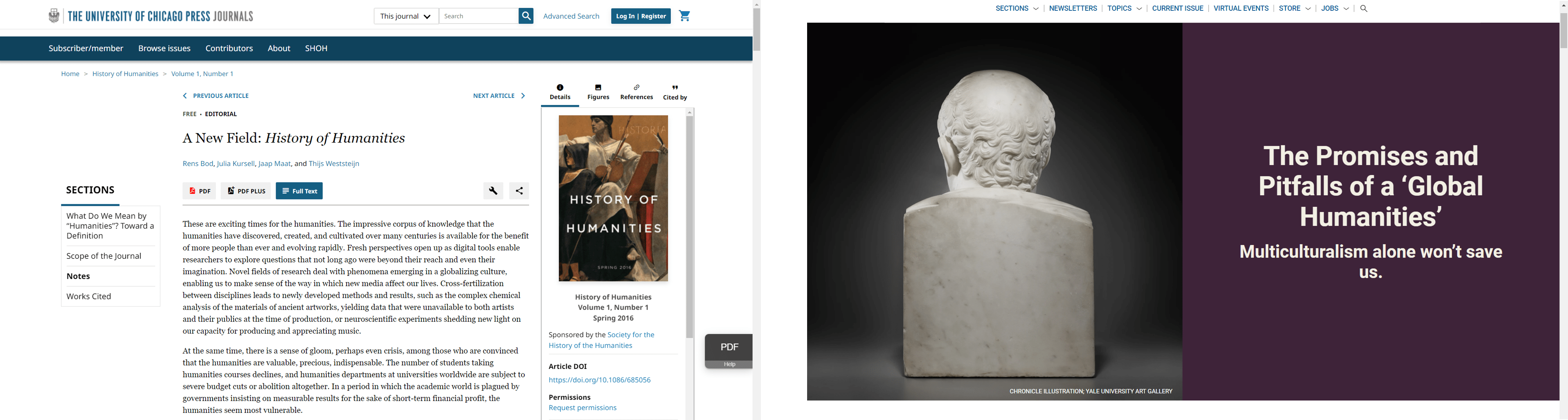
Featured Image: Two Humanities Website for Learning


Neville Buch
Latest posts by Neville Buch (see all)
- The Architecture of Intellectual Renewal: A Comprehensive Analysis of the 131 Influencers on Dr. Neville Buch’s Work – September 15, 2026
- Today’s Institutional Employment Practices: The Academic Blockade and a MICE Proposal Submitted – September 14, 2026
- The Idiocy of Managerialism – September 13, 2026