
The “Reclaiming Human Authorship on Australian Highways” audio commentary on MICE’s Contributory Economy and Human Authorship at: https://drnevillebuch.com/2016-future-public-cognition/audio-commentary-discussion-no-debate-a-conversation-on-5th-australian-east-coast-trip-powerpoint-story-of-resilience-presentation-5th-australian-east-coast-trip-brisbane-to-geelong-and-back-vi/
Abstract
This paper completes the Lebensphilosophie quadrupart synthesis by establishing a comprehensive spatial epistemology and environmental phenomenology capable of uncoiling human cognition from the “techné mindset” and obsessive-logistic formalisms[1]. It addresses the fundamental ontological divide between biological reflexivity and noetic emergence, demonstrating that while animal dispositions react to immediate physical constraint, human freedom operates as an emergent property of self-reflexive consciousness, mediated by linguistic concepts, historical memory, and symbolic tools[4]. Diagnosing the core pathology of modern administrative governance, the paper shows how obsessive-logistic thinking reduces living subjects and complex ecosystems to isolatable, calculable data points[1]. In contrast, grounding knowledge in relational ontology asserts that understanding lifeforms in their mutual interdependence is the primary key to overcoming technological denoetization, decision fatigue, and systemic alienation[1].
At its phenomenological core, the paper articulates the transformative mechanism of “Thinking in Place” and the conscious activation of **”Landscapes of Memory”**[10]. Moving from a passive habitus of unreflective spatial consumption (“the tourist attitude”) to an active awareness of geographical topography transforms the physical environment from a neutral backdrop into a habit of reflective self-criticism[5]. Drawing on Maurice Merleau-Ponty’s thesis that “perception is not representation”, knowledge is shown to be an authentic, pre-reflective engagement of the lived body with the world, where truth is realized in rebus (in the physical place itself)[4]. Traversing regional topographies—such as the coastal reaches, volcanic ranges, and historical corridors of eastern Australia—serves as a catalyst for “philosophic transit,” allowing the “thinking traveler” to escape institutional “bubble thinking” and engage in sustained, high-speed conceptual analysis[13].
Furthermore, the paper provides an existential reckoning with the affective dimension of spatial memory, demonstrating that “Landscapes of Memory” are most potent when evoking the haunting presence of lost loved ones and generational family gatherings[13]. Far from inducing melancholic paralysis, confronting personal grief and historical tragedy in rebus functions as a memento mori and an indispensable site of existential catharsis[13]. Re-living tragedy through spatialized memory purges unexamined superficialities, allowing the thinker to “think so as to feel life intensely” and convert private sorrow into public civilizational wisdom[13]. Within the Dynamic of Cognition (DoC) matrix, this cathartic reckoning uncoils the mind from “historical forgetfulness,” restoring human authorship over personal and collective narratives[25].
Finally, the Management Institute for Contributory Economy (MICE) operationalizes this spatial attunement through panser (thinking as caring) and Spiral Historiography[28]. By linking local geographical memory with “thick ethical concepts” (such as integrity, courage, and substantial fairness), MICE provides a procedural shield that protects the human person from being flattened into computational or market inputs[6]. By replacing thin, quantitative audit metrics with communicative action (Verständigung) and relational solidarity, the “thinking traveler” bridges local topographies with a universal horizon, advancing Aristotelian flourishing (eudaimonia) and achieving Planetary Wisdom within a renewed democratic public sphere[33].

Image: 2026-10-21 (31) The Road to Surf Coast
Road trips are good for clearing the mind and find the critical-creative thoughts. If we are aware, we become attuned to the environment. That open learning creates a stronger internal cognition.
In philosophical anthropology, environmental phenomenology, and cognitive sociology, this statement articulates the transformative mechanism by which physical transit (“philosophic transit”) uncoils the mind from mechanized routines and bureaucratic isolation[1]. Far from being a passive commute, the road trip serves as a “cathartic-therapeutic-life accounting experience”[3]. In the solitude of the open road, the suspension of daily administrative friction allows for “sustained thought drifting at high speeds,” creating the cognitive space required to wrestle with complex philosophical puzzles and where the thinker “thinks so as to feel life intensely” [220–221, 298, 303, 317].
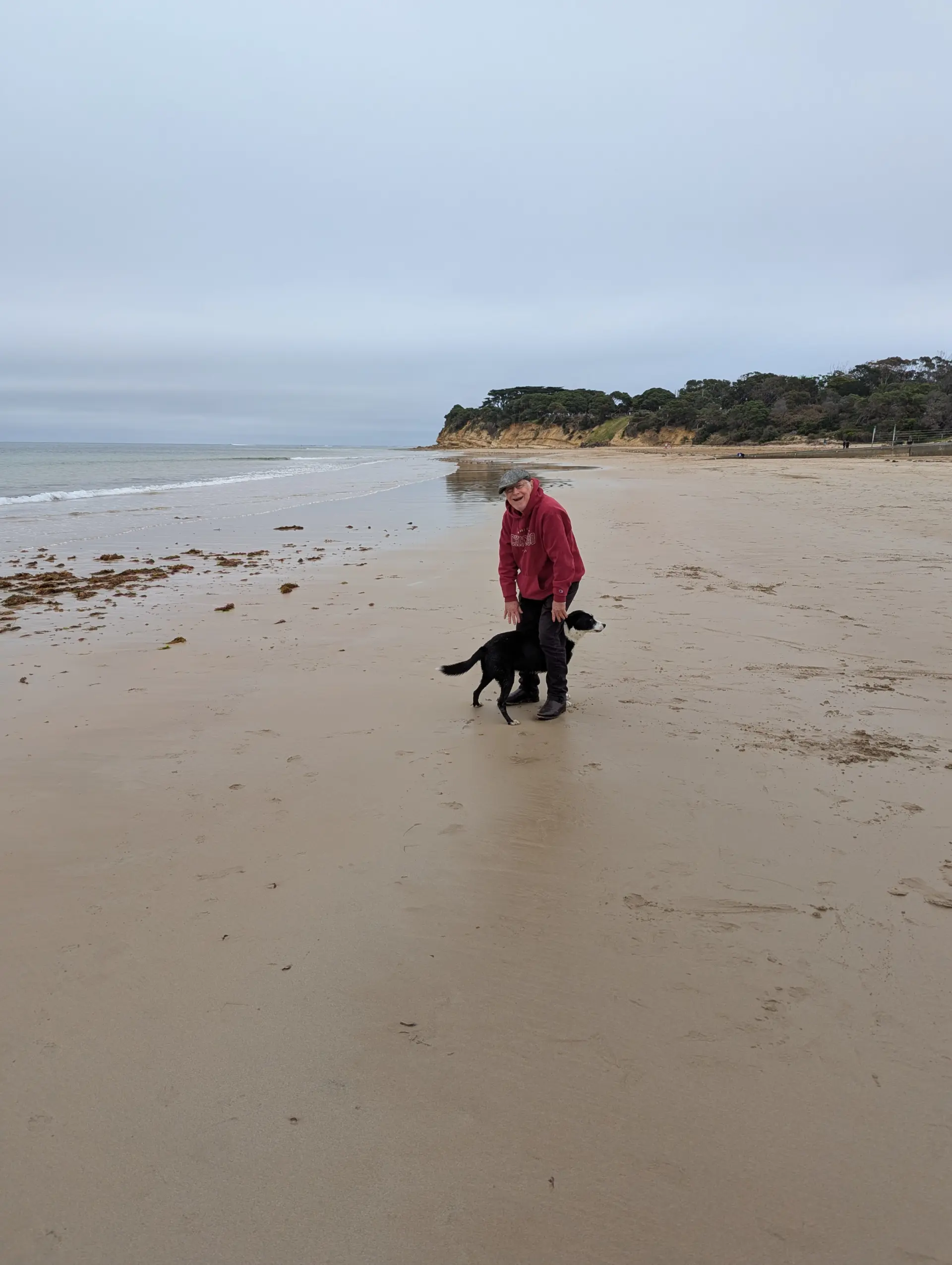
Image: 2026-10-21 (34) Torquay Beach, Neville, Hugo
The concept of becoming “attuned to the environment” aligns with Maurice Merleau-Ponty’s foundational thesis that “perception is not representation”[1][6]. Rather than processing the world through abstract data maps or formalist categories (what Jerome Bruner terms the logico-scientific mode) [201–204], attunement represents an authentic, pre-reflective engagement of the lived body with its physical environment [29–30, 38]. Drawing on Tim Ingold’s environment-coupling and the First Nations topological perspective (“I am located, therefore I am”), truth is realized in rebus—in the physical place itself [15, 38, 42–43]. By reading the changing landscape (such as mountain passes, coastal routes, and historical towns) as an active text, the “thinking traveller” integrates geography with historical memory, transforming spatial movement into a catalyst for critical self-reflection[7].
Within Dr. Neville Buch’s Dynamic of Cognition (DoC) framework, “open learning” represents a deliberate departure from Paulo Freire’s “banking system” of education, where minds are treated as passive receptacles for standardized information[1]. Open learning engages the “craftsmanship of the reflexive insider,” allowing the individual to bridge personal biography with broader historical processes[12][13]. This attunement cultivates a “stronger internal cognition” through Spiral Historiography, enabling the “Mind’s Eye” to reach backward and forward across time to correct unexamined prejudices and “potted thinking” [36, 58, 160–164].
Ultimately, this internal cognitive strengthening culminates in Sufficient Comprehension and Human Authorship [342–344]. By stepping outside institutional “bubbles” and attuning to the broader lifeworld, the thinker transcends narrow, metric-driven compliance (techné mindset)[14]. The subject emerges as an evaluating, willing “historical person”—context-embedded but not context-determined—who exercises intellectual sovereignty and panser (thinking as caring) to safeguard human agency and public reason[17].
The key is understanding the Lebensphilosophie, and the capacity to be able to hold the Lebensphilosophie and Intellectual academic thinking together. There are MICE tools which does that.
In philosophical anthropology, hermeneutic phenomenology, and cognitive sociology, the imperative to hold Lebensphilosophie (lived experience, or Erlebnis) together with intellectual academic thinking addresses the primary failure of modern technocratic rationalism [13–14, 152–153]. In classical academic isolation, formal scholarship frequently succumbs to what Dr. Neville Buch designates as “wooden epistemology” or “specialized ignorance”—a state where analytical categories become detached from the lived body’s authentic engagement with the world[1]. Conversely, unmediated Lebensphilosophie risks collapsing into unexamined prejudice or subjective fragmentation if it lacks the conceptual rigor and fallibilist testing of critical inquiry[1]. The capacity to unite these two domains produces what C. Wright Mills terms the “craftsmanship of the reflexive insider,” wherein the scholar utilizes their personal biography and lived historical situatedness as an empirical lens to interpret broader structural processes[6]. By holding subjective vitality and academic discipline in tension, the thinker resists both the “banking model” of standardized education and the “altar of autocomplete,” reclaiming their status as an evaluating, willing **”historical person”**[9].
The Management Institute for Contributory Economy (MICE) operationalizes this integration through a suite of metacognitive tools and diagnostic frameworks designed to maintain this dual orientation [15–21, 157, 162]:
- Spiral Historiography: This non-linear methodology enables the “Mind’s Eye” to uncoil through space-time, connecting personal lived memories (Lebensphilosophie) with historical archives and formal academic schemas [15, 96–98, 152]. It retrieves “thick ethical concepts” (such as integrity, courage, and substantial fairness) to correct widely believed institutional myths and “historical forgetfulness”[12].
- The POLICE Diagnostic Filter: Comprising five analytical stages (Philosophically Ontology, Logic, Intersect, Compatibility, Education), the POLICE model acts as an “intellectual immune system”[15]. It rigorously tests whether abstract academic theories correspond to actual lived states of affairs (Ontology), integrate cross-disciplinary datasets without disciplinary imperialism (Intersect), and translate into socially accountable public pedagogy (Education) [20–21].
- Panser (Thinking as Caring) and the Dynamic of Cognition (DoC): Derived from Nel Noddings’s ethics of care and Bernard Stiegler’s organology, panser operates as a procedural shield that protects the human person from being flattened into computational or market inputs [6, 17, 123, 149, 154–155]. Within the DoC matrix, it guides the mind from unreflective prejudice through reflective self-criticism toward Sufficient Comprehension and Habermasian Lifeworld communicative action [40, 83–85, 161].
Ultimately, deploying MICE tools to bind Lebensphilosophie and academic intellect together is essential for preserving Human Authorship in an era dominated by hyper-industrial automation and algorithmic formalization [28–29, 50, 157]. When institutions separate academic thinking from the lived human lifeworld, knowledge is reduced to machine-optimized tokens, generating “symbolic misery” and widespread social alienation[18]. By deploying MICE tools, independent thinkers and scholarly communities build open “we-spaces” where academic validity claims are grounded in mutual understanding (Verständigung) and Aristotelian flourishing (eudaimonia) [18, 122, 159–160]. Holding life and intellect together ensures that academic inquiry remains an instrument of democratic wisdom, moral agency, and planetary hope [33, 103–104].

Image: 2026-10-21 (32) Torquay Beach, View Towards Barwon Heads
There remains one significant problem for the Lebensphilosophie approach: the market fundamentalists who often control the institutional decision-making are hell-bent on keeping those of the Lebensphilosophie in poverty. These decision-makers are stuck in outdated and impotent economic theories. In political economy, cognitive sociology, and the philosophy of higher education, this statement diagnoses the structural mechanism through which neoliberal market fundamentalism systematically marginalizes independent humanists, non-conforming scholars, and practitioners of Lebensphilosophie [26–28, 44–46]. Institutional decision-makers operating under orthodox public choice theory and neoclassical formalism view intellectual activity through a narrow, price-centric lens [27, 35–38]. Within this paradigm—exemplified by Bevin Luchel’s critique of independent scholarship—it is dogmatically asserted that if a research project, philosophical synthesis, or cultural inquiry cannot achieve immediate commercial monetization or self-sustaining market clearance, its production represents an inefficient misallocation of scarce capital [26–28, 38–40]. By treating consumer market demand as the sole arbiter of cognitive worth, corporate managerialism conflates short-term transactional price with long-term civilizational value, dismissing the lived human lifeworld as an unpriced luxury [28, 38–40, 85].

Image: 2026-10-21 (33) Torquay Beach, View of Point Danger (Vic)
Mechanistically, enforcing financial precarity upon independent thinkers relies on what Dr. Neville Buch identifies as Jameel’s Economic Law of Responsibility Burden [4–6]. As state agencies and corporate universities step back from funding permanent public infrastructure and core humanistic research, unpriced operational, cognitive, and financial liabilities are shifted directly downward onto individual researchers and care-workers [4–6, 16, 27–28]. Forced to trade their highest creative bandwidth for daily economic survival, independent scholars suffer what Bernard Stiegler terms denoetization—the mechanical liquidation of contemplative memory, deep reading, and judgment induced by chronic decision fatigue and institutional neglect[1][2]. In Habermasian terms, this reflects the pathological colonization of the Lifeworld by the systemic logics of money and power, where administrative gatekeepers deploy “outdated and impotent economic theories” to reduce the scholar from an autonomous creator into a compliant, unpaid system operator [28, 69–71].
To break this cycle of artificial pauperization, Dr. Neville Buch’s Management Institute for Contributory Economy (MICE) framework decouples human cognitive value from extractive wage-labour markets [28, 46–47]. Invoking Susan Haack’s epistemological foundherentism, MICE demonstrates that the explanatory power, historical coherence, and truthfulness of an idea exist entirely independent of whether a commercial market currently purchases it [37–39]. Through “professional contractualism” and the Contributory Income Scheme, MICE proposes underwriting public cognitive scaffolding—treating independent humanists and regional historians like public health officers or civil engineers whose work safeguards the democratic sphere from demagoguery and cultural amnesia [27, 47–49]. Replacing market-driven exploitation with Aristotelian flourishing (eudaimonia) and substantial fairness ensures that the evaluating, willing “historical person” reclaims Human Authorship over automated, marketized systems [20, 27, 50–54, 77].
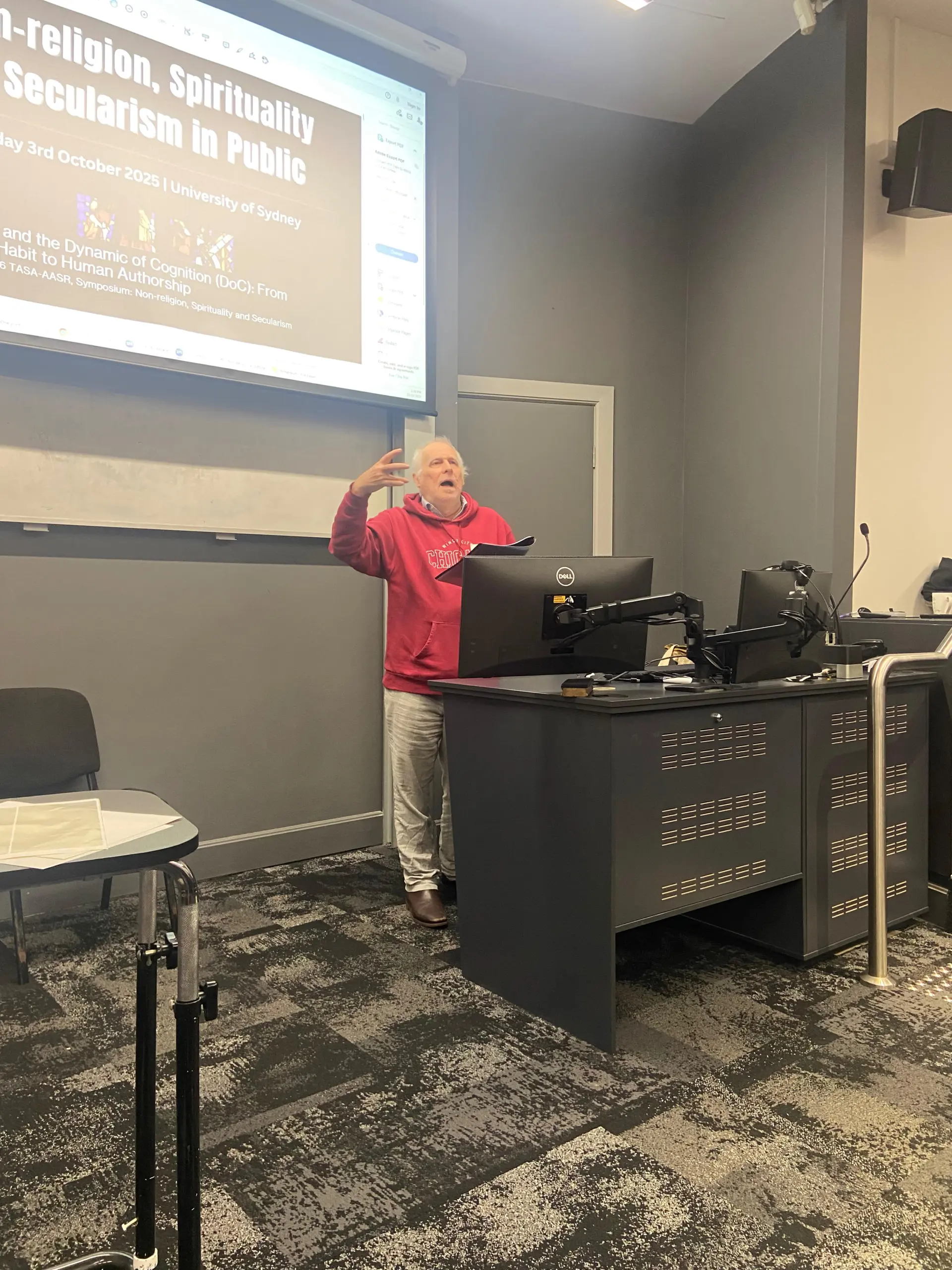
Featured Image: Neville performing his TASA-ASSR Presentation (3), Friday 23 October 2026
Here is a comprehensive, structured bibliography for The Story of Resilience series (documenting Dr. Neville Buch’s 5th Australian East Coast Trip and the accompanying intellectual synthesis) grounded in the source records[1].
1. Series Context & Overview
The Story of Resilience series details Dr. Neville Buch’s travel from Brisbane through regional New South Wales to Geelong and Melbourne, returning via Sydney[1][3]. The series synthesizes the physical trials of the journey (roadside breakdowns, financial strain, and community kindness) with deep historical research, featuring an extended collaborative research residency with leading Australian Islamic historian Dr. Dzavid Haveric in Geelong and a presentation on the Dynamic of Cognition (DoC) at the University of Sydney[1].
2. Primary Works by Dr. Neville Buch & MICE Publications
The core theoretical, methodological, and diagnostic foundation of the series is established across Dr. Buch’s publications for the Management Institute for Contributory Economy (MICE) [16–17, 130–131, 159, 203–204, 279–280]:
- Buch, N. (2015). Process of Learning (Principles) & The Dynamic of Cognition. Brisbane: Dr Neville Buch Publications[4].
- Buch, N. (2024). The Spiral History Theory of Stupidity: Getting Stuck in Time-Space, and Personal Breakout of Historical Cognition Patterns. Brisbane: Management Institute for Contributory Economy[5][6].
- Buch, N. (2025). MICE Principles and Philosophy (First Development). Working Paper. Brisbane: Management Institute for Contributory Economy[5].
- Buch, N. (2026a). MICE: Limited Thinking and the Contributory Economy (Book 1 of MICE). Brisbane: Management Institute for Contributory Economy[5].
- Buch, N. (2026b). Dr Buch in Intellectual Community: Reclaiming Authorship in the City of Intellect. Brisbane: Management Institute for Contributory Economy[5][8].
- Buch, N. (2026c). Understanding History is Philosophy in Practice: A Cognition History of Queensland. Brisbane: Management Institute for Contributory Economy[5][8].
- Buch, N. (2026d). Academic Rigour, Epistemic Renewal, and the Crisis of Inquiry: A Scholarly Review of the Vanderbilt Commission Report on the State of Scholarship. Brisbane: Management Institute for Contributory Economy[9].
- Buch, N. (2026e). Spiral Historiography and the Pedagogy of Consciousness in Australia. Academic Synthesis[10].
- Buch, N. (2026f). The Idea of Religion Today. Brisbane: Management Institute for Contributory Economy[10].
- Buch, N. (2026g). Thinking Religion in Place: Religion Is Not What It Was. Brisbane: Management Institute for Contributory Economy[10].
- Buch, N., & Peach, N. (2024). Philosophically Ontology Logic Intersect Compatibility Education (POLICE). Brisbane: Management Institute for Contributory Economy[7].
- Buch, N., Macklin, M., & Peach, N. (2026). MICE Intellectual Handbook: Limited Thinking and the Contributory Economy. Brisbane: Management Institute for Contributory Economy[8].
3. Foundational Theoretical, Epistemological & Sociological Literature
The series draws on key works in phenomenology, cognitive sociology, critical theory, and educational philosophy to articulate the Dynamic of Cognition, panser (thinking as caring), and the critique of neoliberal formalisms [16–18, 44–47, 106–110, 132, 185–186, 281–286]:
- Arendt, H. (1977). The Life of the Mind (M. McCarthy, Ed.). New York: Harcourt Brace Jovanovich[13].
- Aristotle. (c. 350 BC). Nicomachean Ethics (W. D. Ross, Trans.). Oxford: Clarendon Press[6].
- Cavanaugh, W. (2008). Being Consumed: Economics and Christian Desire. Grand Rapids: William B. Eerdmans Publishing[11].
- Coase, R. H. (1960). The Problem of Social Cost. Journal of Law and Economics, 3(1), 1–44[11].
- Collins, R. (1998). The Sociology of Philosophies: A Global Theory of Intellectual Change. Cambridge, MA: Belknap Press of Harvard University Press[14].
- Collins, R. (2019). The Credential Society: An Historical Sociology of Education and Stratification. New York: Columbia University Press[11][14].
- Cupitt, D. (2008). The Meaning of the West: An Apologia for Secular Christianity. London: SCM Press[14].
- Dweck, C. S. (2006). Mindset: The New Psychology of Success. New York: Random House[9].
- Ellul, J. (1973). Propaganda: The Formation of Men’s Attitudes. New York: Vintage Books / Octagon Books [223–224].
- Gadamer, H.-G. (1989). Truth and Method (2nd rev. edn.). New York: Crossroad[9].
- Haack, S. (1993). Evidence and Inquiry: Towards Reconstruction in Epistemology. Oxford: Blackwell [204–205].
- Habermas, J. (1979). Communication and the Evolution of Society (T. McCarthy, Trans.). Boston: Beacon Press[15].
- Habermas, J. (1984). The Theory of Communicative Action. Boston: Beacon Press[16].
- Habermas, J. (1991). Knowledge and Human Interests. Cambridge: Polity Press[14][16].
- Hofstadter, R. (1963). Anti-Intellectualism in American Life. New York: Random House USA Inc. [214–215].
- Illich, I. (1971). Deschooling Society. London: Calder & Boyars[17].
- Illich, I. (1973). Tools for Conviviality. New York: Harper & Row[17].
- Ingold, T. (2011). Being Alive: Essays on Movement, Knowledge and Description. London: Routledge[16].
- Macklin, M. (1967). Analogy, Analysis and God (Philosophical Thesis). Brisbane: University of Queensland[18].
- Macklin, M. (1976). When Schools Are Gone: A Projection of the Thought of Ivan Illich. Brisbane: University of Queensland Press[18].
- McKinney, J. P. (1971). The Structure of Modern Thought. London: Chatto & Windus[19].
- Merleau-Ponty, M. (1945/1962). Phenomenology of Perception (C. Smith, Trans.). London: Routledge & Kegan Paul [50, 210–211].
- Mills, C. W. (1959). The Sociological Imagination. New York: Oxford University Press[17][20].
- Noddings, N. (1984). Caring: A Feminine Approach to Ethics and Moral Education. Berkeley: University of California Press[19][21].
- Postman, N., & Weingartner, C. (1969). Teaching as a Subversive Activity. New York: Delacorte Press[22].
- Stiegler, B. (1998). Technics and Time, 1: The Fault of Epimetheus. Stanford: Stanford University Press [206–207, 228, 282].
- Stiegler, B. (2014). Symbolic Misery, Vol. 1: The Hyper-Industrial Epoch. Cambridge: Polity Press [207, 228–229, 282].
- Stiegler, B. (2018). Qu’appelle-t-on panser?: 1. L’immense régression. Paris: Les Liens qui Libèrent[21].
- Williams, B. (1985). Ethics and the Limits of Philosophy. Cambridge, MA: Harvard University Press[23].
4. Historical & Collaborative Research Literature
Literature documenting Australian history, Islamic historical encounters, regional geography, and social development synthesized during the Geelong research residency and road trip [1, 132, 315–318]:
- Haveric, D. (2006). Australia in Muslim Discovery: Historical Rediscovering of Australia by Non-Muslims and Muslims. Geelong: Deakin University Print Services[15].
- Haveric, D. (2012). History of the Muslim Discovery of the World: Islamic Civilisation Within the Plurality of Civilisations. Geelong: Deakin University Print Services[15].
- Haveric, D. (2016). History of the Bosnian Muslim Community in Australia: Settlement Experience in Victoria. Saarbrücken: Lambert Academic Publishing [315–316].
- Haveric, D. (2017). Muslim Memories in Victoria: Building Communities and Interfaith Relations from the 1950s to the 1980s. Australian Journal of Islamic Studies, 2(3), 134–162[24].
- Haveric, D. (2018). ANZAC Muslims: An Untold Story. Australian Journal of Islamic Studies, 3(3), 78–102[24].
- Haveric, D. (2023). A History of Muslims in the Australian Military: Loyalty, Patriotism, Contribution from 1885 to 1945. London: Cambridge Scholars Publishing[25].
- Haveric, D. (2026a). Macassan Muslims and Aboriginal Australians: Cultural and Spiritual Encounters. Religions, 17(2), 1–18[25].
- Haveric, D. (2026b). Reconsidering Possible Macassan Prayer Structures in Northern Australia: Port Essington and Raffles Bay. Australian Journal of Islamic Studies, 11(1), 45–68 [132, 317–318].


Neville Buch
Latest posts by Neville Buch (see all)
- The Road to Home. A Re-Narrativization of The Story of Resilience Part 7 – October 26, 2026
- The Road to Home. A Re-Narrativization of The Story of Resilience Part 6 – October 26, 2026
- The Road to Home. A Re-Narrativization of The Story of Resilience Part 5 – October 26, 2026