
Dr Neville Buch
Thinking Religion in Place
Thinking Religion in Place: A Critique of the “Post-Religious” Lament
Abstract
The colloquial observation that “religion is not what it was” often masks a deeper cognitive tension between Historical Forgetfulness and the requirement for a topological understanding of existence. While populist discourse frequently mourns the decline of institutional “Christendom” or celebrates a move into “secularism,” Dr. Neville Buch’s Matrix of Sociology and the Spiral Historiographical Thesis suggest that religion is not vanishing but being re-situated. Drawing on the “spatial turn” in the Academic Study of Religion and the philosophical topology of Jeff Malpas, this essay argues that “Thinking Religion in Place” requires a movement away from simplistic literalism—treating religion as a set of static, unmoored dogmas—toward a recognition of the historical contingency of our social worlds. By integrating the insights of Bernard Williams, Don Cupitt, and Bernard Lonergan, the analysis demonstrates that a “post-religious” identity is not a rejection of the sacred but a humanistic ascent toward Human Authorship, where the “who” (the human person) remains the proactive operator of the “what” (social and technical systems).
https://www.academia.edu/165975120/Religion_is_not_what_it_was
Attached: Thinking Religion in Place. Religion is not what it was
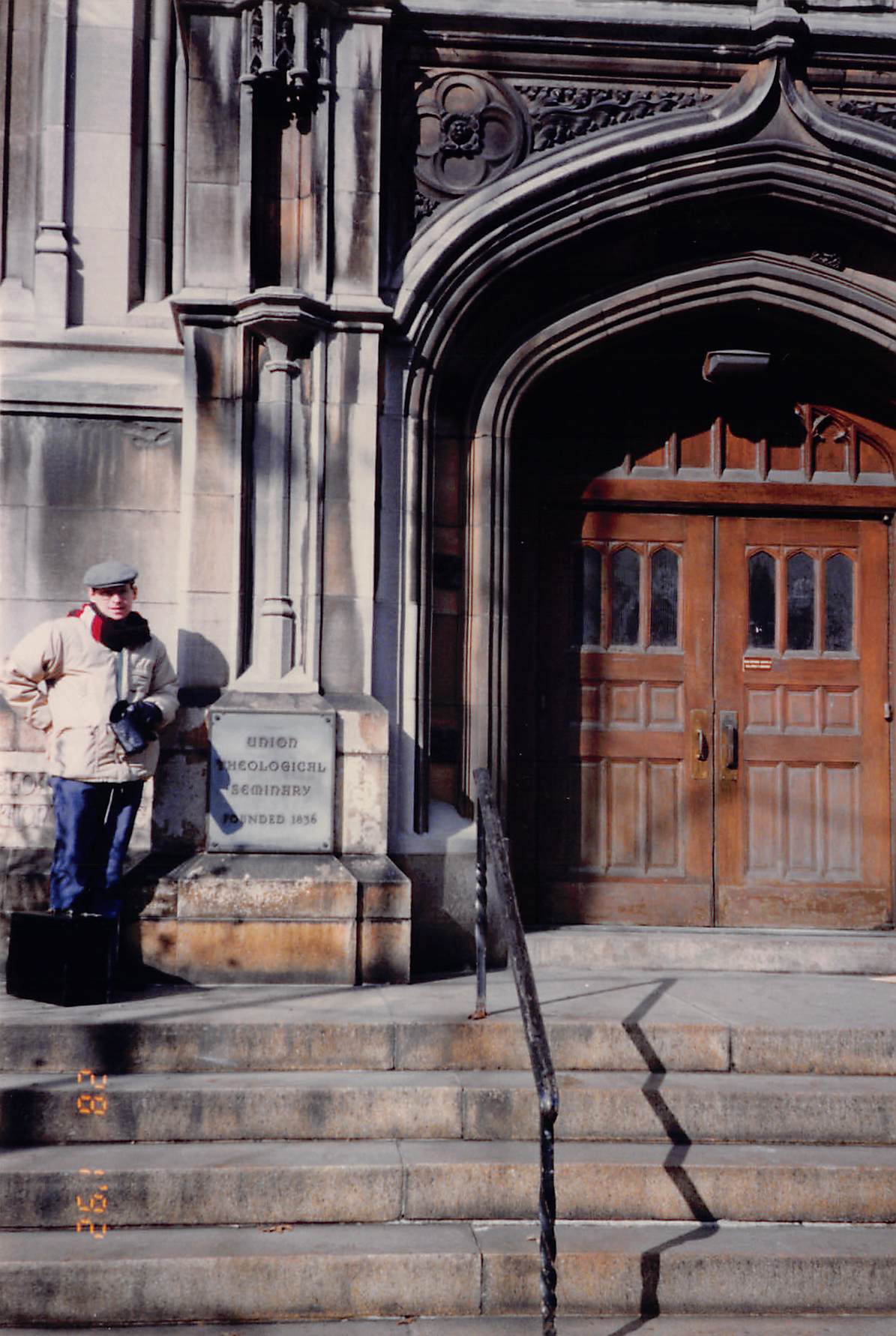
Featured Image: Neville at Union Theological Seminary, New York City, New York State, the United States of America, on 28 January 1992.


Neville Buch
Latest posts by Neville Buch (see all)
- Part 3:The Failure of an Educational Institution and How to Spiral Forward – October 10, 2026
- Part 2:The Failure of an Educational Institution and How to Spiral Forward – October 10, 2026
- Part 1:The Failure of an Educational Institution and How to Spiral Forward – October 10, 2026