
Dr Neville Buch
Abstract
This essay presents a Dynamic of Cognition (DoC) analysis of the unison in Canadian and Australian political thinking, as evidenced in the 2026 Hansard record of the Australian Parliament’s welcome to the Rt Hon. Mark Carney, Prime Minister of Canada. By applying the DoC framework—centring on the transition from unreflective habits to communicative action and human authorship—the analysis demonstrates that the relationship between these two “strategic cousins” transcends geographic distance through a shared reflective ascent. This ascent is grounded in a mutual British inheritance, a commitment to “unity without uniformity,” and the recognition of the historical contingency of their democratic identities. The essay concludes that the unison in their thinking represents a move toward comprehensive empathy and holistic flourishing, utilizing their rare “convening power” as middle powers to re-author a global future defined by values rather than mere technical utility.
——————————————————————————–
https://www.academia.edu/164997692/Strategic_Cousins_The_Cognition_of_Australian_and_Canadian_Political_Unison
PDF File: Strategic Cousins. The Cognition of Australian and Canadian Political Unison
Strategic Cousins: A DoC Analysis of the Australian-Canadian Unison
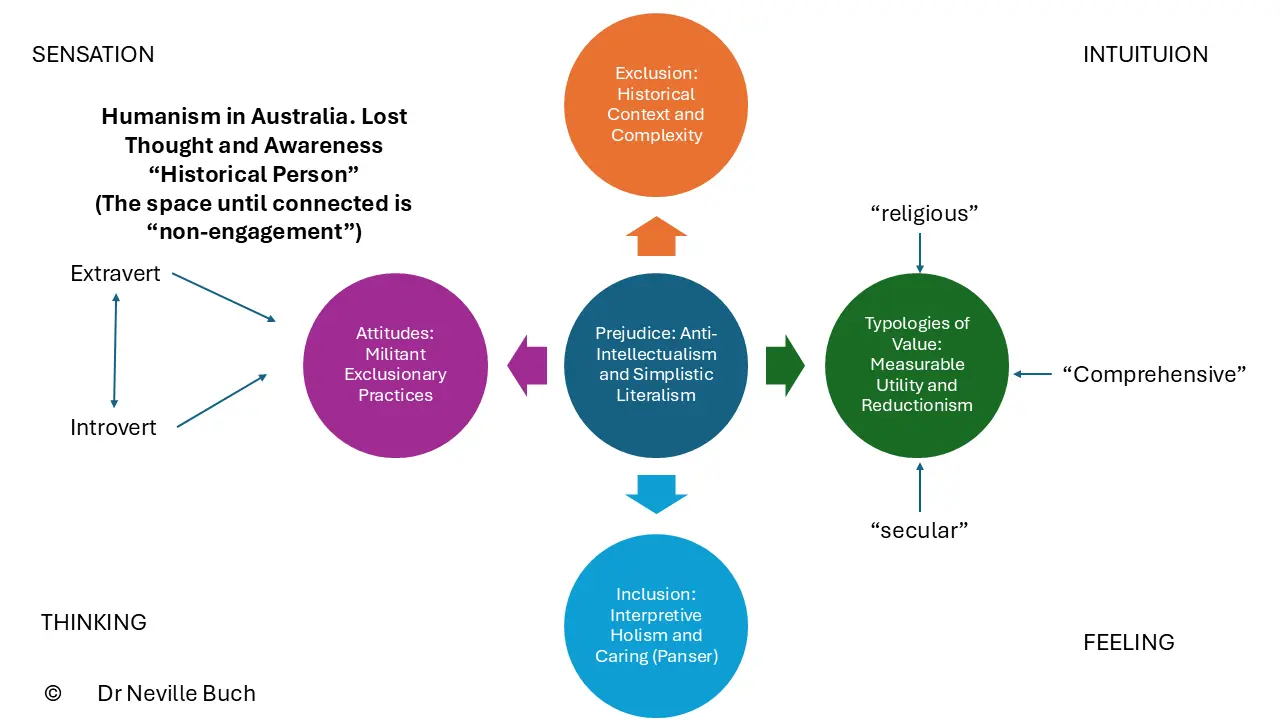
The addresses delivered in the Australian Parliament on March 5, 2026, reveal a profound intellectual and ethical symmetry between Australia and Canada. Prime Minister Anthony Albanese, Opposition Leader Angus Taylor, and Canadian Prime Minister Mark Carney all converge on the notion that while their nations are physically disparate, they possess a singular “orientation” rooted in shared values and a common Commonwealth heritage. This unison can be systematically understood through the Dynamic of Cognition (DoC), a model that maps the movement from stagnant prejudice toward intersubjective mutuality.
Reforming Prejudice: The Common Inheritance
The starting point for this cognitive unison—the Prejudice (Centre) of the DoC—is identified by Angus Taylor as the “gift of British inheritance”. This is not a static dogma but a “pragmatic, enlightened and accommodating” stewardship that nurtured self-identity. Mark Carney deepens this by arguing that their unity is not built on geographic design but on a century of choices. Both nations have “made the Westminster system their own,” moving from a simplistic literalism of inherited law to a reflective self-criticism that makes the system fairer and stronger.
Attitudes and Communicative Action
The Attitudes displayed in the chamber represent a shift from the mechanical techné mindset of “nasty politics” to Communicative Action—dialogue aimed at mutual understanding. Prime Minister Albanese emphasizes that the “distance between our two nations has never mattered less and the closeness of our values has never mattered more”. This represents what Habermas describes as an “unconstrained consensus” where “unforced agreement” is reached through the medium of shared symbolic interaction. The personal bond between Taylor and Carney, formed at Oxford in 1991, serves as a micro-situational example of this communicative rationality.
Values: From Utility to Holistic Flourishing
The speeches reject a worldview defined solely by measurable utility or “political profit”. While Carney notes their practical collaboration in critical minerals (lithium, uranium, iron ore) as the world’s mining giants, he grounds this in a commitment to sustainability and extractive ecosystems. This aligns with the DoC goal of Holistic Flourishing, where people are regarded not as “puny nodes” in an economic network but as citizens in a politics of communal deliberation.
Inclusion and Spiral Historiography
The most significant component of this unison is the practice of Spiral Historiography—reading the past inclusively to re-author the future. Both leaders invoke a politics of memory that filters out “Historical Forgetfulness”. They remember the 1839 French Canadian rebels in New South Wales, the 1854 raising of the Southern Cross by Canadian Henry Ross at Eureka, and the shared sacrifices from Flanders to Kandahar. By acknowledging these historical contingencies, they “unhook” their national identities from restrictive narratives to participate in a shared “variable geometry”—a proactive shaping of the post-war order with optimism and purpose.
——————————————————————————–
CENTRALISM
The source “Strategic Cousins: The Cognition of Australian and Canadian Political Unison” argues that the relationship between Australia and Canada is a “reflective ascent” toward intersubjective mutuality, characterizing a form of Centrist Politics that coalesces a “firmed-up Labour left” with “centrist liberals”. This unison is not merely a product of geographic design but a century of choices and shared values that transcend physical distance.
The Argument: Unison as Centrist Politics
The source posits that the unison in Canadian and Australian thinking represents a move away from unreflective, tribal habits toward comprehensive empathy and human flourishing. This “Centrist” framework is defined by several key intellectual movements:
- Coalescing of Ideologies: The argument suggests that from the retrospect of the mid-2020s, the political differences between traditional liberal and labor streams matter less than their shared opposition to “American-designed commercialism” and “populist-progressive” challenges. This results in a “liberal humanism” that remains critical of the radical Left while supporting substantive social reforms.
- Communicative Action: The unison is grounded in what Jürgen Habermas describes as an “unconstrained consensus”. It moves the political discourse from a “mechanical techné mindset” of managed competition toward a politics of communal deliberation where trust allows middle powers to proactively shape outcomes.
- Values over Utility: This centrist unison rejects a worldview defined by “measurable utility” or “political profit”. Instead, it prioritizes holistic flourishing, viewing citizens not as “puny nodes” in an economic network but as participants in a shared democratic project.
Explaining Centralism through the Canadian-Australian Example
In the context of this unison, Centralism refers to a political approach that prioritizes a unified national purpose and a centralist form of federation to achieve social progress, while maintaining “unity without uniformity”.
The example of Canadian-Australian unison illustrates Centralism through the following dimensions:
Unity without Uniformity
Centralism in this model does not demand a single, rigid national identity. Instead, it recognizes that “differences, honestly acknowledged… are a source of strength”. Both nations have successfully woven together Indigenous, colonial, and migrant threads into a cohesive, yet pluralistic, national fabric.
The British Inheritance as Pragmatic Stewardship
The unison is anchored in the “gift of British inheritance”—a system described as pragmatic, enlightened, and accommodating. This centralized legal and constitutional framework (the Westminster system) was not merely adopted but transformed to be made “fairer, stronger and our own” through reflective self-criticism.
Strategic “Convening Power”
Centralism allows these “strategic cousins” to act as convenors rather than hegemons. Because they are trusted and act on shared convictions rather than mutual convenience, they can form effective coalitions (described as “variable geometry”) to address global challenges like climate change, defence technology, and sustainable resource management.
Overcoming Historical Forgetfulness
Centralism is maintained through a politics of memory—practicing Spiral Historiography to read the past inclusively. By remembering shared sacrifices and historical contingencies (such as the Eureka Stockade or the transport of French-Canadian rebels), they “unhook” their national identities from restrictive tribal narratives to re-author a global future defined by purpose.
——————————————————————————–
Dynamic of Cognition (DoC) Table: Australian-Canadian Centrist Unison
| DoC Component | Regression (Tribal/Binary Politics) | Centrist Ascent (Strategic Unison) | Evidence in Unison Example |
| Prejudice (Centre) | Geographic Isolation: Distance as a barrier. | Reflective Self-Criticism: Recognizing distance makes connection more meaningful. | “Closeness of our values has never mattered more”. |
| Attitudes (Thinking) | Mechanical Techné: Managing order as a static, rules-based system. | Communicative Action: Middle powers as “convenors” of trust. | Nations that are trusted will “be proactive in shaping outcomes”. |
| Typologies of Value | Measurable Utility: Resources as mere economic commodities. | Holistic Flourishing: Linking industry to “sustainability” and ethics. | Building a society “worthy of the service and sacrifice”. |
| Exclusion (Sensation) | Historical Forgetfulness: Ignoring shared roots and wartime bonds. | Crap Detecting: Filtering out “grey powers’” narratives. | “We’ve written it ourselves through a century of choices”. |
| Inclusion (Intuition) | Uniformity: Demanding a rigid, single identity. | Spiral Historiography: Unity that does not require uniformity. | “Differences, honestly acknowledged… are a source of strength”. |
——————————————————————————–
In the context of Canadian-Australian political unison, “crap detecting” refers to the cognitive process of systematically filtering out “institutional bullshit,” manufactured myths, and the pollutants of speech that hinder mutual understanding. Within the Dynamic of Cognition (DoC) framework, it serves as the essential Exclusion (Sensation) mechanism that allows these “strategic cousins” to reject the narratives imposed by “grey powers” (hegemons) and instead re-author their own shared future.
The role of crap detecting in this unison is characterized by the following functions:
- Filtering Hegemonic Narratives
Crap detecting allows middle powers like Canada and Australia to identify and exclude the “mechanical techné mindset” of hegemonic powers that treats international relations as a static, rules-based system driven by compulsion. By detecting and rejecting these external “stencilled” soundbites, both nations can exercise their “rare convening power” to form coalitions based on trust and shared convictions rather than mere “mutual convenience”.
- Overcoming “Historical Forgetfulness”
The practice is vital for unmasking “Historical Forgetfulness”—the state where societies systematically banish the social and historical context of their shared roots. Crap detecting filters out narratives that ignore historical contingencies, such as the shared legacy of the 1839 French Canadian rebels in Australia or the 1854 Eureka Stockade, where Canadian Henry Ross raised the Southern Cross. This allows both nations to “unhook” their national identities from restrictive or sanitized versions of the past.
- Enabling “Variable Geometry”
By filtering out the “bullshit” of rigid, binary political frameworks (such as the ‘foreign’ versus ‘native’ binary), crap detecting facilitates “variable geometry”. This is a flexible approach to engaging the world where coalitions are formed based on specific values and interests rather than totalizing ideologies. As Canadian Prime Minister Mark Carney noted, this unison is the product of a “century of choices” rather than geographic design, a realization that requires the continuous detection and rejection of deterministic myths.
- Grounding Communicative Action
Crap detecting ensures that the “closeness of our values” remains grounded in truthfulness and sincerity. It serves as a “steel helmet” against “potted thinking” and sociological propaganda, enabling communicative action—dialogue aimed at mutual understanding rather than institutional domination. This process restores human authorship, ensuring that citizens are not viewed as “puny nodes” in an economic network but as proactive creators of their own democratic project.
In summary, crap detecting is the procedural tool that allows Canada and Australia to maintain a “reflective ascent” toward intersubjective mutuality, ensuring their strategic unison is defined by their own deliberate choices rather than the interests of larger global powers.
CONCLUSION
The term “strategic cousins” refers to the unique relationship between Australia and Canada, as described in the 2026 addresses to the Australian Parliament by Prime Minister Anthony Albanese, Opposition Leader Angus Taylor, and Canadian Prime Minister Mark Carney. Despite being physically distant—looking at “different skies” (the North Star and the Southern Cross)—the two nations share a singular orientation rooted in common values and history.
The common traits of these “strategic cousins” can be categorized into several key areas:
- Shared Constitutional and Legal Heritage
- British Inheritance: Both nations were nurtured by a “pragmatic, enlightened and accommodating” British stewardship that fostered their self-identity and sovereign nationhood.
- Westminster System: They did not merely adopt the Westminster parliamentary system but “made it fairer, stronger and our own” through reflective transformation.
- Common Institutional Frameworks: Both countries share foundational structures, including federalism, common law, and a commitment to the Crown as constitutional monarchies.
- Civic Values and Cultural Identity
- Unity without Uniformity: A core founding insight for both nations is that unity does not require a single, rigid identity. They have successfully woven together Indigenous, colonial, and migrant threads into a cohesive national fabric.
- Shared Commitment to the Common Good: Their societies are held together by a shared commitment to live together and accommodate differences rather than by “blood or soil”.
- Democratic Extension: Both nations possess a fundamental instinct to “widen the circle” of democracy, as exemplified by Australia’s early leadership in women’s suffrage.
- Geopolitical Role as Middle Powers
- Rare Convening Power: As “middle powers,” Australia and Canada possess a unique capacity to convene and form effective coalitions based on trust, whereas great powers often rely on “compulsion”.
- Variable Geometry: They utilize a framework of “variable geometry”—creating flexible, ad hoc coalitions to address immediate global challenges like climate change, defence, and trade.
- Positive Choice over Necessity: Their partnership is noteworthy because it is a positive choice based on shared convictions rather than geographic necessity, given they do not share a border, region, or hemisphere.
- Economic and Strategic Collaboration
- Mining Giants: Both are world leaders in the extraction of critical minerals (lithium, uranium, and iron ore) and are committed to global sustainability in these sectors.
- Reliable Financial Structures: Both nations possess sound banking systems and sophisticated financial structures, which allowed them to “sail through” global financial crises together.
- Military and Humanitarian Bonds: Their friendship was forged in “common battles” and shared sacrifices, spanning from Flanders and Normandy to Korea and Kandahar.
Ultimately, the “strategic cousins” are defined by a century of choices and a shared reflective ascent that prioritizes communicative action and human authorship over technical or hegemonic dictation.
Dynamic of Cognition (DoC) Table: Canadian and Australian Political Unison
| DoC Component | Regression (Isolated National Thinking) | Humanistic Ascent (The Strategic Unison) | Rationale / Evidence in Speech |
| Prejudice (Centre) | Geographic Isolation: Distance as a barrier to cooperation. | Reflective Self-Criticism: Recognizing distance as making connection more meaningful. | “Closeness of our values has never mattered more”. |
| Attitudes (Thinking) | Mechanical Techné: Managing rules-based order as a static system. | Communicative Action: Middle powers as “convenors” for trust-based coalitions. | “Nations that are trusted… will be proactive in shaping outcomes”. |
| Typologies of Value | Measurable Utility: Viewing resources only as economic commodities. | Holistic Flourishing: Combining mining giants’ power with “sustainability”. | “Building an economy and society worthy of service and sacrifice”. |
| Exclusion (Sensation) | Historical Forgetfulness: Ignoring shared roots and wartime bonds. | Crap Detecting: Filtering out “grey powers’” narratives to write their own future. | “We’ve written it ourselves through a century of choices”. |
| Inclusion (Intuition) | Uniformity: Demanding a single, rigid national identity. | Spiral Historiography: Unity that does not require uniformity; widening the circle. | “Differences, honestly acknowledged… are a source of strength”. |
——————————————————————————–
BIBLIOGRAPHY
Buch, N. (2025). The dynamic of cognition. Academia.edu.
Buch, N. (2026). Folk historiography. Dr Neville Buch.
Carney, M. (2026, March 5). Address to the House of Representatives by the Prime Minister of Canada. Hansard, Parliament of Australia.
Habermas, J. (1979). Communication and the evolution of society (T. McCarthy, Trans.). Beacon Press.
Parliament of Australia. (2026, March 5). Hansard: House of Representatives. Prime Minister of Canada Address.
Stiegler, B. (1998). Technics and time, 1: The fault of Epimetheus (R. Beardsworth & G. Collins, Trans.). Stanford University Press.
Turner, B. (2023). Returning to judgment: Bernard Stiegler and continental political theory. State University of New York Press.
Williams, B. A. O. (1995). Making sense of humanity. Cambridge University Press.
Williams, B. A. O. (2006). Philosophy as a humanistic discipline (A. W. Moore, Ed.). Princeton University Press.
*****
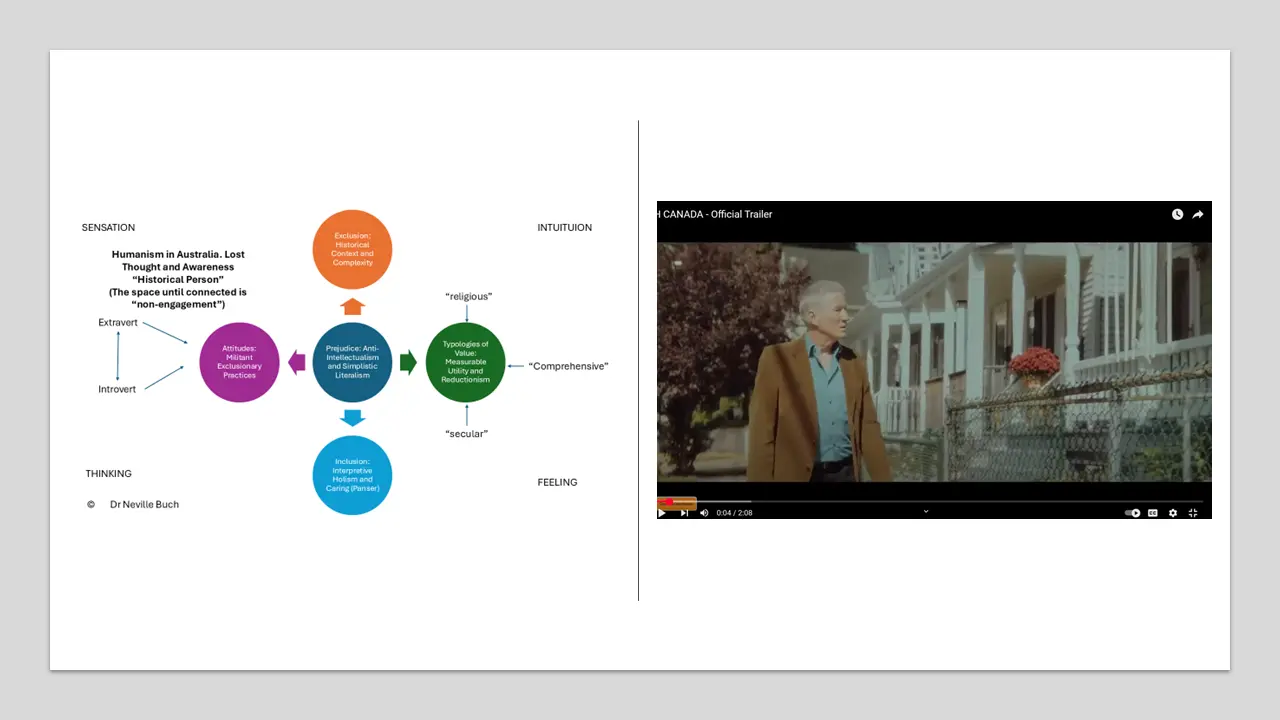
Featured Images: DoC Humanism in Australia and a Still from the film “Oh Canada”.



Neville Buch
Latest posts by Neville Buch (see all)
- The Road to Geelong: A Re-Narrativization of The Story of Resilience Part 1 – October 20, 2026
- The Human Being Above the Transaction and Why Markets Cannot Measure Human Worth – October 15, 2026
- Beyond Neoliberal Formalism: Should Taxpayers Fund Independent Philosophy – October 14, 2026