
Abstract
William’s meta-critique of contemporary ethics foresaw several problems identified by Bernard Stiegler, Susan Haack, and Nel Noddings, among others. This includes practices of denoetization, regression in the abuse of logic, specialised ignorance, and plain uncaring. Rawl’s Theory of Justice unintentionally opened the doorway to these soul-destroying mental practices, which leads to unfortunate behaviour.
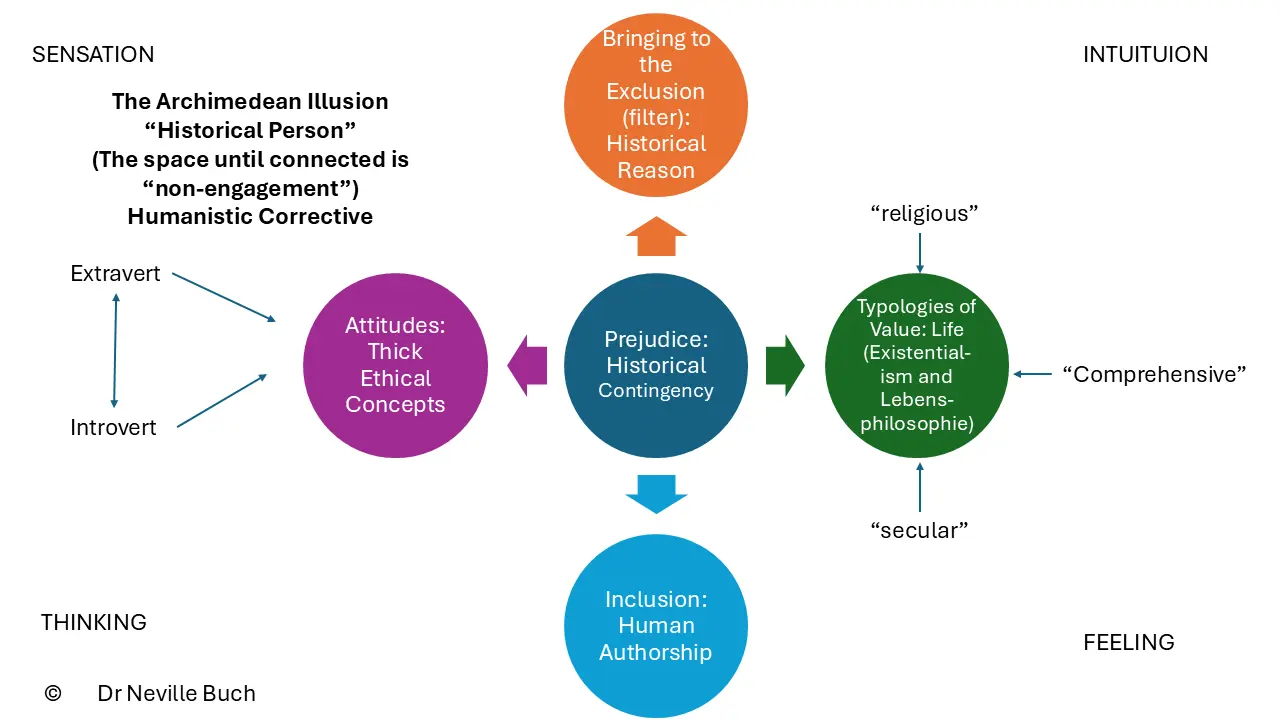
The Preference for Williams: Reclaiming the Person from the “Technical Abyss”
Dr. Neville Buch’s work prefers the “humanistic discipline” of Bernard Williams over the systematic political philosophy of John Rawls because Williams’s framework provides an “intellectual immune system” against the modern malady of denoetization. While Rawls’s A Theory of Justice was magisterial in reviving normative political philosophy, the Management Institute for Contributory Economy (MICE) identifies his reliance on abstract, ahistorical devices as a precursor to the “Academic Immense Regression” seen in contemporary society.
1. The Archimedean Illusion vs. Historical Contingency
Rawls’s theory is built upon the “original position” and the “veil of ignorance,” an artificial thought experiment that asks individuals to design a society without knowledge of their specific identity or historical circumstances. Buch characterizes this as an “ahistorical” and “hypothetical” approach that creates an “Archimedean point” independent of any contingent perspective.
In contrast, Buch utilizes Williams’s concept of historical contingency, arguing that understanding our ideas and motivations requires a deep examination of our specific social and historical bearings. Williams rejects the “illusion of self-sufficiency” in modern theory, asserting that philosophy must remain tethered to the “multi-textured reality” of lived experience to produce meaningful ethical knowledge.
2. The Poverty of “Thin” Concepts and the Loss of World-Guidedness
Rawls bases his principles on a “thin theory of the good,” prioritizing general evaluative terms like “right” or “ought” to maintain neutrality. Buch argues that this concentration on “thin” concepts leads to “specialized ignorance,” where complex social problems are reduced to technical-administrative tasks.
Williams identifies this as a “techné mindset” that reduces morality to “causal levers” and administrative metrics. He instead advocates for “thick ethical concepts” (e.g., courage, treachery, integrity) which unite factual description with evaluative meaning. These thick concepts provide the “rough ground” for judgment, preventing the “mechanical liquidation of discernment” that occurs when thought is detached from its context.
3. Denoetization and the Socratic Paradox
Buch’s preference for Williams is further grounded in the diagnosis of denoetization—the mechanical liquidation of the human capacity to judge under the pressure of automated technical and bureaucratic systems. Rawls’s focus on “formal fairness”—the impartial application of established rules—can inadvertently facilitate this regression by ignoring the historical reasons for specific moral distinctions.
Following Williams, Buch argues that abstract reflection, when detached from social bearings, can actually destroy knowledge. This “notably un-Socratic conclusion” identifies the mechanism of symbolic misery, where individuals lose their collective ability to think and judge as they become “passive conduits” for automated systems.
4. Thinking as Caring (panser) vs. Plain Uncaring
Finally, Buch integrates the work of Nel Noddings and Williams to counter the “politics of uncaring” (cynicism) inherent in technocratic systems. Rawls’s focus on institutions as guarantors of justice has been criticized for neglecting the effect of human behaviour and dispositions on social outcomes.
The MICE framework reinvents thinking (penser) as caring (panser), serving as a procedural “shield” or “kindness” that protects human particularity from cold, calculating logic. By prioritizing Substantial Fairness and Aristotelian flourishing over narrow transactional utility, Buch uses Williams and Noddings to ensure that the “who” (the human being) remains the proactive master of the “what” (the system).
Featured Image:


Neville Buch
Latest posts by Neville Buch (see all)
- Thank you, Richard: Knowing the message but then acting – October 8, 2026
- The Desiccation of the Common Well: Identity Politics, Algorithmic Assessment, and the Crisis of Adult Responsibility – October 6, 2026
- Academic Rigour, Epistemic Renewal, and the Crisis of Inquiry: A Scholarly Review of the Vanderbilt Commission Report on the State of Scholarship – October 5, 2026