
Bernard Lonergan and the Work of Dr Buch
Abstract
The intersection of the philosophies of Bernard Lonergan and Dr. Neville Buch represents a robust humanistic ascent against the “technical abyss” and “limited thinking” of the 21st century. Lonergan provides the internal framework of self-appropriation—the personal discovery of the dynamic structure of inquiry, insight, and judgment. Dr. Buch extends this interiority into the external social realm through Spiral Historiography and the Dynamic of Cognition, arguing that “understanding history is philosophy in practice”. Both thinkers reject mechanistic reductionism in favour of human authorship, where the subject is not a “passive cog” but an active agent capable of self-transcendence. This essay explores how Lonergan’s Generalized Empirical Method (GEM) provides the cognitive engine for Buch’s POLICE model (Philosophically Ontology Logic Intersect Compatibility Education), creating a unified theory for a Contributory Economy rooted in truthfulness, history, and care.
https://www.academia.edu/146227204/Bernard_Lonergan_and_the_Work_of_Dr_Buch
PDF File:
Bernard Lonergan and the Work of Dr Buch
Dr Neville Buch ABN: 86703686642
List of Tags
- Paid Work
- Bernard Lonergan
- Bernard Williams
- Bernard Stiegler
- Nel Noddings
- Political Theory
- Political Communication
- Brisbane
- Queensland
- Appearance
- Foolishness
- Truthfulness
- Value
- Focus
- Exclusion
- Inclusion
- Thinking
- Cognition
- Education
The Three Bernards
Abstract
The intellectual landscape of the early 21st century is marked by a profound tension between technological determinism and the preservation of human agency. This essay explores the convergence of “the three Bernards”—Williams, Lonergan, and Stiegler—whose distinct yet overlapping philosophies offer a robust framework for a humanistic ascent against the “immense regression” of the modern era. Bernard Williams grounds ethics in the historical contingency of “thick concepts” and the limits of abstract theory. Bernard Lonergan provides a cognitive engine through his Generalized Empirical Method (GEM) and the process of self-appropriation. Bernard Stiegler identifies the constitutive relationship between technics and time, reinventing thought as caring (panser) to treat the wounds of the “technical abyss”. Together, they reject mechanistic reductionism in favour of human authorship, arguing that understanding history and our prosthetic nature is a procedural necessity for achieving comprehension and moral wisdom in a digitized world.
https://www.academia.edu/146227231/The_Three_Bernards
PDF File:
Dr Neville Buch ABN: 86703686642
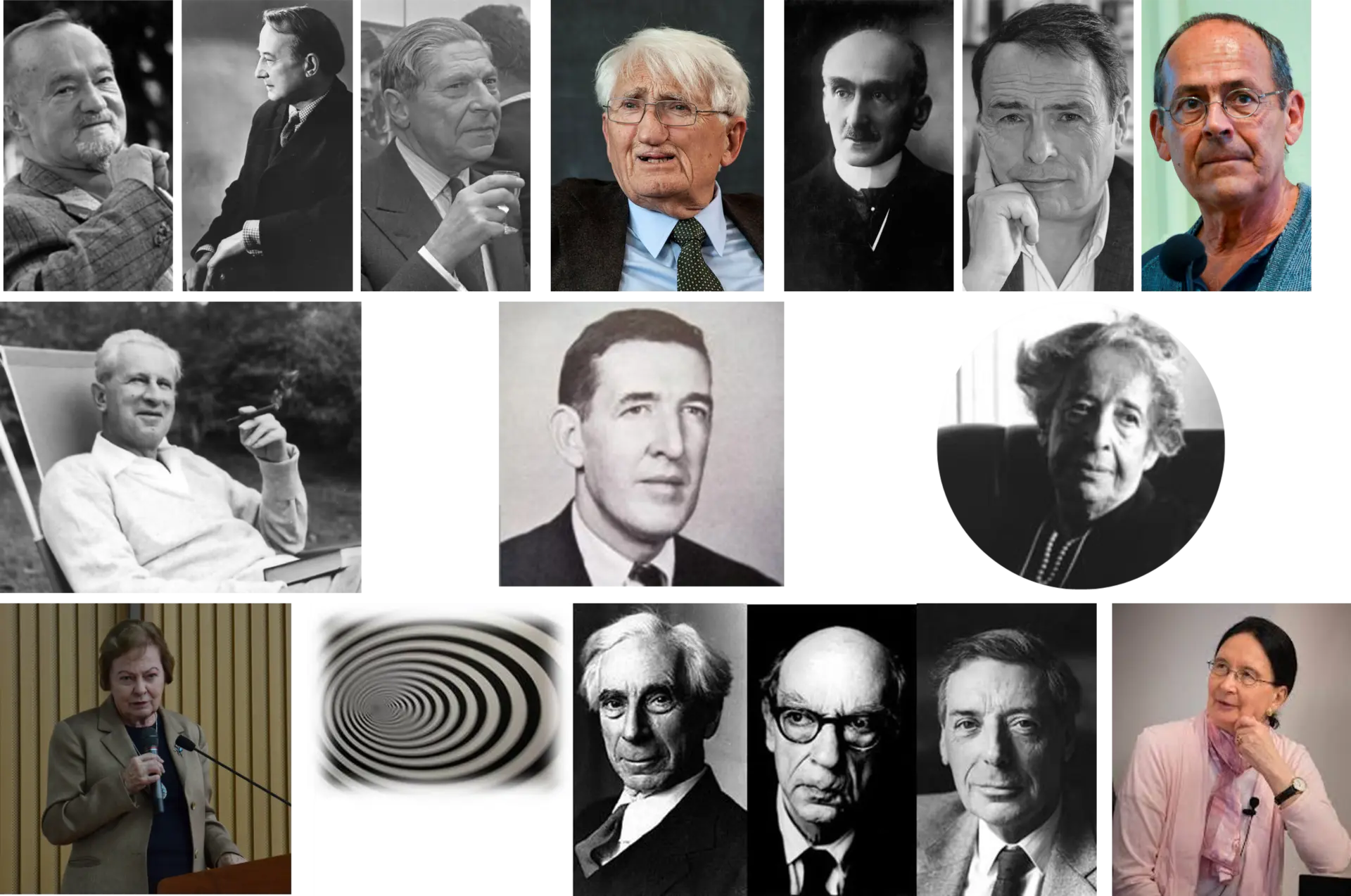
Featured Image: The Game of Guess who the Thinker is…


Neville Buch
Latest posts by Neville Buch (see all)
- Death in Life and Life in Death: Affective, Intellectual, and Ontological Dimensions of Human Mortality – October 2, 2026
- Psychological Symbol Cards – October 2, 2026
- The Washington Post Impact Report and American Studies – October 1, 2026