
Thinking:
Abstract
This essay examines the systemic media misreporting of the 2021 and 2026 Ceuta incidents, arguing that international coverage fundamentally failed to acknowledge the geographical and historical complexities of the region. By mischaracterizing the North African enclave as part of the European mainland, media outlets ignored the unique status of Spain’s autonomous cities and the deep-seated historical patterns of African migration. Furthermore, the analysis explores how this a-historical reporting diminishes the agency of decision-makers, who are often forced to react to “happenings” rather than managed “processes”. Utilizing the perspective of the philosophic historian, the essay posits that the failure to “read” the landscape as a historical text leads to a “continental confusion” that destabilizes intercultural understanding.
The Anatomy of Media Misreporting
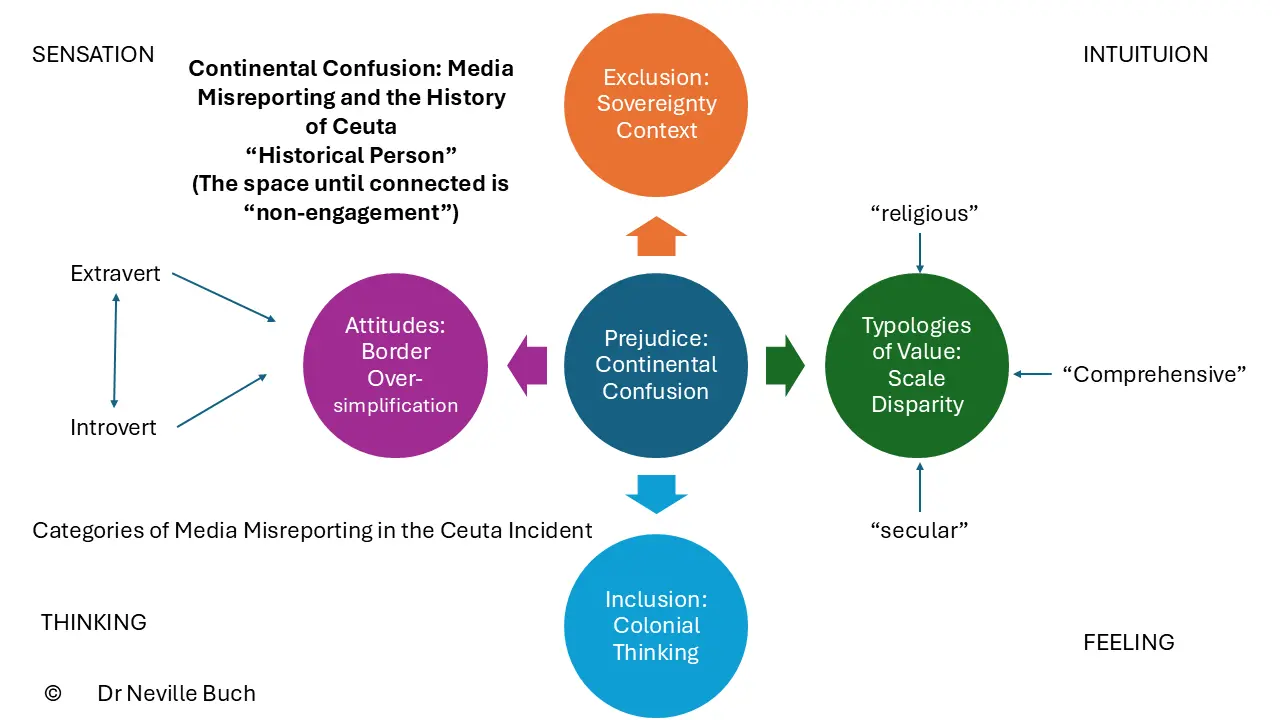
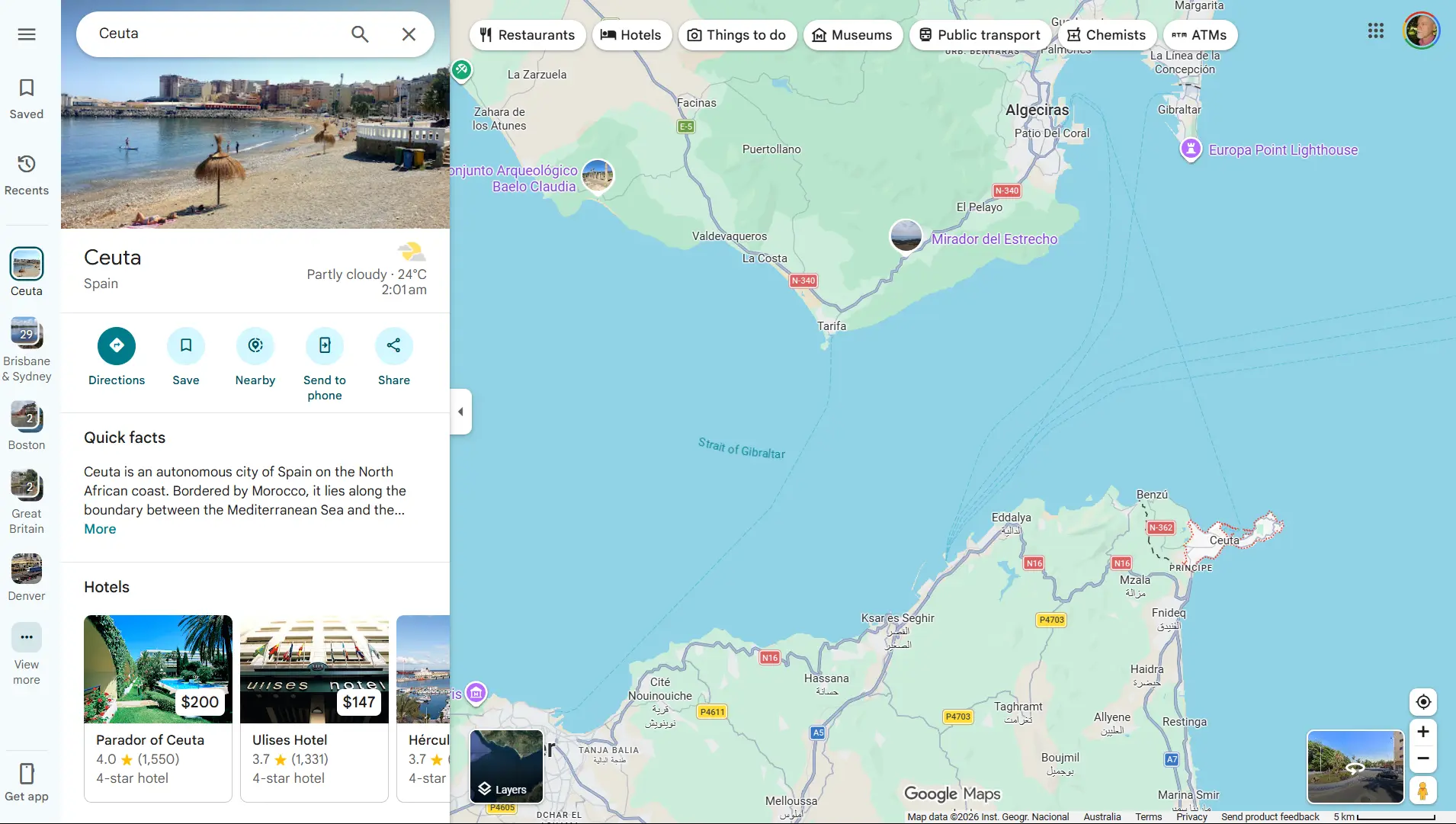
Media coverage of recent migrant surges into Ceuta has been defined by a recurring “Continental Confusion,” where international broadcasts routinely described the events as people “breaking into southern Spain”. This phrasing glosses over the critical geographic reality: Ceuta is a Spanish autonomous city physically located on the North African coast, directly bordered by Morocco. By framing the incident as a breach of the European Iberian Peninsula, reporters omitted the proximity of the Moroccan shore, which allows thousands to simply swim around maritime-land border fences.
This lack of context extends to the scale of the territory. Reports failed to emphasize that an influx of tens of thousands of arrivals represents a massive demographic shock to a municipality of only 84,000 residents. Without this context, the specific stress on localized infrastructure is lost in a broader, less accurate narrative about the general breach of European borders.
The Historical Depth of Spain’s Autonomous Cities
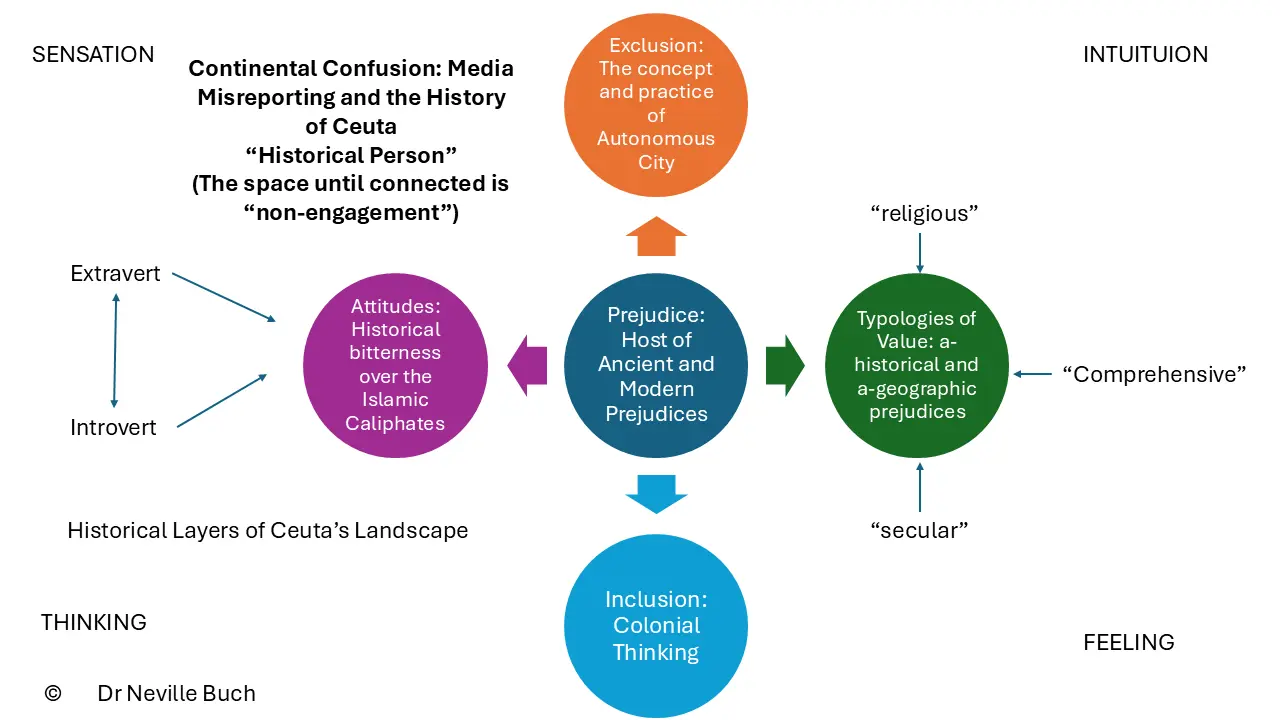
The media’s “a-historical framing” ignores that Ceuta’s status as a Spanish sovereign territory is not a modern anomaly but the result of millennia of contested history. Originally founded by Phoenicians, the city saw continuous rule under Romans, Byzantines, and various Islamic Caliphates before being captured by the Portuguese in 1415. It chose to remain with the Spanish Monarchy in 1640 and was eventually granted Statute of Autonomy in 1995.
This history of the ”plazas de soberanía” is essential to understanding current tensions. Morocco disputes Spanish rule, frequently referring to the city as “occupied” or a “colony,” while Spain maintains it has been an integral part of the Spanish state since the 16th century. Media reports that ignore this legal and historical friction fail to account for the agency of decision-makers in Madrid and Rabat, who must navigate a “hybrid strategy” of annexation attempts and border security.
Historical Waves of Migration and Decision-Maker Agency
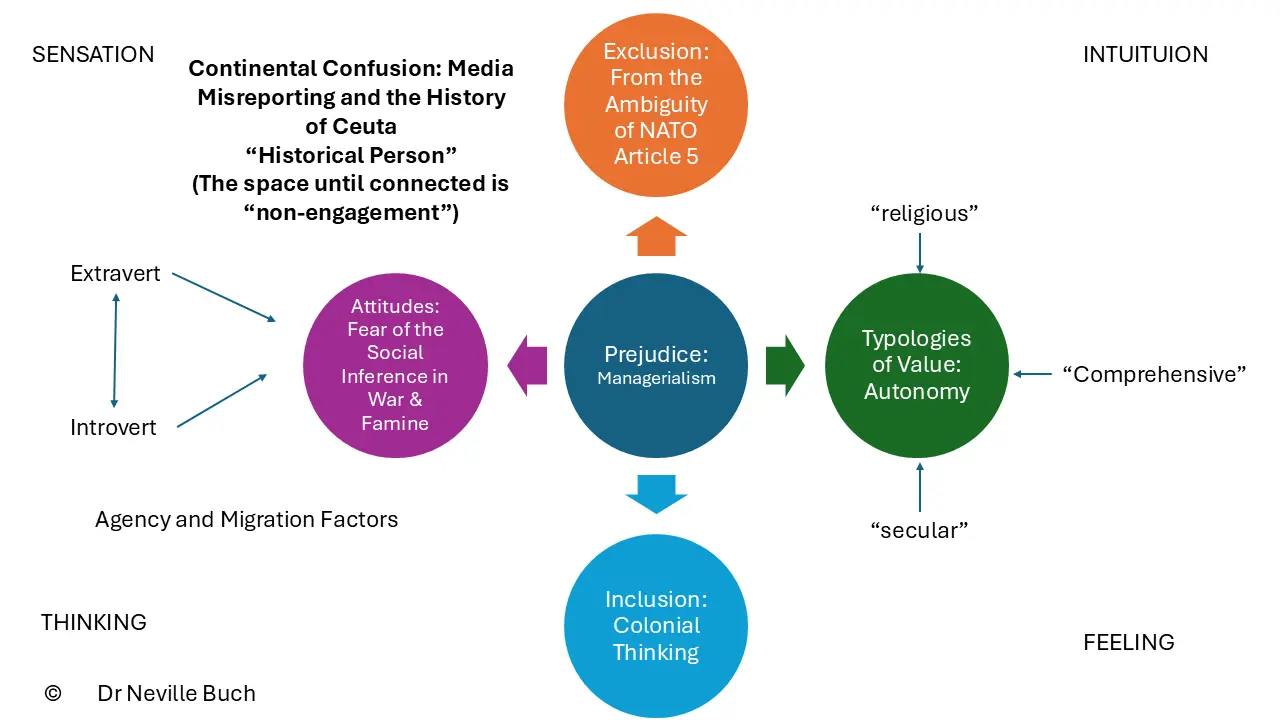
The current migration “incidents” are often reported as isolated crises rather than part of the long-term Migration Period patterns. Historical data shows that movement under the duress of war, famine, or political collapse has shaped the Mediterranean for centuries. During late antiquity, the “barbarisation” of the Roman world was a managed process where local populations often actively participated in military takeovers by newcomers to fill power vacuums.
In a modern context, the agency of decision-makers is often hampered by managerialism and a focus on “manageable measure” rather than deep thought. When media reports fail to provide historical depth, they encourage a “cancel culture” approach to policy—a synthesis that cancels out meaningful dialogue in favour of surface-level reactions. The philosophic historian recognizes that ”understanding history is philosophy in practice”; without this practice, decision-makers remain trapped in a cycle of “re-calculating” solutions for a landscape they have not truly read.
DoC Analytical Tables
Table 1: Categories of Media Misreporting in the Ceuta Incident
| Error Category | Media Narrative | Geographical/Historical Reality |
| Continental Confusion | Breach of “Southern Spain.” | Ceuta is an enclave on the North African coast. |
| Border Oversimplification | Scaling “European” walls. | Proximity to Moroccan shore allows swimming around fences. |
| Scale Disparity | General European border crisis. | Influx is massive relative to local population (84,000). |
| Sovereignty Context | Modern border dispute. | 600+ years of Spanish/Portuguese sovereignty. |
Table 2: Historical Layers of Ceuta’s Landscape
| Era | Governing Power | Key Historical Significance |
| Ancient | Phoenician / Roman | Known as Septem Fratres; Punic culture thrived. |
| Medieval | Islamic Caliphates | Contested port in the “Battle of the Strait.” |
| Portuguese | Kingdom of Portugal | Captured in 1415; marked first hold in the Strait. |
| Spanish | Hispanic Monarchy | Sided with Spain in 1640; Autonomous City since 1995. |
Table 3: Agency and Migration Factors
| Factor Type | Historical/Active Factor | Impact on Decision-Maker Agency |
| Human-Active | War & Famine | Drives large-scale, unmanaged population shifts. |
| Political | Statute of Autonomy | Defines Ceuta as an integral Spanish territory, not a colony. |
| Logistical | Managerialism | Focuses on “managing time” rather than historical process. |
| Diplomatic | NATO Article 5 | Ambiguity regarding protection of North African enclaves. |
Buch’s A.I. Sources
- Ceuta.pdf. (Comprehensive history, geography, and demographics of Ceuta). Wikipedia.
- Media Reports of Ceuta Incident.pdf. (Analysis of journalistic errors in reporting surges). Notes
- Migration_Period.pdf. (Historical analysis of European and North African tribal movements). Wikipedia
- Second_Great_Migration_(African_American).pdf. (Urbanization and spatial segregation). Wikipedia
- The American Soul: A Traveler’s Intellectual Reckoning. Buch’s Blog Essay.
- The Great Journey: Landscape, Memory, and the Thinking Traveler. Buch’s Blog Essay
- The Philosophic Historian: Landscapes of Thought and Travel. Buch’s Blog Essay
- The Road to Legacy: Landscape, Solitude, and Existential Reckoning. Buch’s Blog Essay
- The Road to Wisdom: Grief, History, and Philosophical Transit. Buch’s Blog Essay
- Travel Schedule 2022-2026.pdf. (Chronological record of academic engagements). Buch’s Blog Essay.
Featured Image: 03.-2024-03-08-Joe-Biden-Listens-to-Republican-Concern-about-Immigration-and-Volience.png



Neville Buch
Latest posts by Neville Buch (see all)
- Agency, Cultural Construction, and Synoptic Vision: On Matt Patterson’s Comprehensive Examination in Sociological Theory (2009) – September 20, 2026
- Human Existence, Existential Angst, and the Protestant Worldview: An Essay on Buch’s Existential Thesis – September 20, 2026
- Salus Populi Suprema Lex Esto. Ciceronian Statecraft, Spinozan Toleration, and Prophetic Praxis – September 19, 2026