
Dr Neville Buch
Abstract
In the contemporary landscape of 2026, the dynamic of cognition for living freedom of belief is increasingly caught between the growing formalization of algorithmic education and the radical necessity for a pedagogy of choice. This essay explores how standardized machine-based routines risk modifying consciousness into “passive, dependent, filled” patterns, contrasting this with a “problem-posing” model that fosters a “free, active, creative, and investigative mind”. By synthesizing the educational theories of Paulo Freire and Ivan Illich with the philosophical “discipline of hope,” the study argues that true Freedom of Religion or Belief (FoRB) is not merely a legal status but a cognitive achievement rooted in “conscientization” and the “craftsmanship of the reflexive insider”. Ultimately, living freedom requires a pedagogy of contingency that enables individuals to navigate the “immanent frame” through a continuous “dialogue of myths” and ethical self-affirmation.
——————————————————————————–
The Cognitive Hazards of Formalization
The Fourth Industrial Revolution has accelerated a formalistic trend in education where algorithmic character adversely affects human development. In a formalized online environment, consciousness is shaped by pre-programmed learning materials that treat knowledge as a commodity rather than a “living disclosure”. This creates a dangerous “rift” in the human brain, conditioning students into simplistic, binary views of society while stifling the capacity for discovery through trial and error. When cognition is reduced to following “formal, predetermined routes,” the individual’s capacity for self-initiated choice—a prerequisite for genuine freedom of belief—is systematically diminished.
The Pedagogy of Choice and Freedom of Belief
Living freedom of belief (FoRB) is rooted in Article 18 of the Universal Declaration of Human Rights, affirming the right to hold, change, and express beliefs. However, for this right to be meaningful, cognition must move beyond the “banking system” of education, where the mind is a tabula rasa to be mechanically imprinted with data. Instead, a “problem-posing” method is required, utilizing dialogue as an epistemological relationship that transforms learners into “critical co-investigators”. This cognitive dynamic requires a synthesis of educare (training/imprinting) and educere (leading out), providing the “raw materials of culture” while enabling the mind to solve novel problems.
Cognition as “Presencing” and Horizon Worldviews
Cognition for freedom is not a static possession but a dynamic “presencing” of being, where reality discloses itself to a receptive awareness. This is illustrated in “Horizon Worldviews,” where the “Mind’s Eye” navigates overlapping intellectual schema through a “spiral historiography”. For religions like Mandaeism, knowledge (gnosis) is the theological essence that saves the soul through the active reception and embodiment of truth. Similarly, the cognitive process of hope involves “pathways” (reasoning resources) and “agency” (motivational tendencies), allowing commitments to transcend the “immanent frame” even under conditions of doubt.
Resisting “Theological Capture” and the Discipline of Hope
To live freedom of belief in 2026, one must resist the “theological capture” of society, where theology is transformed into a tool for political control. This resistance is a cognitive act of “metanoia”—a fundamental shift in one’s relationship with the divine that embraces “kenotic” (self-emptying) ethics. Freedom is realized through “conviviality,” defined as individual freedom in “mutual personal interdependence,” which values “creative intercourse among persons” above industrial productivity. This requires a “discipline of hope” that acts as an indispensable bridge between religious practice and secular politics, fostering a “planetary wisdom” that the traditional academy often excludes.
Conclusion: The Investigative Mind
Ultimately, the dynamic of cognition for living freedom depends on restoring the “initiative in education” to the individual. True personal growth is not a “measurable entity” but “growth in disciplined dissidence,” which cannot be compared to institutional achievements. By rejecting the “wooden epistemology” of elitist gatekeeping and embracing the “craftsmanship” of the reflexive insider, individuals can cultivate a free, investigative mind capable of “naming the world” to transform it. Freedom of belief, therefore, is the cognitive byproduct of an authentic self-disclosure that chooses its own stance toward existence.
Featured Image: Living the Freedom of Belief by Living the Question
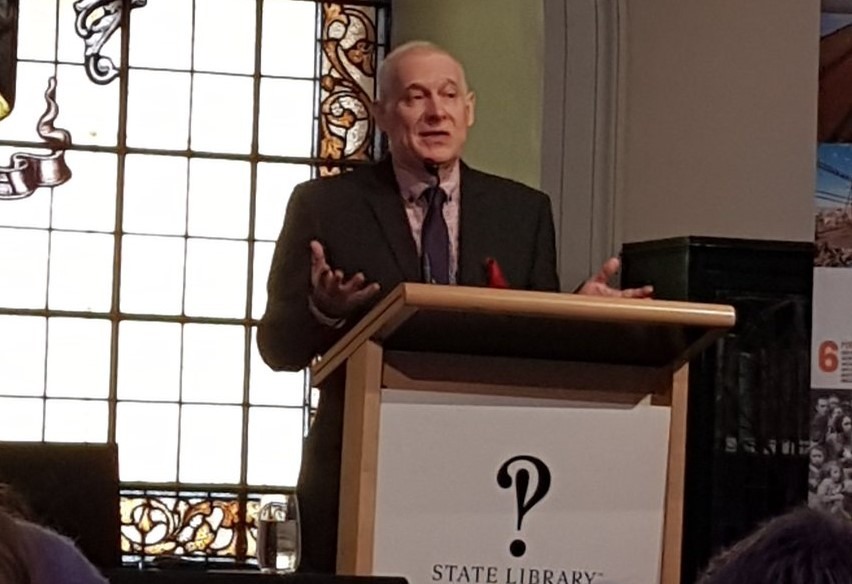


Neville Buch
Latest posts by Neville Buch (see all)
- Part 3:The Failure of an Educational Institution and How to Spiral Forward – October 10, 2026
- Part 2:The Failure of an Educational Institution and How to Spiral Forward – October 10, 2026
- Part 1:The Failure of an Educational Institution and How to Spiral Forward – October 10, 2026