
What is this Protestant-Catholic Thing. The Queensland Case
Dr Neville Buch
Abstract
The social and political landscape of Queensland has long been defined by the “Catholic-Protestant thing,” a shorthand for deep-seated sectarian divisions that influenced education, governance, and the state’s cultural identity. Dr. Neville Buch’s scholarship frames this dynamic as a transition from a “sectarian age” characterized by tribal folklore and institutional patronage to a “pluralistic modern liberalism”. Guided by global patterns—such as the anti-modernist stance of Vatican I and the subsequent reforms of Vatican II—Queensland’s sectarian history was anchored in a “myth of the Queensland character” that prioritized agrarian utility over intellectual depth. This essay explores how the friction between Catholic and Protestant worldviews shaped the state’s institutions, from the schoolground battles of the 1950s to the professionalization of governance in the 1990s.
——————————————————————————–
Table of Contents
- Introduction: The Sectarian Fault Line
- Education and the Architecture of Exclusion
- Global Patterns: From Syllabus of Errors to Vatican II
- The “Queensland Character” and Intellectual Stasis
- The Political Alliance: Labor, Catholics, and the Nationalist Response
- Conclusion: The Quiet Revolution in Pluralism
- APA Bibliography
- Endnotes
- Dynamic of Cognition
——————————————————————————–
The Catholic-Protestant ‘Thing’ in Queensland: An Evaluation of Dr. Buch’s Insights
- Introduction: The Sectarian Fault Line
In Queensland, the “Catholic-Protestant thing” was never merely a matter of theological dispute; it was a comprehensive socio-political framework that dictated the boundaries of community life. Dr. Neville Buch identifies this as a defining element of the “sectarian age,” where religious affiliation functioned as a tribal marker. This era was characterized by what Buch terms “folklore historiography,” a worldview where history was taught as a moralistic tale of pure ethnic heroes and villains.
- Education and the Architecture of Exclusion
The most visible arena for this conflict was education. The Protestant churches generally supported the secular state school system established by the State Education Act 1875, viewing it as a defence against the perceived “dogma” of the Catholic parish system. Conversely, the Catholic hierarchy, led by figures like Archbishop James Duhig, viewed state education as an attempt to “Protestantise” Australian society.
The friction trickled down to the schoolgrounds. Memoirs cited by Buch describe 1950s primary school students engaging in “sectarian battles,” where Catholic children were labelled “cattle-ticks” and state school students were derided as the “rubbish men”. This antagonism was reinforced by examination papers that focused heavily on English Kings and Anglo-Saxon governance while ignoring Catholic history and the Papacy.
- Global Patterns: From Syllabus of Errors to Vatican II
Dr. Buch situates these local conflicts within global historical patterns. He notes that the anti-intellectualism and institutional rigidity of early Queensland Catholicism were partly driven by Pope Pius IX’s Syllabus of Errors (1864), which unequivocally condemned secular education. This created a “historical lag” where the state was slow to embrace modern educational theories.
However, the mid-twentieth century brought a “neo-orthodox revolution”. The reforms of Vatican II acted as a catalyst for organizations like the Knights of the Southern Cross to move away from semi-secret patronage toward a more transparent “Lay Apostolate”. This global shift mirrored the local transition from sectarian competition to a collaborative effort in building the “national soul”.
- The “Queensland Character” and Intellectual Stasis
A central pillar of Dr. Buch’s analysis is the “myth of the Queensland character”—a folkloric, agrarian-based identity used to portray Queenslanders as anti-intellectual and uniquely different from the “southern” states. This myth was used by conservative leaders to resist liberalizing influences, often conflating “secular humanism” with un-Australian behaviour. Education policy under Bjelke-Petersen reflected this myth through a “pragmatic turn” that favoured technical utility over intellectual education, ensuring students remained a “yeoman class” tied to rural industry.
- The Political Alliance: Labor, Catholics, and the Nationalist Response
The political expression of the “Catholic-Protestant thing” was found in the long-standing alliance between the Labor Party and the Catholic community. This bond was forged through shared marginalization and a mutual suspicion of the Protestant establishment. Buch notes that leaders like Archbishop Duhig were highly pragmatic, working with Catholic Premiers to secure land and influence, effectively turning the Church into an economic and social powerhouse. This dominance eventually fuelled a reactionary anti-Catholicism among the Protestant establishment, which rallied behind Nationalist leaders.
- Conclusion: The Quiet Revolution in Pluralism
By the 1990s, the “historical lag” began to close. The Goss government’s introduction of professional accountability frameworks—exemplified by the Queensland Cabinet Handbook—marked the end of governance by personal patronage. Buch evaluates this as the era where the state finally moved toward “pluralistic modern liberalism,” unhooking the gospel from old nation-building narratives in favour of a more inclusive, strategy-based governance. The “Catholic-Protestant thing” has transitioned from a source of street fights to a historical wound that informs modern Queensland’s identity.
——————————————————————————–
BIBLIOGRAPHY
Arklay, T., & Menzies, J. (n.d.). Selected highlights: 1986 Cabinet minutes. Policy Innovation Hub, Griffith University for Queensland State Archives.
Arklay, T., Horton, S., & Menzies, J. (n.d.). Selected highlights: 1987 Cabinet minutes. Policy Innovation Hub, Griffith University for Queensland State Archives.
Arklay, T., Horton, S., & Menzies, J. (n.d.). 1987 Cabinet overview. Policy Innovation Hub, Griffith University for Queensland State Archives.
Buch, N. (1995). American influence on Protestantism in Queensland since 1945 (PhD dissertation). The University of Queensland.
Buch, N. (2015). No regrets in the evening of life: The history of Junction Park State School (1888–2013). Salisbury, QLD: Boolarong Press.
Buch, N. (2015, December). Knights of the Southern Cross: A new story from the old days. Queensland 1921-2015. Brisbane Catholic Historical Society, 15(5), 90-101.
Buch, N., & Roberts, B. (2016). No regrets in the evening of life: Access, equity and exclusivity at Junction Park State School in the early twentieth century. History of Education Review, 45(1), 69-87.
Buch, N. (2019, May). The changing definition of Peace, Part 1: The status quo of thinking in Queensland during the Armistice. Queensland History Journal, 24(1), 117-131.
Buch, N. (2019, May). The changing definition of Peace, Part 2: The shifting of thinking in Queensland during the Armistice. Queensland History Journal, 24(1), 132-146.
Buch, N. (2021). The intellectual ethos of Charles Strong in Queensland 1855-1917. In M. Maddox (Ed.), Charles Strong’s Australian Church: Christian Social Activism 1885–1917 (pp. 130-146). Carlton, VIC: Melbourne University Press.
Buch, N. (2023, June). Evangelicals and nation-building: Radical and transformational criticism from across Christian traditions in Queensland history, Part I. Lucas: An Evangelical History Review, 3(1), 44-70.
Buch, N. (2024). Queensland history, religious education, and belief. In Socio-Anthropological Approach in Queensland (Chapter 7, pp. 161-187).
Buch, N. (2026). Queensland in 1995-2025. Management Institute for Contributory Economy.
Marinac, A. S. (n.d.). Michael John Ahern: A frustrated reformer (1988 Cabinet minutes background report). Pacific Maritime Lawyers & Consultants.
Marinac, A. S. (n.d.). Beyond Expo: An overview of the 1988 Cabinet documents. Pacific Maritime Lawyers & Consultants.
Richards, J. (n.d.). 1972 Cabinet documents: A report by Jonathan Richards, Consultant Historian. Queensland State Archives.
Salisbury, C. (n.d.). 1991 Cabinet minutes: Selected highlights. Queensland State Archives.
Stroja, J. (2025, December 1). Queensland in 1995: Background paper. Heritage Vision for Queensland State Archives.
Stroja, J. (2025, December 1). Selected highlights from the 1995 Queensland Cabinet minutes. Heritage Vision for Queensland State Archives.
——————————————————————————–
Endnotes
No Regrets, p. 11. Support for secular curriculum above sectarian controversies.
No Regrets, p. 11. Protestant support for secular ed to keep Catholic children at bay.
No Regrets, p. 14. Pope Pius IX’s Syllabus of Errors on secular education.
No Regrets, p. 30. Fetes and mutual societies as benign covers for sectarian agendas.
No Regrets, p. 44. Catholic fear of state system as “Protestantising” mechanism.
No Regrets, p. 52. Folklore historiography and moralistic views of ethnic “villains.”
No Regrets, p. 52. “Cattle ticks” vs. State school students street fights in the 1950s.
No Regrets, p. 53. Hugh Lunn’s memoir on the “enemy of our religion.”
No Regrets, p. 53. Examination papers full of English Kings but no Popes.
KSC History, p. 93. Vatican II reforms and the shift from sectarian battles.
KSC History, p. 94. Role of Knights in supporting Catholic education through Parents and Friends. KSC History, p. 94. Knights as Archbishop Duhig’s main financial collectors.
KSC History, p. 98. Capacity for re-organization in light of Vatican II.
History of Education Review, p. 83. J.J. Dempsey and the sectarian coexistences of the Denham era.
Charles Strong Chapter, p. 3. Protestant resistance to liberal religious models.
Charles Strong Chapter, p. 4. Alliances between militant Labor and religious pacifists. Charles Strong Chapter, p. 4. Labor support for liberal progressivism under Ryan and Theodore.
Charles Strong Chapter, p. 10. The role of characterization in historical analysis.
Lucas Review, p. 45. Rejection of historic settlements for pluralistic liberalism.
Lucas Review, p. 48. Chronological periods of Queensland nation-building.
Lucas Review, p. 50. Consolidated Baptist identity and secular education impacts.
Lucas Review, p. 68. Saving individuals as the primary path to national salvation.
Socio-Anthropological Approach, p. 161. The myth of “secular humanism” as a political weapon.
Socio-Anthropological Approach, p. 167. Anglo-Catholic establishment as a fortress against Roman intrusions.
Socio-Anthropological Approach, p. 167. Duhig’s role as statesman and “patron of the arts.”
Queensland Governance, p. 1. The myth of the “Queensland Character” in the Petersen era.
Queensland Governance, p. 2. Professional administration and “Studies in Religion” under Goss.
Agrarian Myth, p. 1. Prioritization of utility over intellectual education.
Evolution of Governance, p. 1. The challenge of the institutional “historical lag.”
Evolution of Governance, p. 2. The shift toward strategy-based systems and pluralism.
Evolution of Governance, p. 2. “Intellectual wounds” of early cultural conflicts.
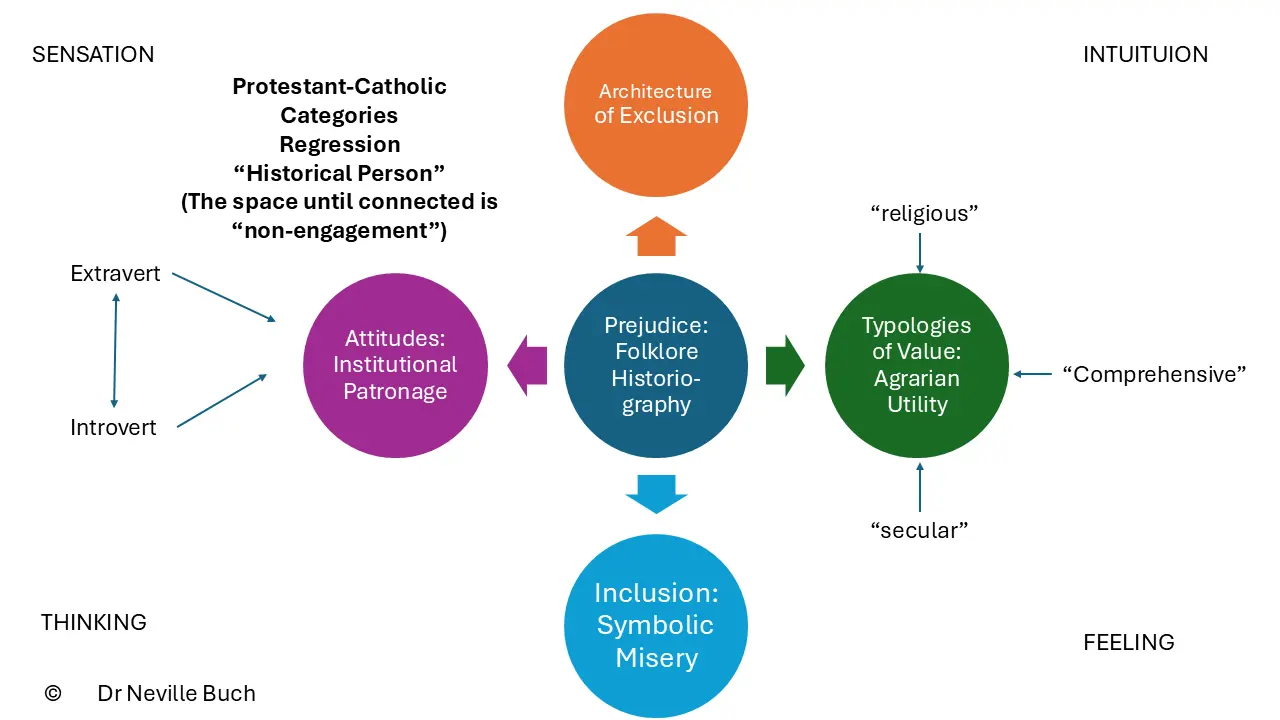
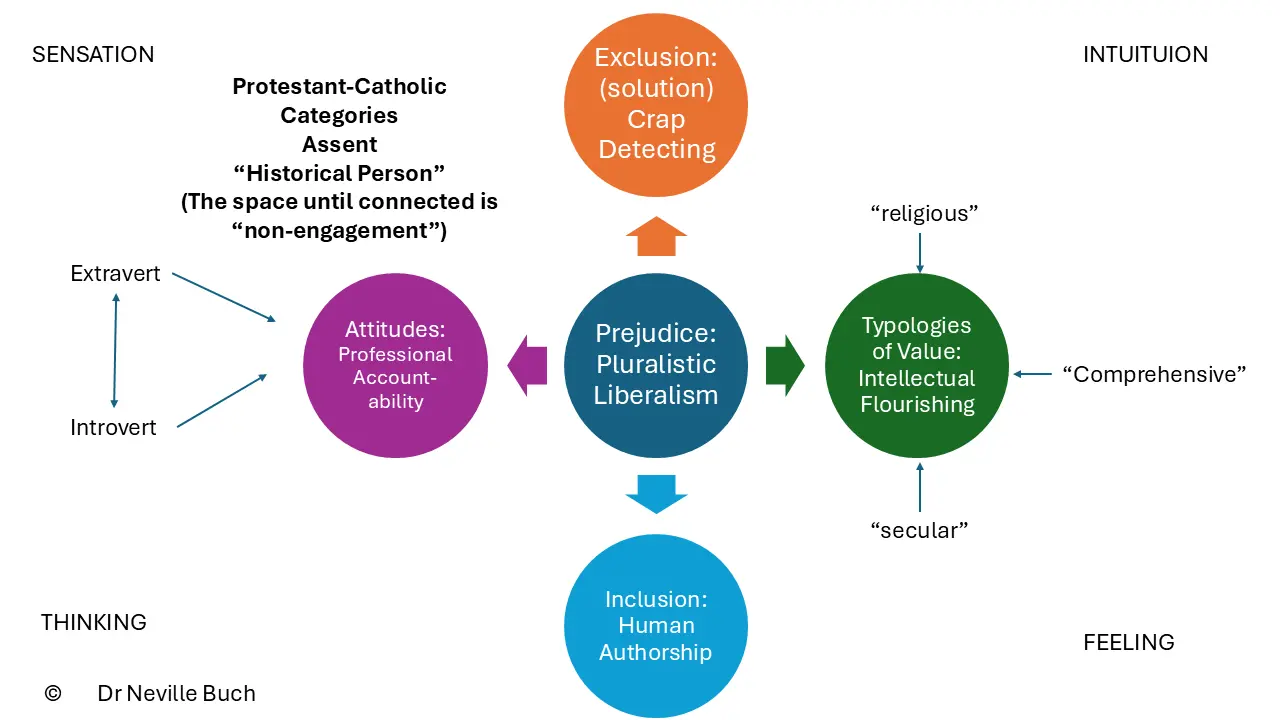
The following Dynamic of Cognition (DoC) table analyses the “Protestant-Catholic Thing” within the context of Queensland’s history, mapping the transition from a sectarian age defined by tribalism toward a pluralistic modern liberalism grounded in professional accountability.
DoC Table: From Sectarian Tribalism to Pluralistic Liberalism
| DoC Component | Regression into Sectarianism (The Abyss) | Required Humanistic Ascent (Comprehension) | Rationale / Source |
| Prejudice (Centre) | Folklore Historiography: History viewed as moralistic tales of pure ethnic heroes and villains. | Pluralistic Liberalism: Recognizing the state’s identity as a shared, diverse construction. | Moves from tribal markers to reflective self-criticism. |
| Attitudes (Thinking) | Institutional Patronage: Reliance on semi-secret networks and personal influence for social/economic gain. | Professional Accountability: Adopting transparent strategy-based governance and “Lay Apostolate” models. | Replaces strategic sectarianism with communicative action. |
| Typologies of Value | Agrarian Utility: Prioritizing technical pragmatism and the “yeoman class” over intellectual depth. | Intellectual Flourishing: Affirming the “national soul” and rigorous scholarly inquiry. | Moves from “measurable utility” to holistic human development. |
| Exclusion (Sensation) | Architecture of Exclusion: Deliberate omission of “The Other” (e.g., school exams omitting Catholic history). | Crap Detecting: Systematically filtering through “mythologies of the Queensland character”. | Unmasks historical lag and “institutional bullshit”. |
| Inclusion (Intuition) | Symbolic Misery: Reducing identity to street-fight labels like “cattle-ticks” and “rubbish men”. | Human Authorship: Proactive participation in an inclusive democratic state. | Restores the person as the operator of their social narrative. |
——————————————————————————–
Summary of the “Protestant-Catholic Thing” in Queensland
- The Sectarian Fault Line: For much of Queensland’s history, the “Catholic-Protestant thing” served as a comprehensive framework for community life, where religious identity acted as a tribal marker.
- Global Influences: This local friction was anchored in global patterns, including the institutional rigidity following Pius IX’s Syllabus of Errors and the counter-move toward modernization via Vatican II.
- The “Historical Lag”: Queensland’s sectarianism was reinforced by a “myth of the Queensland character” that devalued intellectual pursuits in favour of rural, pragmatic utility.
- The Quiet Revolution: The 1990s marked a closure of this historical lag, transitioning from personal patronage (exemplified by the Labor-Catholic alliance) to pluralistic liberalism and professional governance.
Featured Image:


Neville Buch
Latest posts by Neville Buch (see all)
- Part 3:The Failure of an Educational Institution and How to Spiral Forward – October 10, 2026
- Part 2:The Failure of an Educational Institution and How to Spiral Forward – October 10, 2026
- Part 1:The Failure of an Educational Institution and How to Spiral Forward – October 10, 2026