
Abstract
This essay explores the historical, philosophical, and pedagogical architecture of Erasmianism—a distinctive worldview that prioritizes peace, intellectual concord, and the development of the “inward man” over dogmatic purity and ideological factionalism. Tracing its roots from a transformative educational encounter at The University of Queensland in 1984 under the mentorship of Noeline Hall, the analysis illustrates how Erasmianism serves not as a rigid dogma, but as an open-minded methodology for learning from ideology itself. The essay demonstrates how this foundational commitment has remained a steadfast anchor throughout decades of intellectual and personal evolution—navigating the shift from evangelical historiography to post-Christian humanist skepticism. It outlines how Erasmianism is systematically expressed in the author’s contemporary work, specifically within Row 4 of the Matrix of Sociology (the Basic Individual-Collective), where Desiderius Erasmus stands as the prophet of the University, writing functions as a “long circuit of individuation,” and Devotio Moderna provides the structural performance of scholarship. Finally, the essay argues that an Erasmian framework offers a vital therapeutic corrective to the “culture-history wars” and the technical reductionism of the 21st century, establishing the communicative and ethical floor necessary for Aristotelian flourishing and the reclamation of Human Authorship.
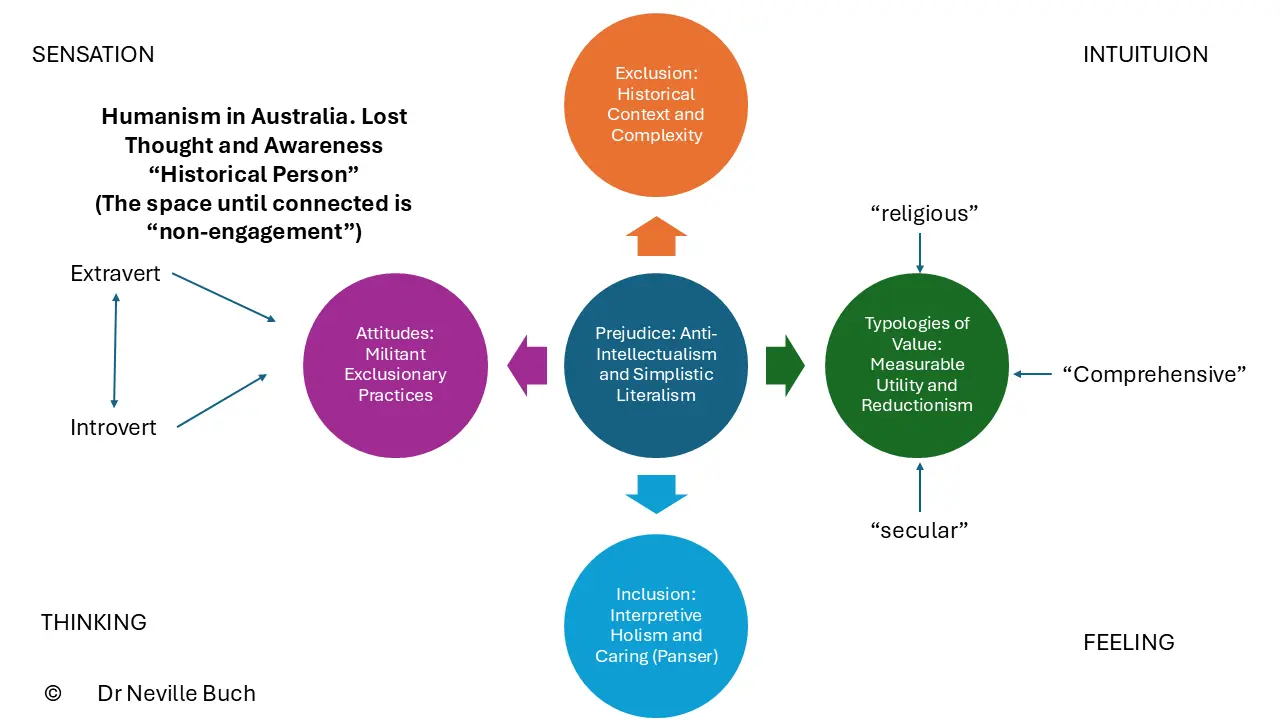
Featured Image: Humanism-in-Australia.-Lost-Thought-and-Awareness.


Neville Buch
Latest posts by Neville Buch (see all)
- Thank you, Richard: Knowing the message but then acting – October 8, 2026
- The Desiccation of the Common Well: Identity Politics, Algorithmic Assessment, and the Crisis of Adult Responsibility – October 6, 2026
- Academic Rigour, Epistemic Renewal, and the Crisis of Inquiry: A Scholarly Review of the Vanderbilt Commission Report on the State of Scholarship – October 5, 2026