
25 February 2026
Dr Neville Buch (ABN 86703686642)
Scholar, Principal Researcher, Team Leader,
Management Institute for Contributory Economy
Business Office
18 Callendar Street, Sunnybank Hills 4109
AUSTRALIA
cc. Drs. Michael Mackin and Neil Peach, Directors, Management Institute for Contributory Economy
Dear “university friends”,
I have a message that must be acknowledged. And better that it is engaged in. In essence, Dr. Buch’s practice offers a sophisticated form of consultancy, research, and education that links high-level global philosophical and cognitive theory directly to the local social, economic, and organizational imperatives. He explicitly states that his professional service should be paid for, instructing readers to “Employ him or contract him”.
The Humanistic Ascent. Reclaiming Dignity in Australian Higher Education
Abstract
The Australian higher education sector is currently undergoing an “immense regression” defined by the transition from humanistic scholarship to a “mechanical techné mindset”. This essay examines the major problems in the sector, identifying how neoliberal managerialism and the “technical abyss” of calculation have eroded the dignity of academic labour. Scholars, who are traditionally formed as critical individuals to transform society through qualified knowledge, are increasingly subjected to a culture of “productivism” that reduces learning to measurable utility. This systematic reduction of education for institutional gain has produced a profound crisis of mental health across the population. Utilizing Dr. Neville Buch’s Dynamic of Cognition (DoC), the essay argues for a “humanistic ascent” that reinvents thinking as caring (panser) and restores human authorship to the academic lifeworld.
——————————————————————————–
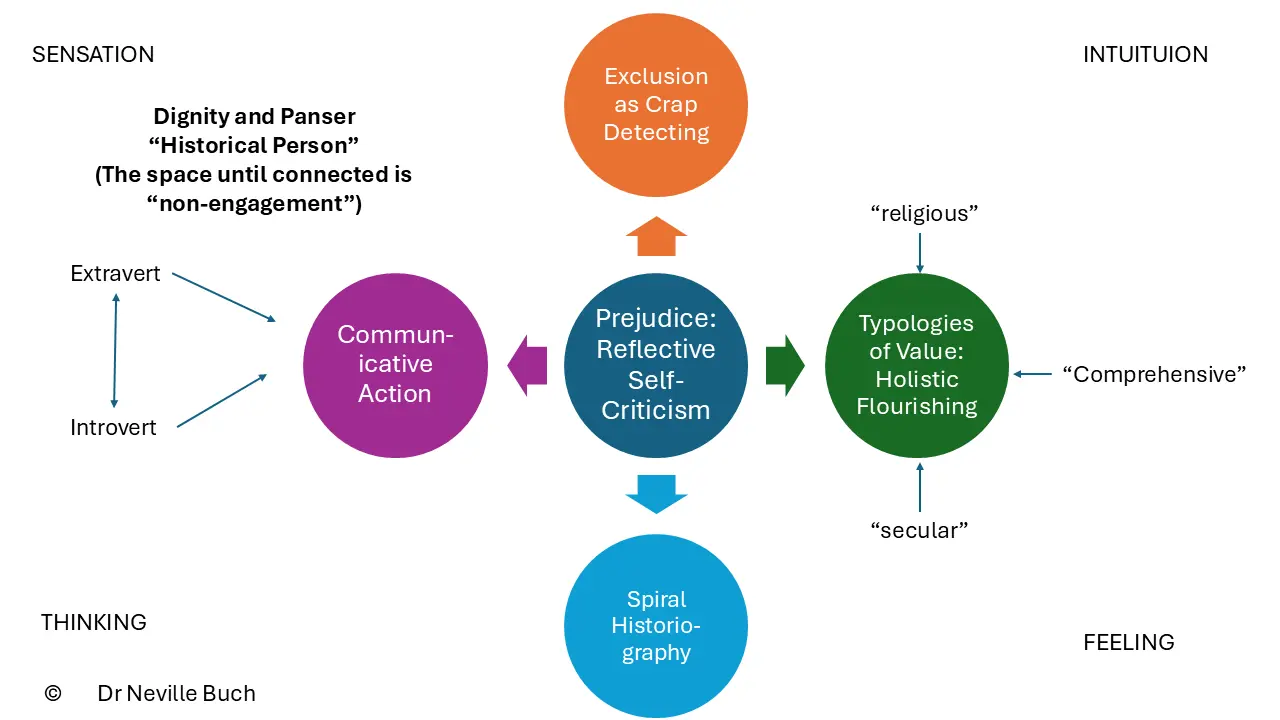
Mental Health and Dignity in Australian Higher Education: A Critical Analysis
The current state of Australian higher education represents a pharmacological crisis where the very tools of knowledge production have been turned into instruments of “symbolic misery” and institutional harm.
The Social Mission and the Public Investment Crisis
Scholars are the primary producers of qualified knowledge, serving a vital social function by forming critical individuals capable of transforming society. In Australia, the health of this mission depends heavily on public investment, which provides the essential opportunities for dedicated study and research. However, the retreat of the state as a reliable “lifeline” for institutions has left universities vulnerable to the “profit motive,” which totalizes the future and structurally constrains deep intellectual critique.
Decent Work and Human Dignity
The guideline of “decent work” is essential for sustainable development, requiring that people of all genders obtain quality employment under conditions of freedom, equity, security, and dignity. In a healthy “Contributory Economy,” academic work would be valued for its noetic contributions and its role in fostering human flourishing. Instead, the modern university has succumbed to “institutional arrogance,” prioritizing the preservation of the “established order” over the well-being of the evaluating-willing person.
III. The Malady of Managerialism and Productivism
Managerialism has introduced principles that negatively impact institutional performance by emphasizing rankings, numbers, and results over genuine scholarship. This “mechanization of work” leads to proletarianization, where knowledge is externalized without the opportunity for scholars to transform it, resulting in a state of “absolute non-knowledge”. Knowledge construction now occurs at a large scale that intensifies labour while imposing a hollow culture of the “academic” that reduces the actual level of education to mere “measurable utility”.
The Crisis of Mental Health
The reduction of teaching and learning for the sake of institutional gain produces a “discontinuous personality” reliant on external stimuli rather than internal norms. This environment fosters workplace trauma, manifesting as anxiety, social withdrawal, and a loss of the “feeling of existing”. As the “steering media” of money and power colonize the academic lifeworld, the pursuit of happiness is replaced by “spiritual desperation” and systemic demoralization.
Conclusion: Reclaiming Human Authorship
To end this regression, universities must adopt the practice of panser—the procedural necessity of thinking as caring—to tend to the wounds of the academic community. We must move beyond the “coldness of pure calculation” and apply the POLICE model to “police our own thoughts,” filtering out “institutional bullshit” and manufactured myths. Reclaiming human authorship means affirming that a person of faith and reason is context-embedded but not context-determined, ensuring that higher education serves the holistic flourishing of humanity once more.
——————————————————————————–
What are the core principles of a Contributory Economy in Australia?
The core principles of a Contributory Economy in Australia, primarily developed through the work of Dr. Neville Buch and the Management Institute for Contributory Economy (MICE) in Brisbane, represent a necessary counterpoint to economic models dominated by purely egoistic micro-motivation or systemic calculation. This model prioritizes social good, collaboration, and meaningful contribution, shifting the focus from the “siloing of knowledge for ‘work’“ toward a model of holistic learning and knowledge production.
The following are the foundational principles of this economic model as detailed in the sources:
- Valuing Noetic Contributions: The economy is designed to value noetic (intellectual) contributions and the development of moral character over mere “measurable utility” or instrumental profit-driven metrics.
- Promotion of Noodiversity: A central principle is noodiversity—the diversity of knowledge intrinsically linked to locality. This serves as a vital defence against the “anthropic” and homogenizing forces of modern computational capitalism.
- Thinking as Caring (Panser): Drawing on the work of Bernard Stiegler, the model views economic activity as a procedural necessity for tending to the social wounds of a fragmented society. This involves reinventing thinking as caring (panser) to restore human authorship against Technological disruption.
- Sustainable Local Development: It prioritizes sustainable development at the local level, fostering collaboration between diverse actors within “laboratory territories”.
- A Balanced Institutional Mandate: As overseen by MICE, the institutional framework for a contributory economy must be “liberal enough” for broad social placement, “radical enough” to shift agendas away from reductive metrics, and “conservative enough” to preserve historical knowledge and community identity.
- Rejection of Laissez-Faire Naivety: The model rejects the assumption that individual self-interest automatically produces the best social outcomes, recognizing instead that all economic systems depend on human dispositions that extend beyond self-interest.
- Spiral Historiography: The economy utilizes Spiral Historiography and interdisciplinary knowledge to ensure that technical innovation is consistently governed by wisdom and a commitment to the historical context of the community.
In essence, the contributory model functions like a “well-tended community garden,” where the “social life-world” (the soil) requires care and a diversity of nutrients to remain fertile and productive. Dr. Buch’s practice offers a form of consultancy and education that links high-level global philosophical theory directly to these local social, economic, and organizational imperatives.
Explain the role of ‘panser’ in healing Australian academic labour (?).
The role of panser in healing Australian academic labour is centred on the reinvention of thinking (penser) as caring or the procedural necessity of tending to wounds. In the context of the Australian higher education sector, which is currently undergoing an “immense regression” into “artificial stupidity” and “absolute non-knowledge,” the practice of panser acts as a curative response to systemic “symbolic misery”.
Academic labour in Australia is increasingly plagued by managerialism and productivism, which reduce the substance of education to measurable utility and institutional gain. This environment fosters workplace trauma, social withdrawal, and a state of “Historical Forgetfulness,” where scholars lose the historical context of their own motivations and concepts. The practice of panser seeks to heal these wounds by:
- Tempering Intellectual Rigor with Empathy: By adopting a Compassion-Focused Pedagogy (CfP), academics can move beyond the “coldness of pure calculation” to establish a positive climate of shared respect and caring.
- Restoring Human Authorship: Panser serves as a mechanism to reclaim the integrity of the “historical person,” ensuring that scholars remain proactive authors of their own existence rather than becoming mere “servants” or functional units in a closed, automated system.
- Facilitating a Reflective Ascent: This process involves using Spiral Historiography to read past intellectual struggles with “modern inclusivity,” thereby providing a therapeutics for the pharmacological problems of the modern technical milieu.
- Combatting Proletarianization: By reinventing thinking as caring, academia can resist the destruction of noesis (knowledge/spirit) caused by the cultural control of conceptual apparatuses by computational capitalism.
- Promoting Noodiversity: The practice of panser encourages a Contributory Economy of knowledge that values the development of moral character and diversity of knowledge linked to locality, acting as a defence against homogenizing institutional forces.
Ultimately, the role of the historian or scholar as a panseur is to act as an analyst who “dresses, treats, and heals” the social and intellectual wounds of the current epoch to foster holistic human flourishing.
How can a ‘theological mask’ influence modern political agendas?
A “theological mask” influences modern political agendas by co-opting both religious and secular culture to serve partisan goals, effectively shielding political ideologies from critical reflection and accountability.
This phenomenon operates through several distinct mechanisms described in the sources:
The Weaponization of “Evangelical a-Historicism”
A primary way the mask functions is by creating an a-historical cognitive state. By retreating into anti-intellectualism and a mechanistic view of faith (often associated with the American Revivalist Tradition), religious traditions divorce their theology from its social and historical context. This “Historical Forgetfulness” makes the faithful susceptible to sociological propaganda, as they lose the ability to see the historical contingency of their own political prejudices.
Shielding Ideology from Critical Inquiry
The theological mask allows partisan agendas to be presented as divinely ordained or as matters of “ideological purity”.
- Trumpism: In the contemporary global context, the Trumpian-Evangelical Alliance uses this mask to tie “ideological purity” to the Republican Party platform, creating a “vehement anti-liberal populism” that dismisses the educated and labels dissent as spiritually suspect.
- Institutional Arrogance: When religious loyalty is transmuted into institutional arrogance, the “established order” is prioritized over truthfulness. The mask ensures that the true political projects of a government are concealed behind a “veil of intentions”—moralistic interpretations rather than factual statements.
Exploitation of Sentiment and Binary Fallacies
“Nasty politicians” use the theological mask to exploit elementary sentiments like pride and fear. By framing political conflicts in religious terms, they can manufacture narratives that justify exclusion and violence. The mask frequently employs binary fallacies—such as ‘native’ vs. ‘foreign’ or ‘holy’ vs. ‘secular humanism’—to maintain power and resist the necessary complexity of public discourse.
Historical Examples of the Mask in Practice
The sources highlight specific instances where this masking has occurred:
- Queensland (1957–1987): The National Party used American-style fundamentalism as a theological mask to justify a style of government that frequently subverted the rights of citizens.
- Modern Apologetics: Movements emphasizing biblical inerrancy often function as a mask for the contemporary Republican Party ideology, directing claims toward political ends while appearing to engage in theological defence.
Ultimately, the mask replaces rational-critical communication with orthopraxy (uniform action without belief), allowing a “mechanical techné mindset” to dominate the political sphere while individuals believe they are acting on behalf of faith. Reclaiming human authorship requires deconstructing these masks through the POLICE model and a humanistic ascent into reflective self-understanding.
What is The POLICE Model: A Framework for Cognitive Governance?
The POLICE model is a 21st-century intellectual framework designed to “police our own thoughts” to overcome the stagnant and often destructive practices of the “culture-history wars”. The acronym stands for Philosophically Ontology Logic Intersect Compatibility Education.
The model is structured around several key procedural steps and goals:
- Deconstructing Falsehoods: It aims to defunct theological and political practices that have become obsolete or function merely as reactionary tools in contemporary ideological conflicts.
- Methodological Turn: The model requires a deliberate philosophical turn to reading ontology and logic. By analyzing the underlying structures of being and reason, the subject can move beyond unreflective patterns of thought.
- Achieving Compatibility: A central goal is to intersect truthful claims from various disciplines to establish a stance of philosophical or ideological compatibility. This prevents the “winner-takes-all” mentality of culture wars and promotes a balanced and comprehensive interdisciplinary overview.
- Logical Education: The model posits that true understanding is achieved as “logically education,” a process where the internal faculties of the mind are forced to doubt, test, and check the consistency of beliefs against established evidence.
In the context of the “humanistic ascent,” the POLICE model serves as a cognitive corrective against the “technical abyss” and “institutional bullshit” of algorithmic governance. It empowers individuals to reclaim human authorship by ensuring their decisions are grounded in truthfulness and sincerity rather than being steered by external stimuli or reductive instrumental calculation.
How does Dr. Buch’s ‘DoC’ model dismantle the ‘theological mask’ in Australia?
Dr. Neville Buch’s Dynamic of Cognition (DoC) model dismantles the “theological mask” in Australia by transforming the cognitive process from unreflective, drive-based habit into a reflective humanistic ascent. In the Australian context, particularly during the Queensland National Party era (1957–1987) and the modern rise of Trumpism, the “theological mask” functions as a shield for partisan political agendas, using Evangelical a-Historicism and simplistic literalism to prevent critical inquiry and accountability.
The DoC model systematically breaks down this mask through its five core components:
Reforming Prejudice: From Literalism to Self-Criticism
The dismantling begins at the centre of the model by replacing simplistic literalism—the belief that truth is merely a collection of static facts—with Reflective Self-Criticism. This involves “making the familiar strange” and questioning the foundational assumptions of a belief system that may have reworked ancient myths into modern partisan propositions.
Shifting Attitudes: From Arrogance to Critical Communication
The model targets Institutional Arrogance, where dogma is used to insulate the self from disturbing evidence. It replaces this with Rational-Critical Communication aimed at mutual trust and the “virtue of candour”. This process uses the POLICE model (Philosophically Ontology Logic Intersect Compatibility Education) to “police one’s own thoughts,” identifying and defunding theological practices that have become obsolete or function purely as political reactions.
Re-evaluating Values: From Utility to Holistic Flourishing
The mask often values religion for its Political Utility, exalting the nation or a specific party over moral truth. The DoC model shifts this focus toward Holistic Flourishing, affirming the inherent complexity of the human person as an “evaluating-willing being” and prioritizing the development of wisdom over “measurable utility” or institutional gain.
Correcting Exclusion: From Forgetfulness to “Crap Detecting”
A primary function of the theological mask is to induce Historical Forgetfulness, systematically banishing the social and historical context of ideas so populations remain vulnerable to sociological propaganda. The DoC counters this through “Crap Detecting”—the active filtering out of “institutional bullshit” and manufactured myths that exploit binary fallacies like the ‘native’ vs. ‘foreign’ binary used by “nasty politicians”.
Achieving Inclusion: From Symbolic Misery to Spiral Historiography
Finally, the model addresses Symbolic Misery, where individuals lose the capacity to distinguish truth from fiction. It achieves a new level of inclusion through Spiral Historiography, reading ancient and foundational texts with modern inclusivity to learn from past intellectual struggles. This allows believers to “unhook” the Gospel from restrictive nation-building narratives, affirming that a “person of faith” is fully capable of being skeptical, rational, and humanist.
By applying these procedural steps, the DoC model restores human authorship, ensuring that individuals in Australia remain proactive creators of meaning rather than mere subjects of automated political rhetoric or technological disruption.
How can we together dismantle ‘theological masks’ in modern political agendas?
Dismantling “theological masks” in modern political agendas—where religious symbols and language are co-opted to shield partisan ideologies from critical reflection and accountability—requires a multidisciplinary synthesis of cognitive, historical, and ethical interventions. The process is anchored in moving from a state of “Historical Forgetfulness” toward a “reflective ascent” that restores human authorship over public and religious narratives.
Cognitive Deconstruction via the DoC and POLICE Models
The first step in dismantling these masks is identifying the cognitive regression they represent. In the framework of the Dynamic of Cognition (DoC), the theological mask relies on “simplistic literalism”—the belief that truth is a collection of static, concrete facts—which must be replaced by “reflective self-criticism”.
- The POLICE Model: This model (Philosophically Ontology Logic Intersect Compatibility Education) provides a theory to “police one’s own thoughts” and defunct theological practices that have become obsolete or function purely as reactive political masks.
- Achieving Compatibility: By analysing the ontology and logic of claims, individuals can achieve “philosophical compatibility,” resolving the false binary between “religion” and “secularity” that “nasty politicians” use to manufacture conflict.
Overcoming “Historical Forgetfulness” through Spiral Historiography
A primary function of the theological mask is to induce “Historical Forgetfulness,” systematically banishing the social and historical context of ideas to make populations susceptible to sociological propaganda.
- Reading with Modern Inclusivity: Dismantling this requires Spiral Historiography, a method of reading ancient and foundational texts with “modern inclusivity” to critically re-evaluate past intellectual struggles.
- Historical Contingency: Following Bernard Williams, we must understand the historical contingency of our concepts, recognizing that ideas like “freedom” or “justice” are manifestly contingent cultural developments rather than static, absolute dictates.
III. Restoring Communicative Rationality and the “Virtue of Candour”
Theological masks often replace communicative action (dialogue aimed at understanding) with purposive-rational action aimed at behavioural control through external stimuli.
- Redeeming Validity Claims: Dismantling the mask involves employing Jürgen Habermas’ universal pragmatics, which demands that every communicative act be prepared to redeem universal validity claims of truthfulness, rightness, and sincerity.
- The Socratic Sting: This requires reintroducing the “virtue of candour” and the “Socratic sting” of contradiction to force a move from “double ignorance” (not knowing that one does not know) toward reflective self-understanding.
Reinventing Thinking as Caring (Panser)
Finally, the mask is dismantled through the ethical turn of panser—the procedural necessity of thinking (penser) as caring (panser).
- Tending to Wounds: Instead of merely analysing political fragments, the individual acts as a panseur who “dresses and heals” the social wounds caused by political fragmentation and “symbolic misery”.
- Human Authorship: This practice affirms that the person is context-embedded but not context-determined, restoring the integrity of the historical person as the proactive author of their own life and meaning.
In conclusion, dismantling theological masks is not a purely academic exercise but a “philosophy in practice” that replaces the “coldness of pure calculation” with a Compassion-Focused Pedagogy (CfP) and a commitment to truthfulness.
How can ‘panser’ help heal trauma in Australian higher education?
The role of panser in healing trauma within Australian higher education is defined as the reinvention of thinking (penser) as caring—the procedural necessity of tending to social and intellectual wounds. In the context of a sector currently facing an “immense regression” into “artificial stupidity” and “absolute non-knowledge,” the practice of panser acts as a curative response to systemic “symbolic misery”.
According to the sources, panser helps heal trauma through the following mechanisms:
Addressing Institutional and Workplace Trauma
Australian academic labour is increasingly plagued by managerialism and productivism, which reduce education to measurable utility and institutional gain. This environment fosters workplace trauma, characterized by anxiety, social withdrawal, and a loss of the “feeling of existing”.
- Reframing Leadership: Instead of focusing on “what is wrong” with underperforming staff, panser invites leaders to consider “what might have happened to them,” adopting a trauma-informed management style that prioritizes a climate of shared respect.
- Countering Proletarianization: By reinventing thinking as caring, institutions can resist the destruction of noesis (knowledge/spirit) caused by the externalization of knowledge into automated systems, which strips scholars of their professional dignity.
Overcoming “Historical Forgetfulness”
A central malady in modern higher education is “Historical Forgetfulness,” a state where individuals lose the historical context of their own motivations and concepts.
- The Therapeutic Use of History: The historian or scholar acts as a panseur who “dresses and heals” the wound of Hubris—the violence of a necessary default in our thinking.
- Spiral Historiography: This method allows scholars to read past intellectual struggles with “modern inclusivity,” providing a therapeutics for the pharmacological problems of the current epoch and helping the community “unhook” itself from restrictive, traumatic narratives.
Restoring Human Authorship
The “technical abyss” of algorithmic calculation and drive-based behaviour creates a discontinuous personality.
- Reclaiming the “Historical Person”: Panser serves to restore the integrity of the individual, ensuring that both students and faculty remain the proactive authors of their own existence rather than mere functions of a techno-economic system.
- Combating “Artificial Stupidity”: By fostering noodiversity (diversity of knowledge), panser ensures that thinking remains a process of spirit socialization rather than fodder for predictive machines.
- Implementing Compassion-Focused Pedagogy (CfP)
The reduction of learning to “intellectual junk food” and standardized testing causes cognitive and emotional distress for students.
- Connection over Calculation: Drawing on the work of Nel Noddings, panser requires a Compassion-Focused Pedagogy that balances the “coldness of pure calculation” with empathy.
- Meaningful Connection: Healing occurs when education makes connections to life’s deepest concerns, moving students from “ignorant habit” toward a “reflective ascent”.
In summary, the role of the academic as a panseur is to act as a “just and candid critic” who prioritizes truthfulness and sincerity over institutional “bullshit,” tending to the community’s wounds to foster holistic human flourishing.
How does Dr. Buch’s work help navigate the Age of Trumpism?
Dr. Buch’s work helps navigate the Age of Trumpism (or the Trumpocene) by providing a diagnostic and curative framework—modelled on the Dynamic of Cognition (DoC) and Spiral Historiography—to resist the “immense regression” into “artificial stupidity” and “absolute non-knowledge”. His approach integrates the insights of Bernard Stiegler, Bernard Williams, and Jürgen Habermas to restore human authorship against the “theological masks” and algorithmic controls characteristic of the current era.
Dr. Buch’s scholarship facilitates navigation through this period in several specific ways:
Deconstructing the “Theological Mask”
Dr. Buch identifies Trumpism as a manifestation of “Evangelical a-Historicism,” where religious culture is co-opted as a “theological mask” for partisan political agendas. This state divorces theology from its social and historical bearings, allowing “vehement anti-liberal populism” to claim religious legitimacy. His work uses the POLICE model (Philosophically Ontology Logic Intersect Compatibility Education) to “police one’s own thoughts” and defunct obsolete or harmful theological practices, reassembling them into a state of philosophical compatibility.
Overcoming “Historical Forgetfulness”
The Age of Trumpism is defined by “Historical Forgetfulness”—a condition where individuals lose the context of their own motivations and are easily manipulated by manufactured myths and “institutional bullshit”. Buch’s Spiral Historiography serves as a corrective method, reading foundational and ancient texts with “modern inclusivity” to learn from past intellectual struggles. This prevents the population from getting “stuck in time-space” and repeating the errors of populist appearance.
Combatting “Artificial Stupidity” and Noetic Desertification
Drawing on Bernard Stiegler, Dr. Buch argues that Trumpism represents a “noetic desertification” and a “disruption” that accomplishes nihilism through the “coldness of pure calculation”. Buch advocates for the practice of panser—reinventing thinking (penser) as caring (panser)—to tend to the social and intellectual wounds caused by political fragmentation. This involves moving from “ignorant habit” toward a “reflective ascent” where individuals prioritize truthfulness and sincerity over the “symbolic misery” of drive-based reflexes.
Restoring Human Authorship and Agency
A central goal of Dr. Buch’s humanism is the reclamation of human authorship. In Collins’ sociological systems, individuals are often viewed as “puny human nodes” constrained by networks, but Dr. Buch affirms that a person is context-embedded but not context-determined. His work encourages a Contributory Economy of knowledge where the diversity of knowledge linked to locality (noodiversity) acts as a defence against the homogenizing and entropic forces of modern computational capitalism and populist manipulation.
Achieving Philosophical Compatibility
Ultimately, Dr. Buch’s work builds a bridge toward “philosophical compatibility” or “ideological compatibilism”. This framework insists that a “person of faith is quite capable of being skeptical, rational, secular, and humanist”. By resolving the unnecessary “culture-history wars” between religion and secularity, his methodology allows for a firmed-up centrist response to authoritarianism, grounded in rational-critical communication and mutual trust.
How does Trumpism fit into the spiral theory of stupidity?
In the framework of Spiral Historiography, Trumpism (or the Trumpocene) represents a period of “immense regression” and “absolute non-knowledge” that fits into the initial phase of the spiral: “Widely-Believed Falsehood”. This era is characterized by “noetic desertification” and the accomplishment of nihilism, where “post-truth” becomes a systemic feature of computational capitalism. Within Dr. Neville Buch’s Dynamic of Cognition (DoC), Trumpism functions as a “theological mask,” co-opting religious and cultural symbols to shield partisan agendas from critical reflection and accountability.
The following points detail how Trumpism occupies the “stupidity” sector of the historical spiral:
- Production of “Artificial Stupidity”: Trumpism thrives on what Bernard Stiegler calls “artificial stupidity,” a condition induced by the “technicisation of cognition” where algorithmic calculation replaces human judgment and leads to a massive entropic collapse of the spirit.
- The State of “Historical Forgetfulness”: It fits the spiral’s pattern of “Historical Forgetfulness,” a state where individuals systematically banish the historical context of their ideas, leaving them vulnerable to sociological propaganda and manufactured myths.
- Simplistic Literalism and Binaries: The movement relies on “simplistic literalism” and the imposition of “Principle Basic Fallacies,” such as the destructive binary of “foreign vs. native,” which “nasty politicians” use to exploit fear and maintain power.
- Regression to the “Drives”: Stiegler argues that this era represents a regression from desire (which requires long-term perspective) to the drives (which demand immediate gratification), leading to “symbolic misery” and a loss of the “feeling of existing”.
- The Role of Regret: According to Buch’s spiral theory, stupidity can be the “mother of wisdom” only through the “father” of Regret; Trumpism is thus a “short-lived excess” that provides the necessary failure from which a society must learn to move toward the next stages of Accountability and Truth.
To navigate out of this phase, the sources advocate for a “humanistic ascent” or “reflective ascent”. This involves the practice of panser—reinventing thinking as caring—to tend to the social wounds caused by political fragmentation. By applying Spiral Historiography, believers and citizens can “unhook” themselves from the “theological mask” and read foundational texts with “modern inclusivity,” restoring human authorship and noetic diversity. Ultimately, Trumpism serves as a “pharmacological” challenge; it is a poison that necessitates the discovery of a cure through rational-critical communication and philosophical compatibility.
How do ‘simplistic literalism’ and ‘historical forgetfulness’ fuel political stupidity?
Simplistic literalism fuels political stupidity by reducing the complexity of human life and truth to a collection of static, concrete facts and quantifiable data. This “mechanical techné mindset” results in institutional arrogance, an unreflective state where loyalty to an established order or “orthopraxy” masks systemic falsehoods and prevents critical inquiry. When individuals cannot distinguish between ancient symbolic interpretation and modern fundamentalist literalism, they become “stuck in time-space,” unable to perceive the historical contingency of their own concepts.
Historical forgetfulness further enables this stupidity by systematically banishing the social and historical context of ideas, leaving populations susceptible to sociological propaganda. This condition is identified as the “Epimethean fault”—the tendency to act without foresight while being burdened by a tradition that “pulls Dasein down” and obscures the origins of one’s own prejudices. In this state, the “current-events man” lives on the surface of news, lacking the landmarks necessary to resist external impulses or perceive inconsistencies in political narratives.
These two factors combine to produce a state of “artificial stupidity,” where “nasty politicians” exploit binary fallacies—such as the ‘native’ versus ‘foreign’ binary—to maintain power through elementary sentiments of pride and fear. This process replaces communicative action, which aims at mutual understanding, with purposive-rational action designed for behavioural control steered by external stimuli rather than norms.
The resulting “immense regression” leads to a state of “absolute non-knowledge,” where the individual’s capacity for critical and personal judgment is liquidated by automated decision-making processes and “institutional bullshit”. Ultimately, simplistic literalism and historical forgetfulness strip the individual of human authorship, turning the subject into a mere channel for propaganda that expresses the group’s opinion rather than an authentic self.
How does Trumpism differ from the historical ‘Queensland character’ myth?
Trumpism and the historical ‘Queensland character’ myth represent distinct but overlapping forms of populism that function by simplifying complex social realities. While the Queensland myth is a regional “political device” used since Federation to mask a robust intellectual culture, Trumpism is a globalized “noetic desertification” that actively liquidates knowledge through algorithmic calculation.
Key differences between the two include:
- Intellectual Substance vs. Engineered Stupidity: The “Queensland character” myth portrays the state as a place of “hillbilly populism” and anti-intellectualism, emphasizing “hard physical yakka” over knowledge. However, historical research reveals this myth hides a “substantial, diverse, complex and intellectually robust religious culture” featuring over 400 significant social thinkers. In contrast, Trumpism is described as a state of “absolute non-knowledge” and “artificial stupidity,” where the capacity for critical judgment is replaced by drive-based reflexes and “fake news” used as a therapeutic tool.
- The Nature of the ‘Theological Mask’: Both systems employ a “theological mask” to shield partisan agendas from accountability. In Queensland, the National Party (1957–1987) co-opted “American-style fundamentalism” to justify subverting citizens’ rights. Trumpism takes this to an extreme through the Trumpian-Evangelical Alliance, which demands “ideological purity” and promotes a “vehement anti-liberal populism” that treats the educated as inherently untrustworthy.
- Regional Misunderstanding vs. Global Disruption: The Queensland myth is often a product of “small scoping” and bias from the Sydney-Canberra-Melbourne triangle, reducing local history to “legend, myth, and thin narrative”. Trumpism, however, is an “eschatological” event of the “Trumpocene” or “Entropocene,” characterized by a “massive entropic collapse” of the spirit that threatens the “feeling of existing” for humanity at large.
- Historical Forgetfulness: While the Queensland myth relies on a “Historical Forgetfulness” that ignores the state’s legacy of “radical and transformational criticism,” Trumpism goes further by violating truth and standards of thought entirely. In the Trumpian framework, the distinction between fact and fiction vanishes, whereas the Queensland myth simply requires spiral historiography to “unhook” the true narrative from the populist caricature.
Ultimately, while the Queensland character myth is a distorted regional identity that can be corrected through deeper scholarship, Trumpism is a systemic pathology of computational capitalism designed to achieve orthopraxy (uniform action) by destroying individual human authorship.
How does Dr. Buch’s work restore ‘human authorship’ in Australia?
Dr. Neville Buch’s work restores “human authorship” in Australia by providing a systematic intellectual and ethical framework designed to move the subject from unreflective, drive-based behaviour toward a “reflective ascent” of reason and responsibility. In the current Australian context, human authorship is under threat from an “immense regression” characterized by the “technicisation of cognition,” where individual judgment is replaced by algorithmic calculation, automated metrics, and “institutional bullshit”.
Dr. Buch restores this agency through several core methodological interventions:
Overcoming “Historical Forgetfulness” via Spiral Historiography
A primary obstacle to human authorship in Australia is “Historical Forgetfulness”—a state where individuals lose the context of their own motivations and succumb to manufactured myths or “sociological propaganda”.
- The Corrective Method: Dr. Buch employs Spiral Historiography, which involves reading ancient and foundational texts with “modern inclusivity”. This process allows Australians to critically re-evaluate past intellectual struggles to distinguish between what is historically fixed and what can be “re-authored” for a more just future.
- Mapping Regional Intellectualism: By identifying over 400 big thinkers in Queensland’s past, Buch challenges the “small scoping” of traditional narratives that focus only on colonial centres like Sydney and Melbourne. This restores the sense that local communities are the proactive authors of their own robust intellectual culture.
The POLICE Model and Filtering “Institutional Bullshit”
Human authorship is often submerged under “institutional arrogance”—an unreflective loyalty to an established order that prizes “measurable utility” over moral wisdom.
- Self-Policing: The POLICE model (Philosophically Ontology Logic Intersect Compatibility Education) urges individuals to “police their own thoughts”.
- Crap Detecting: This serves as a form of “crap detecting,” systematically uncovering the manufactured myths and “theological masks” used by partisan political agendas—such as those found in the American Revivalist Tradition (ART) or the Bjelke-Petersen era in Queensland—to shield themselves from accountability.
III. Reinventing Thinking as Caring (Panser)
Drawing on the neganthropological turn of Bernard Stiegler, Dr. Buch argues that to restore the integrity of the “historical person,” we must bridge the gap between analysis and empathy.
- From Penser to Panser: Thinking (penser) must be reinvented as caring (panser)—the procedural necessity of tending to social and intellectual wounds caused by political fragmentation and industrial productivism.
- Compassion-Focused Pedagogy (CfP): This practice balances the “coldness of pure calculation” found in modern technocratic governance and higher education, ensuring that the scholar or citizen remains the proactive author of their existence rather than a mere “servant” of a techno-economic system.
Establishing a Contributory Economy
Dr. Buch advocates for a Contributory Economy, which shifts the focus from purely egoistic micro-motivations toward models of holistic learning and knowledge production.
- Valuing Noetic Contributions: This economic model values noetic (intellectual) contributions and the development of moral character over instrumental profit.
- Promoting Noodiversity: It prioritizes “noodiversity”—the diversity of knowledge intrinsically linked to locality—which acts as a defence against the homogenizing forces of computational capitalism and restores human agency at the local level.
Conclusion: Context-Embedded but Not Determined
Ultimately, Dr. Buch’s work asserts that the human being is “context-embedded but not context-determined”. By applying the Dynamic of Cognition (DoC), his work facilitates a move from unreflective habit to a “humanistic ascent,” affirming that individuals possess the freedom and responsibility to make logic-based choices and remain the creators of their own meaning in the 21st century.
How can ‘spiral historiography’ solve the ‘noetic desertification’ of populist politics?
Spiral historiography serves as a vital diagnostic and therapeutic framework to solve the “noetic desertification” of populist politics—a state characterized by the liquidation of individual judgment and the destruction of the human spirit (noesis) through algorithmic calculation and “artificial stupidity”. Within Dr. Neville Buch’s Dynamic of Cognition (DoC), this method acts as a “reflective ascent” that restores human authorship over narratives currently dominated by manufactured myths and “institutional bullshit”.
The following sections detail how this methodology addresses the specific maladies of the populist “Trumpocene”:
Deconstructing the “Theological Mask”
Populist politics often employs a “theological mask,” co-opting religious and cultural symbols to shield partisan agendas from critical reflection and accountability.
- Historical Unhooking: Spiral historiography “unhooks” foundational narratives (such as the Gospel or national myths) from restrictive political co-option by showing their historical contingency.
- Accountability via the Spiral: By moving through the spiral’s stages—from Widely-Believed Falsehood to Accountability—it subjects populist slogans to the “virtue of candour” and the “Socratic sting” of contradiction, forcing a move from “double ignorance” toward self-understanding.
Overcoming “Historical Forgetfulness”
Populist politics thrives in a state of “Historical Forgetfulness,” where individuals systematically banish the social and historical context of their ideas, leaving them vulnerable to sociological propaganda.
- The Corrective Method: Spiral historiography treats history as a cyclical pattern where past philosophical insights must be read with “modern inclusivity”. This allows citizens to perceive the “causality of fate” in current events rather than viewing them as isolated “news”.
- Making the Familiar Strange: Following Bernard Williams, the spiral method uses historical distance to achieve a “diachronic distancing” from one’s own society, which is essential to making unreflective dogmas seem “strange” and therefore open to critique.
Restoring Judgment through Panser
Noetic desertification represents an “entropic collapse” where the capacity for reason is replaced by drive-based reflexes and the “coldness of pure calculation”.
- Thinking as Caring: Spiral historiography is the methodological engine for panser—the reinvention of thinking (penser) as caring (panser). The historian acts as a analyst who “dresses and heals” social wounds by integrating local historical bearings with global interdisciplinary understanding.
- Fostering Noodiversity: The method protects noodiversity (diversity of knowledge linked to locality) against the homogenizing forces of computational capitalism. It ensures that thinking remains a socialization of the spirit rather than fodder for automated correlationist algorithms.
Reclaiming Human Authorship
Ultimately, the goal of the spiral approach is to affirm that the human subject is context-embedded but not context-determined.
- From Becoming to Future: Populist politics reduces time to a mere “entropic becoming”—a predictable progression of facts. Spiral historiography transforms this into a “future” by projecting collective ideals onto the “plane of consistence,” allowing individuals to once again become the proactive authors of their own lives and political systems.
- Practical Confidence: By accepting the complexity and ambiguity inherent in the spiral of history, individuals develop a “practical confidence” that comes from intellectual strength rather than the weakness of dogmatism and self-deception.
Dynamic of Cognition (DoC) Table: Higher Education Crisis
| DoC Component | Regression (The Abyss of Managerialism) | Required Ascent (Dignity and Panser) |
| Prejudice (Centre) | Mechanistic Reductionism: Viewing scholars and students as quantifiable data points. | Reflective Self-Criticism: Inquiry that questions the assumptions of “efficiency” metrics. |
| Attitudes (Thinking) | “Artificial Stupidity”: Automated decision-making based on rankings and profit. | Communicative Action: Dialogue aimed at mutual accord and the “virtue of candour.” |
| Typologies of Value | Measurable Utility: Valuing institutional “gain” over moral character and wisdom. | Holistic Flourishing: Affirming the complexity of the person and decent work. |
| Exclusion (Sensation) | Historical Forgetfulness: Banishing the humanistic roots and social mission of the university. | Crap Detecting: Actively filtering out “institutional bullshit” and propaganda. |
| Inclusion (Intuition) | Symbolic Misery: The loss of agency to algorithmic calculation and productivism. | Spiral Historiography: Reading the past to re-author a just and caring future. |
——————————————————————————–
BIBLIOGRAPHY
Arendt, H. (1958). The human condition. University of Chicago Press.
Berlin, I. (1979). Concepts and categories: Philosophical essays (H. Hardy, Ed.). Pimlico.
Buch, N. (2025). The dynamic of cognition. Academia.edu.
Buch, N. (2025). The humanistic ascent: Neville Buch’s inclusive philosophy.
Carlotto, M. (2025). Mental health and dignity in higher education. Academia.Edu, 30 September 2025.
Collins, R. (2019). The credential society: An historical sociology of education and stratification. Columbia University Press.
Habermas, J. (1979). Communication and the evolution of society (T. McCarthy, Trans.). Beacon Press.
Lonergan, B. (1962). Regis College lectures: Operations, the subject, objects, method.
Noddings, N. (2013). Renewing the spirit of the liberal arts. The Journal of General Education, 62(2-3), 77–83.
Stiegler, B. (1998). Technics and time, 1: The fault of Epimetheus (R. Beardsworth & G. Collins, Trans.). Stanford University Press.
Stiegler, B. (2025). The immense regression: What is called caring? (Vol. 1) (D. Ross, Trans.). K. Verlag.
Turner, B. (2023). Returning to judgment: Bernard Stiegler and continental political theory. SUNY Press.
Williams, B. (2006). Philosophy as a humanistic discipline (A. W. Moore, Ed.). Princeton University Press.
******
Dr Neville Buch ABN: 86703686642
List of Tags
- Dr Neville Buch
- Dr Neil Peach
- Dr Michael Macklin
- Hannah Arendt
- Nel Noddings
- Susan Haack
- Bernard Williams
- Bernard Stiegler
- Bernard Lonergan
- Political Theory
- Political Communication
- Thinking
- Cognition
- Brisbane
- Queensland
- Appearance
- Foolishness
- Truthfulness
- Value
- Focus
- Exclusion
- Inclusion
- Paid Work
I, personally, as representing MICE, am now engaged with over 100,000 persons around the world, periodically for over the last three years. My work has been read by 8,552 committed persons; this is the number of persons who have come to my Academia.edu pages. My profile has been seen by more than 1,000 persons. Of my readers, 3,841 are highly engaged, 515 are in my network, and there are 1,098 across my fields of learning (a few hours ago; a moving feast). I am getting the average daily attention of 100 persons a day from social media platforms and emails.
There are a diversity of Techne in my work and the attention is increasingly massive across the platforms:



Below: “Link to Mental health and dignity in higher education: the academic career in decline”
https://www.academia.edu/164839909/The_Humanistic_Ascent_Reclaiming_Dignity_in_Australian_Higher_Education
https://drnevillebuch.com/the-humanistic-ascent-reclaiming-dignity-in-australian-higher-education/
—
Kind regards,
Neville Buch
Historian,
President, Sea of Faith in Australia (SOFiA)
Australian and New Zealand History of Education Society (ANZHES)
Convenor, Sociology of Education Thematic Group, The Australian Sociological Association (TASA).
Regular Philosopher, The Philosophy Cafe Brisbane Meet Up.
Director, Brisbane Southside History Network (BSHN).
MPHA (Qld), Ph.D. (History) UQ., Grad. Dip. Arts (Philosophy) Melb., Grad. Dip. (Education) UQ.
“May I not hope to be heard with candor? God deliver us all from prejudice and unkindness, and fill us with the love of truth and virtue.” William Ellery Channing, Delivered at the Ordination of Rev. Jared Sparks in The First Independent Church of Baltimore on May 5, 1819.
“The human mind always makes progress, but it is progress in spirals.”
— Madame de Staël (commonly attributed).
“The spiral is a spiritualized circle. In the spiral form, the circle, uncoiled, has ceased to be vicious; it has been set free.”
— Vladimir Nabokov.
“Beware of those who speak of the spiral of history; they are preparing a boomerang. Keep a steel helmet handy.” (Ralph Ellison, Invisible Man, Penguin, 1952, p. 6).
Call: 0416 046 429
ABN: 86703686642
On Wed, 25 Feb 2026 at 08:19, Neil Peach <[email protected]> wrote:
fyi
Regards
Dr Neil Peach
Mobile: 0417 774 037 Email: [email protected]
———- Forwarded message ———
From: Academia Mental Health and Well-Being <[email protected]>
Date: Wed, 25 Feb 2026 at 07:57
Subject: Published in Academia Mental Health and Well-Being: “Mental health and dignity in higher education: the academic career in decline”
To: <[email protected]>
|
Featured Image: Dr Buch’s Scholarship.


Neville Buch
Latest posts by Neville Buch (see all)
- University Academy Aggression: Corporate Managerialism, MICE Philosophy, and the Capacity for Comprehensive Understanding – October 25, 2026
- The Numbers Game Problem: Neoliberal Formalism, MICE Philosophy, and the Capacity for Comprehensive Understanding – October 25, 2026
- Politicians, Other Political Players, why your messaging does not land with the general public – October 25, 2026