
David A. Graham, The Atlantic Daily, April 8, 2026:
Legal opinions tend to be dry, wordy, and intentionally vague. One issued by the Justice Department’s Office of Legal Counsel earlier this month is none of these.
“You have asked whether the Presidential Records Act of 1978 (‘PRA’ or ‘Act’) is constitutional. We conclude that it is not,” Assistant Attorney General T. Elliot Gaiser declares. The law, passed after Watergate, is designed to ensure a reliable and accessible public record. It makes presidential documents public by law, and governs how and when they must be preserved.
If the opinion stands, it will allow Trump to destroy the records of his administration’s actions, or take records with him at the end of his term. Combined with alleged violations of PRA in his first term, this could make Trump the most poorly documented president since at least Richard Nixon, and perhaps going back even further. (As my colleague Henry Grabar writes, the actual library part of his planned presidential library is an afterthought at best.) Yet Trump’s habit of making policy without deliberation, and often with stream-of-consciousness speeches and posts on social media, means that his administration is a paradox: simultaneously one of the most transparent and most opaque in American history.
The Office of Legal Counsel exists to issue sophisticated legal guidance to the White House, and in effect is frequently asked to provide justification for an administration’s actions; perhaps the most infamous instance was the “Torture Memos,” many produced by the OLC’s John Yoo during the George W. Bush administration to justify the use of, well, torture during the War on Terror. And guessing why the Trump administration would want to be rid of PRA isn’t difficult.
Trump and his aides have reportedly broken the law on many occasions. During his first term, he was reported to routinely tear up documents, despite staffers imploring him not to. (Some aides were tasked with painstakingly taping them back together to comply with the law.) In other cases, he flushed papers down toilets. Chief of Staff Mark Meadows reportedly fed documents into fireplaces at the end of the presidency. Trump’s staffers then took boxes and boxes of surviving documents, many of them highly sensitive, when they left the White House. He refused to return them upon request from the federal government, then allegedly attempted to obstruct their recovery. According to photographs included in a federal indictment, Trump haphazardly stored documents in a Mar-a-Lago bathroom and a ballroom stage. Trump pleaded not guilty, and his election led to the case being dismissed, which meant he was never tried on charges of obstructing the investigation, but now he would like to erase the accusation entirely by eliminating PRA.
Former Special Counsel Jack Smith, who investigated the documents case, also believed that Trump wanted to use documents his team took from the White House to further his business interests, according to Democratic Representative Jamie Raskin, who obtained Smith’s memo—in other words, stealing public records to make a private fortune. (Absurdly, Trump’s Justice Department returned to Trump the documents that had been collected from Mar-a-Lago by the FBI.)
The Trump presidency is in some ways unusually transparent. The president takes questions from reporters regularly—sometimes in a gaggle, sometimes in cold calls on his phone. The president is temperamentally unable to keep his own counsel, to the point that French President Emmanuel Macron scolded him last week: “Perhaps you shouldn’t talk every day.” There’s simply less policy process to be recorded in preserved documents, because Trump has drastically shrunk bodies like the National Security Council and replaced them with his id and instincts, chronicled in real time on Truth Social.
Yet if Trump is allowed to destroy or remove documents, the American Historical Association argues in a new lawsuit challenging the OLC opinion, historians “would be left with an incomplete historical record by which to professionally research, produce scholarship on, and teach U.S. history.” They add, “Once lost, this information is irretrievable and thus the harm irreparable.” The suit notes that federal courts rejected similar arguments about the law’s constitutionality immediately after its enactment, when Nixon sued to block it.
The history of Nixon’s presidential record also shows the value of the law, even long after a president leaves office. Nixon loyalists controlled the former president’s library for years, and presented a whitewashed version of Watergate to the public. But the law required that the warts-and-all records be preserved, and when control of the library was finally wrested away and handed to Tim Naftali, a professional historian, in 2006, the library began presenting a more accurate account and providing access to historians, who have in turn presented more complete chronicles of Nixon’s career.
Trump is the most corrupt and scandal-plagued president since Nixon; indeed, his fiascoes eclipse Nixon’s, but many of them remain mostly or somewhat hidden, thanks in part to a much more acquiescent Republican Congress than the one Nixon had. In Watergate, the crimes were known; the question was, in the words of Senator Howard Baker Jr., “What did the president know and when did he know it?” With the Trump administration, the situation is perhaps the reverse: We know much about the president’s stated motivations and beliefs, but we do not have a full accounting of what he and his aides have done. Keeping a record would allow the nation to fully understand his actions and their consequences—if not now, then at least later.
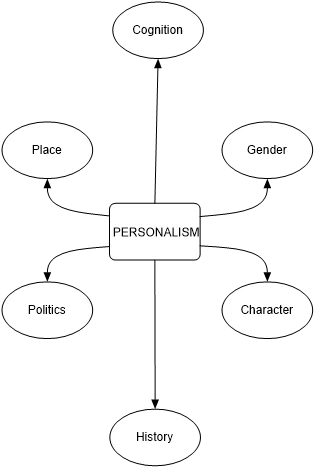
Featured Image: F.01-Level-3.-Personalism-in-Historiography-Knowledge-and-Learning.webp


Neville Buch
Latest posts by Neville Buch (see all)
- The Unbound Mind: Independent Scholarship, Institutional Isolation, and the Restoration of Human Authorship – October 20, 2026
- The Road to Geelong: A Re-Narrativization of The Story of Resilience Part 1 – October 20, 2026
- The Human Being Above the Transaction and Why Markets Cannot Measure Human Worth – October 15, 2026