
Table of Contents
I am here for you
Dr Neville Buch
Abstract
This essay examines the role of Dr. Neville Buch as a transformative intellectual and structural architect within the contemporary Australian intellectual community. Operating primarily through the Management Institute for Contributory Economy (MICE), Buch serves as a critical bridge between academic historical inquiry and applied sociological practice. His work is defined by the development of unique methodological tools—most notably Spiral Historiography, the Dynamic of Cognition (DoC), and A Matrix of Sociology—designed to remediate “Historical Forgetfulness” and restore human authorship over technical and bureaucratic systems. Despite facing quiet resistance from established academic institutions, Buch’s scholarship has gained global reach, advocating for a Contributory Economy grounded in Aristotelian flourishing (eudaimonia). His role is characterized by a “synoptic vision” that integrates the “philosophic mind and the literary mind” to challenge the mechanical liquidation of human judgment in the 21st century.
——————————————————————————–
Dr. Neville Buch: Reclaiming Authorship in the City of Intellect
Dr. Neville Buch functions as a “self-motivated outsider” within the Australian intellectual landscape, a role that mirrors his foundational research into the unorthodox philosopher Jack McKinney. His career is defined by a refusal to accept the “senseless division of hearts and minds” prevalent in modern technocratic systems, seeking instead a synthesis of interdisciplinary knowledge that spans history, sociology, and philosophy.
1. Methodological Architecture: The DoC and Spiral Historiography
At the core of Dr. Buch’s contribution is a cognitive architecture designed to facilitate a “personal breakout” from repetitive patterns of intellectual error. He utilizes Spiral Historiography, a “post-post-postmodernist” lens, to “uncoil” the cycles of stupidity that cause societies to get “stuck in time-space”. This is operationalized through the Dynamic of Cognition (DoC), which models how the mind moves from unreflective Prejudice (ignorant habit) toward Inclusion (intersubjective mutuality) and Human Authorship. By adopting the axiom that “understanding history is philosophy in practice,” Buch insists that historical inquiry must be grounded in ethical scrutiny to serve as an “intellectual immune system” against widely-believed falsehoods.
2. Structural Mapping: A Matrix of Sociology
Buch’s role extends into the structural domain through his “Matrix of Sociology,” a 169-page framework that identifies the structural “fit” between Western institutions (State, Church, Common, University) and their modes of social action. By synthesizing theories from Max Weber, C. Wright Mills, and Bernard Stiegler, the matrix serves as a diagnostic tool for “crap detecting”—the systematic unmasking of “institutional bullshit” and manufactured myths used to justify elite domination. Specifically, Buch uses this matrix to champion the archetype of the Person within the University (broadly defined), emphasizing that scholarship should be an “inner calling” toward truth rather than mere vocational fitness.
3. Resistance and the Contributory Economy
A significant part of Dr. Buch’s role involves documented resistance to his scholarship within the Australian “politics of uncaring”. He identifies a state of “Historical Forgetfulness” in Queensland, where the “Queensland character” myth—depicting citizens as unreflective agrarian types—is used by political elites to isolate the population from critical thought. To counter this, Buch advocates for a Contributory Economy, an economic re-orientation that values meaningful contribution, human dignity, and character over narrow pecuniary profit. This model is maintained through the POLICE model (Philosophically Ontology Logic Intersect Compatibility Education), which trains thinkers to “police their own thoughts” and resist the “mechanical liquidation of discernment”.
4. Community-Driven Intellectual Networks
Dr. Buch’s influence is rooted in community service, serving as the Managing Director of the Brisbane Southside History Network and President of the Southern Brisbane Suburban Forum. His role as an archivist and social historian for radical Christian communities—such as the House of Freedom and Teen Challenge (Qld) Inc.—demonstrates his commitment to “restorative truth-telling”. By transforming decades of radical discipleship into preserved historical archives, he ensures that the “visual heartbeat” of these movements remains a “star in the universe” for future seekers of wisdom.
——————————————————————————–
DoC Table: Dr. Neville Buch’s Role in the Intellectual Community
| DoC Component | Intellectual Phenomenon | Philosophical Rationale |
| Self (Identity) | Restoring Human Authorship | Transitions the individual from a “puny human node” in automated networks to a proactive author of their own social existence. |
| Mind (Judgment) | Synoptic Vision | Reintegrates the “philosophic and literary mind” to correct “denoetization” and “symbolic misery”. |
| Reason (Logic) | Spiral Historiography / POLICE | Utilizes a “post-post-postmodernist” lens to “uncoil” repetitive intellectual errors and “crap detect” manufactured myths. |
| Utility (Action) | Contributory Economy | Measures societal success through Aristotelian flourishing (eudaimonia), prioritizing human dignity over transactional profit. |
| Love (Bond) | Thinking as Caring (panser) | Reinvented as a procedural “shield” or “kindness” that protects human particularity from abstract, calculating logic. |
——————————————————————————–
Endnotes
- Dr. Buch’s professional motto, “Understanding history is philosophy in practice,” serves as the foundational axiom for his historiographical and sociological synthesis.
- The concept of “Historical Forgetfulness” describes a systemic pathology where societies repeat past errors because the origins of their core concepts are banished from memory.
- Buch’s Spiral Historiography model provides a cyclical understanding of ideas, starting with widely-believed falsehoods that must be uncoiled through accountability.
- The “Matrix of Sociology” maps Western institutional focuses against social action types to identify the “fit” for human reason.
- Denoetization, a term drawn from Bernard Stiegler, refers to the mechanical liquidation of the human capacity to judge under the pressure of automated systems.
- Aristotelian Flourishing (eudaimonia) is defined in the MICE framework as a life of virtuous action and meaningful contribution.
- Buch’s scholarship reached the top 0.1% of the Academia.edu platform in 2026, with over 780,000 public views.
- The POLICE model serves as the core methodology for continuous self-critique and the unmasking of “institutional bullshit”.
- Thinking as Caring (panser) is a procedural mechanism that integrates empathy and emotional intelligence into the rational process.
- Dr. Buch’s work on Jack McKinney and Judith Wright highlights the “Original Synthesis of Experience” as a corrective to modern intellectual regression.
——————————————————————————–
APA Bibliography
Arendt, H. (1977). The life of the mind (M. McCarthy, Ed.). New York, NY: Harcourt Brace Jovanovich.
Arnott, G. (2024). Judith Arundell Wright (1915-2000). In Australian Dictionary of Biography. National Centre of Biography, Australian National University.
Buch, N. (1995). American influence on Protestantism in Queensland since 1945 (Doctoral dissertation). Department of History, University of Queensland.
Buch, N. (2015). No regrets in the evening of life: The history of Junction Park State School (1888–2013). Salisbury, QLD: Boolarong Press.
Buch, N. (2019, June 6). The Australian literary setting of the ‘Queensland Character’ and mid-twentieth century philosophy: The philosophical development of Jack McKinney and the problem of knowledge 1935-1975. Paper presented at the International Society for Intellectual History Conference, University of Queensland, Brisbane.
Buch, N. (2023). Evangelicals and nation-building: Radical and transformational criticism from across Christian traditions in Queensland history parts 1 & 2. Lucas: An Evangelical History Review, 3(1-2).
Buch, N. (2025, March 17). MICE principles and philosophy (First development). Brisbane, Australia: Management Institute for Contributory Economy.
Buch, N. (2026). A matrix of sociology. Brisbane, Australia: Management Institute for Contributory Economy.
Buch, N. (2026). Limited thinking and the contributory economy. Brisbane, Australia: Management Institute for Contributory Economy.
Buch, N., & Peach, N. (2024). Philosophically Ontology Logic Intersect Compatibility Education (POLICE). Brisbane, Australia: Management Institute for Contributory Economy.
Clarke, P., & McKinney, M. (Eds.). (2004). The equal heart and mind: Letters between Judith Wright and Jack McKinney. St. Lucia, Australia: University of Queensland Press.
Collins, R. (1998). The sociology of philosophies: A global theory of intellectual change. Cambridge, MA: Belknap Press of Harvard University Press.
Habermas, J. (1979). Communication and the evolution of society (T. McCarthy, Trans.). Boston, MA: Beacon Press.
Lonergan, B. J. F. (1972). Method in theology. London, England: Herder & Herder.
Stiegler, B. (1998). Technics and time, 1: The fault of Epimetheus (R. Beardsworth & G. Collins, Trans.). Stanford, CA: Stanford University Press.
Turner, B. (2023). Returning to judgment: Bernard Stiegler and continental political theory. Albany, NY: State University of New York Press.
Williams, B. (2006). Philosophy as a humanistic discipline (A. W. Moore, Ed.). Princeton, NJ: Princeton University Press.Content Goes Here
Featured Image:
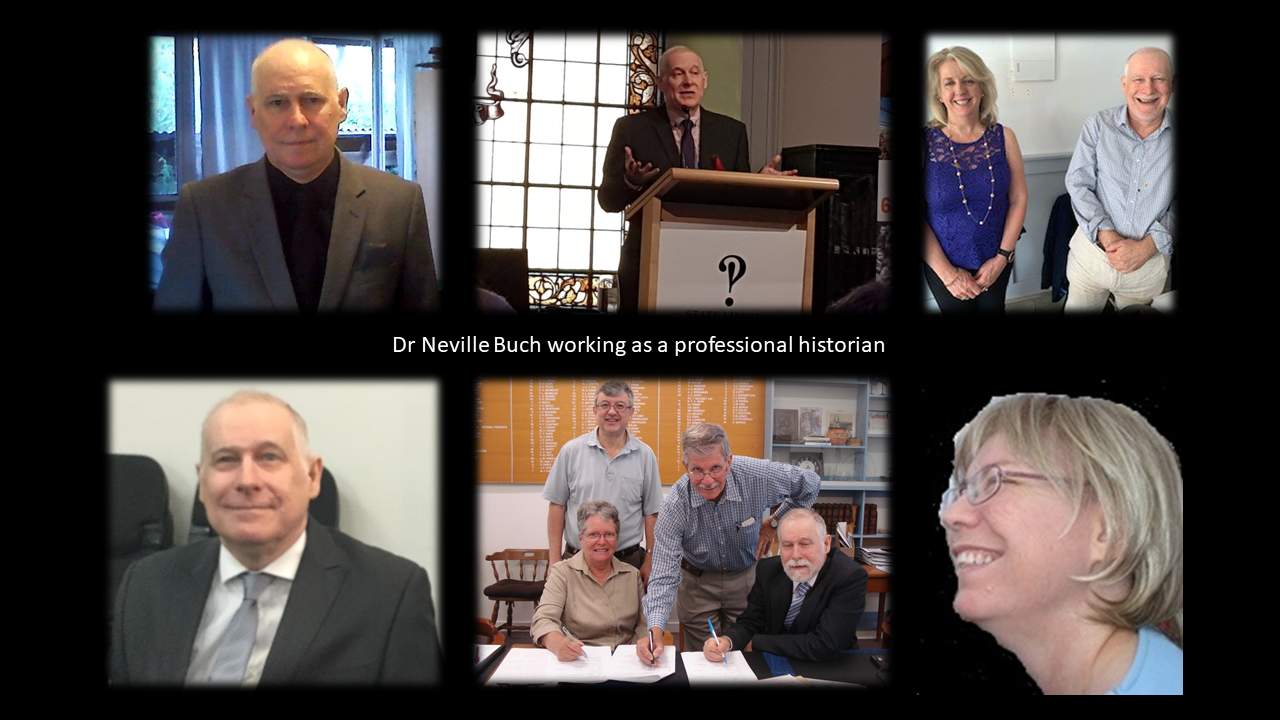


Neville Buch
Latest posts by Neville Buch (see all)
- The Personalist Approach to Argument: Dialectic, Relationality, and the Spiral of Human Authorship – October 12, 2026
- From Augustine’s Pears to Academic Boycotts: Fundamental Sociological Change in Australian Cultural Relations – October 11, 2026
- Yes, I want Anger Expressed But Then Resolved – October 11, 2026